
Most of what the sky and the ground do is ordinary. Rain falls, clouds drift, ice forms. Then occasionally the same physics that produces all of that lines up in an unlikely way and produces something that looks impossible: a rainbow made by the moon, snow that grows into blades taller than a person, rocks that cross a desert floor on their own.
None of the nineteen phenomena below breaks any rule of nature. Every one of them is rare because it needs several ordinary conditions to occur at the same time and in the same place, which is a much harder thing to arrange than it sounds. What follows is what each one actually is, why it happens, and where you would have to stand to see it.
One of them was a genuine mystery until 2014 and is now solved. The last one on the list is still open, and it is not the only entry where the honest answer is that nobody is entirely sure.
What makes a natural phenomenon rare
Rarity here comes in three different flavours, and it is worth separating them, because they are not the same kind of rare.
Some of these are geographically rare. The phenomenon is reliable, but it only happens in a handful of places on Earth. Blood Falls exists at one glacier in Antarctica. The Morning Glory rolls in over one gulf in northern Australia. If you are not there, you will never see it, no matter how long you wait.
Others are optically rare. The ingredients are everywhere, but the geometry has to be exact. A circumhorizontal arc needs ice crystals of a particular shape, hanging at a particular angle, with the sun at a particular height. Miss any of the three and you get an ordinary cloud.
And a few are rare to witness rather than rare to occur. Red sprites fire above thunderstorms constantly. They last a few thousandths of a second, they happen above the cloud where nobody is looking, and almost nobody saw one until cameras got fast enough.
Ice does a lot of the work on this list. Sunlight and moonlight passing through ice crystals suspended in the atmosphere get bent, split and reflected, and because ice crystals grow in regular geometric shapes, the results appear at predictable angles. Learn the angles and you can tell what you are looking at. The rest is a mix: electricity, water droplets, atomic emission, and in a few cases rock and fire.
1. The aurora borealis
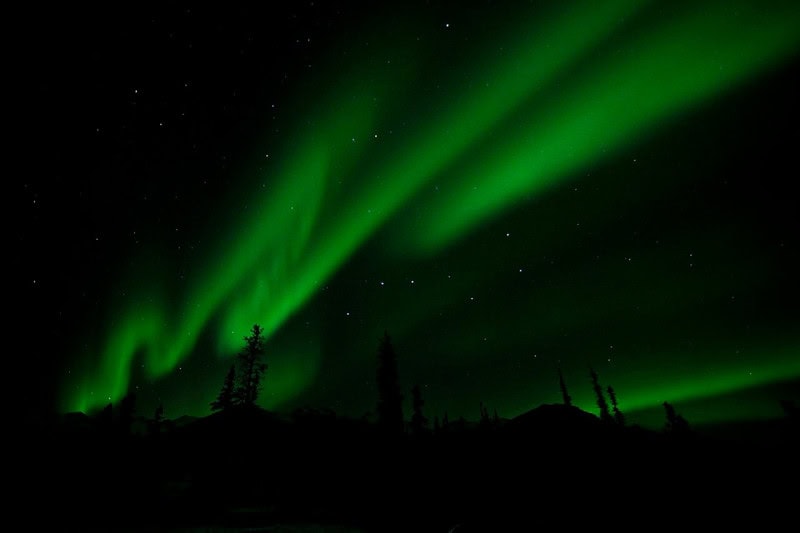
Charged particles streaming from the sun are caught by Earth’s magnetic field, funnelled toward the poles, and slammed into the upper atmosphere, where they excite atoms of gas until those atoms give the energy back as light. The colour tells you which gas and roughly what altitude: oxygen produces the familiar green at around a hundred kilometres up and a deep red much higher, while nitrogen contributes blues and violets.
The display sits in a ring around the magnetic pole rather than at the pole itself, which is why Iceland, northern Norway, Finland, Alaska and northern Canada are the reliable places to stand. Activity rises and falls with the roughly eleven year solar cycle, and during strong geomagnetic storms the ring widens far enough south that people who have never seen it get one night of it.
2. Fire rainbows
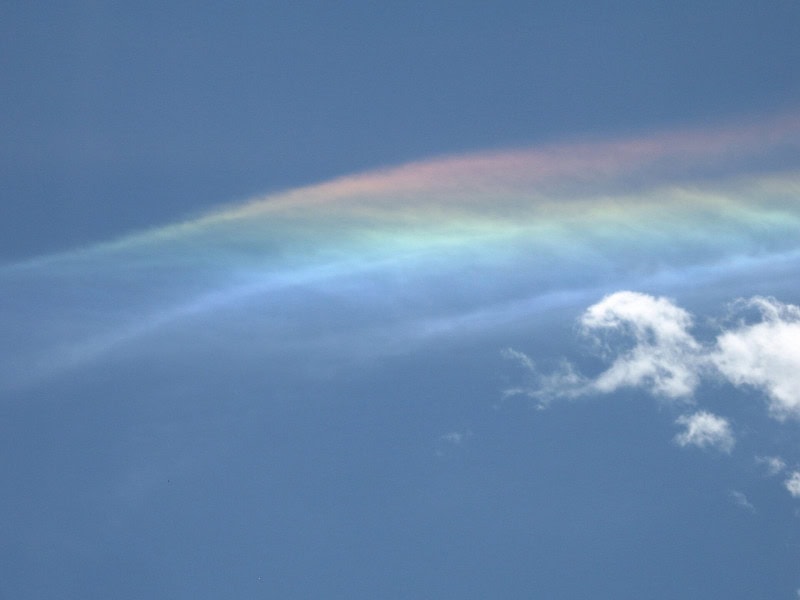
A flat band of ordered colour, red at its top edge, laid across a patch of high cloud. The proper name is a circumhorizontal arc. We take the optics apart in unusual cloud formations; what matters here is where you can stand to see one.
It needs plate shaped ice crystals in cirrus and, crucially, a very high sun: above roughly fifty eight degrees of elevation. That single requirement sets a hard latitude limit, and you can work out your own. Maximum solar elevation is ninety degrees, minus your latitude, plus twenty three and a half. Put your own latitude in: if the answer is under fifty eight, you will never see one from your garden, on any day of any year. That is the rare case of a spectacle you can rule in or out with one subtraction.
3. Sun dogs
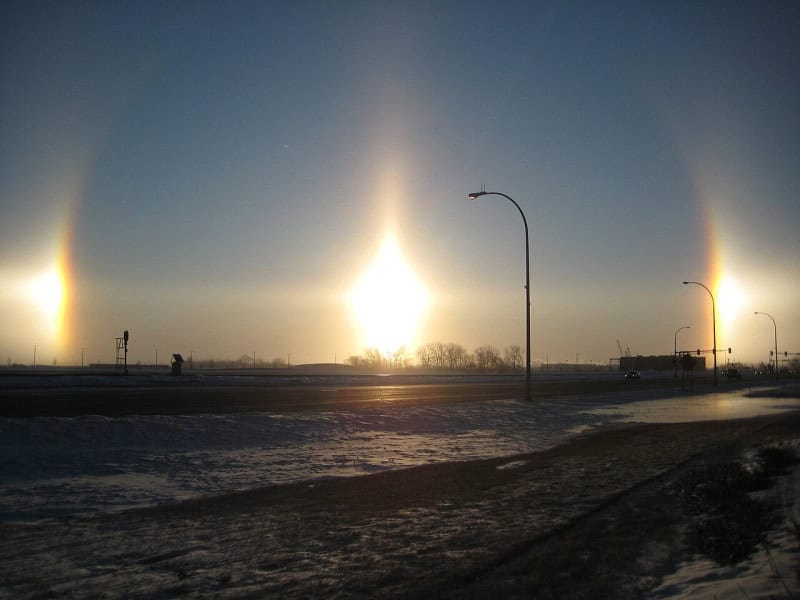
Two bright patches of light flanking the sun, one on each side, often with a faint reddish edge facing inward. They sit about twenty two degrees from the sun when it is low, drifting further out as it climbs, and they have been noticed for long enough to have collected folk names in most northern languages, including the English one, which nobody has satisfactorily explained.
The cause is plate shaped ice crystals drifting with their flat faces roughly horizontal, refracting sunlight sideways. They are genuinely common in very cold weather, and they are one of the easiest phenomena on this list to catch, because all you need is a cold clear morning and the habit of looking to the side of the sun rather than at it.
4. The 22 degree halo
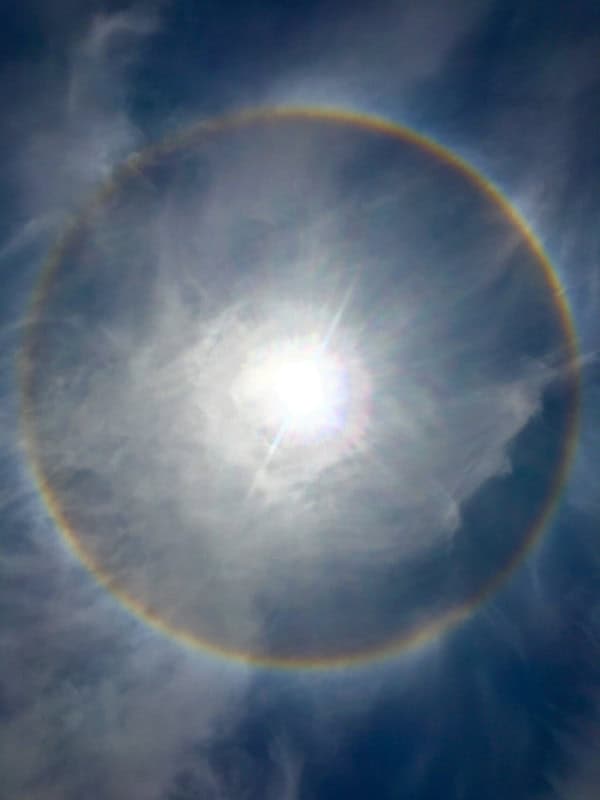
A complete ring of light around the sun or the moon, at a fixed twenty two degrees. Here is the trick that makes it useful: hold your hand at arm’s length with fingers spread, and the span from thumb tip to little finger tip is very close to twenty degrees for most adults. If the ring sits just outside your outstretched hand, it is a twenty two degree halo. The sky inside is often darker than the sky outside, though when the cirrus is thick, as in the photograph here, the disc fills with haze instead. It is produced by the same ice crystals responsible for sun dogs, but oriented randomly rather than lying flat. Light entering one side face of a hexagonal crystal and leaving through the second face along from it cannot be bent by less than twenty two degrees, which is why the ring has a sharp inner edge and a soft outer one.
Halos are the most catchable entry on this list: the crystal-bearing cirrostratus that produces them is common everywhere on Earth, so the only habit required is glancing up at the sun, with it blocked behind a hand or a rooftop, whenever the sky turns thin and milky. Do that and you will see one within a few weeks, which makes this a good first phenomenon to collect deliberately.
5. Light pillars
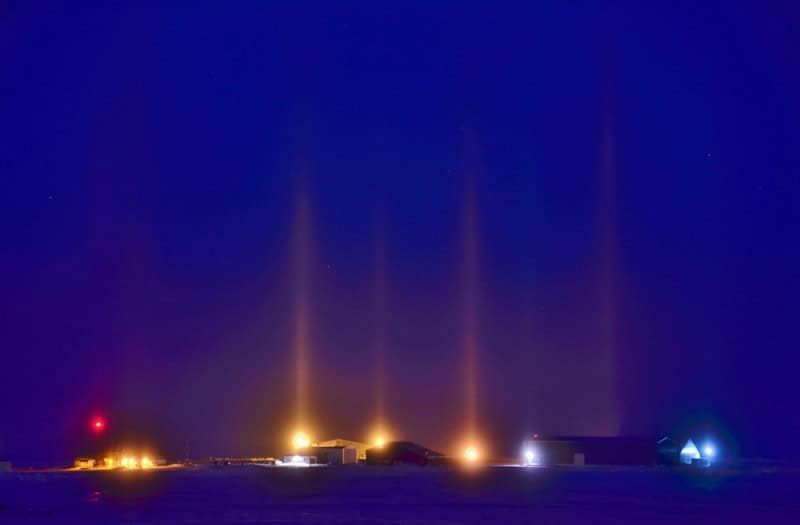
Vertical columns of light standing above street lamps, headlights and rooftops on the coldest nights, as though the town had been lit from below. They are reported as UFOs with some regularity, and photographs of them are mistaken for the aurora constantly.
The mechanism is simpler than either. In very cold, very still air, flat ice crystals hang close to the ground with their faces horizontal, and each one acts as a tiny mirror. The pillar is not a beam travelling upward. It is the reflection of a single light source in thousands of crystals at different heights, which the eye assembles into a column. Each pillar takes the colour of whatever light made it, which is why a street of sodium lamps produces orange ones.
6. Moonbows
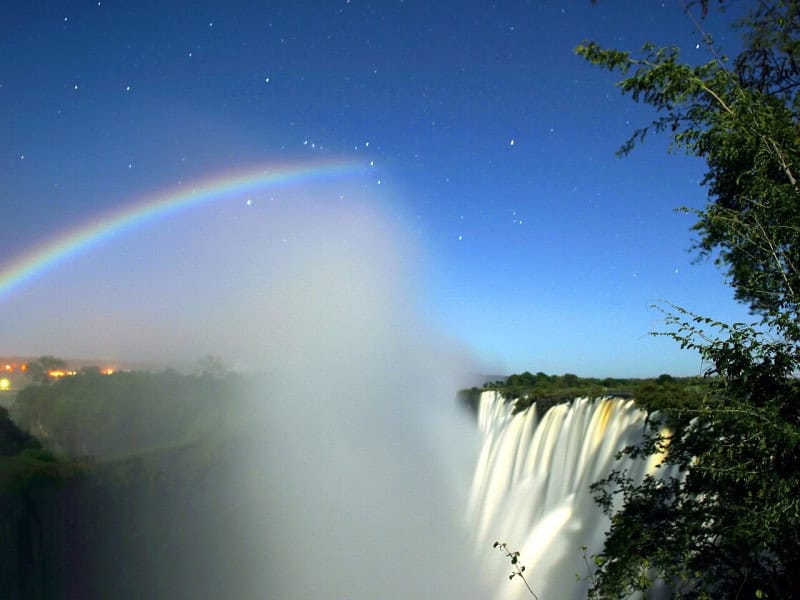
A rainbow made by moonlight instead of sunlight. Physically it is the same event, sunlight reflected off the moon and then refracted through water droplets, and it appears in the same place in the sky, opposite the light source.
What makes it strange is that it usually looks white. Moonlight is far too dim to activate the colour receptors in human eyes, so the brain renders the arc in grey, and only a long camera exposure reveals that the colours were there the whole time. It needs a bright full moon, a dark sky and water in the air, which is why the dependable places to see one are big waterfalls: Victoria Falls on the Zambezi, and Cumberland Falls in Kentucky.
7. Red sprites
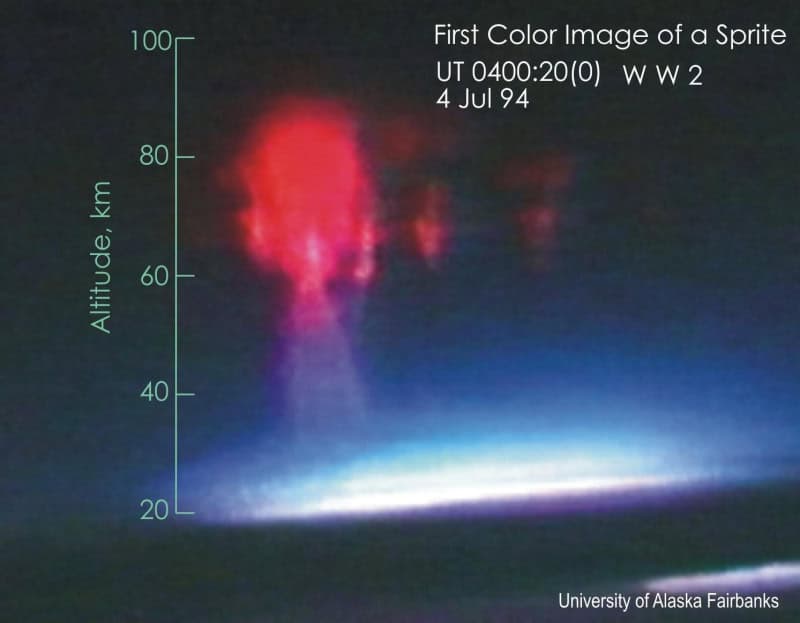
Enormous red electrical discharges that flicker upward from the tops of thunderstorms, reaching into the mesosphere far above the cloud. They are shaped something like jellyfish, with tendrils hanging below a diffuse head, and they are genuinely huge, spanning tens of kilometres.
Pilots reported them for decades and were largely disbelieved, because a sprite lasts a few thousandths of a second and nobody had caught one. The first confirmed capture came in 1989, by accident, on a low-light monochrome video camera; the first colour image, reproduced here, came out of a NASA and University of Alaska aircraft campaign in 1994. They are now filmed routinely from the International Space Station. They are a good reminder that a phenomenon can be both common and almost never witnessed.
8. Lenticular clouds
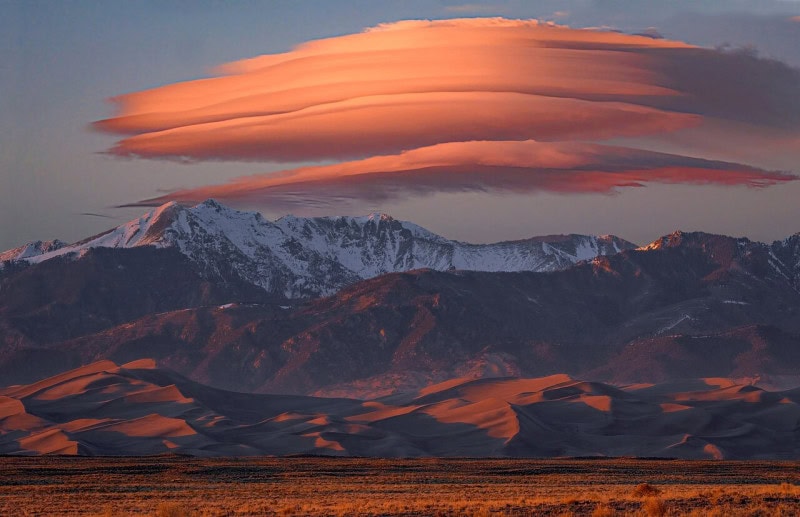
Smooth, stacked, lens shaped clouds that hang motionless downwind of a mountain while wind pours through them at speed. The stillness is the giveaway: every other cloud in the sky drifts, and a lenticular sits fixed in place, sometimes for hours, because it marks the crest of a standing wave in the airflow rather than a parcel of moving air. This is the one entry here you can plan for rather than stumble across. They favour isolated peaks in strong, steady wind with stable air, and the big lone volcanoes, Rainier, Shasta and Fuji among them, produce textbook stacks often enough that they have become part of each mountain’s photographic identity. Treat the beauty as strictly a spectator sport from the ground: the rotor zone beneath that smooth cap holds some of the most violent turbulence in aviation, which is why airliners give mountain-wave systems a wide berth. How the wave works is in our guide to unusual cloud formations.
9. Mammatus clouds
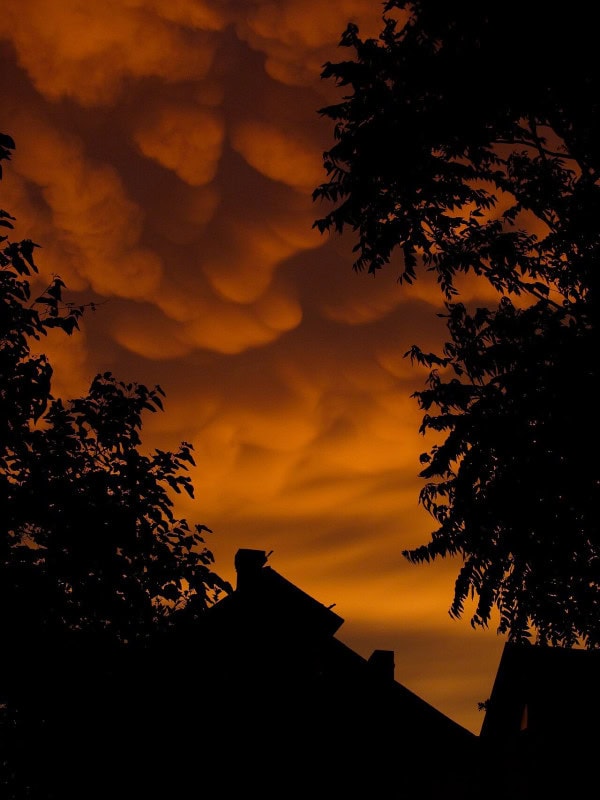
Hundreds of smooth pouches hanging from the underside of a cloud, most often the spreading anvil of a big thunderstorm. For something photographed this often, they are remarkably poorly understood: a 2006 review in the Journal of the Atmospheric Sciences worked through around ten proposed formation mechanisms and concluded that none had been demonstrated. The detail worth adding to the usual chase advice is the light: the best displays come in the half hour after heavy weather has passed through, when most people have stopped watching the sky, and the low sun that often follows a storm catches the pouches from the side and turns them gold.
10. Noctilucent clouds
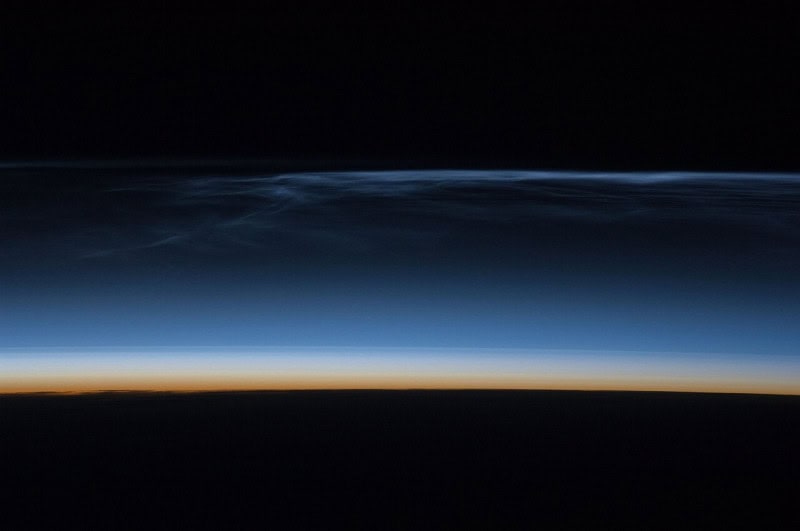
The highest clouds on Earth, and not by a small margin. Ordinary weather clouds give up around ten kilometres; these sit in the mesosphere, some eight times higher. The detail worth carrying is the date: nobody recorded them before the 1880s, and the first reports followed the eruption of Krakatoa, which is why the question of whether they are entirely natural, or partly a signature of the industrial era, has never fully gone away; it is the question NASA launched the AIM satellite in 2007 to work on. Catching them is a summer discipline with a narrow window. Stand between roughly fifty and seventy degrees of latitude in the weeks around midsummer, wait an hour or two after sunset, and look low toward the pole: they burn a blue-white that nothing else in the night sky matches.
11. Roll clouds and the Morning Glory
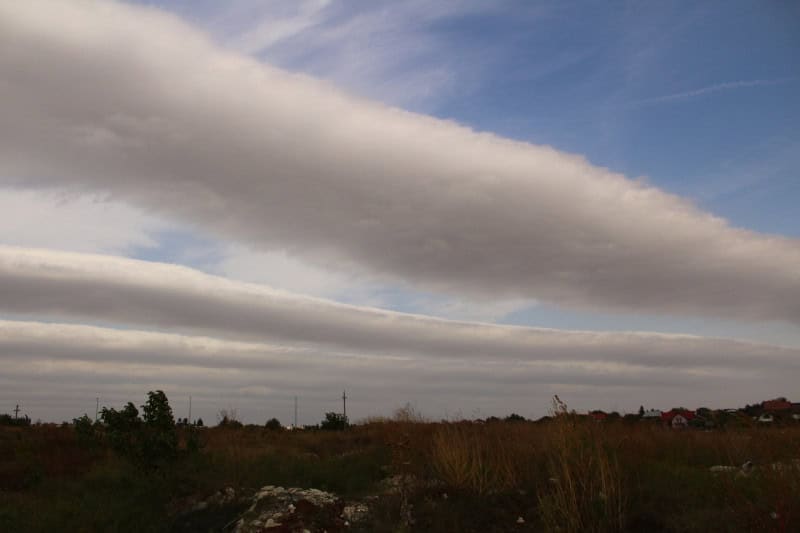
A long horizontal tube of cloud, rolling slowly about its own axis as it advances, detached from everything else in the sky, which is what makes it read as an object rather than weather. Almost everywhere on Earth a roll cloud is a one-off: it forms, crosses the sky once, and is never seen in that place again, so there is nowhere to go and wait for one. The exception is the Gulf of Carpentaria in northern Australia, whose Morning Glory is the only roll cloud on Earth with a dependable season; it has its own full entry, season and gliding culture included, in our guide to unusual cloud formations, along with how to tell a roll cloud from the shelf cloud it is usually mistaken for.
12. Penitentes
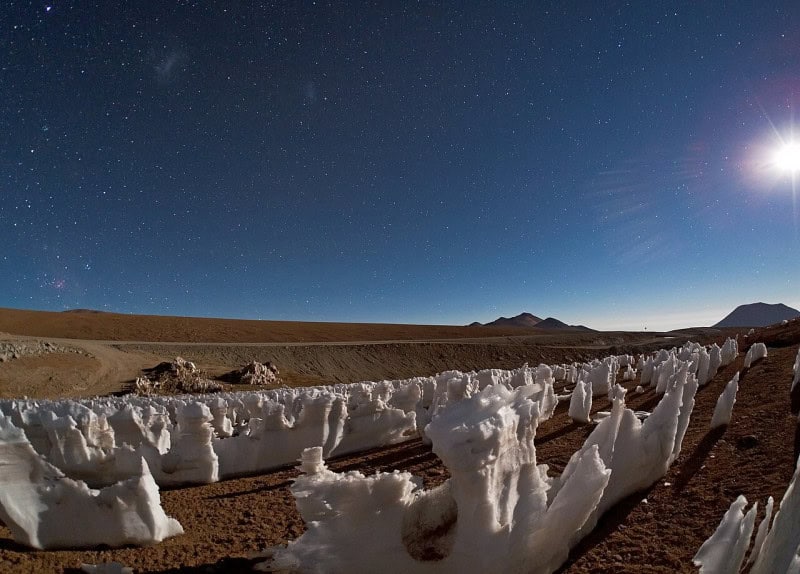
Fields of tall, thin blades of hardened snow, all leaning toward the midday sun, standing anywhere from a few centimetres to several metres high. The name comes from their resemblance to a procession of robed and hooded penitents, and walking through a mature field of them is reportedly closer to negotiating a thicket than crossing a snowfield.
They need high altitude, intense sun and air so dry that snow sublimates directly into vapour without melting first. Once a small dip forms, it concentrates reflected light and deepens faster than the ridges around it, and the difference runs away with itself. The high dry Andes are the classic location, which is why the observatories on the Chajnantor plateau in Chile are surrounded by them.
13. Frozen methane bubbles
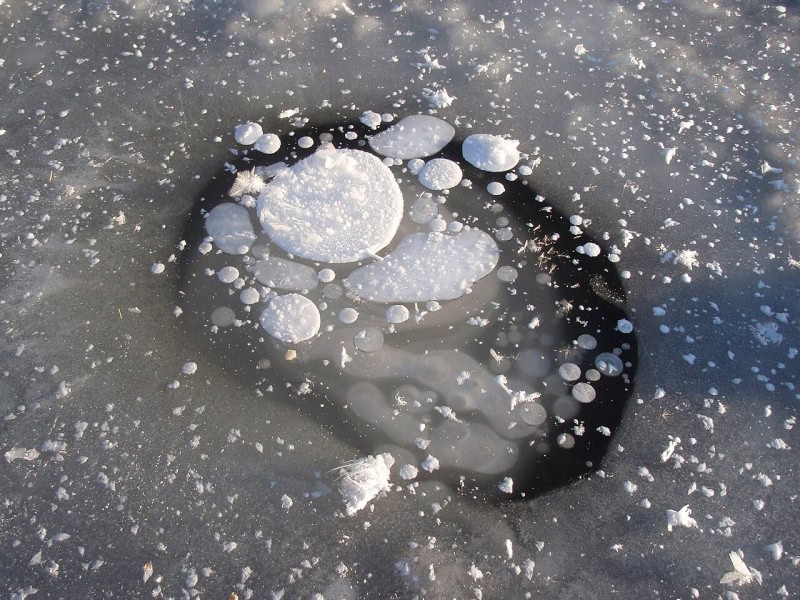
Stacks of white discs suspended inside clear lake ice, sometimes dozens deep, looking like a photograph of something rising that has been paused.
That is close to what they are. Bacteria digesting dead plant matter on the lake bed release methane, the gas rises toward the surface, and if the lake is freezing from the top down the bubbles are trapped in place as the ice reaches them. Each disc marks a moment when the ice front caught up. Abraham Lake in Alberta is the site that made them famous, helped by clear ice and mountains behind. The gas is genuinely flammable, which has produced a genre of alarming videos and is a very good reason not to experiment on a frozen lake.
14. Blood Falls
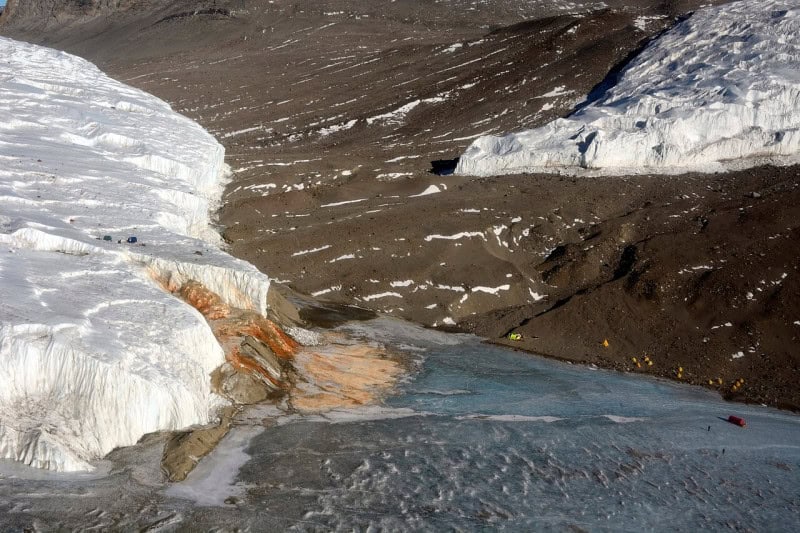
A deep red flow spilling out of the white face of the Taylor Glacier in Antarctica and staining the ice below it. When it was found in 1911 the colour was attributed to red algae.
It is iron. Trapped beneath the glacier is an extremely salty, iron rich body of water, sealed off from the atmosphere for a very long time. Where that brine escapes at the glacier’s edge and meets air for the first time, the dissolved iron oxidises, and the outflow rusts as it emerges. The brine is also inhabited: microbial life persists there without sunlight and without oxygen, which is the reason the site draws far more scientific attention than its appearance alone would earn. Seeing it in person means reaching the McMurdo Dry Valleys, so in practice almost everyone sees it in photographs taken by people working there.
15. The Salar de Uyuni mirror
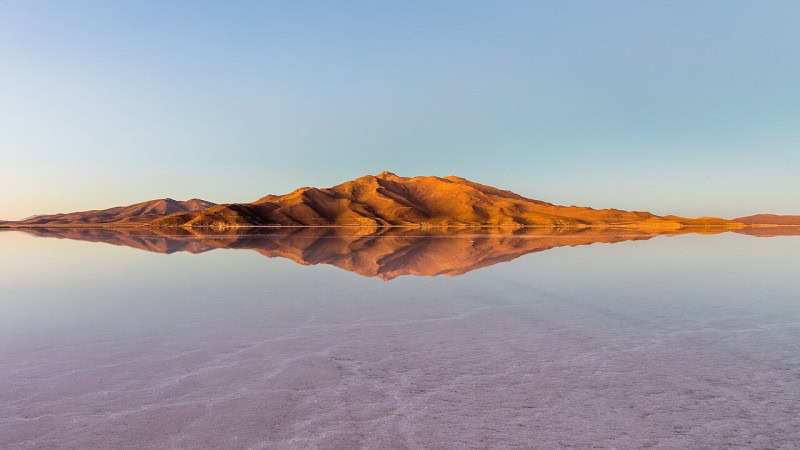
The largest salt flat in the world, in southwest Bolivia, and for part of the year the largest mirror. When a shallow layer of rainwater sits on a surface that is almost perfectly level over many kilometres, it produces a reflection with no visible horizon, so that the sky appears above and below whoever is standing in it.
The mirror needs the wet season, roughly December to April, and it needs the rain to have stopped: a few centimetres of standing water on a still day. Come in the dry months and you get a white plain instead. The flatness is the genuinely unusual part, not the water. It is so consistent that satellite missions use the surface to calibrate their instruments, which is a better testament to it than any photograph.
16. The Giant’s Causeway
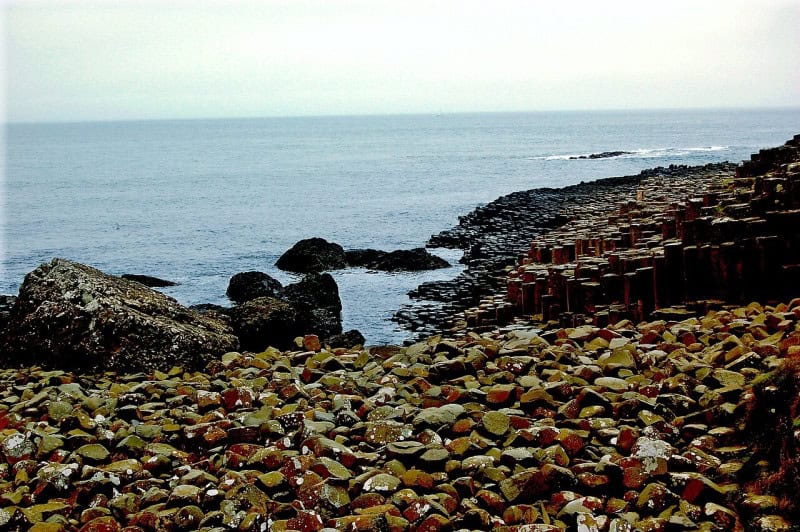
Around forty thousand basalt columns packed together on the Antrim coast of Northern Ireland, most of them hexagonal, fitted so precisely that the whole thing reads as built rather than formed.
It is the one entry here that is not a fleeting event, and it earns its place on the other kind of rarity: the conditions that produce columns this regular, at this scale, have occurred in only a handful of places on Earth. It formed when a thick flow of lava cooled and contracted. Contraction puts the cooling rock under tension, cracks open to relieve it, and a hexagonal arrangement is what you get when cracks propagate to release stress as efficiently as possible, which is the same reason drying mud cracks into rough polygons. The local explanation is that the giant Finn McCool built it as a causeway to Scotland, and the columns that surface again on the Scottish island of Staffa are the other end of the road. It is on the Antrim coast, open year round, and the only entry here you can plan a weekend around with any certainty.
17. Fire whirls
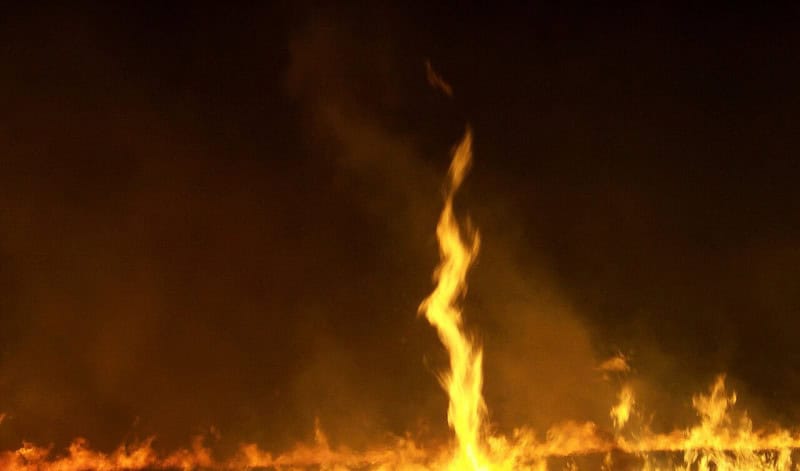
A rotating column of flame standing up out of a fire. Intense heat drives a strong updraft, and if that rising air picks up any existing rotation from wind or terrain, the column tightens and spins, in the same way a spinning skater speeds up by pulling their arms in.
Most are a few metres tall and last less than a minute, and they turn up wherever fire meets wind and open ground: wildfires, controlled burns, occasionally a large bonfire. This is the one entry on the list nobody should go looking for. They are usually called fire tornadoes, and that is worth a small correction, because a true fire tornado, where the rotation comes from a storm cloud generated by the fire itself rather than from the ground, is vanishingly rarer than the ordinary whirl and has only been formally documented a handful of times.
18. The sailing stones of Racetrack Playa
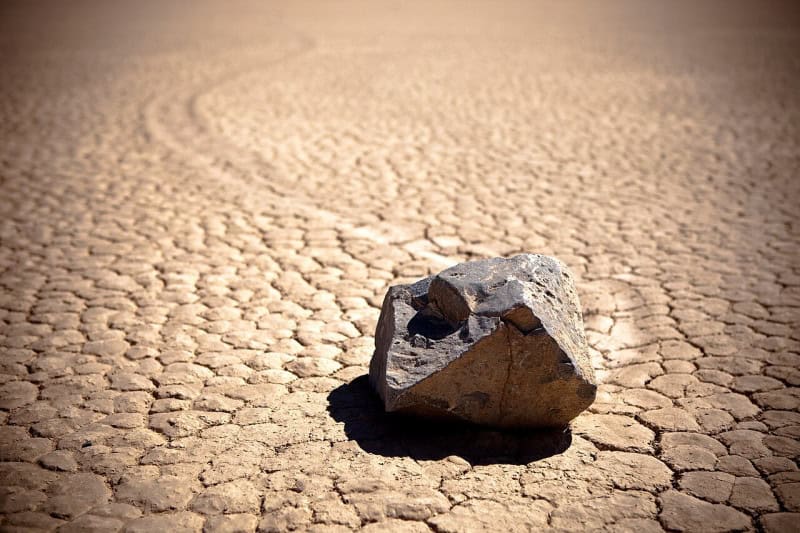
Rocks sitting on a dry lake bed in Death Valley, each with a long furrow trailing behind it, as though it had been dragged across the mud. Some of the trails run for hundreds of metres. Some turn corners. Nobody had ever seen one move.
Proposed explanations ran through hurricane force winds, thick ice rafts and, inevitably, magnetism. The answer, recorded in December 2013 after researchers instrumented the rocks and waited, and published in 2014, is far stranger for being so gentle. A shallow pond forms on the playa and freezes overnight into a thin sheet of ice. In the morning sun the sheet breaks into floating panels, and a light breeze, only a few metres per second, pushes those panels against the rocks and shoves them slowly across the soft mud. The measured speed was two to five metres per minute, which is slow enough that people standing nearby did not notice it happening, and the trail is the only evidence left when the water dries.
19. Ball lightning
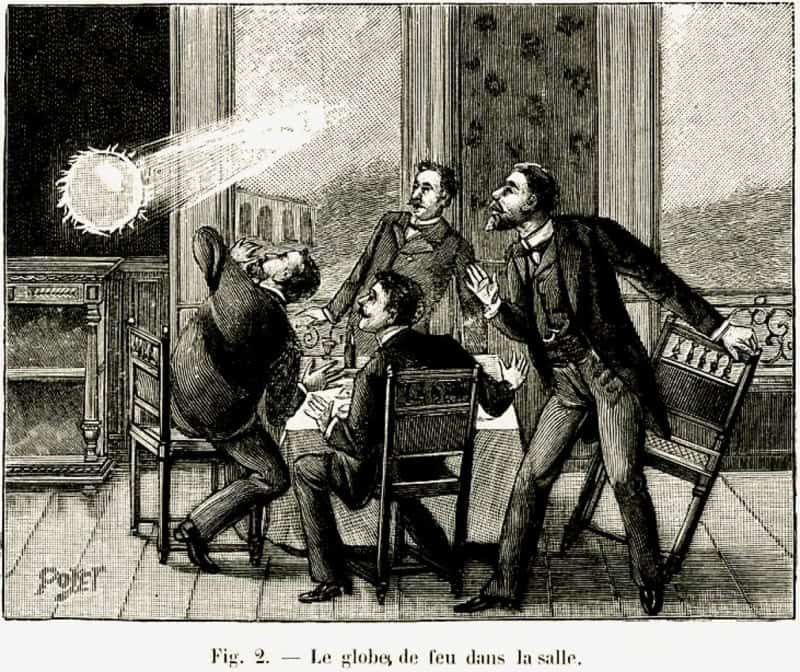
Glowing spheres, usually described as somewhere between a golf ball and a beach ball in size, reported during thunderstorms. They are said to drift rather than fall, to last seconds rather than an instant, to enter buildings through windows and chimneys, and occasionally to end with a bang.
The accounts go back centuries and are numerous enough, and consistent enough, that most researchers accept something real is being described. What does not exist is a settled explanation, or an image clear enough to settle one. The illustration here is a nineteenth century engraving rather than a photograph, which is the honest way to picture something short lived, unpredictable and mostly seen by people who are not holding a camera. The best record so far is accidental: in 2012, researchers from Northwest Normal University in Lanzhou, set up on the Qinghai plateau to study ordinary lightning, caught one on video and, more usefully, got its spectrum, published in Physical Review Letters in 2014.
There is no place to go and no season to wait for, which is part of the problem: reports arrive from everywhere, during thunderstorms, at random. It sits here at the end deliberately. Nearly every entry above is understood, several of them only recently, and the honest position on this one is that the reports are credible and the mechanism is open. If you enjoy the gap between what gets reported and what gets confirmed, our piece on the Dragon’s Triangle works the same territory.
Rare natural phenomena: in conclusion
The pattern running through this list is that almost none of these needed a new law of physics to explain. Sailing stones turned out to be ice and a light breeze, and that one really was open until 2014. Blood Falls is rust. Light pillars are a street lamp reflected in a million tiny mirrors. What made each one mysterious was not the mechanism but the coincidence: several unremarkable conditions arriving together, somewhere nobody happened to be standing.
Which is also the practical takeaway, if you want to see one. Most of these are not luck. Sun dogs want a cold clear morning. Noctilucent clouds want deep summer twilight at high latitude. Moonbows want a full moon and a waterfall. Put yourself in the right place at the right time of year and the odds change completely.
Image credits
Images are public domain or Creative Commons licensed. Attribution where the licence requires it: 22 degree halo, Suzanne Birrell Jones (CC BY 4.0). Light pillars, Eric Van Lochem (CC BY-SA 2.0). Moonbow, Calvin Bradshaw (CC BY-SA 3.0). Roll cloud (volutus), Constral (CC BY-SA 4.0). Penitentes, ESO / B. Tafreshi (CC BY 4.0). Salar de Uyuni, Diego Delso (CC BY-SA 4.0). Giant’s Causeway, Joseph Mischyshyn (CC BY-SA 2.0). The remaining twelve images are public domain or CC0, from NASA, the National Park Service, the U.S. Geological Survey, the University of Alaska Fairbanks, the U.S. Fish and Wildlife Service, the National Science Foundation and individual Wikimedia Commons contributors.