
The Norse myths are short on gods who stay home and long on things with teeth. Odin rides an eight-legged horse and keeps two wolves at his feet; Thor’s chariot is pulled by goats he eats and resurrects; the world is fenced by a serpent and the sun is chased across the sky by a wolf that will one day catch it. Most of what survives of this bestiary comes from two Icelandic books written down a century and a half to two centuries after the Viking Age ended: the Poetic Edda, a collection of older poems, and the Prose Edda that Snorri Sturluson compiled around 1220 to explain them. This list names the creature, says which poem or chapter it comes from, tells the story it is in, and says where it has turned up since, because half of what people think they know about Norse monsters is from a film or a game.
Twenty-seven entries in six groups: the great monsters of Ragnarök; the first beings (Ymir, the cow Auðumbla and the giants); the animals that serve the gods; the peoples of the nine realms (dwarves, elves, the Norns and the Valkyries); the beasts of the sea; and, kept separate so nobody mistakes them for Edda, the trolls, water spirits and night-hags of later Scandinavian folklore. Every picture is a public-domain painting, engraving or manuscript page, credited at the foot. If you want the gods these creatures belong to, the Norse gods and goddesses list on this site is the companion page; the gods of death and the underworld has Hel, whose hound and whose brother both appear below.
The monsters of Ragnarök
1. Fenrir, the wolf that swallows Odin
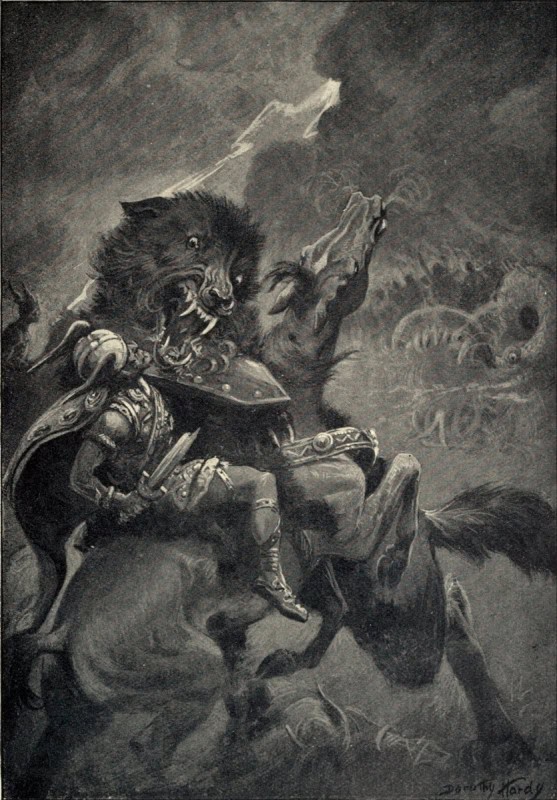
Named in: Völuspá; Gylfaginning 34 and 51 of the Prose Edda. Fenrir (Fenrisúlfr, “fen-dweller”) is the eldest of the three monstrous children Loki fathered on the giantess Angrboða, with the serpent Jörmungandr and Hel. The gods raised the wolf in Asgard, and only Týr would feed him. When he grew too large to trust they tried to bind him twice with iron chains, which he broke as a game, and then with Gleipnir, a ribbon the dwarves made from six impossible things (the sound of a cat’s footfall, a woman’s beard, a mountain’s roots, a bear’s sinews, a fish’s breath and a bird’s spittle). Fenrir agreed to be bound only if a god placed a hand in his mouth as a pledge; Týr did, the ribbon held, and Týr lost the hand. At Ragnarök the wolf breaks free (Völuspá) and swallows Odin (Vafþrúðnismál 53; Gylfaginning 51), and Odin’s son Víðarr avenges him. Since then: he is the giant wolf of every Norse-flavoured game and the model for Tolkien’s Carcharoth, the wolf that bites off Beren’s hand.
2. Jörmungandr, the Midgard Serpent
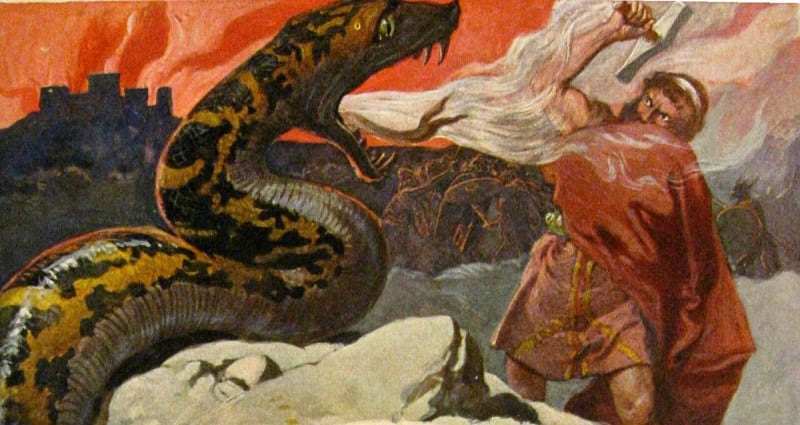
Named in: Hymiskviða; Völuspá; Gylfaginning 34 and 48. Odin threw Loki’s second child into the ocean that rings the world, and it grew until it circled Midgard and bit its own tail. Thor meets it twice before the end. In Gylfaginning the giant Útgarða-Loki tricks Thor into trying to lift a cat that is the serpent in disguise; in Hymiskviða and Gylfaginning 48 Thor goes fishing with the giant Hymir, baits his hook with an ox’s head, and hauls the serpent to the surface, where Hymir cuts the line in terror as Thor raises the hammer. At Ragnarök they meet a third time: Thor kills the serpent and walks nine paces before its venom kills him. Since then: the world serpent is the ouroboros of a thousand tattoos and the sea monster in the God of War games.
3. Níðhöggr and the creatures of Yggdrasil
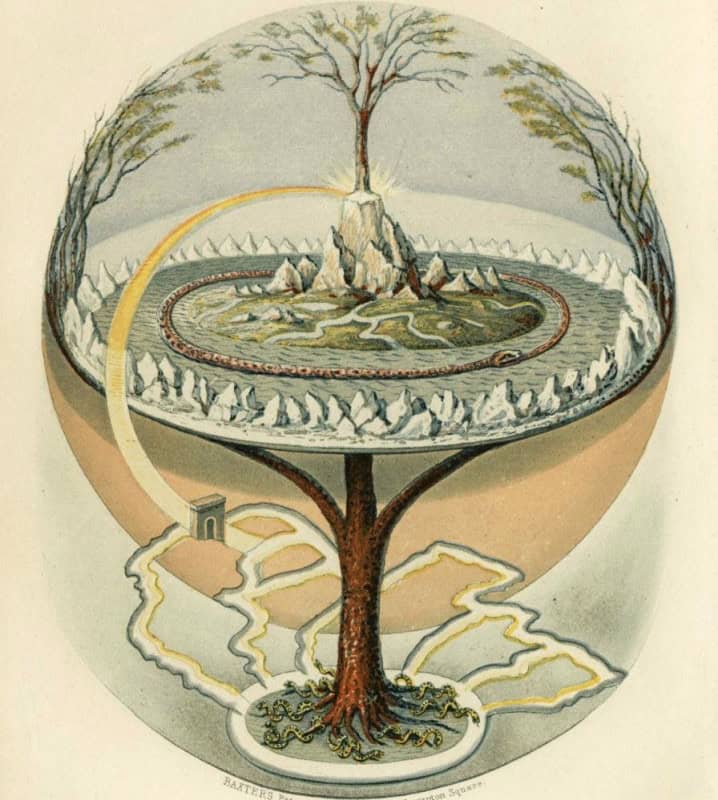
Named in: Grímnismál 32 to 35; Völuspá 39 and 66; Gylfaginning 16. The world tree is a crowded place. At its roots the serpent or dragon Níðhöggr (“malice-striker”) gnaws, and Völuspá has him chewing the corpses of oath-breakers and murderers in the hall of Náströnd; in the poem’s last verse he flies up from the dark with bodies in his feathers. At the crown sits an unnamed eagle with a hawk, Veðrfölnir, between its eyes. The squirrel Ratatoskr runs up and down the trunk carrying insults between the eagle and Níðhöggr, which is the whole of his job. Four stags (Dáinn, Dvalinn, Duneyrr and Duraþrór) browse the branches, and Grímnismál says more serpents lie under the tree than any fool can imagine. Since then: Níðhöggr is the dragon of the Norse underworld in games, and Ratatoskr has had a late career as a mascot.
4. Garmr, the hound of Hel
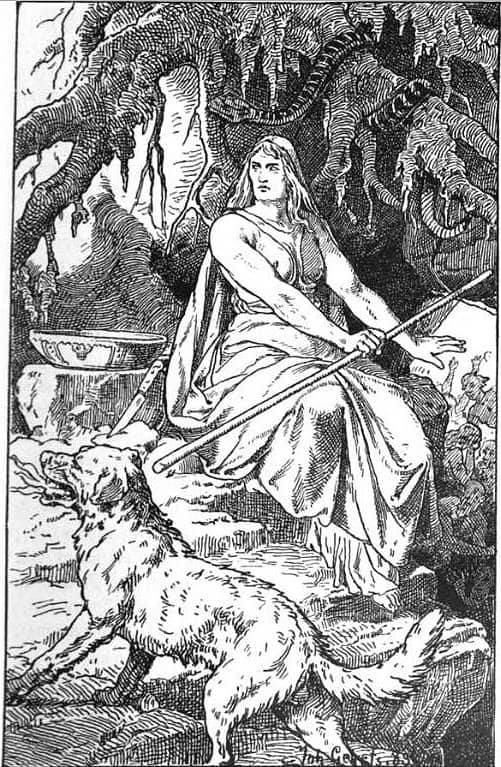
Named in: Völuspá (the refrain “Garmr howls loud before Gnipahellir”); Grímnismál 44; Gylfaginning 51. Garmr is the dog chained at the cave-mouth of Gnipahellir on the road to Hel, and Völuspá uses his howling as the drumbeat that announces Ragnarök, repeating the line three or four times depending on the manuscript. Grímnismál calls him the best of hounds as Sleipnir is the best of horses. In Snorri’s account of the last battle he and Týr kill each other; some readers take the bloodied hound that bars Odin’s way to Hel in Baldrs draumar for the same animal. Since then: the dog at the gate of the dead is older than the Norse (Greek Cerberus does the same job, and the underworld gods list on this site has Hel and Hades), but Garmr’s howl is the Norse one.
5. Sköll and Hati, the wolves that chase the sun and moon
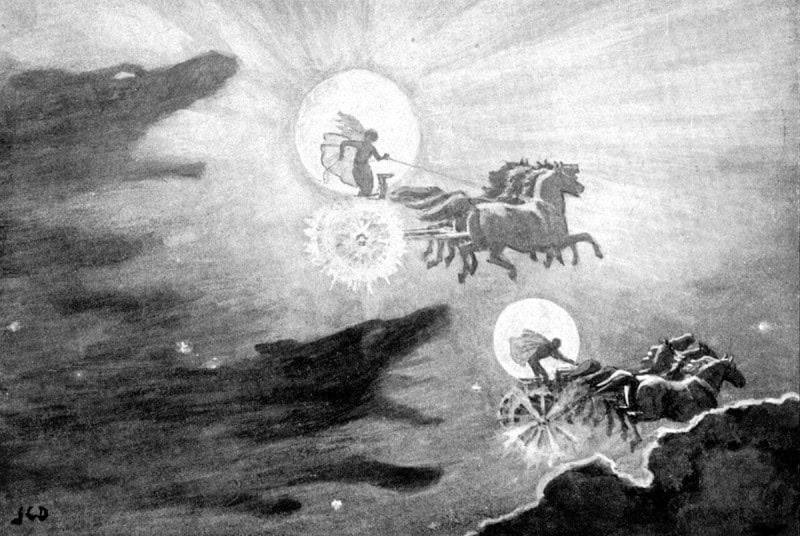
Named in: Grímnismál 39; Gylfaginning 12. The sun and moon are driven across the sky in chariots by Sól and Máni, and they hurry because two wolves are behind them: Sköll (“mockery”) runs after the sun and Hati (“hate”), whom the poem calls Hróðvitnir’s son, after the moon. Snorri makes them the offspring of an old giantess in Ironwood, and says that when Ragnarök comes the wolves catch their prey; Völuspá describes the sun turning black. Snorri also mentions a wolf called Mánagarmr, “moon-hound”, who some take for Hati under another name. Since then: an eclipse explained as a wolf swallowing the sun is one of the oldest ideas in the world, and the Norse version is the one that gave the wolves names.
6. Fáfnir, the dwarf who became a dragon
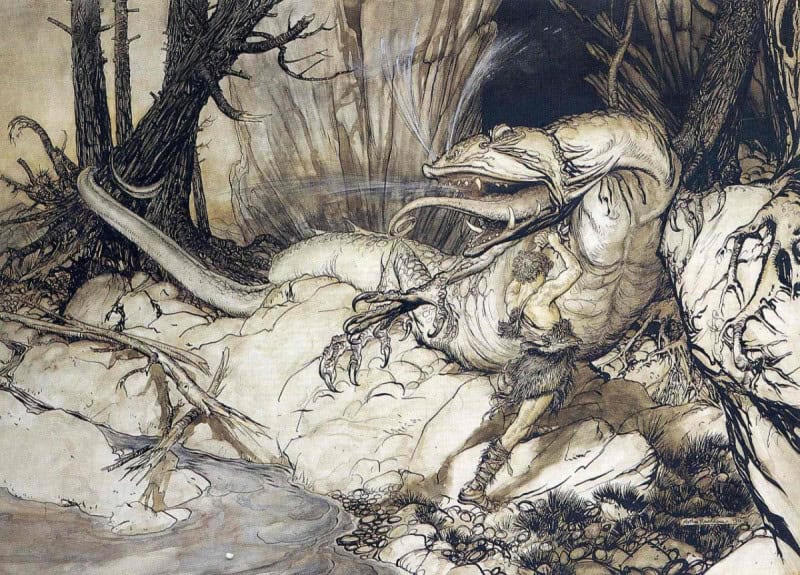
Named in: Reginsmál and Fáfnismál in the Poetic Edda; Skáldskaparmál 39; Völsunga saga. Fáfnir was not born a dragon. He was the son of Hreiðmarr, a dwarf or magician depending on the telling, who received a ransom of gold from the gods for the killing of his son Ótr; the gold carried a curse laid on it by the dwarf Andvari. Fáfnir murdered his father for the hoard, took it to Gnitaheiðr, and brooded on it until he became a serpent. His brother Reginn forged the sword Gram and sent the hero Sigurðr to kill him; Sigurðr dug a pit on the dragon’s path and stabbed him from below, then tasted the dragon’s blood and understood the birds, who warned him Reginn meant to betray him. Since then: Fáfnir is the dragon on the gold behind Wagner’s Siegfried, Tolkien’s Smaug and the whole idea of a dragon’s hoard.
7. Surtr, the fire giant who burns the world
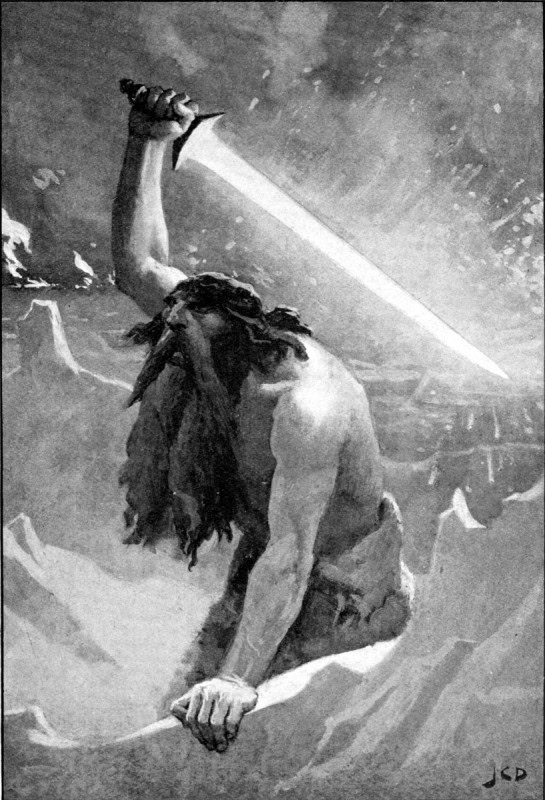
Named in: Völuspá 52; Vafþrúðnismál 50 and 51; Gylfaginning 4 and 51. Surtr (“the black one”) guards Múspellsheimr, the realm of fire that existed before the world, with a sword brighter than the sun. At Ragnarök he rides out at the head of the sons of Múspell, the rainbow bridge Bifröst breaks under them, he kills Freyr (who gave away his own sword for love), and then he throws fire over the whole earth. No source says Surtr dies: Vafþrúðnismál 50 and 51 speak only of a time “when Surtr’s fire is quenched”, when Víðarr and Váli will live in the gods’ home. Since then: a volcanic island that rose from the sea off Iceland in 1963 was named Surtsey after him, and Surtr is the fire giant of Marvel’s Thor films.
The first beings
8. Ymir, the giant the world was made from
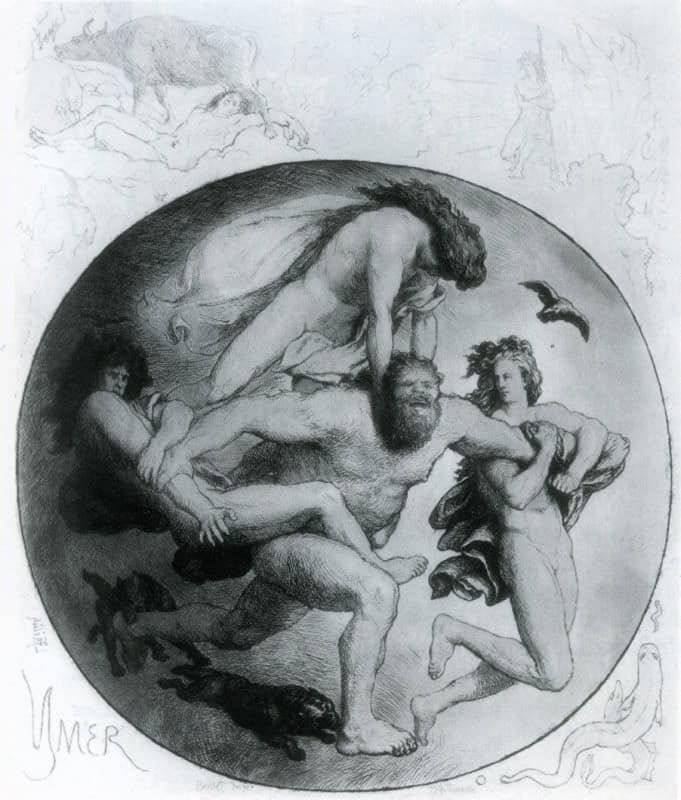
Named in: Vafþrúðnismál 21 and 28 to 35; Grímnismál 40 and 41; Völuspá 3; Gylfaginning 5 to 8. Before there was earth there was a gap, Ginnungagap, with ice on one side and fire on the other, and where they met the melt took the shape of a giant, Ymir, the ancestor of all the frost giants. While he slept a man and a woman grew from the sweat under his arm and one leg fathered a son on the other. Odin and his brothers Vili and Vé killed him, and Grímnismál lists what they built from the body: the earth from his flesh, the mountains from his bones, the sea from his blood, the sky from his skull, the clouds from his brains and Midgard from his eyebrows. The blood drowned every giant but one, Bergelmir, who escaped with his wife on what the text calls a lúðr (a boat, or a mill-box), so the giants of the later myths are his descendants. Since then: the world made from a dead giant’s body is a story the Norse share with India and China, and Ymir’s name is on a moon of Saturn.
9. Auðumbla, the cow who licked the gods out of the ice
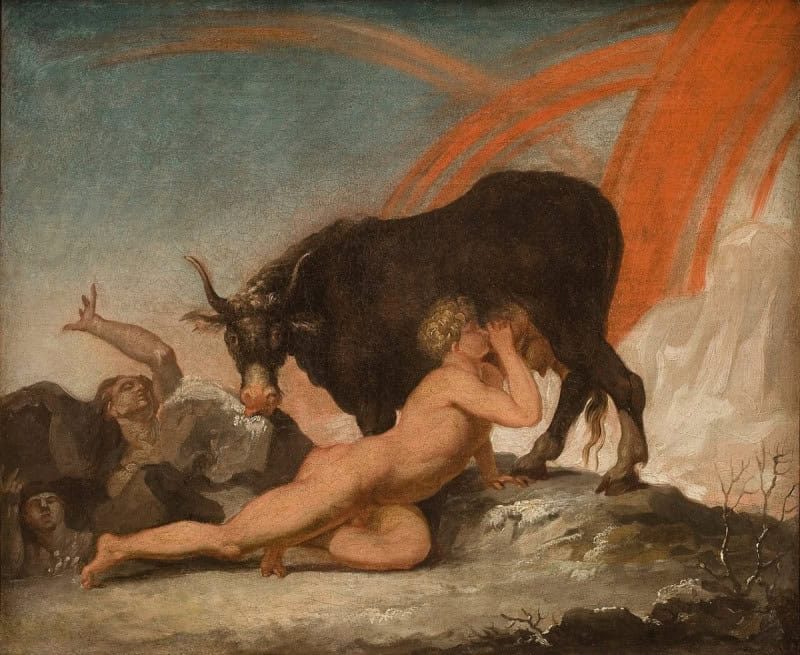
Named in: Gylfaginning 6 (she is Snorri’s alone; no surviving poem names her). Ymir fed from four rivers of milk that ran from the udder of Auðumbla, a cow formed from the same melting ice. She fed herself by licking the salty rime, and over three days her tongue uncovered a man, Búri, whose grandsons were Odin, Vili and Vé. That is the whole of her story, and it makes her a creature older than the gods and the reason they exist. Since then: Abildgaard painted her in the 1770s, which is why she looks so much more classical than anything else on this page.
10. The jötnar: Skaði, Þrymr, Hræsvelgr and the giants of the Eddas
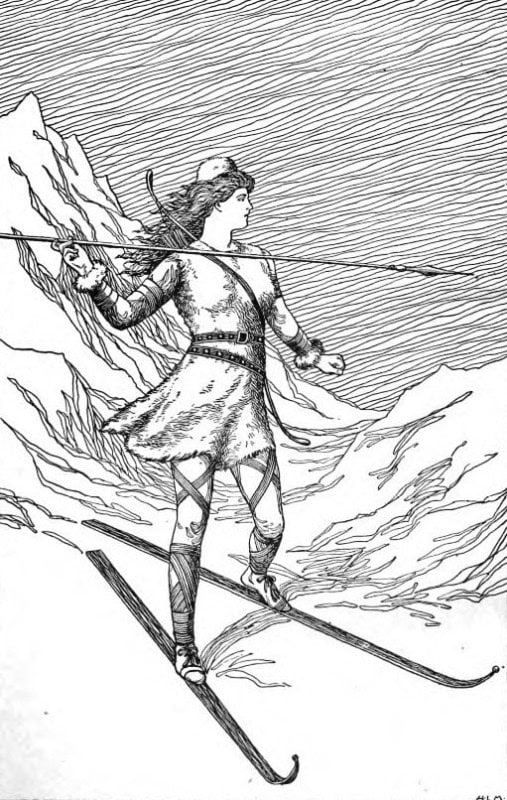
Named in: throughout both Eddas; Þrymskviða; Vafþrúðnismál 37; Skáldskaparmál 1; Gylfaginning 23 and 45 to 47. “Giant” is the usual translation of jötunn and it misleads, because the jötnar of the Eddas are often the gods’ size, frequently their lovers and in-laws, and only sometimes huge. Skaði is a giantess who marched on Asgard in armour to avenge her father, was offered a husband chosen by his feet, picked the sea god Njörðr by mistake, and left him for the mountains, where she hunts on skis with a bow. Þrymr is the giant who stole Thor’s hammer and demanded Freyja as ransom, which is why Thor spent a wedding feast in a bridal veil. Hræsvelgr (“corpse-swallower”) is a giant in eagle form who sits at the edge of the sky and makes the wind by beating his wings, according to Vafþrúðnismál. Útgarða-Loki is the giant king whose contests humiliate Thor with illusions. Since then: the frost giants of Marvel descend from the jötnar, and make them stupider than the Eddas do.
The animals of the gods
11. Sleipnir, Odin’s eight-legged horse
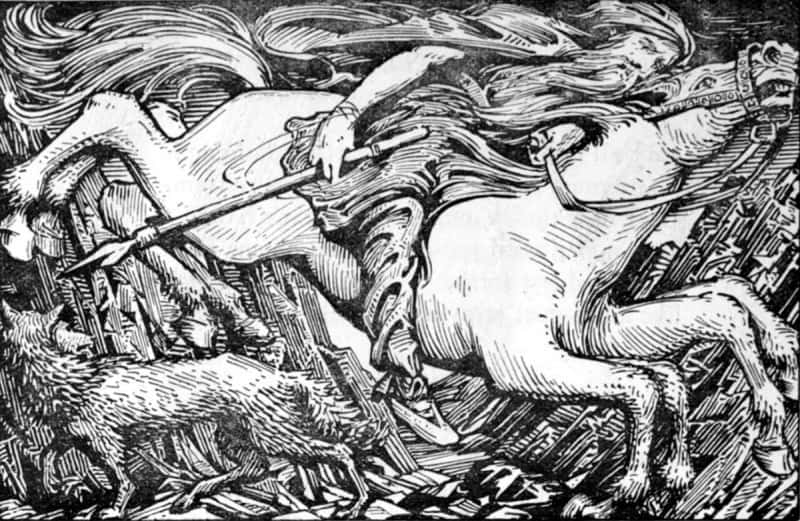
Named in: Grímnismál 44 (“best of horses”); Baldrs draumar; Gylfaginning 42 and 49; Sigrdrífumál. Sleipnir has the strangest parentage in the myths. A giant builder offered to wall Asgard in a single winter if he could have the sun, the moon and Freyja as payment, and the gods agreed on Loki’s advice, expecting him to fail. His stallion Svaðilfari did most of the work, so Loki turned himself into a mare to lure the horse away, and some months later returned with a grey foal that had eight legs. Odin rides Sleipnir to the gates of Hel in Baldrs draumar, and Hermóðr borrows him to ride there after Baldr’s death, leaping the gate of the underworld. Since then: an eight-legged horse is a common reading of the Gotland picture stones, and Sleipnir is the mount in more or less every Odin on screen.
12. Huginn and Muninn, the ravens
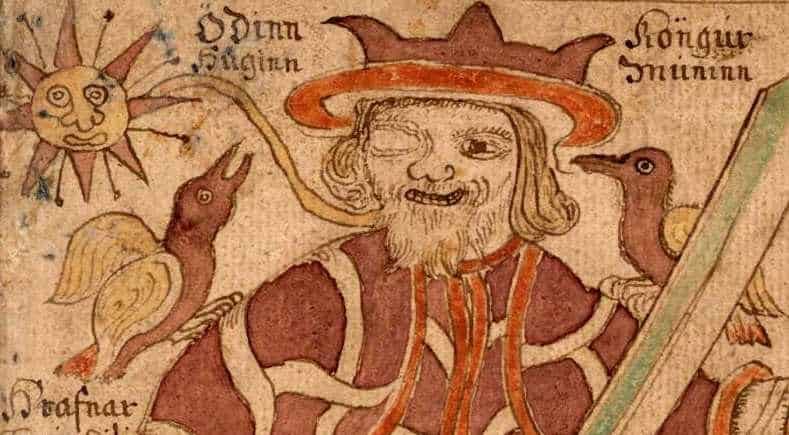
Named in: Grímnismál 20; Gylfaginning 38. Two ravens sit on Odin’s shoulders and fly over the world every day, returning at breakfast to tell him what they have seen; their names mean “thought” and “memory” or “mind”. The verse in Grímnismál is one of the few places the god admits a fear: he worries that Huginn will not come back, and worries more about Muninn. Snorri says this is why Odin is called the raven-god. Since then: ravens on the shoulders are the shorthand for Odin in every painting and game, and the two birds have given their names to everything from a Danish space mission to craft beers.
13. Geri and Freki, Odin’s wolves
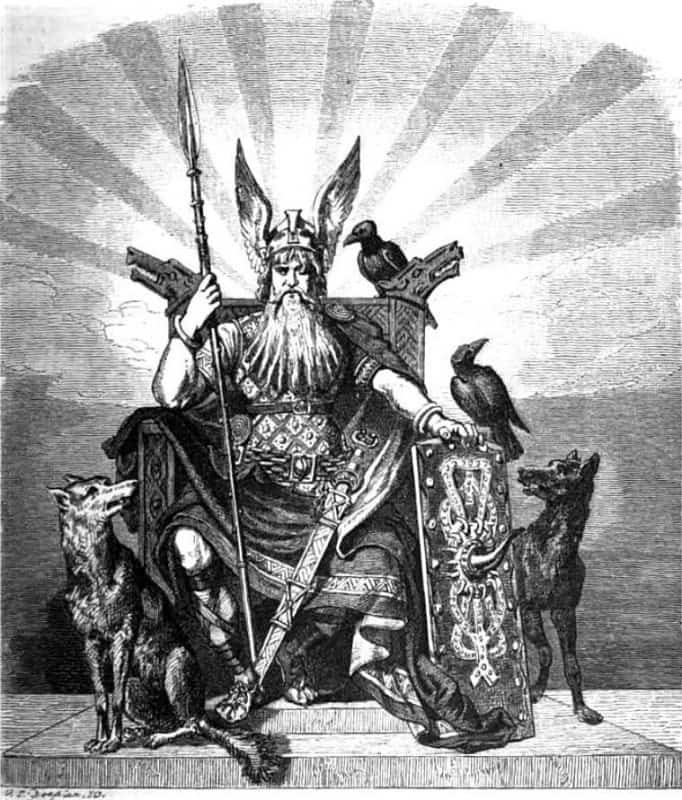
Named in: Grímnismál 19; Gylfaginning 38. Both names mean roughly “the greedy one”. Odin keeps the two wolves at his feet in Valhalla and gives them all the food from his table, because, Grímnismál says, he himself lives on wine alone. That single verse is almost everything the sources give us, and it is enough to explain why a god of battle has wolves for pets: wolves and ravens are the animals that follow an army. Since then: they appear as names for wolves in fantasy fiction and video games, and the pairing of wolves and ravens with Odin is on half the Viking-themed jewellery sold.
14. Gullinbursti, Freyr’s golden boar
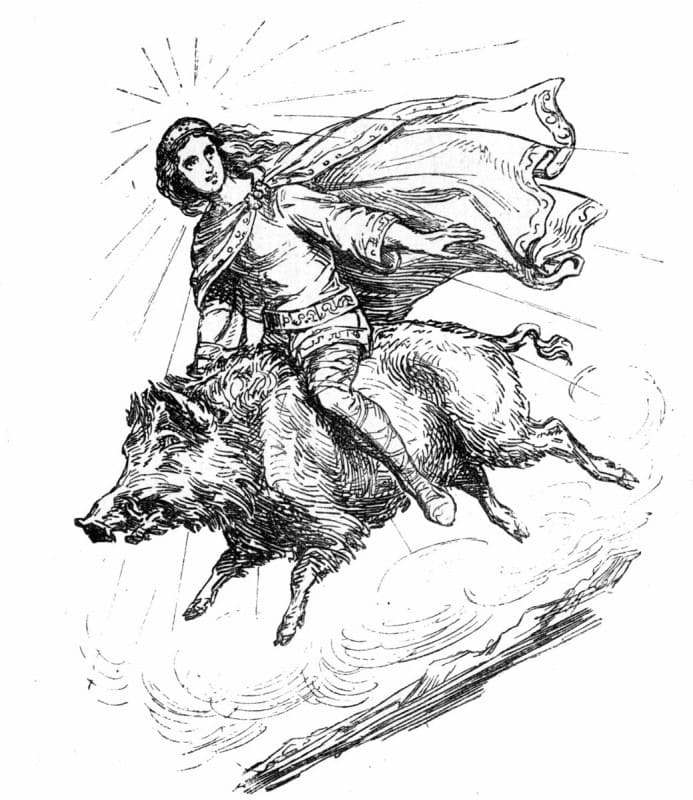
Named in: Skáldskaparmál 35; Gylfaginning 49 (Hyndluljóð 7 names Freyja’s boar Hildisvíni, a different animal). The boar with golden bristles was made by the dwarf brothers Brokkr and Eitri (Sindri in some manuscripts and in most retellings) during the wager with Loki that also produced Thor’s hammer and Odin’s ring Draupnir: Eitri threw a pig’s skin into the forge, Brokkr worked the bellows while a fly bit him, and the boar came out. Its bristles light the darkest night and it runs through air and water faster than any horse. Freyr rides it, or has it draw his chariot, at Baldr’s funeral. Since then: the boar helmet crests of Anglo-Saxon and Swedish graves are usually read as Freyr’s animal, and Gullinbursti turns up wherever games need a mount with a glow.
15. Tanngrisnir and Tanngnjóstr, Thor’s goats
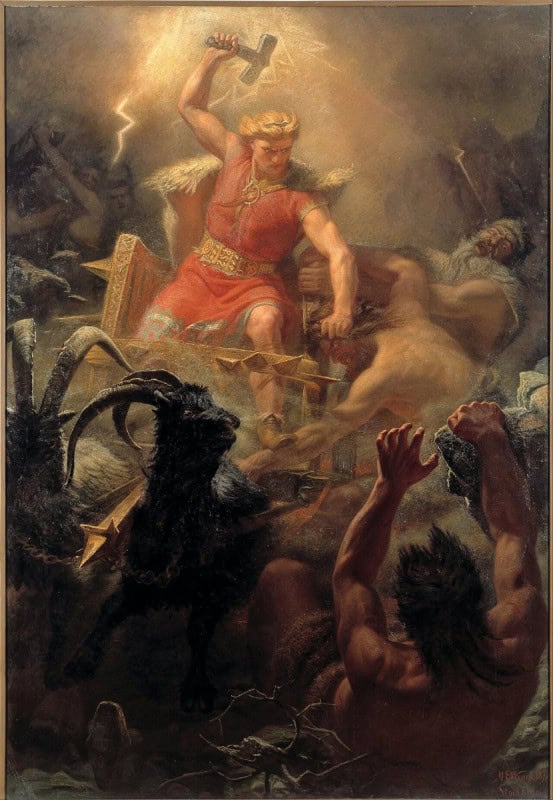
Named in: Gylfaginning 21 and 44; Hymiskviða; Þrymskviða. Thor does not ride; he drives, and his chariot is pulled by two goats whose names mean “teeth-barer” and “teeth-grinder”. They are also his food supply. In Gylfaginning 44 he stops at a farmhouse, kills and cooks both goats, and tells the household to throw the bones on the skins; in the morning he blesses the skins with his hammer and the goats stand up alive, except that one is lame because the farmer’s son Þjálfi split a thigh bone for the marrow. Thor takes the boy and his sister Röskva as servants in payment. Since then: the goat-drawn chariot is on the Winge painting above, which is probably the most reproduced image of Thor ever made, and the Yule goat of Scandinavian Christmas is often traced to the same animals.
16. Heiðrún, the goat whose udder runs with mead
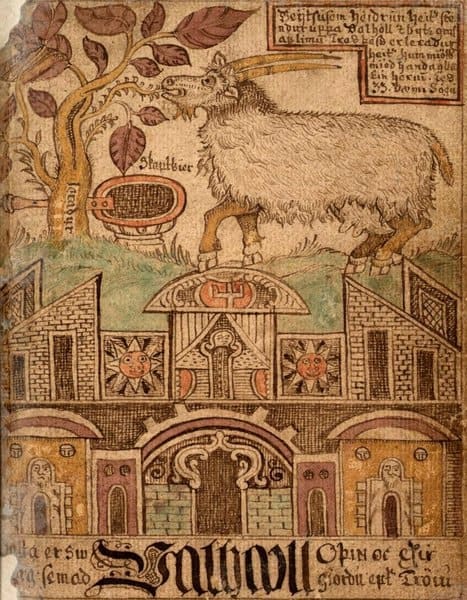
Named in: Grímnismál 25 and 26; Gylfaginning 39; Hyndluljóð 46 and 47. The warriors in Valhalla drink mead, and Grímnismál explains where an infinite supply comes from: a goat called Heiðrún stands on the hall’s roof eating the leaves of a tree called Læraðr, and from her udder runs enough mead every day to fill a vat that all the Einherjar can drink from without emptying it. Beside her a stag, Eikþyrnir, eats the same tree and drips water from his antlers into the spring that feeds every river. Since then: very little; Heiðrún is one of the creatures that stayed in the poems, which is a pity for a goat that solved the problem of the never-empty cup.
17. Sæhrímnir, the boar eaten every night in Valhalla
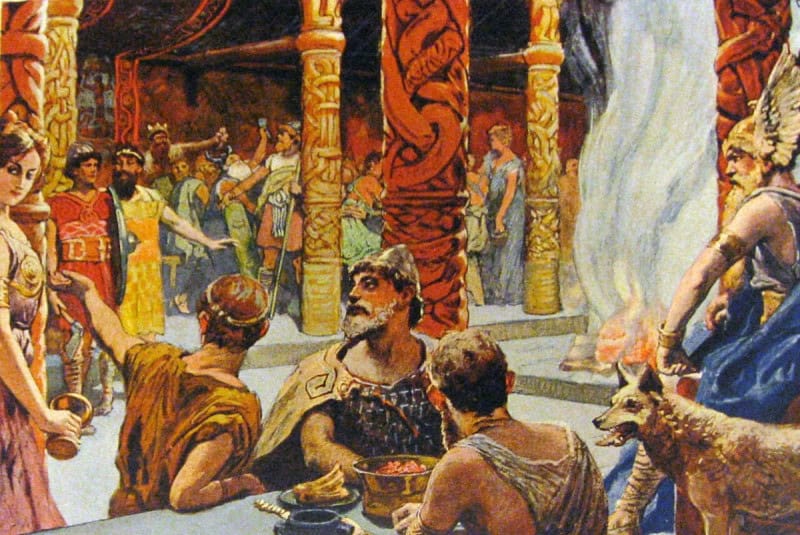
Named in: Grímnismál 18; Gylfaginning 38. The mead needed meat. Every day the cook Andhrímnir boils the boar Sæhrímnir in the cauldron Eldhrímnir, the warriors eat him, and every evening he is whole again for the next day; Grímnismál says few know what the Einherjar eat, and Snorri has King Gylfi ask whether one boar can really feed so many. It is the same miracle as Thor’s goats on an industrial scale. Since then: the self-renewing feast is borrowed by every fantasy afterlife with a mead hall in it.
The peoples of the nine realms
18. The Norns, who decide every fate
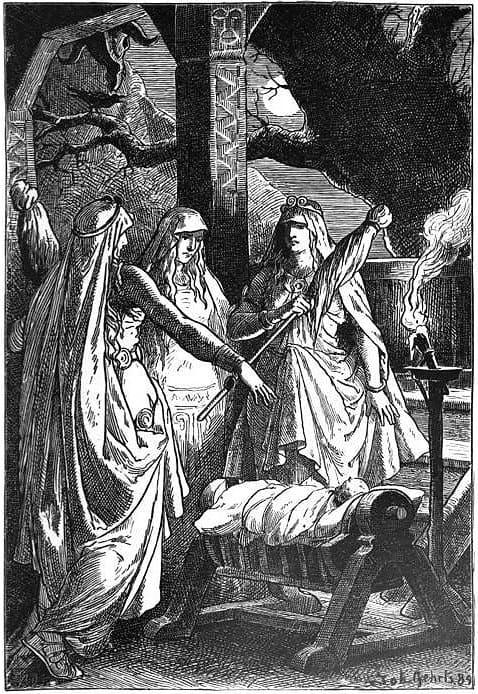
Named in: Völuspá 20; Gylfaginning 15 and 16; Fáfnismál 12 and 13; Helgakviða Hundingsbana I. Three women live by the well of Urðr under the world tree: Urðr, Verðandi and Skuld, whose names are usually read as “what has become”, “what is becoming” and “what shall be”. They carve the fates of people on wood, and they water Yggdrasil from the well each day so it does not rot. Snorri adds that there are many lesser norns of every race, good and bad, who come to each child at birth. In the Helgi poem they arrive the night a hero is born and twist the threads of his fate, fastening them to the sky. Since then: Shakespeare’s three witches, the Fates of countless fantasy novels and the three sisters in every Norse game are the Norns at one remove.
19. The Valkyries, choosers of the slain
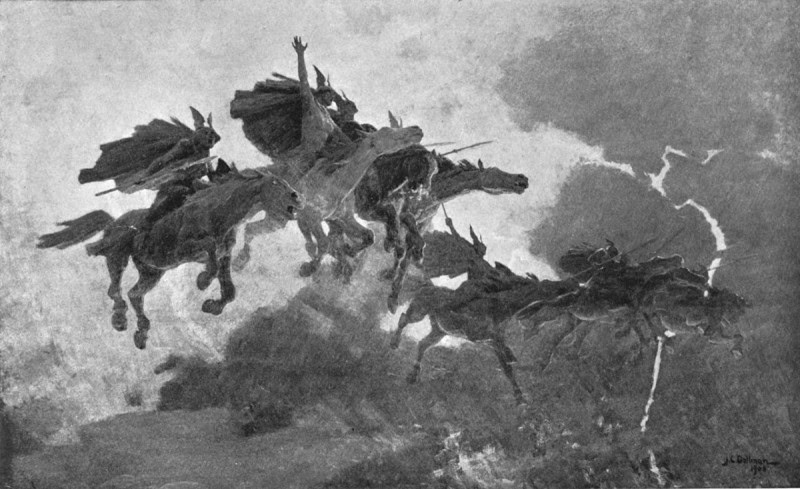
Named in: Völuspá 30; Grímnismál 36; Gylfaginning 36; the Helgi poems (Helgakviða Hundingsbana I and II); Sigrdrífumál; Völsunga saga. Valkyrja means “chooser of the slain”. Odin sends them to battlefields to decide who dies and to bring the chosen to Valhalla, where they also serve the drink; Grímnismál lists thirteen by name, including Hildr and Skögul (Völuspá adds Göndul), and Snorri says the youngest Norn, Skuld, rides with them. In the heroic poems they are individual women with wills of their own: Sigrún marries the hero Helgi against her father’s wishes, and Sigrdrífa, whom Odin put to sleep with a thorn for giving victory to the wrong king, is woken by Sigurðr and teaches him runes, the figure Wagner turned into Brünnhilde. Since then: Wagner’s “Ride of the Valkyries” fixed the image of winged helmets and galloping horses that Dollman painted, and that no Norse source describes.
20. The dvergar, the dwarves who made the gods’ treasures
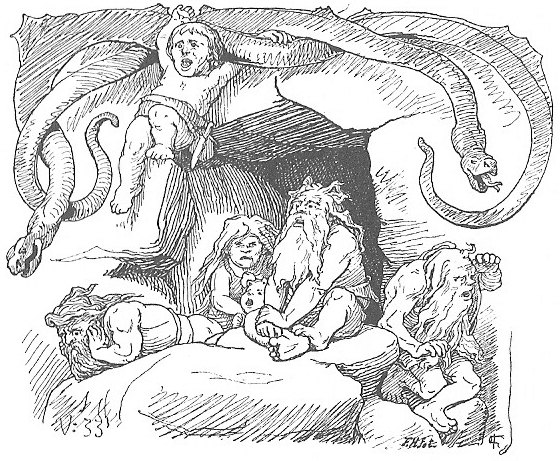
Named in: Völuspá 9 to 16 (the Dvergatal, a catalogue of dwarf names); Gylfaginning 8 and 14; Skáldskaparmál 35 and 39; Reginsmál; Alvíssmál. Snorri says the dwarves began as maggots in Ymir’s flesh and were given sense and shape by the gods; four of them, Norðri, Suðri, Austri and Vestri, hold up the corners of the sky made from Ymir’s skull. They live in rock and earth and they make everything that matters: Thor’s hammer Mjölnir, Odin’s spear Gungnir, Freyr’s ship Skíðblaðnir, Sif’s golden hair, the ribbon Gleipnir and the mead of poetry (brewed by Fjalar and Galar from the blood of a murdered sage). Andvari, robbed of his gold and his ring by Loki, lays the curse that runs through the Fáfnir story; Alvíss, who came to claim Thor’s daughter, was kept talking until sunrise turned him to stone. Since then: Tolkien took the names of his dwarves (and Gandalf) straight from the Dvergatal, and Wagner’s Alberich, the dwarf of the Ring, is Andvari with a German name.
21. The álfar: light elves and dark elves
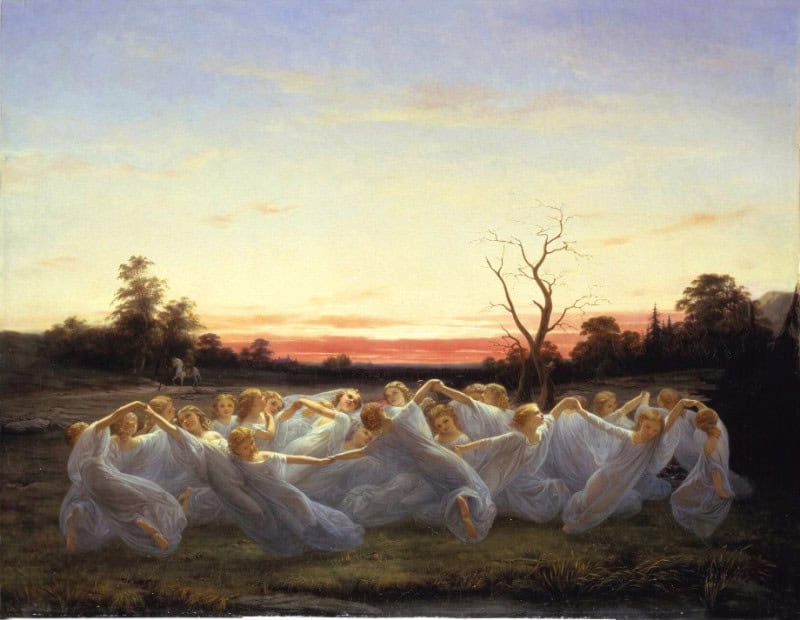
Named in: Grímnismál 5; Gylfaginning 17; Völundarkviða; Völuspá (the formula “æsir and álfar”). The Eddas treat elves as a people close to the gods: the poems pair “Æsir and elves” as the two races that matter, Freyr was given Álfheimr, the elf-home, as a teething gift, and the smith Völundr of Völundarkviða is called a prince of elves. Snorri divides them: light elves, fairer than the sun, live in Álfheimr, and dark elves, blacker than pitch, live down in the earth, which brings them close enough to the dwarves that scholars have argued ever since about whether they are the same people. Since then: Tolkien’s tall, fair, immortal elves are Snorri’s light elves; the dark elves of Marvel and of games are the other half of the same sentence.
The beasts of the sea
22. The daughters of Ægir and Rán, the nine waves
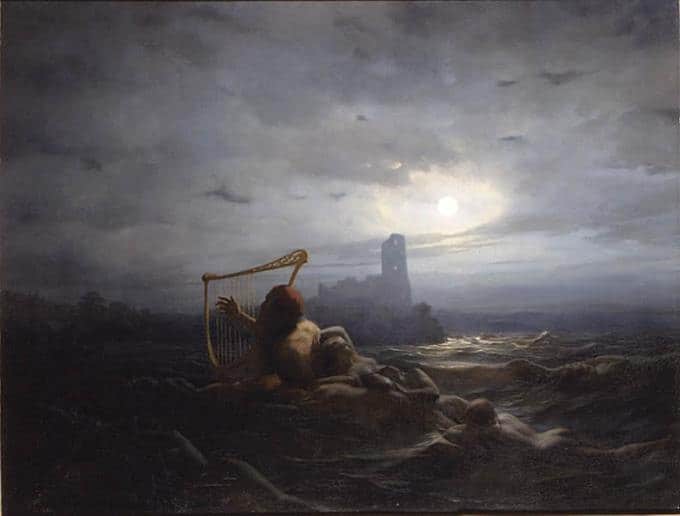
Named in: Skáldskaparmál 25 and 33; Helgakviða Hundingsbana I; Hyndluljóð 35 to 37 (where the identification is debated). Ægir is the giant who brews ale for the gods in a cauldron Thor fetched from Hymir; his wife Rán drags drowned sailors down in her net; and their nine daughters are the waves, with names like Blóðughadda (“bloody-hair”) and Kólga (“the cold one”) that are used as kennings for the sea throughout skaldic poetry. A verse in Hyndluljóð says the god Heimdallr was born of nine mothers who were sisters, and many readers take those for the waves. Since then: Rán’s net is the drowned-sailor image of Norse poetry, and Blommér painted the daughters as the water-nymphs of his own century.
23. Hafgufa and Lyngbakr, the sea monsters that look like islands
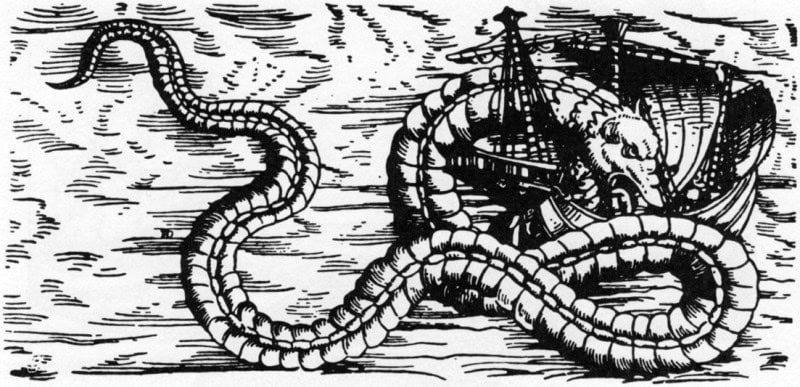
Named in: Örvar-Odds saga; the King’s Mirror (Konungs skuggsjá, a 13th-century Norwegian text), not the Eddas. The sagas of the far north have their own monsters. Lyngbakr (“heather-back”) is a whale so large that sailors land on it thinking it an island and drown when it dives; Hafgufa (“sea-steam”) lies with its jaws open at the surface so that fish and ships drift in. The King’s Mirror describes the hafgufa as a real animal of the Greenland sea, so rare that it was thought there were only two. Since then: these are the ancestors of the kraken and the Norse cousins of the island-whale in the voyage of St Brendan and in Sinbad; the 1555 engraving above is from Olaus Magnus’s history of the northern peoples, which fixed the sea serpent in the European imagination.
From folklore, not the Eddas: trolls, water spirits, the night-mare and the kraken
Four creatures that every list of Norse monsters includes are not, strictly, Norse mythology at all. They come from Scandinavian folk belief recorded long after the Eddas, from a king’s saga, or from early-modern books, and they are kept separate here so that the reader knows which is which. A fifth, the draugr, is the exception that proves it: the walking dead of the Icelandic sagas (Glámr in Grettis saga, who breaks Grettir’s nerve; Þórólfr Lame-foot in Eyrbyggja saga, who had to be burned) are medieval and Icelandic, but they belong to the sagas of farmers and outlaws rather than to the poems about the gods, and no early picture of one survives to put here.
24. Trolls
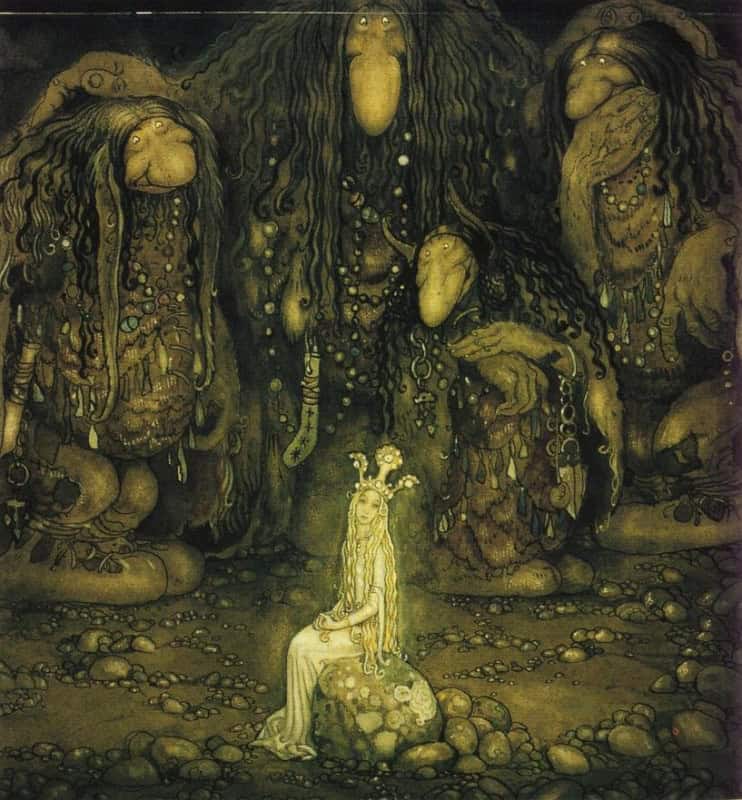
Named in: a handful of Edda passages where tröll means a giant or a witch (a troll-woman challenges the poet Bragi in Skáldskaparmál); the forest trolls of the pictures are 19th-century Swedish and Norwegian folklore. In the Old Norse texts “troll” is a loose word for any hostile supernatural being, and it overlaps completely with the jötnar of entry 10. The slow, ugly, sun-fearing troll of the mountains, who turns to stone at dawn and steals children, belongs to the fairy tales collected by Asbjørnsen and Moe in the 1840s and to the illustrators who followed, above all John Bauer, whose troll mother is shown here. Since then: Tolkien’s trolls, who turn to stone in sunlight, are the folklore troll, and so is every troll under a bridge.
25. The nøkk and the fossegrim, the water spirits
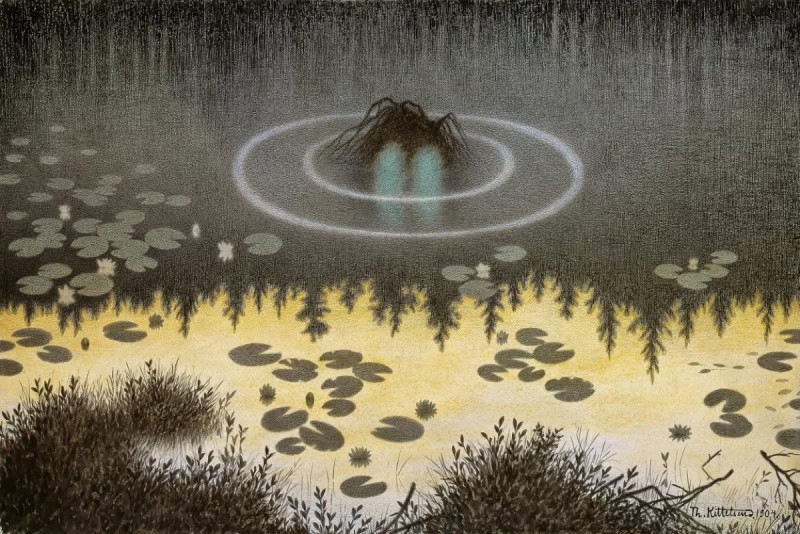
Named in: Scandinavian folklore; the Old Norse word nykr, a water-horse, appears in the name-lists appended to Snorri’s Edda, but no story is told about it. The nøkk (Norwegian nøkken, Swedish näcken) is a shape-shifting spirit of lakes and rivers, a white horse that drowns the rider who mounts it or a beautiful young man who plays the fiddle until the listener walks into the water; the fossegrim is its waterfall cousin, who will teach a fiddler his skill in return for a stolen joint of meat thrown into the falls. Kittelsen’s painting, two eyes in a black tarn, is the image most Norwegians carry. Since then: the water-horse appears in Frozen II as the Nokk, and the drowning fiddler is behind every siren-song river spirit in fantasy.
26. The mara, the night-mare
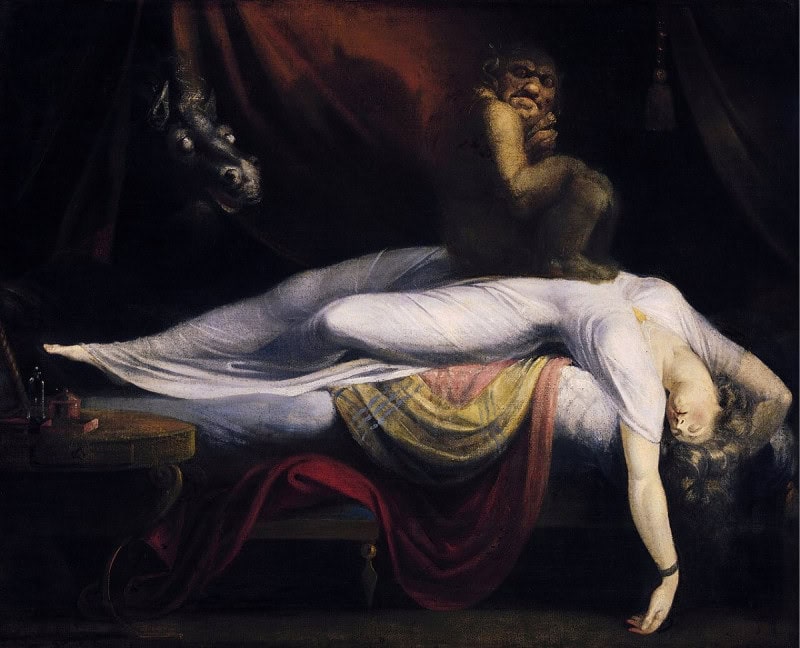
Named in: Ynglinga saga 13 in Snorri’s Heimskringla, which is history rather than Edda; otherwise Germanic folklore. The mara is a spirit that sits on a sleeper’s chest and rides them until they cannot breathe, which is the original meaning of “nightmare”. Snorri’s one Norse story is of King Vanlandi of Sweden, whose abandoned wife paid a sorceress to send a mara against him: it trod on his legs until they broke and on his head until he died. The Fuseli painting above was painted in London in 1781, and it is here because it is the picture that fixed the creature. Since then: the word survived into English, Dutch and German, and the sleep-paralysis demon on the chest is still the way the experience is drawn.
27. The kraken
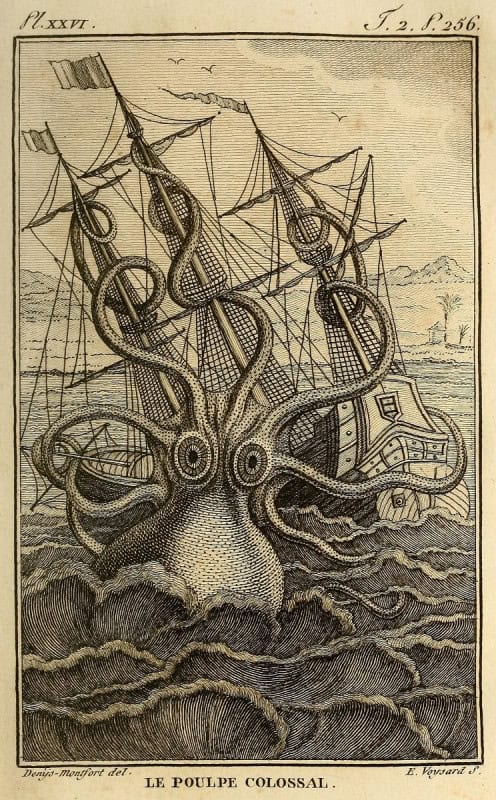
Named in: no Norse source. The fullest early description of the kraken under that name is from the 1750s, in a natural history of Norway by the bishop Erik Pontoppidan (Hans Egede had used the word a decade earlier), as a mile-wide creature that fishermen mistake for a bank of shoals; the giant octopus is Denys de Montfort’s 1801 addition, drawn from a sailors’ story and shown above. Its ancestors are entry 23, the hafgufa and lyngbakr of the sagas, which is why it belongs on a Norse list at all, and why it does not belong among the Eddic monsters. Since then: Tennyson’s poem, Jules Verne’s squid, the Pirates of the Caribbean films and “release the kraken” have made it the most famous Scandinavian monster that no Viking ever heard of.
Norse creatures and Greek creatures: the same jobs, different animals
Readers who know the Greek bestiary will have noticed the overlaps. Garmr guards the road to the dead as Cerberus does; the Norns at their well are the three Fates with their thread; Ragnarök’s wolf and serpent play the part of the Titans and Typhon; Fáfnir on his gold is a Northern cousin of the dragon Ladon in the garden of the Hesperides. The differences are as telling. The Greek monsters are mostly killed by heroes and stay dead; the Norse ones are bound, deferred and waiting, and at the end most of them take a god with them. The Greek gods list on this site is the place to compare the other pantheon, and the Viking warriors list has the people who told these stories.
Frequently asked questions
What is the most feared creature in Norse mythology?
Fenrir. The gods feared him enough to bind him with a magic ribbon while he was still a pup, Týr lost a hand doing it, and the poems say he kills Odin himself at Ragnarök. Jörmungandr, who kills Thor, is the only rival.
What are the main creatures of Norse mythology?
The monsters Fenrir, Jörmungandr, Níðhöggr, Garmr, Sköll and Hati, Fáfnir and Surtr; the gods’ animals Sleipnir, Huginn and Muninn, Geri and Freki, Gullinbursti, Thor’s goats, Heiðrún and Sæhrímnir; and the peoples: jötnar, dwarves, elves, Norns and Valkyries. The list above gives each one’s source.
Are trolls part of Norse mythology?
Only as a word. In the Eddas “troll” means any hostile being, usually a giant. The stone-at-sunrise, under-the-bridge troll is Scandinavian folklore written down in the 19th century (entry 24).
Is the kraken from Norse mythology?
No. It is an 18th-century Norwegian legend with saga ancestors (the hafgufa and lyngbakr, entry 23). No Eddic poem or Viking Age source names it.
Where do these stories come from?
Almost entirely from two medieval Icelandic books: the Poetic Edda, a 13th-century manuscript of older poems (Völuspá, Grímnismál, Vafþrúðnismál and the rest named above), and the Prose Edda, written by Snorri Sturluson around 1220, whose first part, Gylfaginning, retells the myths in order. The sagas supply the draugr, the sea monsters and the mara.
Sources
The Poetic Edda, cited by poem and stanza as numbered in the standard editions (Völuspá, Grímnismál, Vafþrúðnismál, Hymiskviða, Þrymskviða, Reginsmál, Fáfnismál, Sigrdrífumál, Völundarkviða, Alvíssmál, Baldrs draumar, Hyndluljóð, the Helgi poems). Snorri Sturluson, Prose Edda: Gylfaginning and Skáldskaparmál, cited by chapter. Snorri Sturluson, Heimskringla: Ynglinga saga. Völsunga saga, Grettis saga, Eyrbyggja saga and Örvar-Odds saga. Konungs skuggsjá (The King’s Mirror). Erik Pontoppidan, The Natural History of Norway (1752 to 1753). Where a detail is Snorri’s alone, or where the identification is debated, the entry says so.
Image credits
All images are in the public domain and reproduced via Wikimedia Commons: Mabel Dorothy Hardy, Odin and Fenris (1909); Emil Doepler, Thor and the Midgard Serpent (c. 1905) and Walhall (c. 1905); Carl Emil Doepler, Odin the All-Father; W. G. Collingwood, Odin Rides to Hel (1908); Oluf Olufsen Bagge, Yggdrasil (1847); Johannes Gehrts, Hel (1889), The Norns (1889); John Charles Dollman, The Wolves Pursuing Sól and Máni, The Giant with the Flaming Sword and The Ride of the Valkyrs (1909); Arthur Rackham, Siegfried Kills Fafnir (1911); Lorenz Frølich, Ymir Slain by the Sons of Bor and Dwarves Before a Stone; Nicolai Abildgaard, Ymir Suckled by the Cow Auðumbla (c. 1777, Statens Museum for Kunst); the illustration of Skaði signed H. L. M. (1901); an 18th-century Icelandic manuscript page of Odin and his ravens and a 17th-century page of Heiðrún (Árni Magnússon Institute manuscripts); Ludwig Pietsch, Freyr Riding Gullinbursti; Mårten Eskil Winge, Thor’s Fight with the Giants (1872, Nationalmuseum, Stockholm); Nils Blommér, Meadow Elves (1850) and The Water Sprite and Ægir’s Daughters; Olaus Magnus, Historia de Gentibus Septentrionalibus (1555); John Bauer, “Look at them, troll mother said” (1915); Theodor Kittelsen, Nøkken (1904, Nasjonalmuseet); Henry Fuseli, The Nightmare (1781); Pierre Denys de Montfort, Le Poulpe Colossal (1801).