
Ask how many Norse gods there are and the honest answer is that the sources never settle it. The two medieval Icelandic books that preserve the mythology, the Poetic Edda and Snorri Sturluson’s Prose Edda, name a dozen principal gods, about the same number of goddesses, a second divine family called the Vanir, and a ring of giant-born figures who married in, were adopted or were simply too important to leave out. This list gathers thirty of them. Each entry gives the same four things: what the god ruled, who they were related to, the objects and animals that identify them, and the one story from the Eddas that defines them. Where the two Eddas disagree, or a detail rests on a single stanza, the entry says so rather than smoothing it over.
The gods are grouped the way the sources group them. The Aesir are the ruling family in Asgard, Odin’s kin. The Vanir are an older family of fertility and sea gods who fought a war with the Aesir and then exchanged hostages with them, which is how Njord, Freyr and Freyja came to live in Asgard. The last group holds the figures the Eddas treat as gods without quite calling them Aesir: Loki’s daughter Hel, the giantesses Skadi and Gerd who married gods, the sea giant Aegir who hosted their feasts, and the wise Mimir whose severed head Odin consulted. These were the gods the warriors on our list of the toughest Viking warriors swore by, and the gods of the dead among them have their own place on our list of gods and goddesses of death and the underworld.
The world the Norse gods lived in
A little geography makes the entries easier to follow. The cosmos is held together by the ash tree Yggdrasil, and the Prose Edda places nine worlds among its roots and branches. The ones that matter here are Asgard, home of the Aesir, reached from the human world of Midgard by the rainbow bridge Bifrost; Vanaheim, home of the Vanir; Jotunheim, the land of the giants (the jotnar), who are the gods’ enemies and, just as often, their in-laws; and Hel, the realm of the dead who did not fall in battle. Three wells feed the tree’s roots, and two of them, Mimir’s well of wisdom and the Norns’ well of fate, appear in the stories below. Over everything hangs Ragnarok, the foretold battle in which most of the gods die, the world burns and sinks, and a few survivors return to a green earth. Almost every god in this list has a Ragnarok line, and the entries give it where the sources do.
The Aesir
1. Odin, the Allfather
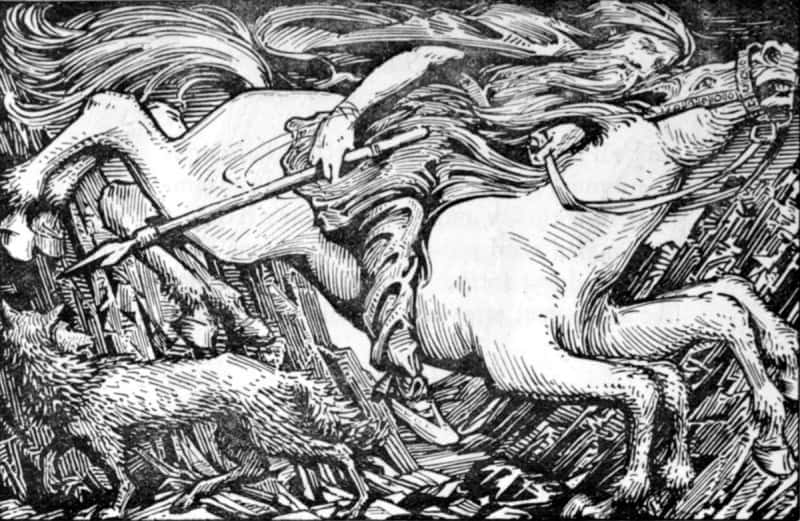
Domain: war, death, wisdom, poetry and magic. Family: son of Borr and the giantess Bestla; husband of Frigg; father of Thor, Baldr, Vidar and Vali among others. Attributes: the spear Gungnir, the gold ring Draupnir that drops eight rings of equal weight every ninth night, the eight-legged horse Sleipnir, the ravens Huginn and Muninn (Thought and Memory) who fly over the world each day and report back, the wolves Geri and Freki, and a single eye. The defining myth: Odin pays for knowledge. He pledged one eye to drink from Mimir’s well, and in the Poetic Edda poem Havamal he tells how he hung nine nights on the windswept tree, wounded with a spear, offered “myself to myself”, with no bread and no drink, until he could reach down and seize the runes. He keeps the chosen dead, the einherjar, in his hall Valhalla, training them for Ragnarok, where the wolf Fenrir swallows him whole.
2. Frigg, queen of the Aesir
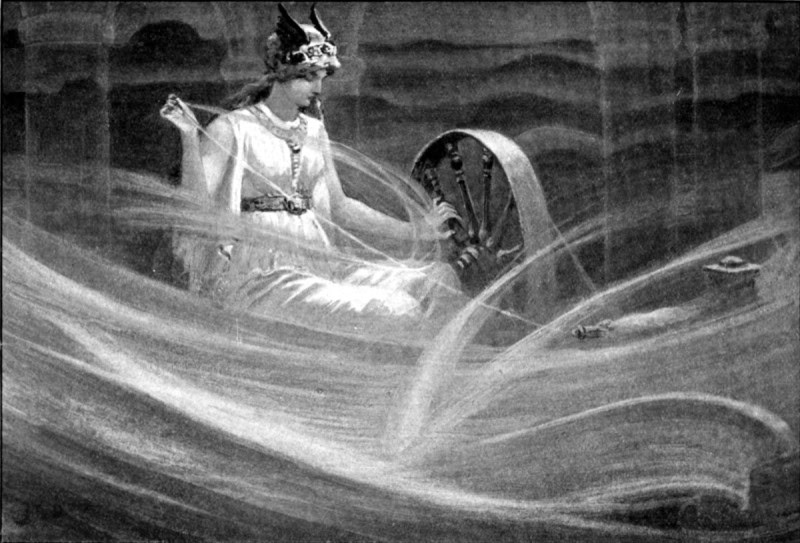
Domain: marriage, motherhood and foreknowledge. Family: wife of Odin, mother of Baldr; the Prose Edda names her the foremost of the goddesses. Attributes: her hall Fensalir, “the marsh halls”, and the handmaidens Fulla, Gna and Hlin who run errands for her. The defining myth: Frigg knows every fate and tells none of them. In the poem Lokasenna, Freyja says of her that she knows all destinies though she does not speak them herself. The one time she acts on that knowledge is the story of Baldr: when her son dreams of his own death, she travels the world taking oaths from fire, water, iron, stone, trees, sicknesses, beasts and birds that none will harm him, and passes over the mistletoe growing west of Valhalla because it seemed too young to swear. Loki finds out which plant she skipped by asking her in disguise. Friday is named after her.
3. Thor, god of thunder
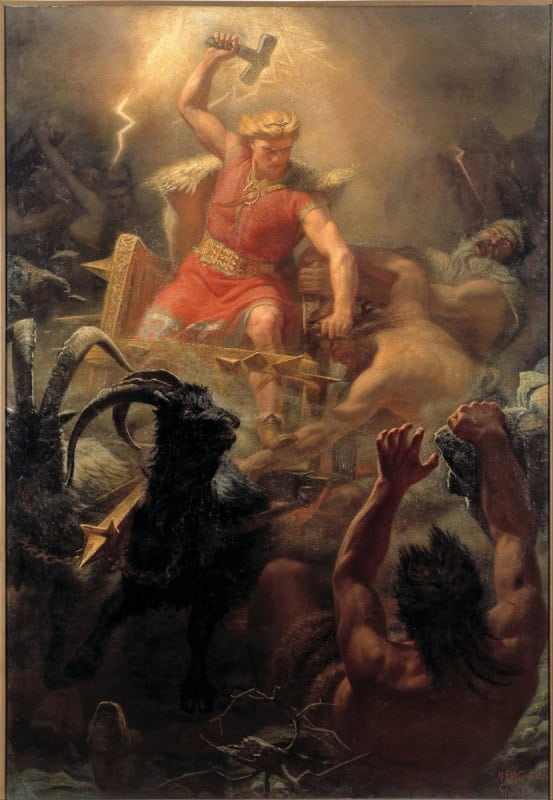
Domain: thunder, storms, strength and the protection of gods and humans against the giants. Family: son of Odin and the earth itself, personified as Jord; husband of Sif; father of Magni, Modi and Thrud. Attributes: the hammer Mjolnir, which always hits and always returns to his hand; the belt Megingjord, which doubles his strength; iron gloves to grip the hammer; a chariot pulled by the goats Tanngrisnir and Tanngnjostr, which he can kill, eat and raise again the next morning; and the hall Bilskirnir in Thrudvangr, which the Prose Edda calls the largest house ever built. The defining myth: Thor against the Midgard Serpent. Fishing with the giant Hymir, he baits a line with an ox’s head and hooks Jormungandr, the serpent that circles the world, and is about to strike it when Hymir cuts the line in terror. The fight is finished at Ragnarok: Thor kills the serpent, walks nine paces, and falls dead from its venom. Thursday is his day.
4. Baldr, the shining god
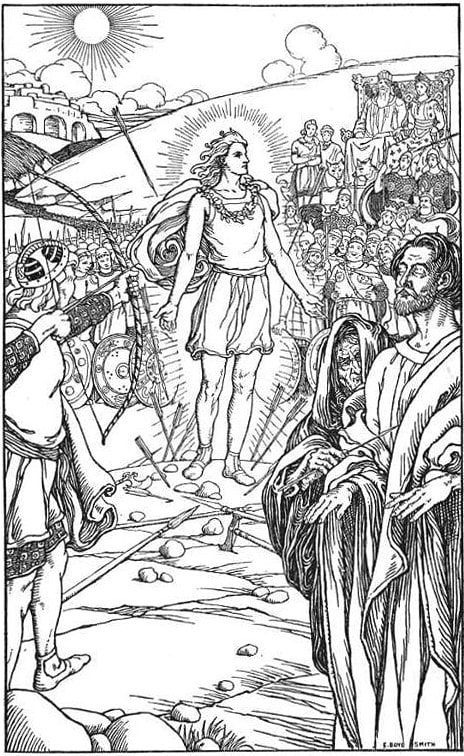
Domain: light, beauty and goodness; the Prose Edda says he is so fair that light shines from him, and that he is the wisest and most gently spoken of the Aesir. Family: son of Odin and Frigg; husband of Nanna; father of Forseti. Attributes: his hall Breidablik, where nothing unclean may be, and the ship Hringhorni, the largest of all ships, which becomes his funeral pyre. The defining myth: his death, the central tragedy of the mythology. Once Frigg has taken her oaths, the gods make a game of throwing weapons at Baldr and watching them bounce off. Loki puts a mistletoe dart in the hand of the blind god Hodr and guides his aim, and Baldr falls. The gods cannot take vengeance on holy ground; his wife dies of grief and is burned beside him; Thor kicks a dwarf into the fire; and Odin bends down to whisper something in the dead god’s ear that no one else ever hears. After Ragnarok, Baldr and Hodr return together to the new world.
5. Tyr, the one-handed god
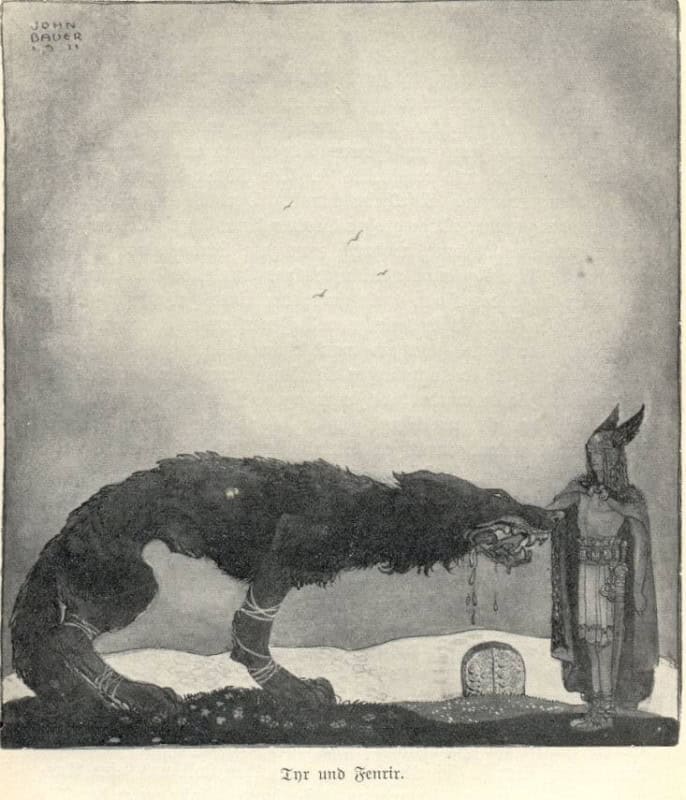
Domain: war, law and oaths; the Prose Edda says he is the bravest of the gods and that brave men are called “Tyr-valiant”. Family: the Prose Edda makes him a son of Odin; the poem Hymiskvida gives him a giant father, Hymir. The sources do not agree. Attributes: a single hand. The defining myth: the binding of Fenrir. The gods decide to chain Loki’s wolf, who is growing too fast, and the dwarves forge the ribbon Gleipnir from six impossible things, among them the sound of a cat’s footfall and the breath of a fish. Fenrir suspects a trick and agrees to be bound only if one god puts a hand in his mouth as surety. Only Tyr will do it. When the wolf finds he cannot break free, he bites, and the Prose Edda notes drily that the gods all laughed except Tyr, who lost his hand. At Ragnarok he fights the hound Garm and each kills the other. Tuesday is Tyr’s day.
6. Heimdall, watchman of the gods
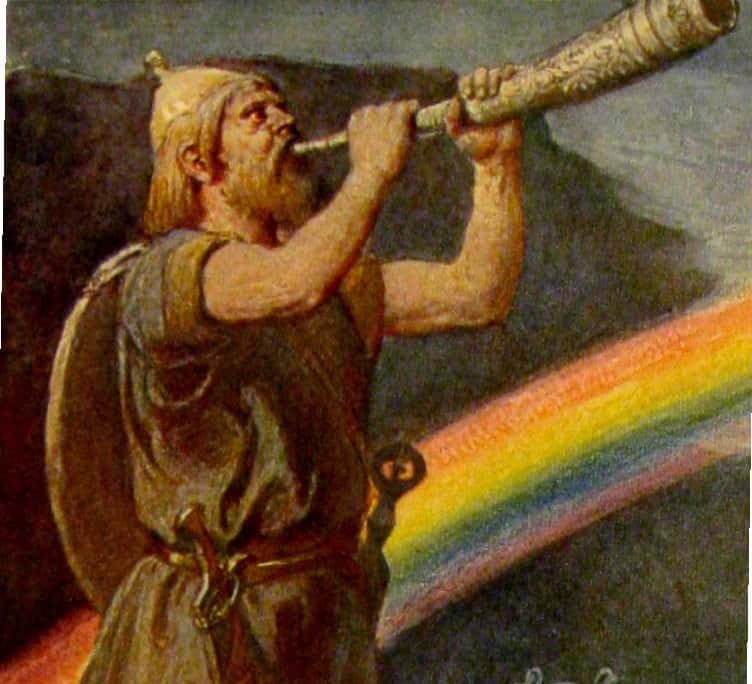
Domain: guardianship. He watches the rainbow bridge Bifrost for the giants’ approach. Family: born, the Prose Edda says, of nine mothers who were sisters; the poem Rigsthula, if its Rig is Heimdall as its prose introduction claims, makes him the father of the three classes of humankind. Attributes: the horn Gjallarhorn, whose blast can be heard in every world; the hall Himinbjorg, “heaven’s cliffs”, at the end of the bridge; the horse Gulltoppr; and gold teeth. He needs less sleep than a bird, sees a hundred leagues by day or night, and hears grass growing in the fields and wool on sheep. The defining myth: the horn. Heimdall’s single most important act is to blow Gjallarhorn when the giants cross the bridge, the signal that Ragnarok has begun. In the battle he and Loki kill each other.
7. Loki, the trickster
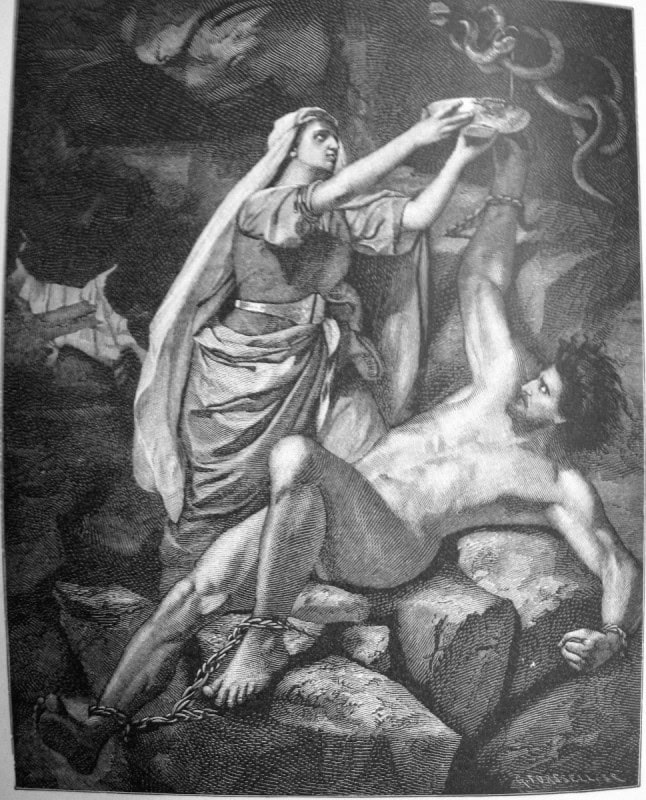
Domain: none, which is the point. Loki is mischief, lies and shape-changing, and he is counted among the Aesir because Odin swore blood brotherhood with him. Family: son of the giant Farbauti and of Laufey; husband of Sigyn; with the giantess Angrboda the father of the wolf Fenrir, the Midgard Serpent and Hel; and, having turned himself into a mare, the mother of Odin’s horse Sleipnir. Attributes: shoes that run on air and water in some tales, and whatever shape he needs: a salmon, a fly, a falcon, an old woman. The defining myth: his punishment. After he engineers Baldr’s death and then insults every god at Aegir’s feast, the Aesir hunt him down, bind him to three rocks with the entrails of his own son, and fix a venomous snake above his face. Sigyn stands beside him holding a bowl to catch the venom, and when she turns away to empty it the drops that hit him make him writhe so hard that the earth shakes. That, the Prose Edda says, is what earthquakes are. He breaks free at Ragnarok and steers the ship of the dead against the gods.
8. Bragi, god of poetry
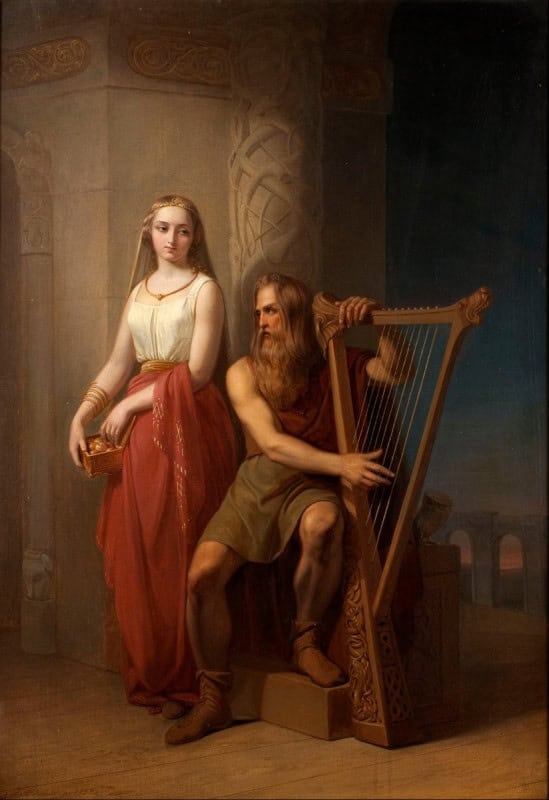
Domain: poetry and eloquence. Family: husband of Idunn; the Prose Edda lists him among Odin’s sons. Attributes: a long beard (Snorri derives a kenning for a bearded man from it) and, in later art, a harp. The defining myth: Bragi is the god who speaks for the gods. In the skaldic poems Eiriksmal and Hakonarmal he greets the dead kings arriving in Valhalla, and in the Poetic Edda’s Lokasenna he is the first to try to keep Loki out of Aegir’s hall and the first to be insulted for it, Loki calling him a bench-ornament who is brave only when seated. There is a real ninth-century Norwegian poet called Bragi Boddason, the earliest skald whose verses survive, and many scholars think the god grew out of the man. The Eddas themselves do not make that connection, so it is offered here as a theory, not a fact from the sources.
9. Idunn, keeper of the apples
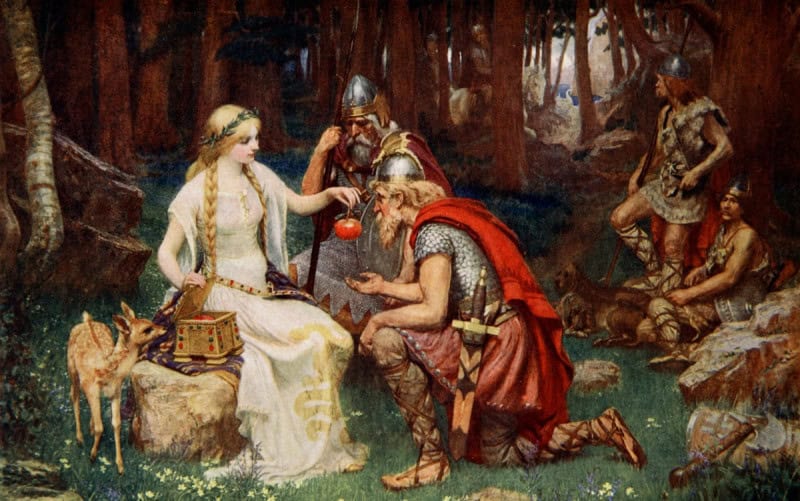
Domain: youth. Family: wife of Bragi. Attributes: a box or basket of apples, which the gods must eat to stay young until Ragnarok. The defining myth: her kidnapping. Captured by the giant Thjazi in eagle form, Loki buys his freedom by promising to deliver Idunn and her apples, and lures her out of Asgard with a story about better apples growing in a wood. With her gone the gods turn grey and old. They threaten Loki with death until he borrows Freyja’s falcon cloak, flies to Thjazi’s home, turns Idunn into a nut and carries her back with the giant in pursuit. The gods light a fire at the walls of Asgard, the eagle’s feathers catch, and Thjazi is killed inside the gate. That death brings his daughter Skadi to Asgard demanding compensation, which is entry 25.
10. Vidar, the silent god
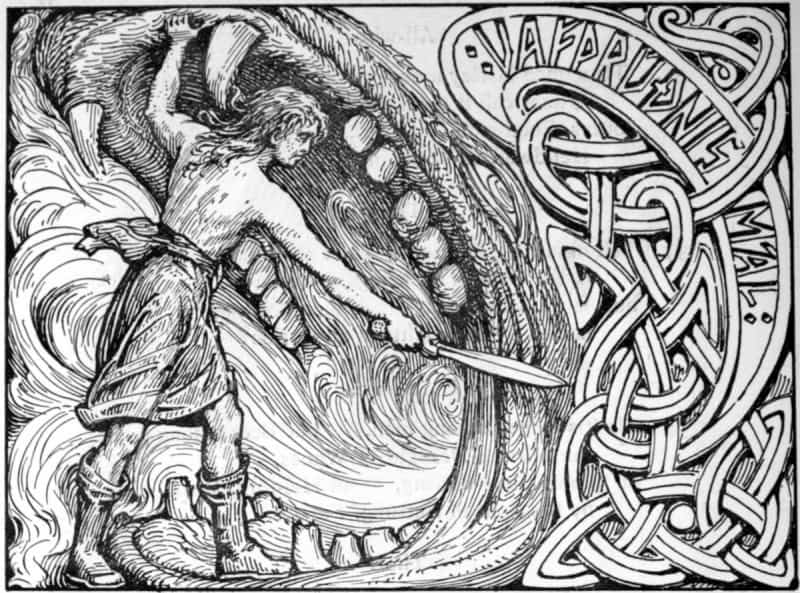
Domain: vengeance and silence. The Prose Edda calls him the silent god and says he is nearly as strong as Thor. Family: son of Odin and the giantess Grid. Attributes: a thick shoe, built up over all time from the scraps of leather people cut away when making their own shoes; and the hall or land called Vidi, grown over with brushwood and tall grass. The defining myth: the avenging of Odin. When Fenrir swallows Odin at Ragnarok, Vidar steps forward, sets the shoe on the wolf’s lower jaw, grips the upper jaw and tears its mouth apart; the Poetic Edda’s version has him drive a sword into its heart instead. Either way he survives the battle and is named among the gods who live on in the renewed world. The Prose Edda adds a practical note: anyone who wants to help the gods should throw away their leather offcuts.
11. Vali, the avenger of Baldr
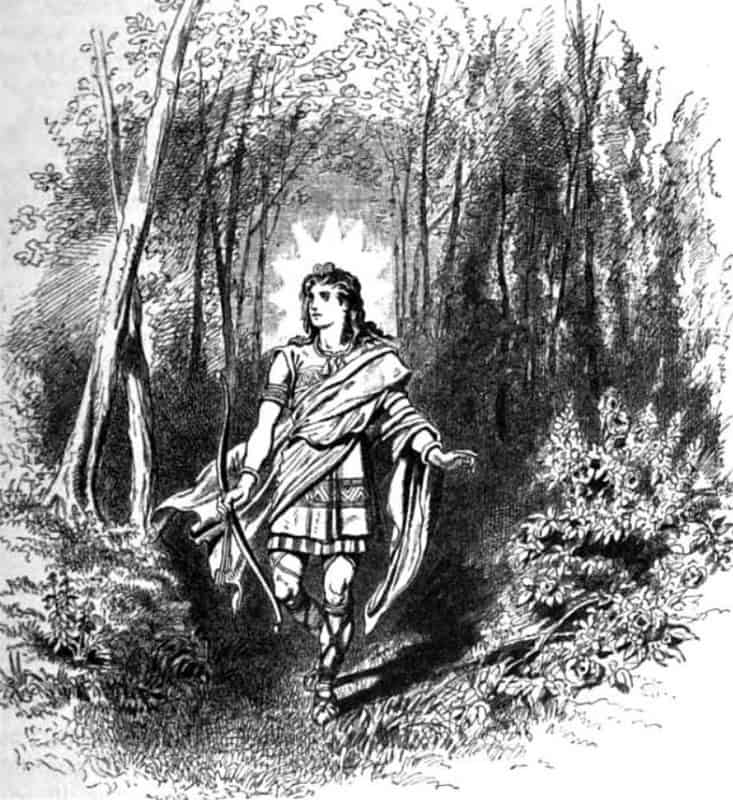
Domain: vengeance; he is also a bold fighter and a good shot, according to the Prose Edda. Family: son of Odin and Rind, a woman or giantess the sources say little about. Attributes: a bow in art, and his age. The defining myth: Vali exists to do one thing. The poem Voluspa says that Baldr’s brother was born for the purpose, and that when only one night old he neither washed his hands nor combed his hair until he had carried Baldr’s slayer to the pyre. The slayer was Hodr, the blind god who threw the mistletoe, and Vali kills him. He then disappears from the stories until the end, when he and Vidar are listed together among the survivors of Ragnarok who settle where Asgard had been.
12. Forseti, god of justice
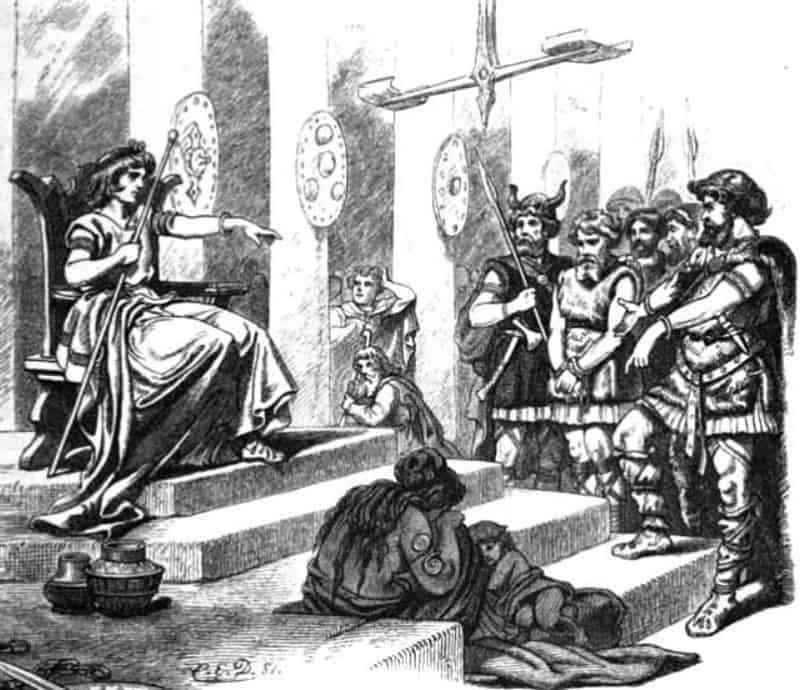
Domain: justice and the settling of disputes. Family: son of Baldr and Nanna, which makes him Odin’s grandson. Attributes: his hall Glitnir, “the shining one”, with pillars of gold and a roof of silver. The defining myth: there is no story about Forseti, only a description, and it is worth quoting for what it says about what the Norse valued. The poem Grimnismal gives him the tenth of the gods’ halls and says that there he settles all suits; the Prose Edda adds that everyone who comes to him with a legal dispute goes away reconciled, and that his is the best court among gods and men. A god of law with a hall built to be seen from a distance is a fair picture of how the assembly, the thing, sat at the centre of Norse life.
13. Sif, the golden-haired
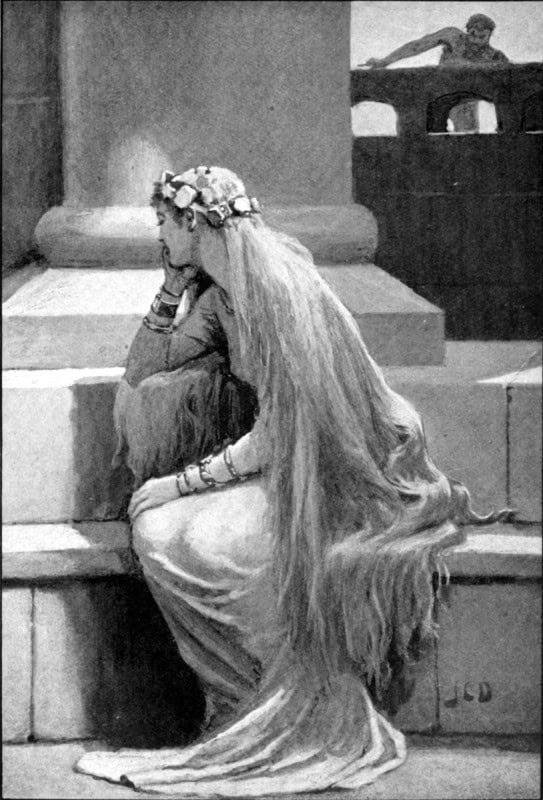
Domain: the sources give her none directly; her golden hair has been read since the nineteenth century as ripe grain, which is a scholarly guess and labelled as one here. Family: wife of Thor, mother of Ullr by an earlier union and of Thrud by Thor. Attributes: hair of real gold, and the reason she has it. The defining myth: the haircut that armed the gods. Loki cuts off all of Sif’s hair as a prank, and Thor is about to break every bone in his body when Loki promises to get the dark elves to make her new hair of gold that will grow like real hair. The dwarves called the sons of Ivaldi make the hair, and while they are at it the spear Gungnir and the ship Skidbladnir. Loki then bets his head with two other dwarves, Brokk and Eitri, that they cannot do better, and they produce the ring Draupnir, the golden boar Gullinbursti and the hammer Mjolnir. Almost every famous treasure of the gods comes out of one bad joke at Sif’s expense.
14. Nanna, wife of Baldr
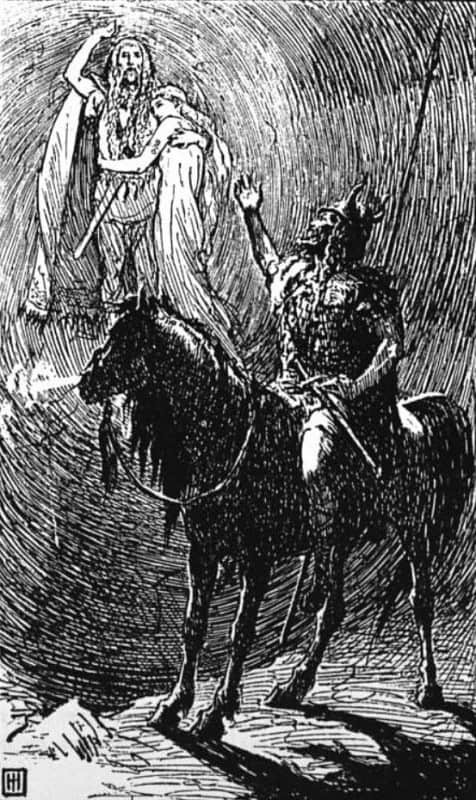
Domain: none is stated; she is defined entirely by her marriage. Family: daughter of Nep; wife of Baldr; mother of Forseti. Attributes: a linen robe, which is the one object the sources attach to her. The defining myth: her death and her gift. When Baldr’s body is carried to the ship Hringhorni for burning, Nanna’s heart bursts with grief and she dies on the spot, and the gods lay her on the pyre beside him. She is therefore already in Hel when Hermod rides down to plead for Baldr’s return, and the Prose Edda gives her the story’s quietest moment: as Hermod leaves, Baldr sends Odin’s ring Draupnir back with him as a keepsake, and Nanna sends Frigg a linen robe and other gifts, and sends Frigg’s handmaiden Fulla a gold ring. A dead woman remembering to send presents home is the detail that makes the myth feel human.
15. Hodr, the blind god
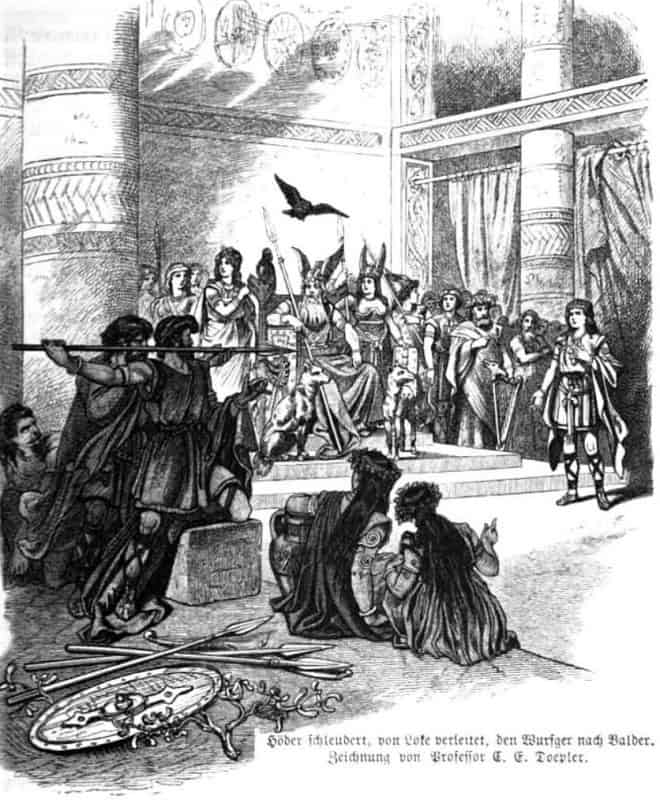
Domain: none; the Prose Edda says only that he is blind and very strong, and that the gods would rather he were never mentioned, because his handiwork will long be remembered. Family: son of Odin, brother of Baldr. Attributes: his blindness and the mistletoe. The defining myth: the throw. At the game where the gods hurl weapons at the invulnerable Baldr, Hodr stands at the edge of the ring, unable to see and with nothing to throw. Loki, who has learned from Frigg that the mistletoe swore no oath, hands him a dart made from it, offers to point him toward his brother, and Hodr throws. Baldr falls dead. Hodr is in turn killed by Vali, his one-night-old half-brother. The Voluspa then names Hodr and Baldr together among those who return after Ragnarok to live in the halls of the gods, the killer and the killed reconciled.
16. Hermod, the messenger to Hel
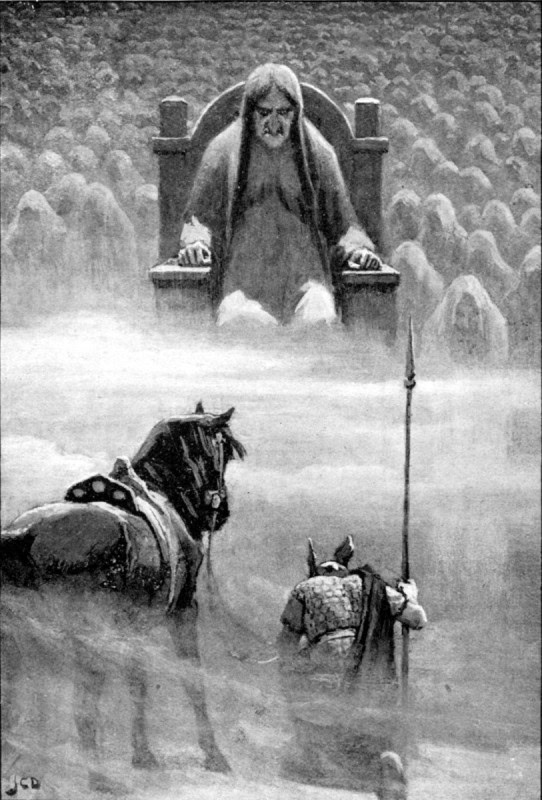
Domain: errands; the Prose Edda calls him Odin’s boy and uses him as the gods’ envoy. Family: a son of Odin in the Prose Edda, Baldr’s brother. Attributes: he borrows Odin’s horse Sleipnir for his one great ride. The defining myth: the ride to Hel. When no god will volunteer to go and ask Hel for Baldr back, Hermod does. He rides Sleipnir nine nights through valleys so dark he sees nothing, crosses the bridge over the river Gjoll, whose keeper tells him that five troops of dead men made less noise than he does alone, and jumps the gate of Hel. Hel agrees to release Baldr on one condition: everything in the world, living and dead, must weep for him. Everything does, except one giantess in a cave called Thokk, who says Hel may keep what she has. The Prose Edda adds that people think Thokk was Loki.
17. Ullr, the archer on skis
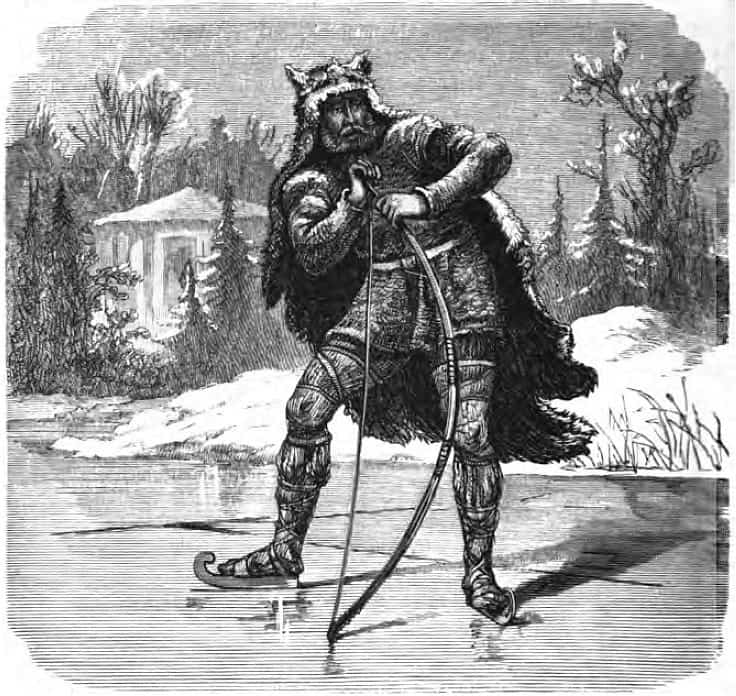
Domain: archery, skiing, hunting and single combat; the Prose Edda says he is so good an archer and skier that no one can compete with him, and that he is a good one to call on in a duel. Family: son of Sif and stepson of Thor; his father is never named. Attributes: a bow, skis and a shield, which skalds called “Ullr’s ship”; his hall Ydalir, “yew dales”, named for the wood bows were made from. The defining myth: there is none that survives, and that absence is itself the story. Place names across Sweden and Norway show Ullr was once widely worshipped, and the Danish historian Saxo Grammaticus, writing around 1200, tells of a god he calls Ollerus who ruled in Odin’s place for ten years during an exile. In the Eddas, written in Iceland, he is reduced to a description and a kenning. He is one of the clearest cases of a major god fading before the stories were written down.
The Vanir
The Vanir are the second family of gods, associated with fertility, the sea, wealth and a form of magic called seidr. The Poetic Edda’s Voluspa remembers a war between them and the Aesir, “the first war in the world”, and the poem Vafthrudnismal says Njord was sent to the Aesir as a hostage when it ended. Snorri’s Ynglinga saga fills in the exchange: Njord, Freyr and Freyja went to live among the Aesir, and the Aesir sent Hoenir and Mimir to the Vanir. The three Vanir hostages became some of the most worshipped gods in Scandinavia, and the Eddas count them as Aesir from then on.
18. Njord, god of the sea and wealth
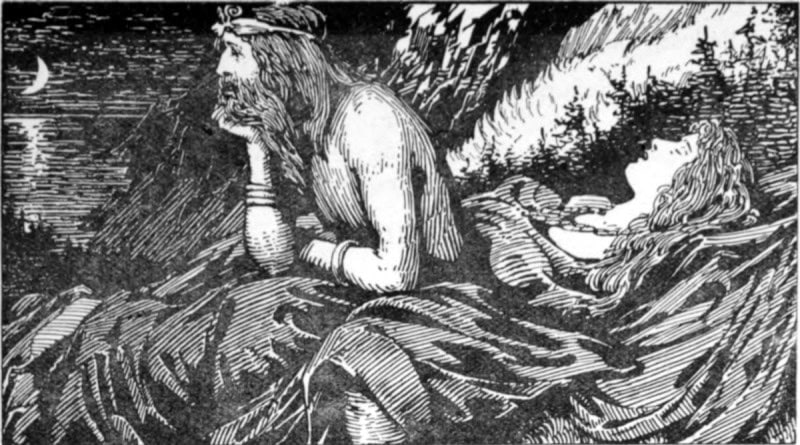
Domain: the sea, seafaring, wind, fishing and wealth; the Prose Edda says he should be invoked for sea voyages and for fishing, and that he can grant land and goods to those who ask. Family: father of Freyr and Freyja by his own sister (Snorri’s Ynglinga saga adds that such marriages were lawful among the Vanir and not among the Aesir); husband, briefly, of the giantess Skadi. Attributes: his hall Noatun, “ship enclosure”, by the sea. The defining myth: the marriage that could not work. Skadi, allowed to pick a husband by his feet alone, chooses the handsomest pair and finds they belong to Njord rather than Baldr. They agree to spend nine nights in her mountain home Thrymheim and nine at Noatun, and both are miserable. He cannot bear the howling of wolves; she cannot sleep for the screaming of gulls. The Prose Edda preserves the two short verses in which each complains, and the marriage ends there.
19. Freyr, lord of harvests
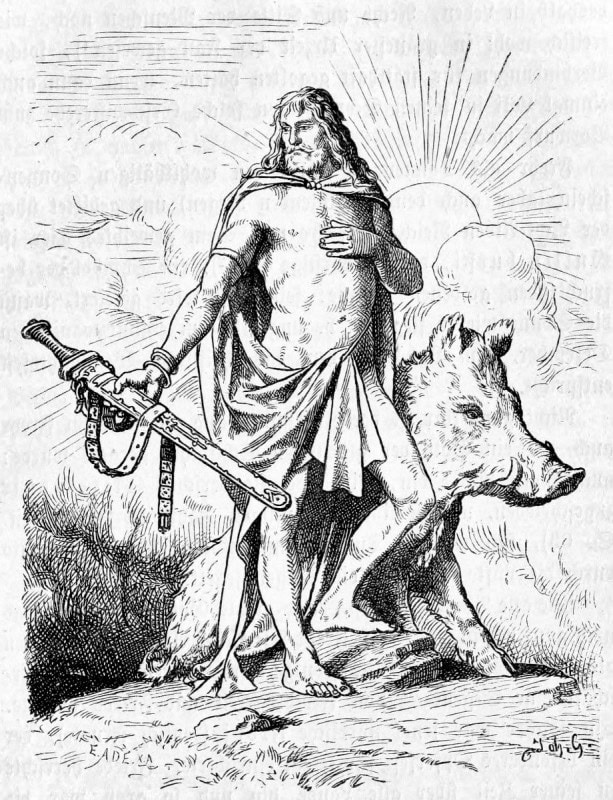
Domain: rain, sunshine, the fruitfulness of the earth, peace and prosperity. The Prose Edda calls him the most glorious of the Aesir and says he should be invoked for good seasons and for peace. Family: son of Njord, twin brother of Freyja, husband of the giantess Gerd. Attributes: the boar Gullinbursti, whose golden bristles light the dark; the ship Skidbladnir, which always has a fair wind and folds up to fit in a pouch; and the realm of Alfheim, given to him as a teething gift. The defining myth: the price of Gerd. Sitting in Odin’s high seat Hlidskjalf, which he had no right to, Freyr sees a giant’s daughter whose arms light up the sky and sea, and falls so sick with longing that he gives his servant Skirnir his own sword, a blade that fights by itself, to go and win her. He gets the bride. At Ragnarok, swordless, he faces the fire giant Surt and is killed, and the Prose Edda says plainly that he would have survived if he had kept the sword.
20. Freyja, goddess of love and war
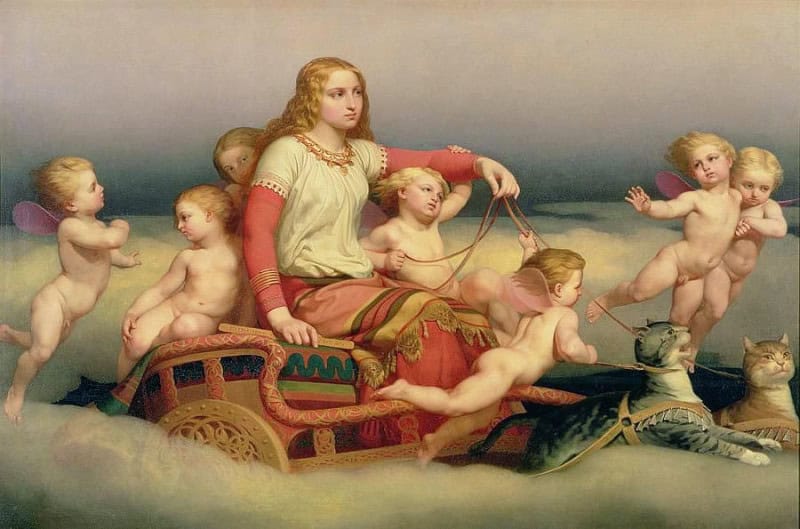
Domain: love, beauty, fertility, gold, battle and the dead; the Prose Edda calls her the most renowned of the goddesses and says she is the one to call on in matters of love. Snorri’s Ynglinga saga adds that she was the one who taught the Aesir the magic called seidr. Family: daughter of Njord, twin of Freyr, wife of the wandering Od, mother of Hnoss and Gersemi, whose names both mean treasure. Attributes: a chariot drawn by two cats; the necklace Brisingamen; a cloak of falcon feathers that lets the wearer fly; the boar Hildisvini; and her hall Sessrumnir in the field Folkvang, where she takes half of all who die in battle, Odin taking the other half. The defining myth: the tears of gold. Her husband Od went away on long journeys, and Freyja wept for him, and her tears were red gold, which is why gold is called Freyja’s weeping in skaldic verse. She is also the prize the giants most often demand: the builder of Asgard’s wall, the giant Thrym who steals Thor’s hammer, and the giant Hrungnir all ask for her, and the gods never pay.
21. Nerthus, the earth mother in the wagon
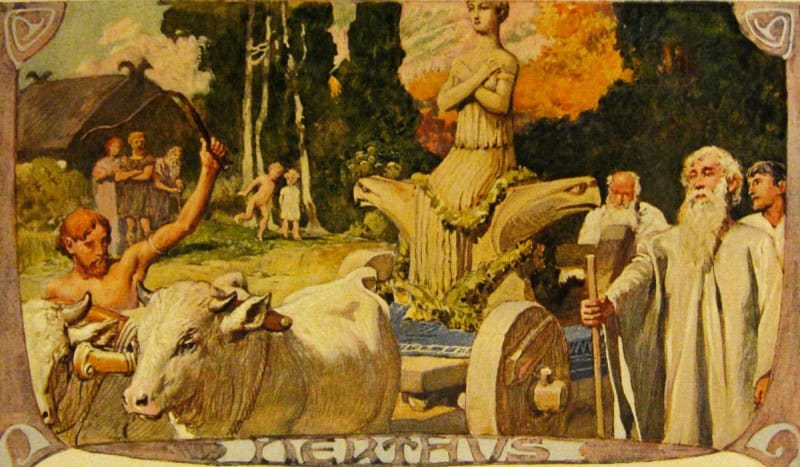
Domain: the earth and peace. Family: none recorded; her name is the exact earlier form of Njord’s, and most scholars take her to be his female counterpart or an older version of the same deity. That is an inference from the names, and it is labelled as one. Attributes: a wagon covered with a cloth, drawn by cows. The defining myth: Nerthus is the one entry here that does not come from the Eddas at all. She is described by the Roman historian Tacitus in his Germania, written around the year 98, a thousand years before Snorri. He says seven tribes of the north worshipped “Nerthus, that is, Mother Earth”, that her wagon was kept in a grove on an island, that when the priest felt her presence the wagon was drawn through the country and every weapon was put away, and that afterwards the wagon, the cloth and the goddess herself were washed in a hidden lake by slaves who were then drowned in it. She is included because she is the earliest Germanic goddess anyone described, and because her name ties the oldest layer of the religion to the Vanir of the Eddas.
22. Kvasir, the wisest of all
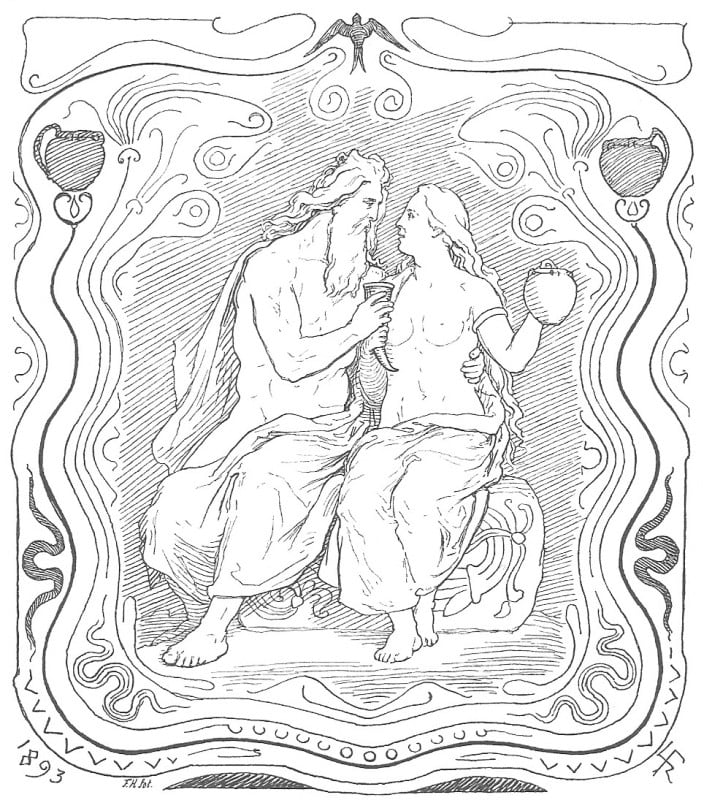
Domain: wisdom. Family: none in the ordinary sense. When the Aesir and Vanir made peace they sealed it by all spitting into a vat, and from the spittle they made a man, Kvasir, so wise that no one could ask him a question he could not answer. Attributes: his blood. The defining myth: the mead of poetry. Travelling the world teaching, Kvasir is invited home by two dwarves, Fjalar and Galar, who kill him, drain his blood into two vats and a kettle, mix it with honey and brew the mead that turns whoever drinks it into a poet or a scholar. They tell the gods he choked on his own learning. The mead passes to the giant Suttung, who hides it in a mountain with his daughter Gunnlod as guard. Odin bores his way in as a snake, sleeps three nights with Gunnlod, drinks all three vessels in three draughts and flies home as an eagle, spitting the mead into vats in Asgard, which is why poetry is called Kvasir’s blood and Odin’s gift. Snorri’s Ynglinga saga counts Kvasir among the Vanir sent as hostages, while his Prose Edda story of the spittle makes him both families’ child; this list keeps him with the Vanir, where Ynglinga saga placed him.
23. Gullveig, the thrice-burned
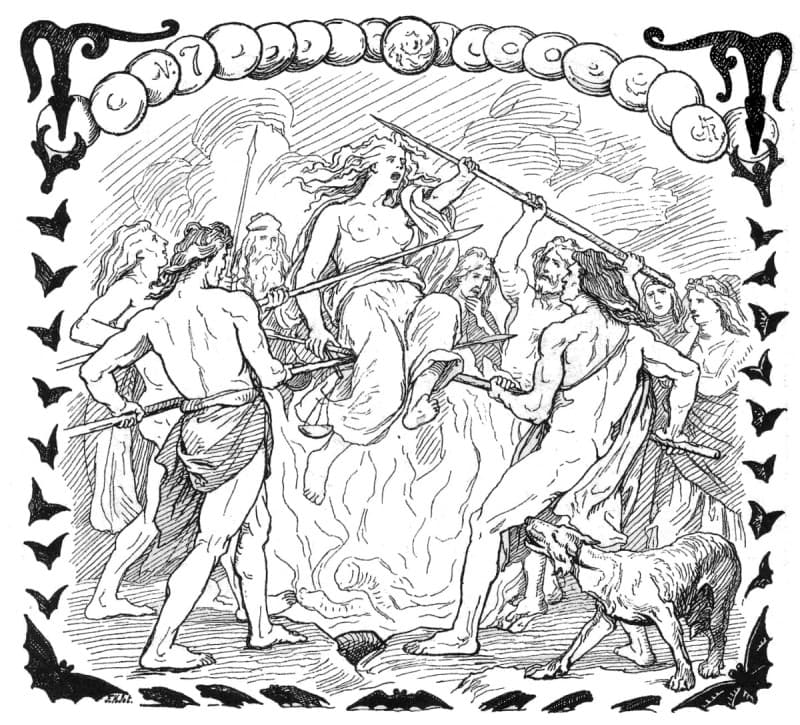
Domain: gold and seidr, the magic associated with the Vanir; her name is usually read as “gold-drink” or “gold-power”. Family: none given. Attributes: spears and fire. The defining myth: two stanzas of the Voluspa are all there is, and they are among the most argued-over lines in the Poetic Edda. The seeress recalls the time the gods pierced Gullveig with spears and burned her in Odin’s hall, three times burned and three times reborn, and that she lives still; and that under the name Heid she went from house to house as a seeress and a worker of magic, a delight to wicked women. The next stanza is the gods in council deciding whether to pay tribute, and then the war with the Vanir begins. Reading the stanzas together, Gullveig’s mistreatment is the cause of the first war in the world, and many scholars identify her with Freyja, who also taught seidr and wept gold. The poem does not say so, and this list keeps her as her own entry.
The giant-born and the others the Eddas count as gods
The line between gods and giants is thinner in the Eddas than in most retellings. Odin’s mother is a giantess, Thor’s mother is the earth, and several of the gods’ wives are giants’ daughters. The seven figures below are not Aesir or Vanir by birth, but the sources treat them as gods: they rule a realm, they marry into Asgard, they host the gods’ feasts, or they hold the knowledge the gods need.
24. Hel, ruler of the dead
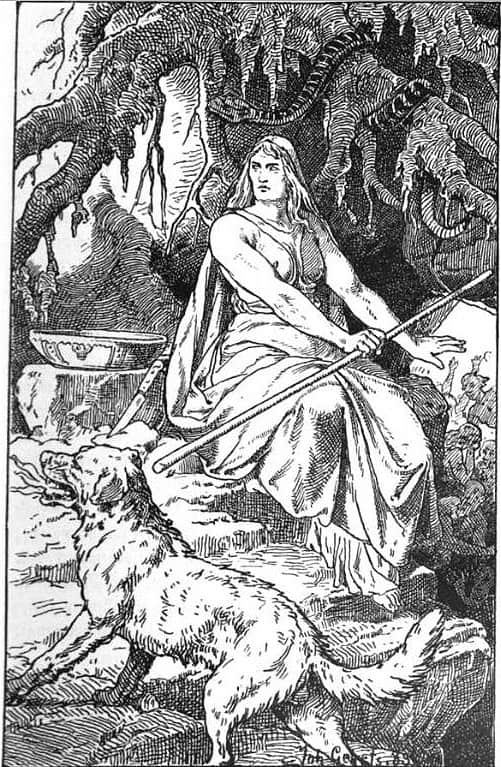
Domain: the dead who die of sickness or old age, as against the battle-dead who go to Odin and Freyja. Family: daughter of Loki and the giantess Angrboda; sister of the wolf Fenrir and the Midgard Serpent. Attributes: a body that is half flesh-coloured and half blue-black, so that she is easily recognised, and a grim, gloomy face; her hall Eljudnir, whose dish is called Hunger, whose knife is Famine, whose bed is Sickbed and whose curtains are Gleaming Bale. The defining myth: Odin’s decision. Foreseeing the trouble Loki’s children will cause, Odin has them brought to him: he throws the serpent into the sea, has the wolf raised in Asgard, and casts Hel down into Niflheim with authority over nine worlds and the duty of housing all who are sent to her. Her one appearance in a story is when she sets the price for Baldr’s return and keeps him when it is not paid. She has her own entry on our list of gods of death and the underworld, alongside the other rulers of the dead she is usually compared with.
25. Skadi, goddess of the mountains
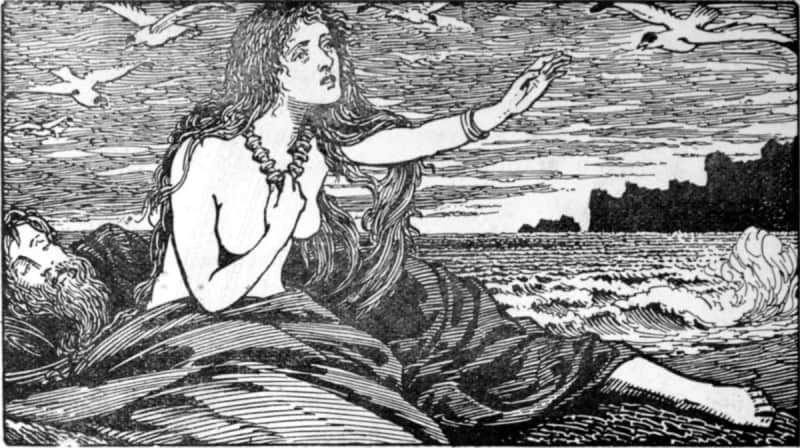
Domain: mountains, winter, skiing and bow-hunting; the Prose Edda calls her the ski goddess and says she travels much on skis with a bow and shoots animals. Family: daughter of the giant Thjazi, whom the gods killed in the Idunn affair; wife of Njord; in the Ynglinga saga, later the partner of Odin. Attributes: skis, a bow, snowshoes, and her father’s hall Thrymheim in the mountains. The defining myth: her arrival in Asgard. She comes in full armour to demand compensation for her father, and the gods offer two things: a husband of her choice, to be picked by his feet alone, and a laugh, since she says she cannot. She picks the wrong feet and gets Njord. For the laugh, Loki ties one end of a cord to a goat’s beard and the other to his own testicles, and the two of them pull and shriek until Loki falls into her lap and she laughs. Odin then takes Thjazi’s eyes and sets them in the sky as stars. Skadi is also the one who hangs the venomous snake over the bound Loki’s face, which gives the trickster’s punishment the shape of a personal revenge.
26. Gerd, the giant’s daughter who married Freyr
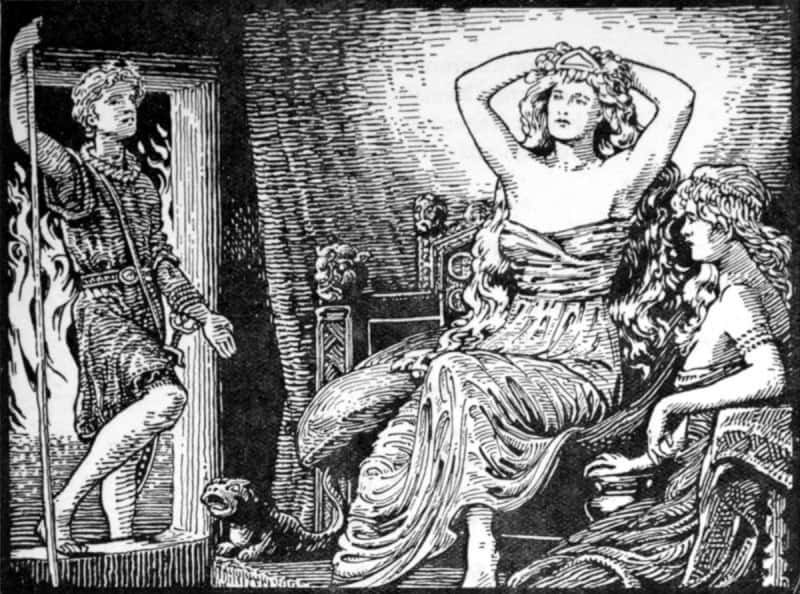
Domain: none is stated, though her name is the word for a fenced field, and the match between a harvest god and a giantess of the enclosed earth has been read as a fertility myth since the nineteenth century. Family: daughter of the giant Gymir and of Aurboda; wife of Freyr. The Prose Edda lists her among the goddesses. Attributes: arms so bright they light the air and the sea. The defining myth: the wooing, which is not a love story from her side. In the poem Skirnismal, Freyr’s servant Skirnir rides to Gymir’s hall through a wall of flame and offers Gerd eleven golden apples and the ring Draupnir. She refuses both. He then threatens to strike off her head with the sword, and when that fails he carves runes against her and recites a curse: that she will live where no one can see her, be stared at like a thistle, wither, and be married to a three-headed giant. She yields, and agrees to meet Freyr in nine nights in the grove called Barri. The poem ends with Freyr counting the nights.
27. Aegir, host of the gods
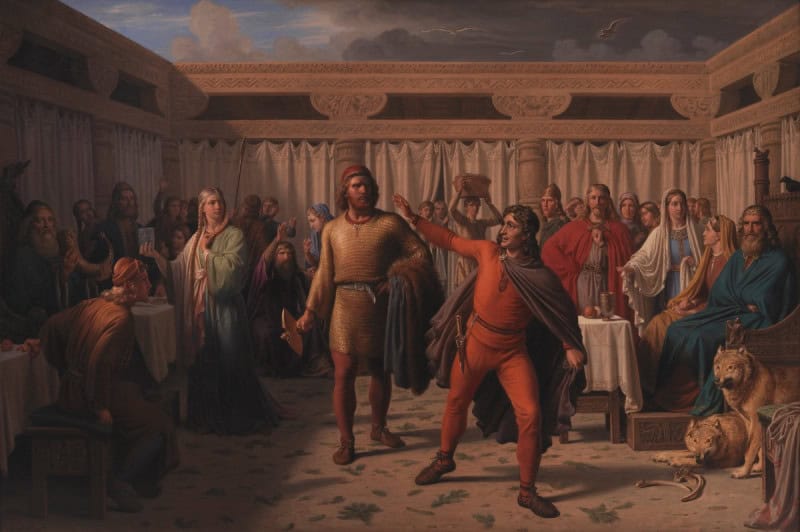
Domain: the sea, and the brewing of ale. Family: a giant, “very skilled in magic” according to the Prose Edda; husband of Ran; father by her of nine daughters whose names are all words for waves. Attributes: a hall lit by shining gold instead of fire, where the ale serves itself, and the enormous cauldron he brews in. The defining myth: the feast. Aegir visits Asgard and is feasted by the gods; he returns the invitation, but says he lacks a cauldron big enough to brew for them all. Thor and Tyr go to the giant Hymir to fetch one a mile deep, which is the expedition on which Thor hooks the Midgard Serpent. The feast Aegir then gives is the setting of Lokasenna, the poem in which Loki arrives uninvited, kills a servant, and insults every god and goddess at the table in turn until Thor arrives and threatens him with the hammer. The sea giant who hosts the gods’ last civil evening together is a figure the Eddas plainly respect, and skalds used “Aegir’s fire” as a kenning for gold.
28. Ran, who takes the drowned
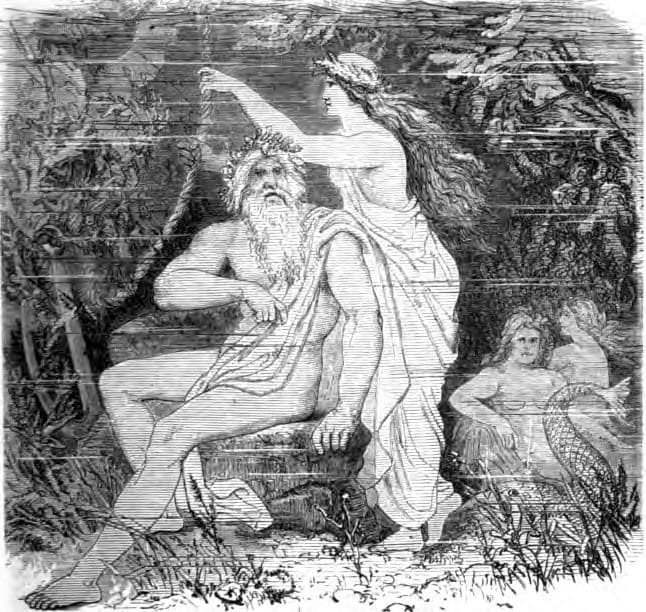
Domain: the sea’s dead. Those who drown go to Ran, as the battle-dead go to Odin and the sick to Hel. Family: wife of Aegir; mother of the nine wave-daughters. Attributes: a net, with which she catches sailors; the Prose Edda says Loki borrowed it to catch the dwarf Andvari in his pool, which is how the cursed gold of the Volsung story came into the world. The defining myth: Ran has no narrative of her own in the Eddas, but she is everywhere in the kennings and in the sagas. The sea is “Ran’s road”, a wave is “Ran’s daughter”, and a drowned man has “gone to Ran”. Snorri’s Skaldskaparmal explains that gold is called the fire of Aegir because his hall was lit with it, and that poets speak of drowning men as going to feast with Ran. The Icelandic Eyrbyggja saga records a belief that those she takes are received well in her hall, and that if drowned men appear at their own funeral feast it is a sign she has made them welcome.
29. Mimir, keeper of the well of wisdom
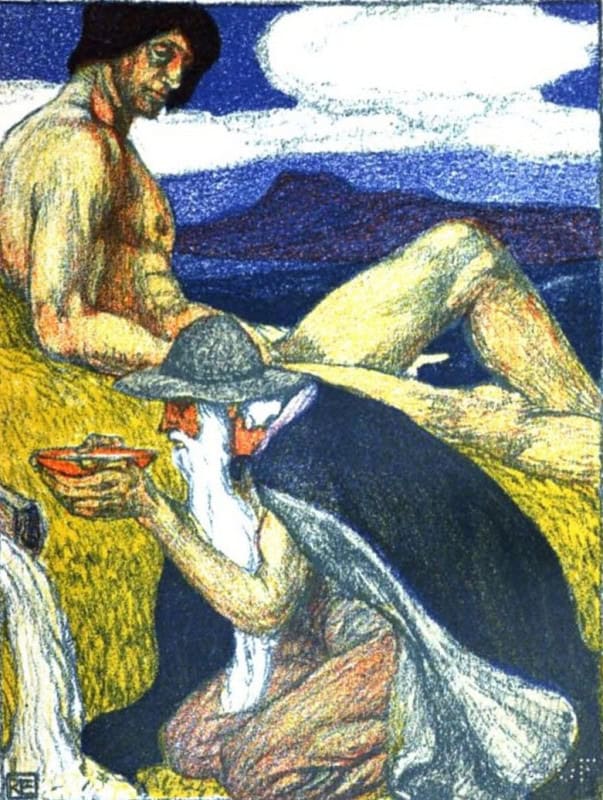
Domain: wisdom and memory. Family: the Eddas give him no clear parentage; a stanza of Havamal in which Odin learns songs from the son of Bolthorn, his mother’s father, has led many scholars to make Mimir Odin’s maternal uncle, and he is usually counted among the giants. Attributes: his well, Mimisbrunnr, under the root of Yggdrasil that reaches toward the giants, and the horn Gjallarhorn, which in the Prose Edda he drinks from each morning. The defining myth: the head. The fullest telling is in Snorri’s Ynglinga saga rather than the Eddas: sent to the Vanir as a hostage with the handsome but empty-headed Hoenir, Mimir does all of Hoenir’s thinking for him, and when the Vanir realise they have been cheated they cut off Mimir’s head and send it back. Odin embalms it with herbs, speaks charms over it, and keeps it, and it tells him hidden things. The Eddas themselves give only the result: Voluspa and Gylfaginning both have Odin speaking with Mim’s head. The same Odin had already given an eye to drink from Mimir’s well, and the Voluspa pictures the eye still lying in it, with Mimir drinking mead from Odin’s pledge every morning. In the lead-up to Ragnarok, Odin goes to consult the head one last time.
30. Vili and Ve, the brothers who built the world
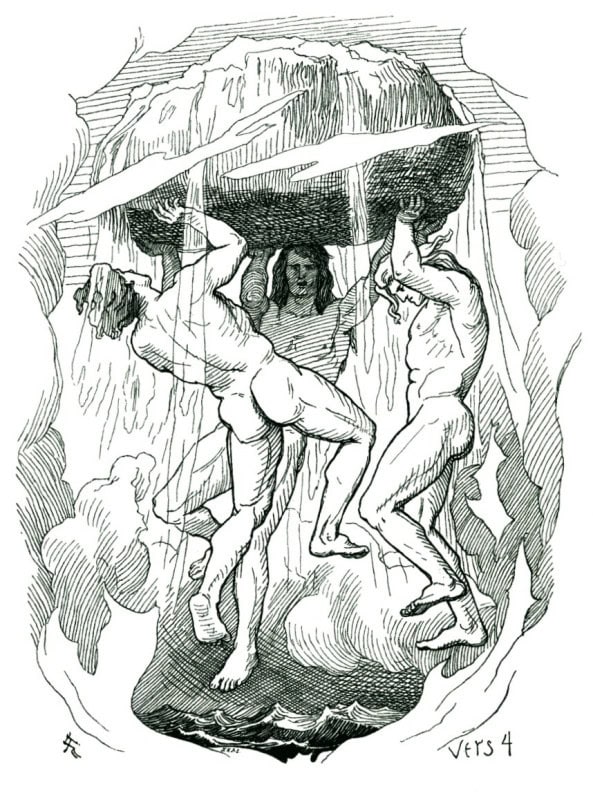
Domain: creation. Family: sons of Borr and the giantess Bestla; Odin’s two brothers. Attributes: none; they are known only by what they did. The defining myth: the making of the world and of people. In the Prose Edda the three brothers kill the first giant, Ymir, and so much blood runs from his wounds that all the frost giants drown in it but one. They carry the body to the middle of the void and build from it: the earth from his flesh, the mountains from his bones, the sea from his blood, the sky from his skull, propped up at the four corners by four dwarves, and the clouds from his brains. Walking on the shore afterwards they find two logs and make from them the first man and woman, Ask and Embla. Odin gives them breath and life, Vili gives them wit and feeling, and Ve gives them face, speech, hearing and sight. The Voluspa tells the same story with different names for the two companions, Hoenir and Lodur, which is one of the clearest cases of the two Eddas disagreeing about who did what. After the creation, Vili and Ve vanish from the stories, except for one line in Lokasenna where Loki tells Frigg she once took both of them to her bed while Odin was away.
Norse gods and Greek gods: how the two pantheons differ
Readers who come to the Norse gods from the Greek ones expect a one-to-one match, and the matches are there up to a point: Odin and Zeus are both sky-fathers who rule from a high seat, Thor and Heracles both hit things, Freyja and Aphrodite both govern love. The differences are more interesting. The Greek gods are immortal and know it; the Norse gods age without Idunn’s apples and know the day and manner of their deaths. The Greek gods win their war against the Titans and rule securely afterward; the Norse gods are fated to lose theirs, and most of the stories in this list carry a line pointing toward that end. And the Norse sources are thinner. For the male Greek gods we have Homer, Hesiod, the tragedians and a thousand years of commentary; for the Norse gods we have two Icelandic books written down by Christians two centuries after the conversion, a Roman paragraph about Nerthus, and whatever can be read off place names and a few carved stones. There is also far less surviving art: the famous statues of the Greek gods have no Norse equivalent, and every picture on this page is a nineteenth- or early twentieth-century artist’s imagination, not a Viking Age image.
Frequently asked questions
Who are the 12 Aesir gods?
The Prose Edda’s Gylfaginning says there are twelve divine Aesir besides Odin and lists them in this order: Thor, Baldr, Njord, Freyr, Tyr, Bragi, Heimdall, Hodr, Vidar, Vali, Ullr and Forseti, with Loki added at the end as the one “reckoned among the Aesir” whom some call the slanderer of the gods. Njord and Freyr are Vanir by birth but counted as Aesir after the hostage exchange. The same book names fourteen goddesses, headed by Frigg and Freyja.
Who is the most powerful Norse god?
The sources answer differently depending on what is meant. Odin rules the gods and holds the deepest knowledge. Thor is the strongest, and the Prose Edda says so directly: he is the foremost of the gods and the strongest of all gods and men. In terms of worship, Thor seems to have been the more popular of the two in the late Viking Age, to judge by the hammer amulets found in graves and the number of people named after him, while Odin was the god of kings, poets and warriors. Freyr was the third great cult god, especially in Sweden.
What are the main Norse goddesses?
Frigg and Freyja stand above the rest, and they are different goddesses, though the two names may once have belonged to one figure. After them the Prose Edda’s list runs through Saga, Eir the healer, Gefjun, Fulla, Sjofn, Lofn, Var, Vor, Syn, Hlin, Snotra and Gna, most of whom are little more than a name and a function. The goddesses with real stories are the ones in this list: Frigg, Freyja, Idunn, Sif, Nanna, Skadi, Gerd, Hel, Ran and Nerthus.
Where do the stories of the Norse gods come from?
Almost entirely from two Icelandic books. The Poetic Edda is a collection of anonymous poems, some of them probably composed in the Viking Age and written down around 1270 in a manuscript called the Codex Regius. The Prose Edda was written by the Icelandic chieftain Snorri Sturluson around 1220 as a handbook for poets, and it retells the myths in prose, quoting the older poems as it goes. Snorri was a Christian writing two hundred years after Iceland’s conversion, and he frames the gods as ancient kings who were mistaken for gods, so his account is a retelling at one remove. Everything in this list is drawn from those two books, with Tacitus for Nerthus, Saxo Grammaticus for the one note on Ullr, and two Icelandic sagas, Snorri’s Ynglinga saga and Eyrbyggja saga, where an entry names them.
Sources
The Poetic Edda, translated by Henry Adams Bellows (American-Scandinavian Foundation, 1936): Voluspa, Havamal, Grimnismal, Skirnismal, Lokasenna, Hymiskvida and Rigsthula. The Prose Edda by Snorri Sturluson, translated by Arthur Gilchrist Brodeur (American-Scandinavian Foundation, 1916): Gylfaginning and Skaldskaparmal. Tacitus, Germania, chapter 40, translated by Alfred John Church and William Jackson Brodribb (1876). Saxo Grammaticus, Gesta Danorum, book 3, translated by Oliver Elton (1894). Snorri Sturluson, Ynglinga saga (Heimskringla), chapters 4 and 7, translated by Samuel Laing (1844), for the hostage exchange, Njord’s marriage, Kvasir, Freyja’s seidr, Mimir’s head and Skadi. Eyrbyggja saga, chapter 54, translated by William Morris and Eirikr Magnusson (1892), for the drowned at their funeral feast. All six translations are in the public domain. Norse names are given in their common English spellings without accents.
Image credits
Every illustration on this page is a nineteenth- or early twentieth-century work in the public domain, reproduced via Wikimedia Commons: W. G. Collingwood (1908), John Charles Dollman (1909), Marten Eskil Winge (1863 and 1872), Elmer Boyd Smith (1902), John Bauer (1911), Emil Doepler (about 1905), Carl Emil Doepler (1882), Friedrich Wilhelm Heine (1882), Nils Blommer (1846 and 1852), James Doyle Penrose (1890), George Percy Jacomb-Hood (1893), Johannes Gehrts (1888 and 1889), Lorenz Frolich (1895), Robert Engels (1903) and Constantin Hansen (1857; photograph released under CC0 by the National Gallery of Denmark).