
The twentieth century got the flashy ones. Flight, antibiotics, the transistor, the moon.
By comparison the twenty-first can look like a century of software updates — and for a while that was a fair complaint. But the list below is not a list of apps. In the last twenty-five years humans have edited a living genome to order, landed an orbital rocket on its tail and flown it again, heard two black holes collide, flown a helicopter in the atmosphere of another planet, and pushed a vaccine from a published viral sequence into a phase 1 trial in nine weeks, and into hundreds of millions of arms inside eighteen months.
Some of these are already invisible because they worked. The phone in your pocket is a 2007 invention that swallowed the camera, the map, the newspaper and the record shop. Others have barely started: the fusion result below released more energy than it consumed for the first time in history, and did it in 2022.
A note on what qualifies. Everything here was first demonstrated, first shipped, or first reached ordinary people after 1 January 2001. Where the underlying science is older — and it often is — the entry says so rather than quietly claiming the century’s credit. That rule cost this list some obvious candidates, and it is the same rule that governs our companion lists of the greatest inventions of the 20th century and the inventions of the 19th century.
What Counts as a 21st-Century Invention?
Almost nothing is invented from nothing. Every entry below stands on work done decades earlier, and the useful question is not who had the idea but when did it become real.
Three different things get called an invention, and this list includes all three while trying to be clear about which is which.
A first demonstration. Something that had never been done is done once — gravitational waves detected, fusion ignition achieved, a helicopter flown on Mars. The device may never become commonplace. What moved was the barrier.
A first practical version. The science exists; someone builds the thing that actually works and can be manufactured. CRISPR was not the first gene-editing method, it was the first cheap and precise one. mRNA vaccine research ran for thirty years before 2020.
A first version ordinary people could buy. The technology exists in laboratories and industry; a product puts it in a pocket. The smartphone is the clearest case — every component predated the iPhone, and the invention was the combination.
Where a claim in this list rests on the second or third of these, the entry says so.
The 25, In Order of Arrival
The entries below are grouped by field rather than by date, because the fields tell a clearer story. This table gives the chronology.
| Year | Invention | Field | Why it counts |
|---|---|---|---|
| 2003 | Human genome sequenced | Biology | First reference sequence, about 92% complete |
| 2003– | Sequencing cost collapse | Biology | Fell faster than computing did |
| 2004 | Graphene isolated | Materials | First stable two-dimensional material |
| 2005 | Optogenetics | Neuroscience | Switching single neurons with light |
| 2005 | Desktop 3D printing | Manufacturing | Open-source printers that copy themselves |
| 2006 | Cloud computing | Computing | Compute rented by the hour |
| 2007 | The smartphone | Computing | The combination, not the components |
| 2007 | E-ink readers reach the mainstream | Media | A sunlight-readable screen plus delivery over the air |
| 2008 | The electric car stops being a compromise | Transport | Range and speed without sacrifice; the mass market followed in 2010 |
| 2009 | Perovskite solar cells | Energy | Efficiency gains no other cell matched |
| 2010 | The tablet | Computing | The third device category |
| 2012 | CRISPR-Cas9 | Biology | Gene editing made cheap and precise |
| 2013 | Consumer drones | Transport | Aerial photography for everyone |
| 2015 | Reusable orbital rockets | Space | Landing the first stage upright |
| 2015 | Gravitational waves detected | Physics | A century-old prediction confirmed |
| 2015 | Self-driving cars on public roads | Transport | Removing the driver, in traffic |
| 2016 | True wireless earbuds | Audio | No wire to anything at all |
| 2017 | CAR-T cell therapy | Medicine | A patient’s own cells re-engineered |
| 2017 | Continuous glucose monitoring | Medicine | Ending the finger-prick |
| 2020 | mRNA vaccines | Medicine | Sequence to injection in under a year |
| 2021 | AlphaFold released publicly | Biology | A fifty-year problem largely solved; first shown at CASP14 in 2020 |
| 2021 | Powered flight on another planet | Space | Ingenuity’s first Mars hop |
| 2021 | Sample-caching Mars rovers | Space | Collecting rock for a later return |
| 2021 | James Webb Space Telescope | Astronomy | Infrared eyes on the first galaxies |
| 2022 | Fusion ignition | Energy | More energy out than in, once |
1. The Human Genome, Sequenced (2003)
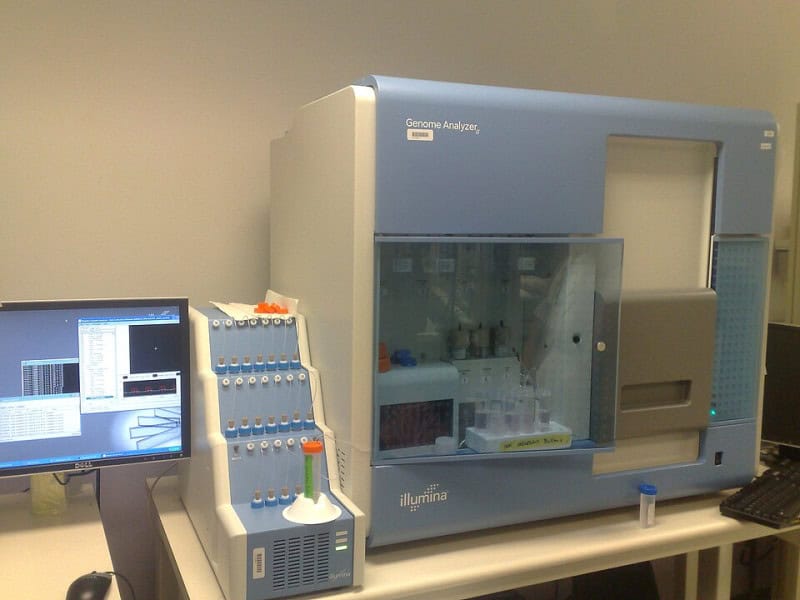
The Human Genome Project was declared complete in April 2003, thirteen years after it began and at a cost usually given as around $2.7 billion in 1991 dollars.
Two things about it are routinely overstated. First, the 2003 genome was not finished in the ordinary sense — roughly 8% of the sequence, mostly highly repetitive regions, remained unread, and a substantially gap-free human genome was not published until 2022, by the Telomere-to-Telomere Consortium — and even that came from a cell line with no Y chromosome, which was not finished until 2023. Second, it was not one person’s genome; it was a composite drawn from several anonymous donors.
What it did deliver was a reference — a map against which any other human genome could be compared. Almost everything else in this section depends on having one. The project also set a precedent that mattered as much as the data: results were released publicly and daily, under what became the Bermuda Principles, rather than held back for patenting.
2. CRISPR-Cas9 Gene Editing (2012)
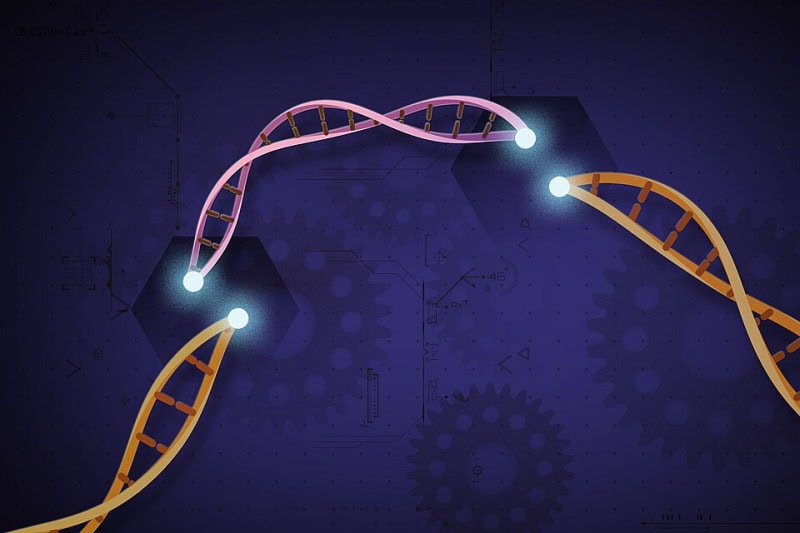
CRISPR was not the first way to edit a genome. Zinc-finger nucleases and TALENs both worked before it. CRISPR-Cas9 was the first method cheap, fast and precise enough for an ordinary laboratory to use, which is why it went from a 2012 paper to a global research tool in about three years.
The mechanism was borrowed rather than designed. Bacteria keep fragments of the viruses that have attacked them and use those fragments as a guide to cut matching DNA on sight. Jennifer Doudna and Emmanuelle Charpentier showed the system could be redirected with a synthetic guide, and shared the 2020 Nobel Prize in Chemistry for it.
The consequences are still arriving. Casgevy, a CRISPR-based therapy for sickle-cell disease and beta thalassemia, was approved in the UK and the US in late 2023 — the first approved medicine built on the technique. It is also the entry here with the most serious open ethical questions, and they are not settled.
3. Optogenetics (2005)
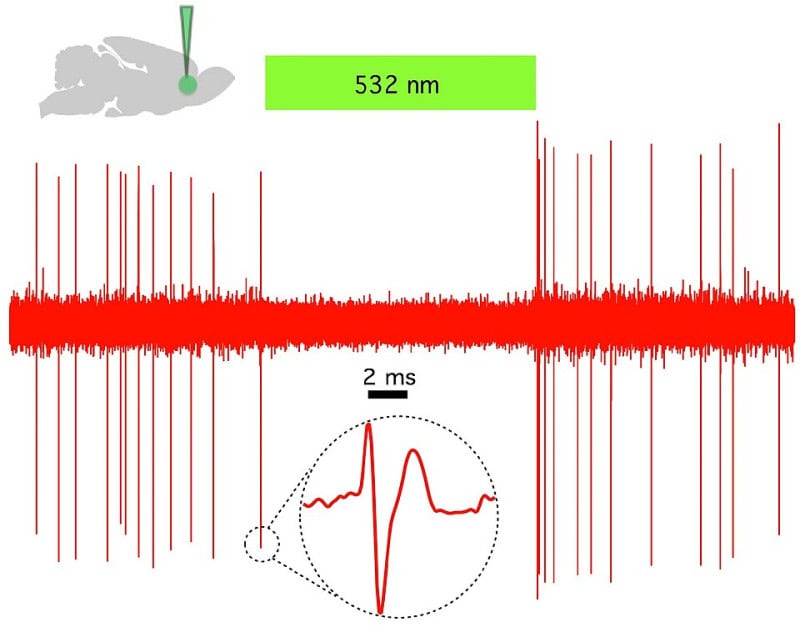
Optogenetics does something that sounds impossible: it switches individual neurons on and off with pulses of light, in a living, behaving animal.
The trick is genetic. Certain algae carry light-sensitive proteins called channelrhodopsins, which open an ion channel when struck by particular wavelengths. Insert the gene for one into a chosen population of neurons, shine the right colour of light, and only those neurons respond. Karl Deisseroth’s group at Stanford demonstrated the method in 2005.
Before this, neuroscience could largely correlate — record which cells were active while an animal did something, or destroy a region and observe what broke. Optogenetics allowed causation: activate exactly these cells and watch the behaviour change, reliably, in milliseconds. It has been used to probe circuits underlying fear, thirst, aggression and memory. It remains overwhelmingly a research tool rather than a treatment, and this entry claims nothing more.
4. CAR-T Cell Therapy (2017)
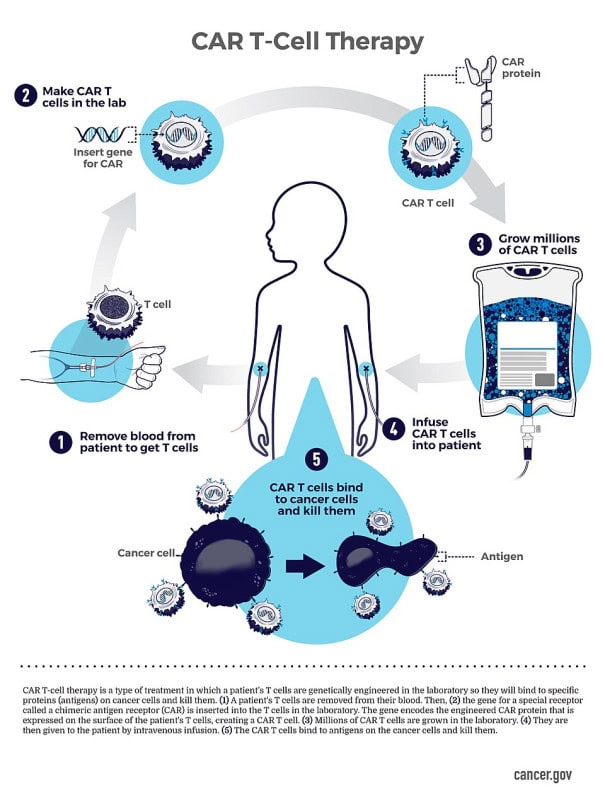
CAR-T is the point at which cancer treatment stopped being something done to the immune system and became something done with it.
The procedure removes a patient’s own T cells, engineers them to display a chimeric antigen receptor that recognises a protein on the surface of their cancer, multiplies them, and returns them. The modified cells then hunt. The first approval came in August 2017, when the FDA cleared tisagenlecleucel for a form of paediatric leukaemia.
Results in some blood cancers have been striking, including durable remissions in patients who had exhausted every other option. The limits are equally real: it has worked far better against blood cancers than solid tumours, it can trigger a dangerous immune reaction called cytokine release syndrome, and manufacturing a bespoke product per patient has kept prices in the hundreds of thousands of dollars. It is a genuine breakthrough with a genuine access problem, and both halves belong in the description.
5. Continuous Glucose Monitoring (2017)
For most of the history of diabetes management, a person with type 1 diabetes learned their blood sugar by drawing blood from a fingertip several times a day, and got a single number each time with no indication of direction.
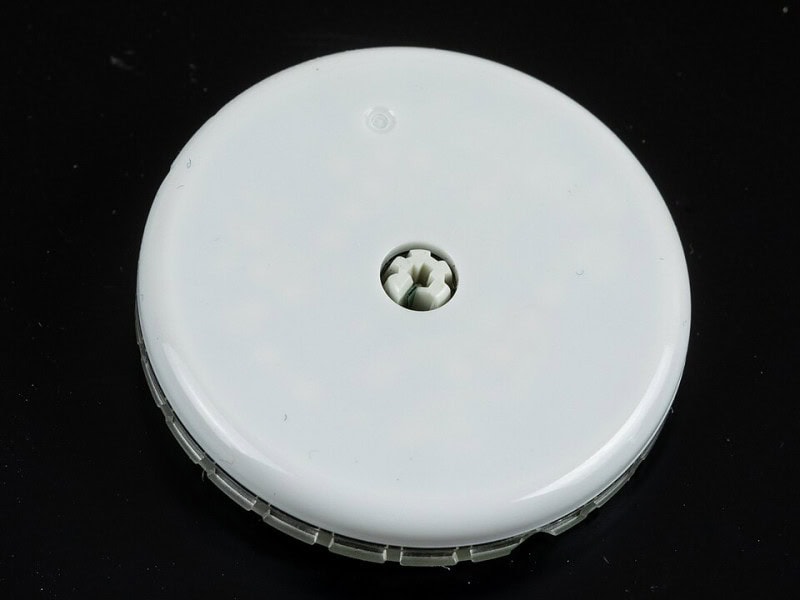
A continuous glucose monitor is a small sensor worn on the arm or abdomen, with a filament sitting in the interstitial fluid beneath the skin, reporting a reading every few minutes to a phone. It gives not a number but a curve — and a curve tells you whether you are falling, and how fast.
Sensors existed earlier, and the shift happened in two steps. In December 2016 the FDA cleared the Dexcom G5 for making treatment decisions without a confirming finger-prick. In September 2017 Abbott’s FreeStyle Libre added factory calibration, so the sensor needed no calibration finger-pricks either. Between them, those two approvals turned the technology from a supplement into a replacement. Paired with an insulin pump and a control algorithm, the same sensor became the basis for closed-loop “artificial pancreas” systems that adjust insulin automatically overnight.
6. mRNA Vaccines (2020)
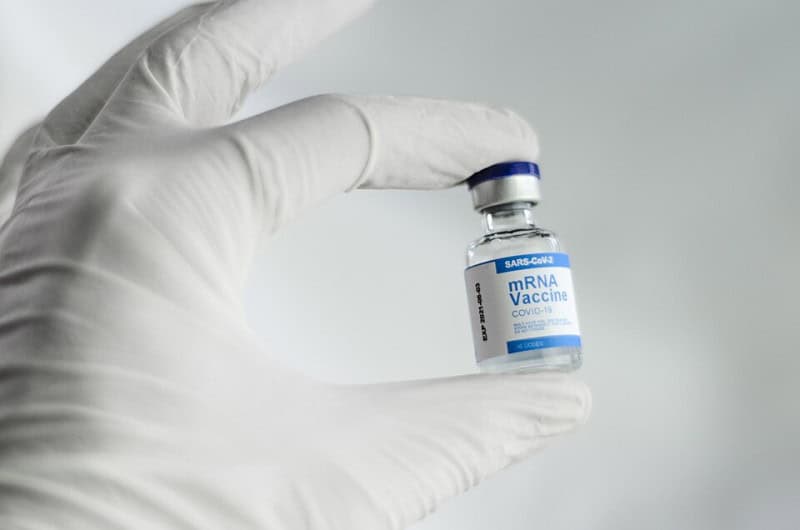
The speed is the headline and it deserves to be. The genetic sequence of SARS-CoV-2 was published on 11 January 2020. Moderna’s candidate vaccine entered a phase 1 trial on 16 March — 65 days later. (The widely quoted “63 days” runs from 13 January, when the vaccine sequence was finalised, rather than from publication.) Both it and the Pfizer-BioNTech vaccine had emergency authorisation before the year ended.
The reason that was possible is the reason mRNA matters. A conventional vaccine requires growing a virus or a protein, which is a manufacturing problem. An mRNA vaccine delivers instructions and lets your own cells make the protein, which is an information problem — and information can be redesigned in an afternoon.
Nothing about it was sudden. Katalin Karikó and Drew Weissman published the key modification in 2005, solving the problem that synthetic mRNA provoked a destructive inflammatory response, and spent years unable to get the work funded. They shared the 2023 Nobel Prize in Physiology or Medicine. Trials are now running for mRNA vaccines against influenza, RSV and several cancers.
7. AlphaFold and Protein Structure Prediction (2021)
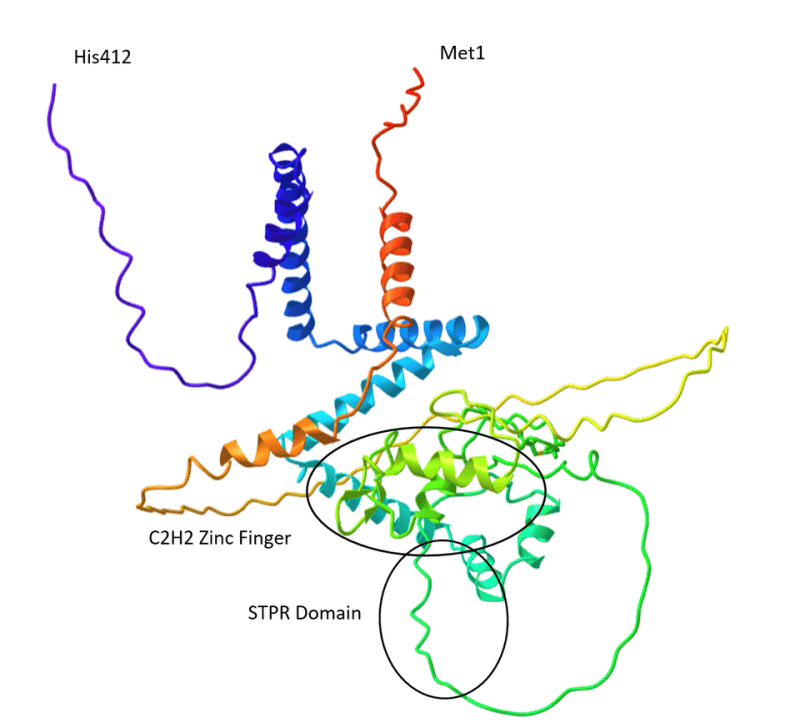
A protein’s function follows from its shape, and its shape follows from its amino acid sequence — but working out the second from the first defeated biology for fifty years. Determining a single structure experimentally could take a doctoral thesis.
AlphaFold 2, from DeepMind, effectively closed the gap. The first demonstration was CASP14 in 2020, where it predicted structures at accuracy comparable to experimental methods; this entry is dated to 2021, when the system and a database of predicted structures were released publicly and the result became usable by everyone else. That database now covers over 200 million proteins — very close to every one known to science.
“Solved” is doing a lot of work in that sentence. AlphaFold predicts a static structure well; proteins move, bind partners and change shape in ways it captures less well, and predictions for disordered regions remain unreliable. Demis Hassabis and John Jumper shared the 2024 Nobel Prize in Chemistry for it. It is the clearest case so far of machine learning producing a genuine scientific result rather than a product.
8. Genome Sequencing at Collapsing Cost (2003–present)
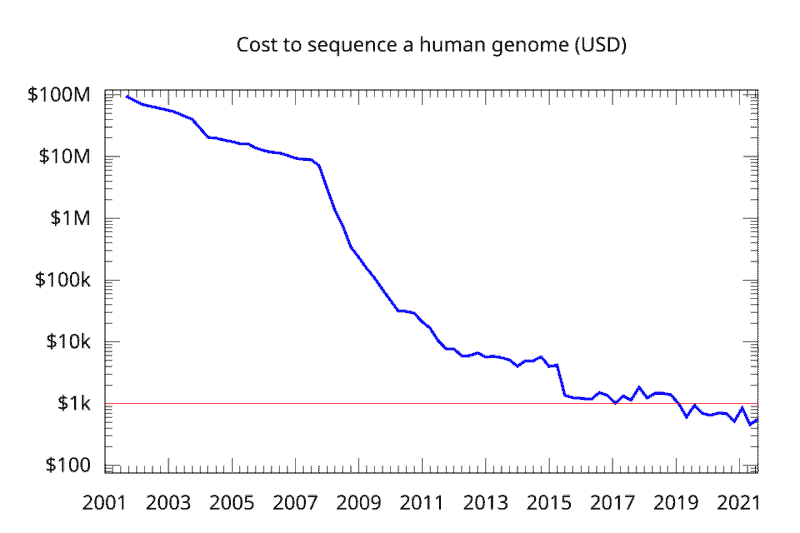
This entry is not a device. It is a price curve, and it belongs on the list because it changed what was thinkable.
The first human genome cost on the order of a billion dollars and took over a decade. By the mid-2010s the figure quoted for sequencing a human genome had fallen to around $1,000, and it has fallen further since. The US National Human Genome Research Institute, which has tracked this since 2001, notes the cost fell faster than Moore’s law would predict, with a step change around 2008 as second-generation sequencing arrived.
What that bought is routine use. Sequencing became something you do to an outbreak, to a tumour, or to a newborn in intensive care with an undiagnosed condition, rather than a national project. It is also why tracking SARS-CoV-2 variants in near-real time was possible at all.
9. Reusable Orbital Rockets (2015)
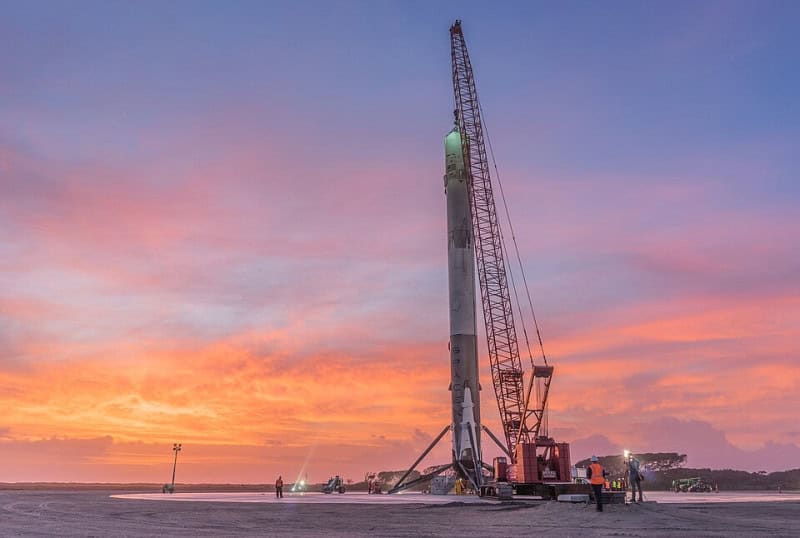
On 21 December 2015 the first stage of a Falcon 9 returned from the edge of space and landed upright on a pad in Florida. In April 2016 another landed on a ship at sea. In March 2017 a recovered booster flew a second mission.
Reusability had been attempted before — the Space Shuttle was partly reusable, and its refurbishment costs are part of why it never delivered the savings promised. The Falcon 9 difference was propulsive vertical landing of the stage that does most of the work, followed by turnaround measured in weeks.
The consequence is economic rather than technical. Launch cost per kilogram to orbit fell sharply and the number of objects launched per year rose accordingly. Whether that is entirely good is a live argument: the same economics enabled satellite constellations numbering in the thousands, with consequences for astronomy and orbital debris that are not resolved. It remains the most visually improbable engineering achievement of the century so far.
10. Gravitational Waves, Detected (2015)

On 14 September 2015 the two LIGO detectors registered a signal lasting about a fifth of a second: two black holes, roughly 29 and 36 times the mass of the Sun, spiralling together about 1.3 billion light years away.
Einstein predicted gravitational waves in 1916 and doubted they would ever be measurable. He had reason to. The distortion LIGO measured changed the length of a four-kilometre arm by about one ten-thousandth the width of a proton.
The instrument is the invention here. LIGO is an interferometer: a laser split down two perpendicular arms, reflected, recombined. A passing wave stretches one arm and squeezes the other, and the recombined beams fall out of step. Making that work required isolating the mirrors from every truck, wave and earthquake on the planet. The result was announced in February 2016 and took the 2017 Nobel Prize in Physics, opening a way of observing the universe that does not use light at all.
11. Powered Flight on Another Planet (2021)
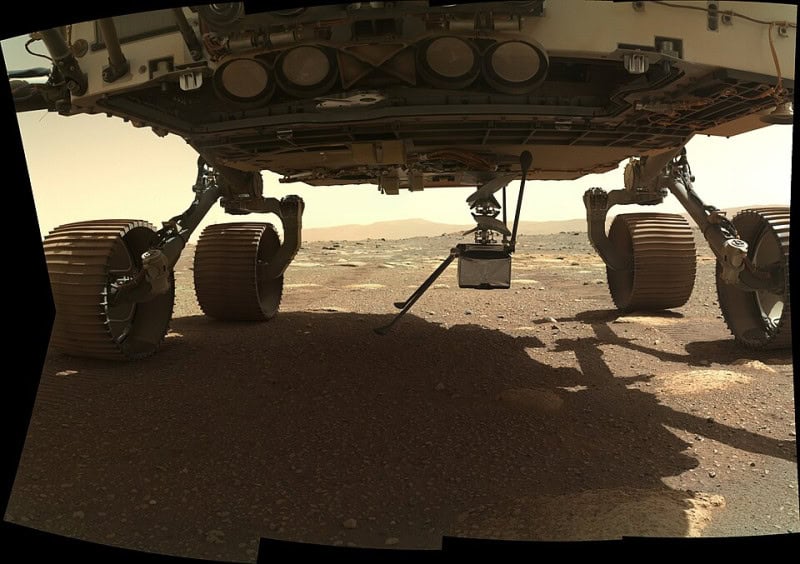
On 19 April 2021 a four-pound helicopter called Ingenuity lifted about three metres off the surface of Mars, hovered for thirty seconds, and landed. It was the first powered, controlled flight on another world.
The engineering problem is atmospheric. Mars has roughly 1% of Earth’s atmospheric density, so there is almost nothing for a rotor to push against — the equivalent of flying at about 100,000 feet on Earth, more than twice the altitude any helicopter has reached here — Jean Boulet’s 1972 record of 40,820 feet still stands. The answer was counter-rotating rotors more than a metre across, spinning near 2,500 rpm, on a vehicle light enough to lift with one hand.
Ingenuity was a technology demonstration expected to make five flights. It made 72, over nearly three years, before rotor damage ended flight operations in January 2024. It also changed mission planning: NASA now treats aerial scouting on Mars as an available option rather than a proposal.
12. Sample-Caching Mars Rovers (2021)
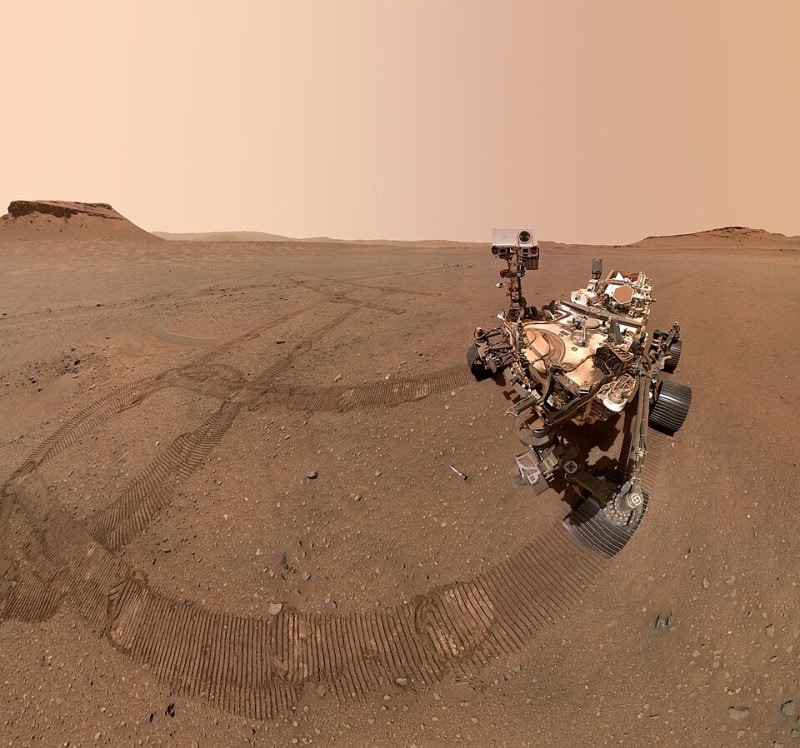
Perseverance landed in Jezero Crater in February 2021 carrying an instrument no previous rover had: a drill and a set of sealed titanium tubes.
Every Mars mission before it analysed samples where it found them, with whatever instruments it could carry, which constrains the science to what fits on a rover and survives launch. Perseverance instead collects rock cores, seals them, and leaves them in a cache for a future mission to retrieve — the first deliberate step in a campaign to bring Martian rock back to Earth. The logic is that terrestrial laboratories can do things no spacecraft can, and keep doing them for decades as techniques improve. Apollo lunar samples are still producing results half a century on.
There is a large caveat. The return half of Mars Sample Return has been repeatedly redesigned on cost and schedule grounds, and no confirmed retrieval date exists. The cache is sitting on Mars. Collecting it is the invention; recovering it is not yet done.
13. The James Webb Space Telescope (2021)
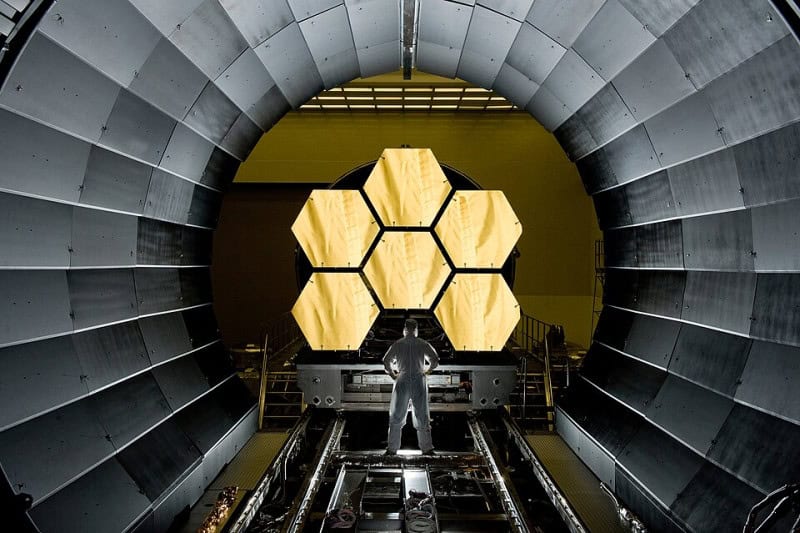
Webb launched on 25 December 2021 after roughly three decades of development and a great deal of public argument about its cost, which reached about $10 billion.
It is an infrared telescope, and almost every design decision follows from that. Infrared observation requires extreme cold, so Webb sits about 1.5 million kilometres from Earth at the second Lagrange point, behind a five-layer sunshield the size of a tennis court that keeps the mirror near 40 kelvin. The 6.5-metre primary mirror is too large for any fairing, so it is segmented into eighteen gold-coated hexagons that unfolded after launch.
That unfolding involved 344 single-point failures — mechanisms with no backup, in a place no one could reach. All of them worked. Because light from the most distant objects is stretched into the infrared by cosmic expansion, Webb sees galaxies that formed within a few hundred million years of the Big Bang, and has already found more mature early galaxies than models predicted.
14. Fusion Ignition (2022)
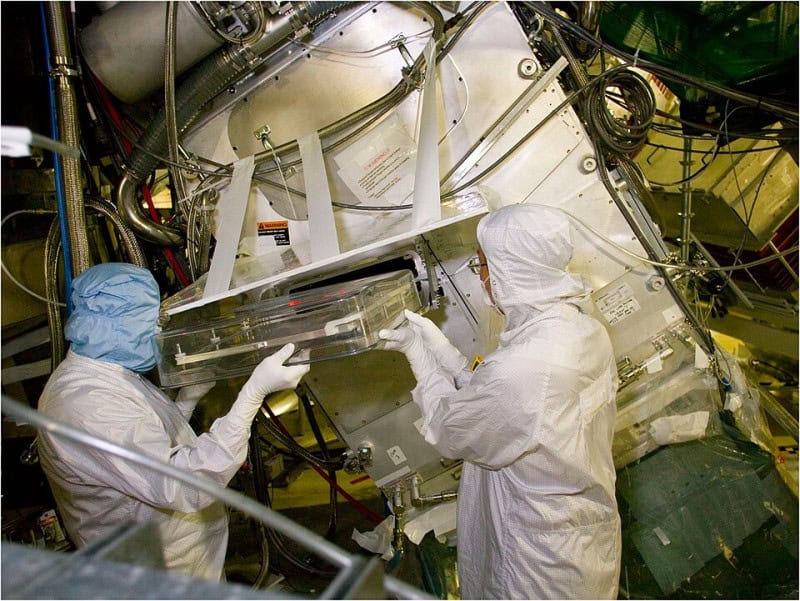
On 5 December 2022 the National Ignition Facility at Lawrence Livermore aimed 192 lasers at a peppercorn-sized capsule of hydrogen fuel and, for the first time in history, got more energy out of the fusion reaction than the lasers delivered into it: about 3.15 megajoules out for 2.05 megajoules in.
This is the achievement usually called ignition, and it had been the stated goal since the facility opened in 2009. It has been repeated several times since, at higher yields.
The caveat has to be stated clearly, because coverage frequently omitted it. The energy balance is measured at the target, not at the wall. Powering those lasers took on the order of 300 megajoules from the grid. NIF is not a power plant, was never designed as one, and its primary purpose is nuclear stockpile research. What changed is narrower and still significant: a fusion fuel capsule producing net energy gain went from theoretical to demonstrated.
15. Graphene (2004)
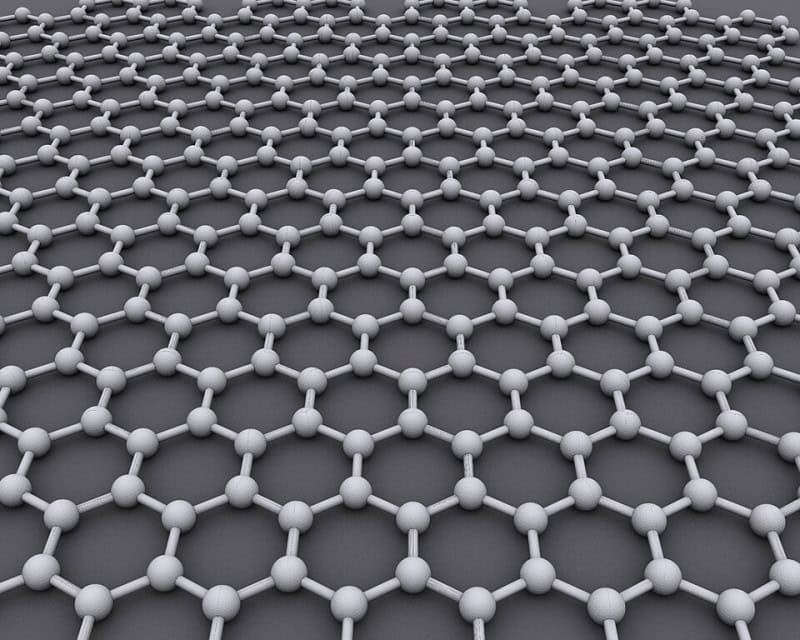
Graphene is a single layer of carbon atoms in a hexagonal lattice — one atom thick, the first genuinely two-dimensional material anyone had isolated.
It was believed for decades that such a sheet could not exist as a free-standing object, on the argument that thermal fluctuation would destroy it. In 2004 Andre Geim and Konstantin Novoselov at Manchester isolated it by repeatedly peeling graphite with adhesive tape until single layers remained on the substrate. They received the 2010 Nobel Prize in Physics.
Its properties read like a list of superlatives: stronger than steel by weight, an excellent conductor of heat and electricity, nearly transparent, impermeable to gases. Two decades on, graphene has not yet delivered the revolution the early coverage promised, with manufacturing at consistent quality and scale the persistent obstacle. It has found real uses in composites, coatings and battery additives, and its main scientific legacy may be that it opened an entire field of two-dimensional materials.
16. Perovskite Solar Cells (2009)
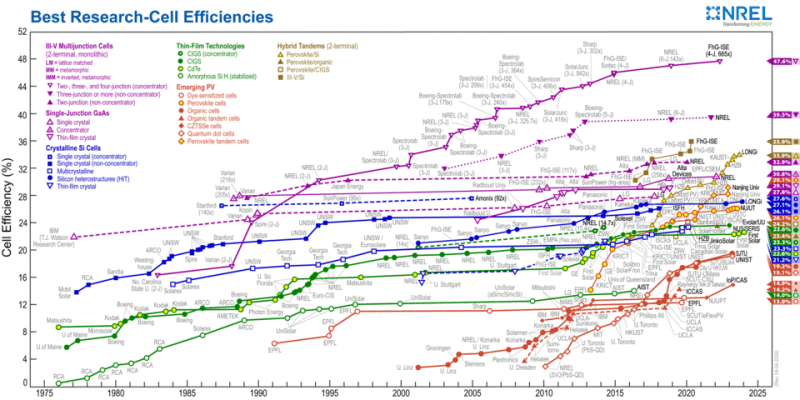
Perovskite solar cells went from a laboratory curiosity converting about 3.8% of incoming light in 2009 to certified efficiencies above 26% within roughly fifteen years — the fastest improvement of any photovoltaic technology on record.
The name refers to a crystal structure rather than a specific compound, which is part of the appeal: the chemistry can be tuned. They can be made at low temperature from solution, which points toward printing them rather than growing silicon ingots, and they can be layered on top of a conventional silicon cell to capture parts of the spectrum silicon wastes. Those tandem cells have exceeded 33%.
The obstacle is durability, and it is not a small one. Perovskites degrade under heat, moisture and ultraviolet light far faster than silicon, which routinely carries a 25-year warranty. Most contain lead, raising an end-of-life question. Included here because the efficiency trajectory is genuinely without precedent, with the durability problem stated plainly.
17. Cloud Computing (2006)
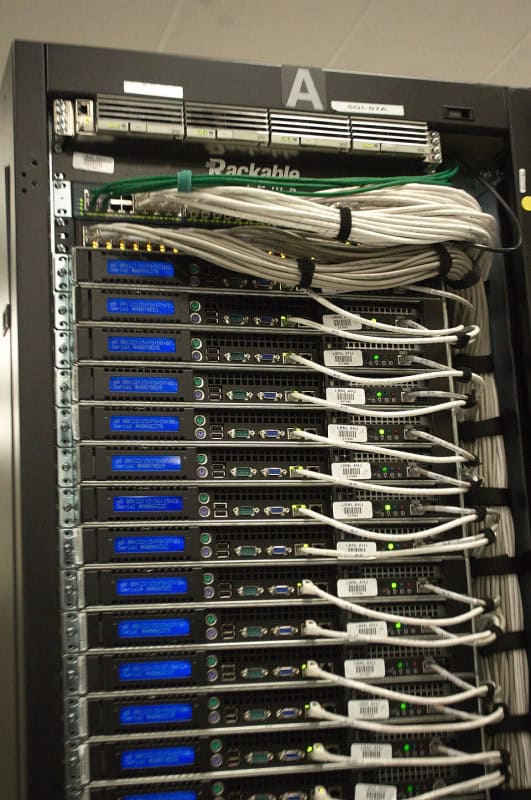
Renting computing is an old idea — mainframe time-sharing sold it in the 1960s, and the application service providers of the late 1990s sold a version of it too. What Amazon Web Services did, launching S3 in March 2006 and EC2 that August, was make it self-service, metered by the hour, and available to anyone with a credit card and no sales call.
Before this, a company that wanted to run software bought servers, sized for peak demand, and owned them whether or not they were busy. That was a capital barrier, and it selected for companies that already had capital. Afterwards, a person with a credit card could have the same infrastructure as a large corporation and pay only for what they used.
The consequence was structural rather than technical. Essentially every consumer technology company founded after 2006 was built on rented infrastructure, and the startup cost of a software business fell by orders of magnitude. The corresponding cost is concentration: a large fraction of the internet now depends on a small number of providers, and their regional outages take down thousands of unrelated services at once — a fragility that did not exist when everyone ran their own servers.
18. The Smartphone (2007)
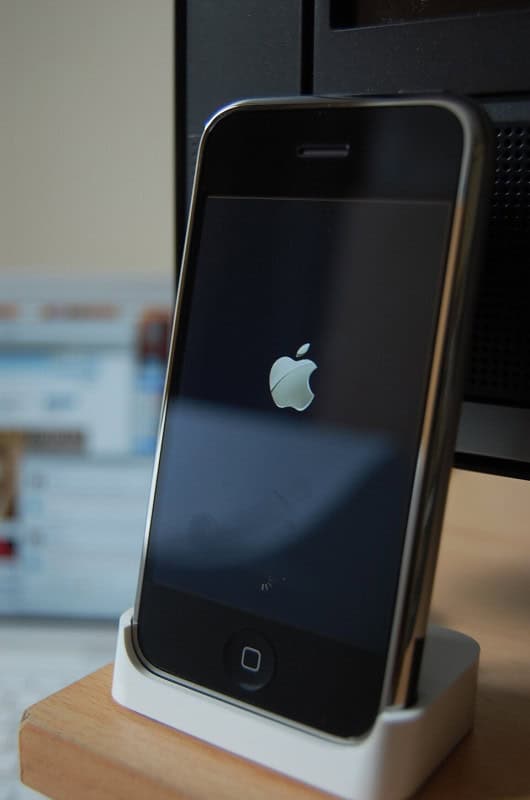
Every component of the original iPhone existed before it. Touchscreens, mobile internet, cameras in phones, music players, GPS — all shipped in earlier products, several of them for years. So did the smartphone itself: IBM’s Simon appeared in 1994, the Nokia 9000 in 1996, and the Ericsson R380 called itself a smartphone in 2000.
The invention was the combination, and specifically the decision to treat the whole front surface as a screen driven by fingers rather than a stylus or a keypad. That is why this entry is dated to 2007 rather than to any of its parts, and it is the clearest case of the third category set out at the top of this list: not a new capability, but the first version ordinary people could actually use.
What followed is hard to overstate. The smartphone absorbed the camera, the camcorder, the map, the music player, the portable games console, the alarm clock, the torch, the newspaper and a substantial share of the world’s photography and correspondence. It is also the entry with the most contested legacy: the same device is the subject of a serious and unresolved body of research on attention, sleep and adolescent mental health.
19. E-Ink Readers Reach the Mainstream (2007)
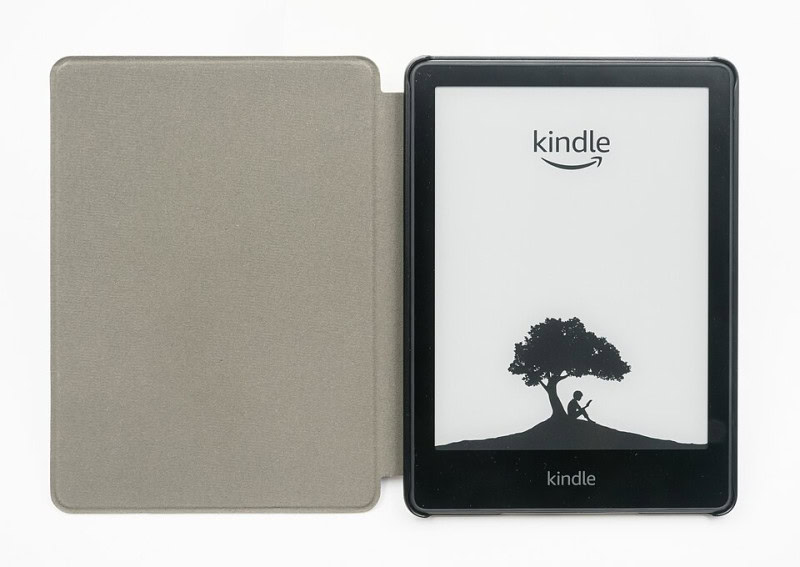
The Amazon Kindle launched in November 2007 and sold out in hours. It was not the first E Ink reader — Sony’s Librié shipped in Japan in 2004, and the Sony Reader reached the US in September 2006. The interesting part is the screen, and what Amazon put behind it.
Electrophoretic displays work nothing like an LCD or OLED. Millions of microcapsules hold black and white pigment particles in a clear fluid; a charge moves them to the top or bottom of the capsule. The result is a stable, reflective image that consumes power only when the page changes, and is read by ambient light exactly as ink on paper is. That yields two properties no emissive screen has matched: readability in direct sunlight, and battery life measured in weeks rather than hours.
The underlying research came out of the MIT Media Lab in the 1990s, so the display technology is not itself a 21st-century invention. What is 21st-century is the product, and specifically Amazon’s pairing of the screen with cellular delivery built into the device — Sony’s readers needed a computer and a cable. That is what made a bookshop something you carry. E-ink has since spread to shelf labels and signage, but the reader remains its defining use.
20. The Electric Car Stops Being a Compromise (2008)
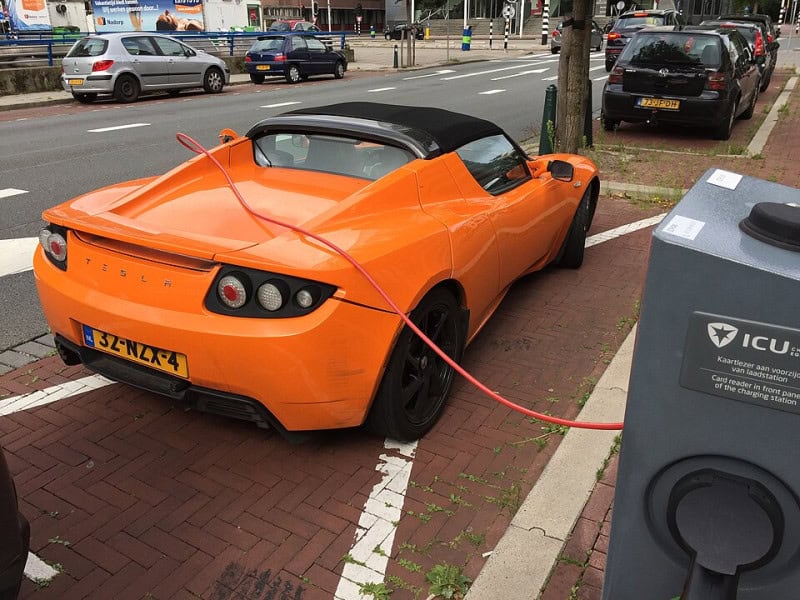
Electric cars are older than petrol ones. They were outselling internal combustion in the 1900s before cheap oil and the electric starter ended the argument for a century.
What the Tesla Roadster did in 2008 was narrower and more useful than inventing the electric car: it demonstrated that an electric car did not have to be a compromise. Previous modern EVs were small, slow and short-range, and were marketed as sacrifices made for virtue. The Roadster used thousands of laptop-type lithium-ion cells, went from rest to 60 mph in under four seconds, and claimed a range over 200 miles.
That mattered because it changed what other manufacturers believed the category could be. The Nissan Leaf followed in 2010 as the first mass-produced EV aimed at ordinary buyers. The remaining objections are the ones the industry still argues about: charging infrastructure, battery raw-material supply chains, and the fact that an EV’s lifetime emissions depend heavily on how its electricity is generated.
21. The Tablet (2010)
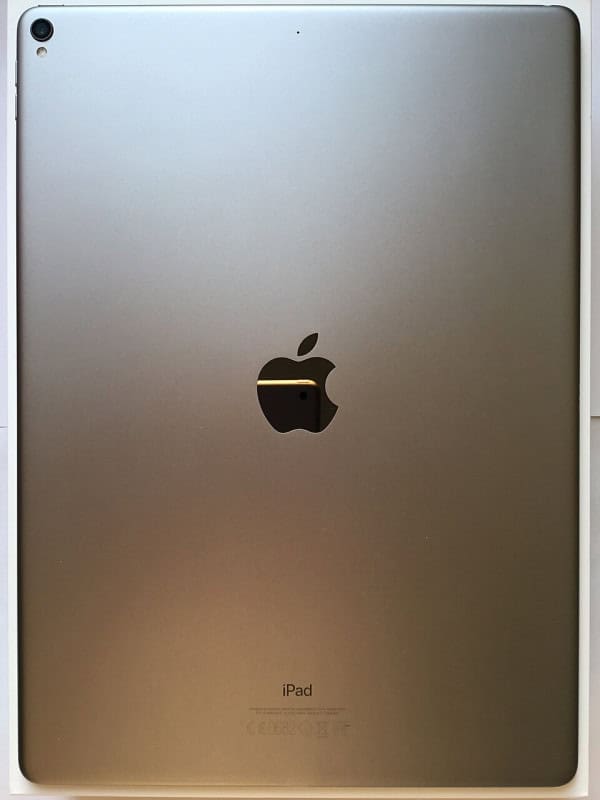
Tablet computers existed for years before the iPad — Bill Gates demonstrated the Microsoft Tablet PC at Comdex in 2001 and conforming machines shipped in November 2002, and pen-driven slates go back further still. They did not sell.
The 2010 iPad is on this list for the same reason the smartphone is: it found the version people would actually use. The change was to stop treating a tablet as a laptop without a keyboard and build it instead as a large touch device with a touch operating system, near-instant wake, and battery life measured in days.
Its most durable effect has been in places nobody targeted at launch. Tablets became the default computer for very young children and for many older people who never got on with a mouse; they replaced paper charts in hospitals, menus in restaurants and clipboards on shop floors; and they became a serious tool for illustrators once pressure-sensitive styluses arrived. The category has never displaced the laptop, which is worth saying plainly. It settled into being a third device rather than a replacement.
22. Consumer Drones (2013)
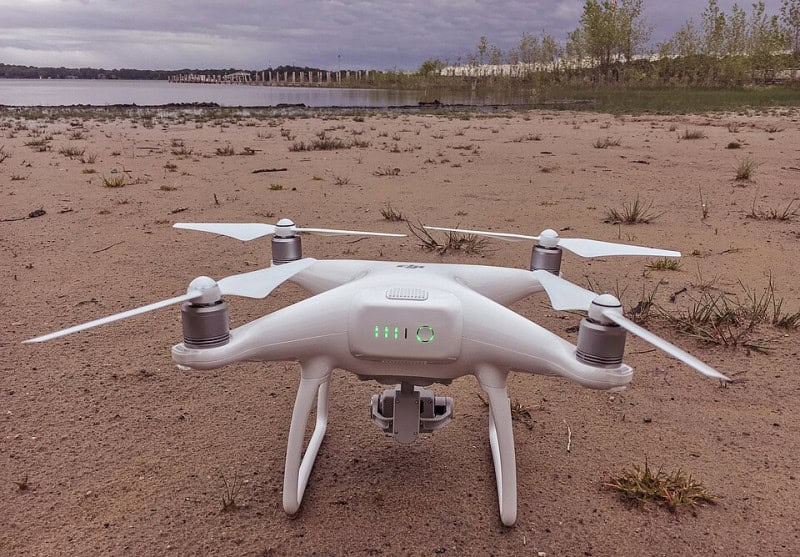
Remote-controlled aircraft are old, and military drones predate this entry by decades. What arrived in 2013 with the DJI Phantom was a flying camera that a person with no flying skill could operate.
The enabling parts came from the smartphone supply chain: cheap MEMS gyroscopes and accelerometers, GPS receivers, compact lithium batteries and small powerful processors. Together they allowed the aircraft to hold its own position, return to its launch point on low battery, and keep a camera level while the airframe pitched — meaning the operator flew a viewpoint rather than an aeroplane.
The visual consequence was immediate. Aerial shots that had required a helicopter and a five-figure budget became available to wedding photographers, estate agents, farmers and film students. The regulatory consequence took longer and is still being worked out, across registration requirements, altitude limits, no-fly zones around airports and remote identification rules that vary by country.
23. Self-Driving Cars on Public Roads (2015)
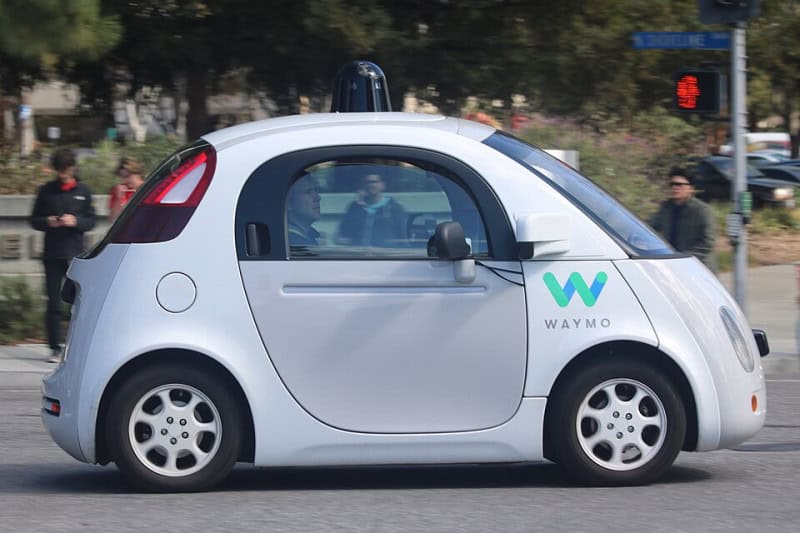
Autonomous driving has an unusually well-documented starting gun: the DARPA Grand Challenge of 2004, in which no vehicle finished the course, and 2005, in which five did.
The 21st-century invention is the removal of the driver in real traffic. Google’s project ran a fully driverless trip on public roads in Austin in 2015 with no steering wheel and no human able to intervene. Waymo opened an invitation-only Early Rider programme in Phoenix in 2017, with safety drivers, and launched Waymo One as a commercial service in December 2018.
The technology is a sensor-fusion problem: lidar building a three-dimensional point cloud, radar for velocity and bad weather, cameras for colour and text, and a great deal of software reconciling them against a prior map. Deployment has been far slower and more geographically restricted than the confident predictions of the mid-2010s, which is itself the lesson. The remaining difficulty is not ordinary driving but the rare, ambiguous event — and rare events are common across millions of miles.
24. True Wireless Earbuds (2016)
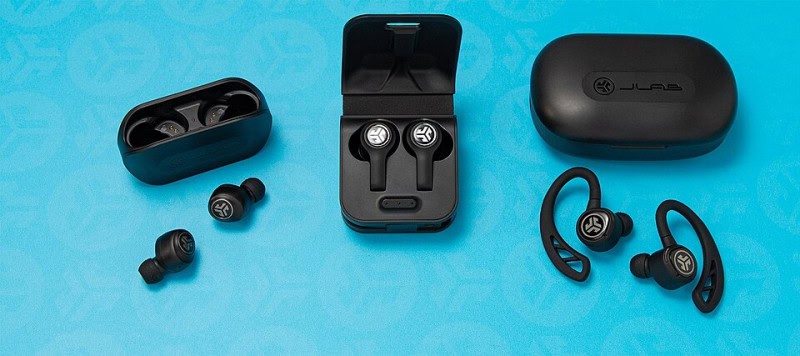
Bluetooth headphones existed for years, and most kept a wire between the two earpieces, because keeping two independent earbuds in sync with each other and with a phone was harder than it looked. Onkyo’s W800BT and Earin’s buds both solved it and shipped in 2015, a year before AirPods were announced.
The solution that made the category work was to have one earbud maintain the connection to the phone and relay to the other, with later designs having both listen to the same stream. Apple’s AirPods, announced in September 2016, paired this with an automatic connection process and a charging case, and the format became ubiquitous within a few years.
Included because it is a genuine engineering problem solved rather than a styling exercise: sub-millisecond synchronisation, an antenna in a space smaller than a thumbnail, and a battery that fits in an ear. The environmental objection is real and belongs here too. Sealed devices with small lithium cells and a fixed lifespan are difficult to repair and largely unrecyclable, and the category has produced an enormous volume of unfixable electronic waste.
25. Desktop 3D Printing (2005)
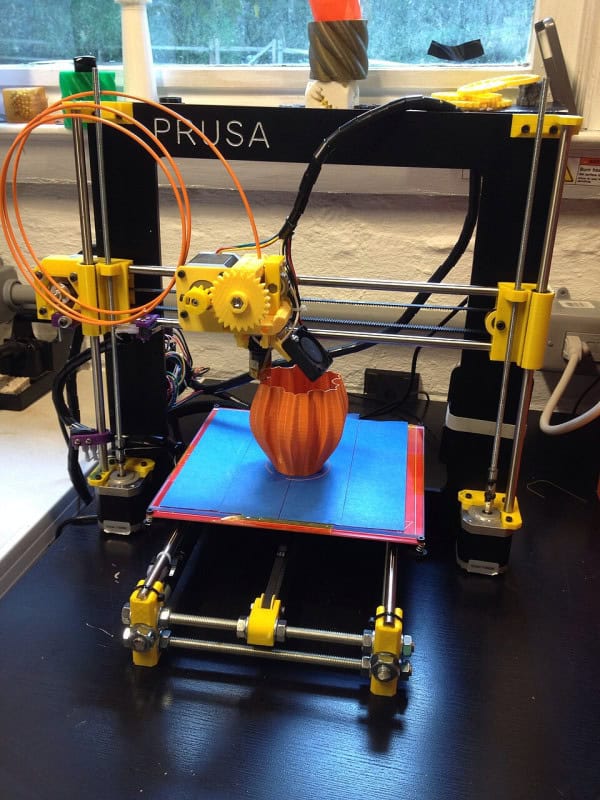
Industrial additive manufacturing dates to the 1980s, and stereolithography was patented in 1986. What changed in 2005 was the RepRap project, begun by Adrian Bowyer at the University of Bath with an unusual design goal: a 3D printer that could print most of its own parts.
The point was not self-replication as a novelty. It was that an open-source, self-copying machine could spread without a manufacturer, and it did — the entire consumer 3D-printing industry descends from RepRap designs, and the expiry of key fused-deposition patents around 2009 opened the field further. A machine costing tens of thousands of dollars became one costing a few hundred, sitting in schools, workshops and bedrooms.
Its most important use has turned out to be prototyping and spare parts rather than the mass personal manufacturing early coverage predicted. During 2020 the same distributed capacity produced face-shield frames and ventilator components when supply chains failed — a use case nobody designed for.
Greatest Inventions of the 21st Century — In Conclusion
Look at these twenty-five together and one pattern dominates: almost none of them are a single invention.
The smartphone is a combination. CRISPR is a bacterial defence mechanism redirected. Ingenuity is a helicopter, which is old, flown in an atmosphere that barely supports one. AlphaFold is a fifty-year-old question answered with a machine-learning method built for something else. The century’s characteristic move is not invention from nothing but assembly — taking things that already worked separately and making them work together, usually because one component finally got cheap enough.
The second pattern is speed of consequence. The nineteenth century took decades to move an invention from laboratory to household. mRNA vaccines went from a published sequence to hundreds of millions of doses in about eighteen months.
The third is that most of these come with a caveat attached. Fusion ignition was measured at the target, not the wall. Graphene has not yet delivered what was promised. The Mars samples are still on Mars. Self-driving cars are limited to a handful of cities. These are real achievements and unfinished ones at the same time — which is roughly what a century looks like when you are only a quarter of the way through it.
Compare that with the greatest inventions of the 20th century, where the dust has settled and the winners are obvious. It is a useful reminder that the obvious ones were not obvious at the time either.
Image Credits
All 25 images are public domain, CC0, or used under a Creative Commons licence, and every file was checked on its Wikimedia Commons file page. The sixteen CC BY and CC BY-SA files name their author, as those licences require; the nine public-domain and CC0 files are listed for provenance.
- 1. file page on Wikimedia Commons — CC BY 2.0, Jon Callas
- 3. file page on Wikimedia Commons — CC BY-SA 3.0, Doneuron
- 5. file page on Wikimedia Commons — CC BY-SA 4.0, Raimond Spekking
- 6. file page on Wikimedia Commons — CC BY 4.0, Spencerbdavis
- 7. file page on Wikimedia Commons — CC BY-SA 4.0, Glitt006
- 10. file page on Wikimedia Commons — CC BY-SA 3.0, Umptanum
- 14. file page on Wikimedia Commons — CC BY-SA 3.0, Lawrence Livermore National Security
- 15. file page on Wikimedia Commons — CC BY-SA 3.0, AlexanderAlUS
- 18. file page on Wikimedia Commons — CC BY-SA 2.0, Andrew, London
- 19. file page on Wikimedia Commons — CC BY-SA 4.0, Jacek Halicki
- 20. file page on Wikimedia Commons — CC BY 2.0, FaceMePLS
- 21. file page on Wikimedia Commons — CC BY-SA 4.0, Pengjiajie
- 22. file page on Wikimedia Commons — CC BY-SA 2.0, Tony Webster
- 23. file page on Wikimedia Commons — CC BY-SA 4.0, Grendelkhan
- 24. file page on Wikimedia Commons — CC BY-SA 4.0, JLabPR
- 25. file page on Wikimedia Commons — CC BY 2.0, John Abella
- 2. file page on Wikimedia Commons — Public domain
- 4. file page on Wikimedia Commons — Public domain
- 8. file page on Wikimedia Commons — Public domain
- 9. file page on Wikimedia Commons — CC0
- 11. file page on Wikimedia Commons — Public domain
- 12. file page on Wikimedia Commons — Public domain
- 13. file page on Wikimedia Commons — Public domain
- 16. file page on Wikimedia Commons — Public domain
- 17. file page on Wikimedia Commons — CC0