
A monument, in the strict sense, is a structure built to make people remember: a victory, a death, a founding, a catastrophe. That is a narrower idea than “landmark”, and this list keeps to it. The arches, columns, obelisks, tombs and memorials below were not built to be lived in, prayed in or governed from; they were built to stand in a public place and say “this happened here, and it mattered”. The great buildings that often share the word, the Taj Mahal, the Colosseum, the pyramids, have their own page on the most famous buildings in the world, and the figures in bronze and stone, from the Statue of Liberty to the Lincoln Memorial, are on the most famous statues in the world. Nothing on either of those lists is repeated here.
What is left is still a crowded field. Rome invented the triumphal arch and the commemorative column and Europe spent two thousand years copying both; the First World War produced memorials to the missing on a scale nobody had attempted before; and three of the entries are tombs that became something larger than the person inside them. The twenty-five are grouped by type rather than ranked, each with what it commemorates, who built it and when, and where it stands, with the sources at the end and a photograph of every one.
Triumphal arches and gates
1. Arc de Triomphe, Paris (1836)
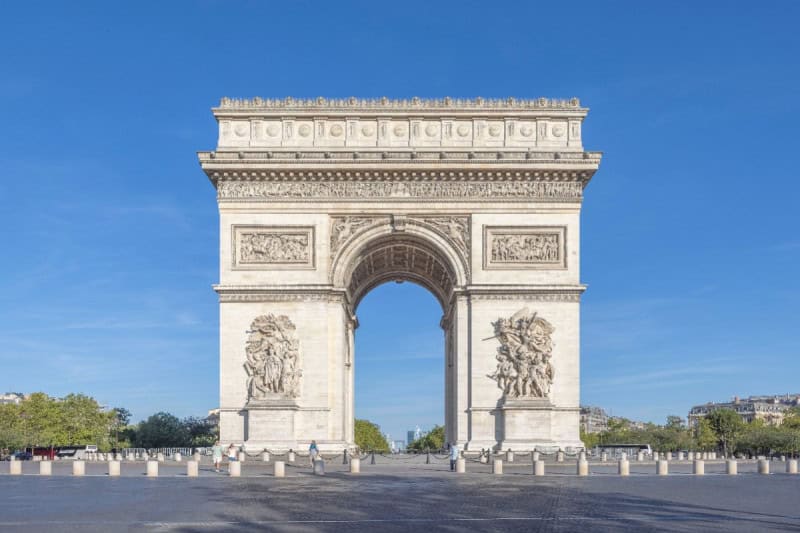
Napoleon ordered it in 1806, in the weeks after Austerlitz, as a monument to the armies of the Revolution and the Empire, and it took thirty years and three regimes to finish: the architect Jean-François Chalgrin died in 1811, work stopped with the Empire in 1814, and the arch was finally completed under Louis-Philippe in 1836. At about fifty metres it was the largest arch in the world for a century. The names of French victories and of hundreds of generals are cut into its walls, François Rude’s relief of the departing volunteers of 1792, known as La Marseillaise, stands on its eastern pier, and since 1921 the tomb of France’s Unknown Soldier of the First World War has lain beneath it, with a flame that has been rekindled every evening since 1923.
2. Brandenburg Gate, Berlin (1791)
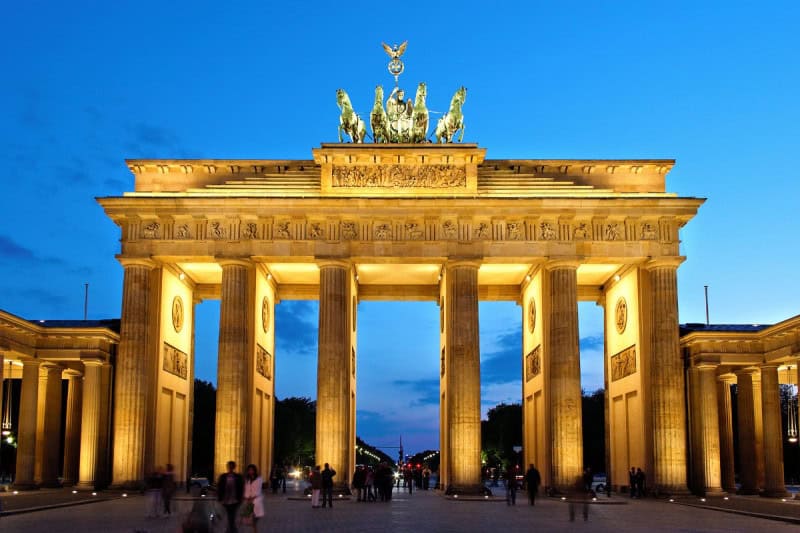
Carl Gotthard Langhans built the gate for the King of Prussia between 1788 and 1791 as a ceremonial entrance to the city, modelled on the Propylaea of the Athenian Acropolis, and Johann Gottfried Schadow’s Quadriga, a goddess driving a four-horse chariot, was set on top in 1793. Napoleon carried the Quadriga off to Paris in 1806 and it came back in 1814. The gate’s modern meaning comes from the twentieth century: it survived the bombing of Berlin as one of the few structures standing on Pariser Platz, and from 1961 to 1989 it stood inside the death strip of the Berlin Wall, visible from both sides and reachable from neither. Its reopening on 22 December 1989 is the image most people hold of the Wall coming down.
3. Arch of Constantine, Rome (AD 315)
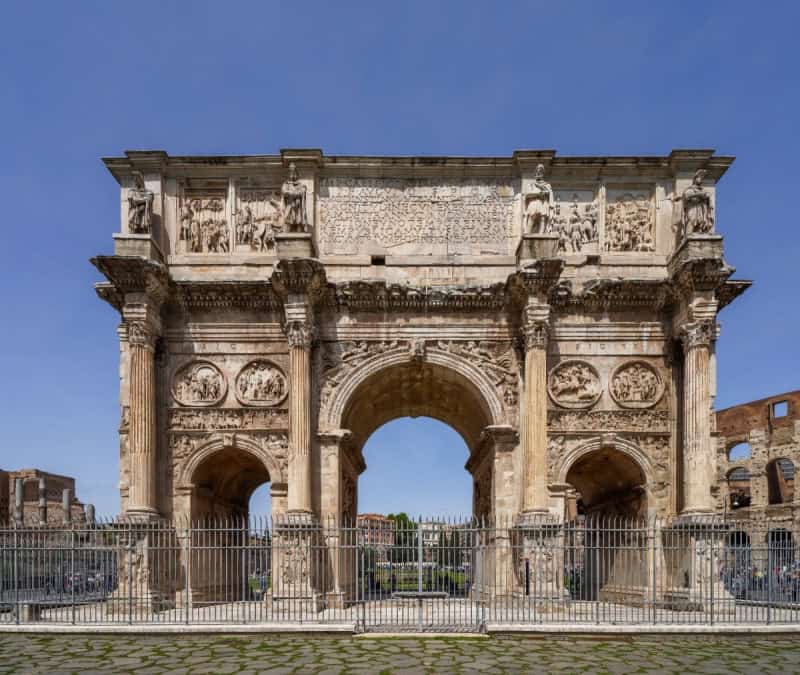
The largest surviving Roman triumphal arch, dedicated by the Senate in 315 to mark ten years of Constantine’s rule and his victory over Maxentius at the Milvian Bridge in 312, the battle that put a Christian emperor on the throne. It stands beside the Colosseum on the route of the ancient triumphal processions, about twenty-one metres high with three passages. Much of its sculpture is older than the arch: reliefs and statues were taken from monuments of Trajan, Hadrian and Marcus Aurelius and reused, with the earlier emperors’ heads recut as Constantine’s. The practice, called spolia, has made the arch a textbook for the way late Roman art borrowed from the empire’s second century.
4. Gateway Arch, St. Louis (1965)
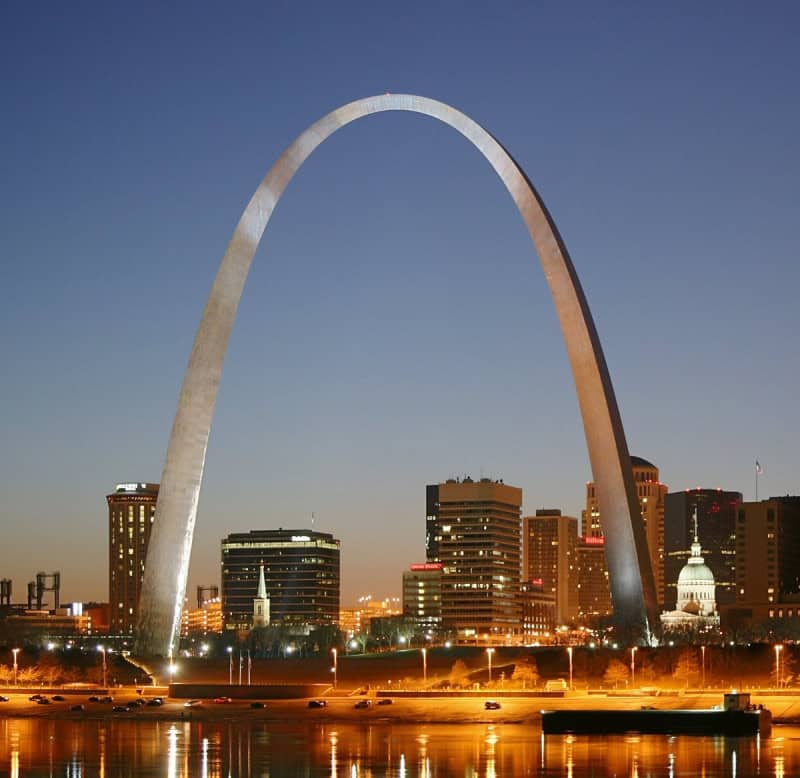
Eero Saarinen won the competition for a memorial to America’s westward expansion in 1948 with a stainless-steel catenary arch; he died in 1961, before construction began in 1963, and the final piece was set in place in October 1965. The arch is 630 feet (192 metres) tall and the same distance wide at its base, which makes it the tallest arch in the world and the tallest man-made monument in the Western Hemisphere. Visitors ride to the top in small tram capsules that climb inside each leg. It stands on the Mississippi riverfront where the city was founded, on the site of the old warehouses from which the fur trade and the wagon trains set out, and the surrounding grounds became Gateway Arch National Park in 2018.
5. India Gate, New Delhi (1931)
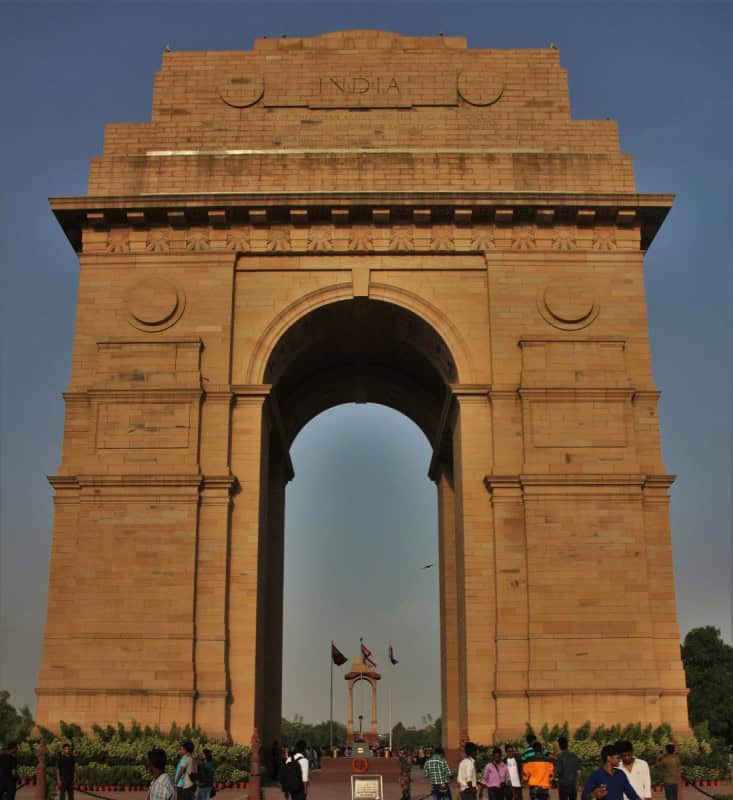
Edwin Lutyens, the architect of New Delhi, designed the All-India War Memorial as the eastern end of the capital’s ceremonial axis; the foundation stone was laid in 1921 and the arch was dedicated in 1931. It commemorates the soldiers of the British Indian Army who died in the First World War and the Third Anglo-Afghan War of 1919, and more than thirteen thousand names of the dead are inscribed on it. At forty-two metres it is one of the largest war memorials in the world, and its lawns are among the most used public spaces in Delhi. An eternal flame for the unknown soldier, the Amar Jawan Jyoti, burned beneath the arch from 1972 until it was merged with the flame at the new National War Memorial nearby in 2022.
6. Menin Gate, Ypres, Belgium (1927)
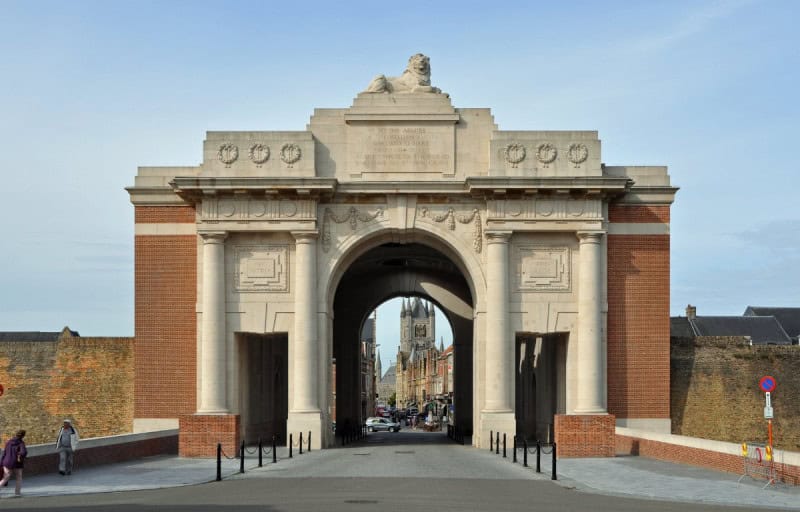
The Menin Gate stands on the eastern edge of Ypres, on the road along which hundreds of thousands of British and Commonwealth soldiers marched out to the Salient during the First World War. Reginald Blomfield’s memorial, unveiled on 24 July 1927, carries the names of more than 54,000 of them who died in the Salient before 16 August 1917 and have no known grave; the missing from after that date are named at Tyne Cot cemetery, because the gate ran out of room. Every evening at eight o’clock the traffic is stopped and buglers from the town’s fire brigade sound the Last Post beneath the arch. The ceremony began in 1928 and has been held every night since, except during the German occupation of 1940 to 1944, when it moved to England.
Columns and obelisks
7. Nelson’s Column, London (1843)
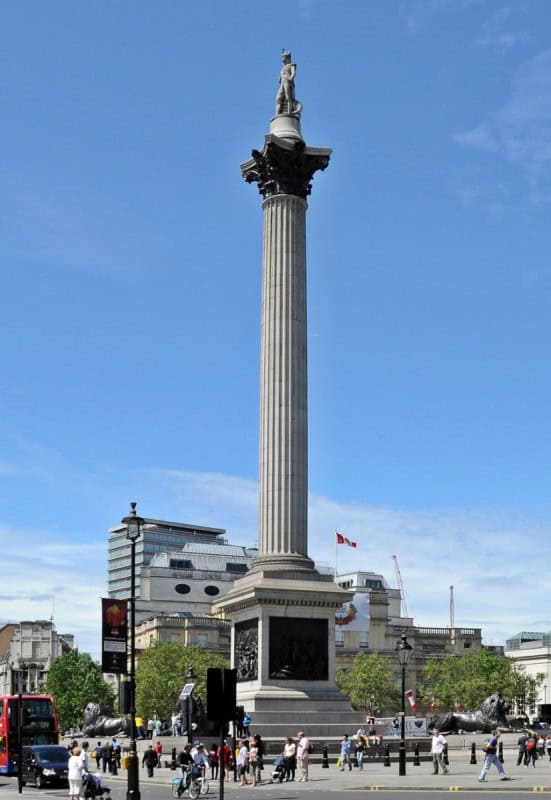
Trafalgar Square was laid out in the 1830s and 1840s to commemorate the naval victory of 1805, and the column to Horatio Nelson, who died in the battle, went up at its centre between 1840 and 1843 to William Railton’s design. The granite Corinthian column with E. H. Baily’s sandstone statue on top stands about fifty-two metres from the pavement to the top of Nelson’s hat. The four bronze relief panels at the base, showing Nelson’s battles, were cast from captured French cannon, and Edwin Landseer’s four bronze lions were added in 1867, late enough that the sculptor was mocked for the delay. The column has been the backdrop to London’s political demonstrations, celebrations and New Year crowds ever since.
8. Trajan’s Column, Rome (AD 113)
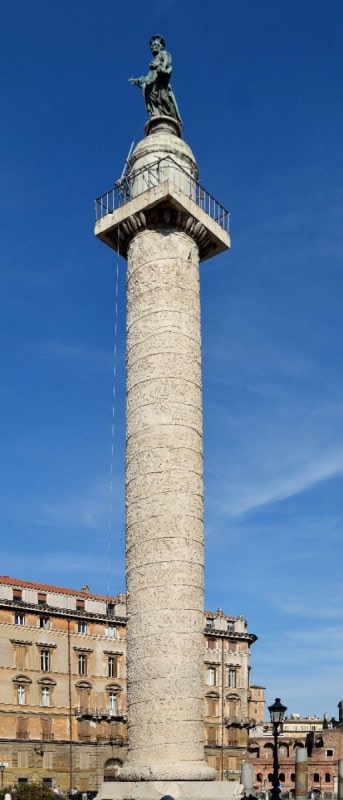
The original commemorative column, dedicated in 113 in Trajan’s new forum to record his conquest of Dacia, modern Romania, in two wars between 101 and 106. The marble shaft is about thirty metres high and carries a spiral frieze some 190 metres long, with more than two thousand figures, that winds twenty-three times from base to top and tells the story of the campaigns in continuous narrative: river crossings, sieges, sacrifices, surrenders, the emperor appearing again and again. Trajan’s ashes were placed in the base after his death in 117. The bronze statue of the emperor that stood on top was lost in the Middle Ages and replaced by a figure of St Peter in 1587. Every column on this list, from Nelson’s to Berlin’s, descends from this one.
9. Washington Monument, Washington, D.C. (1884)
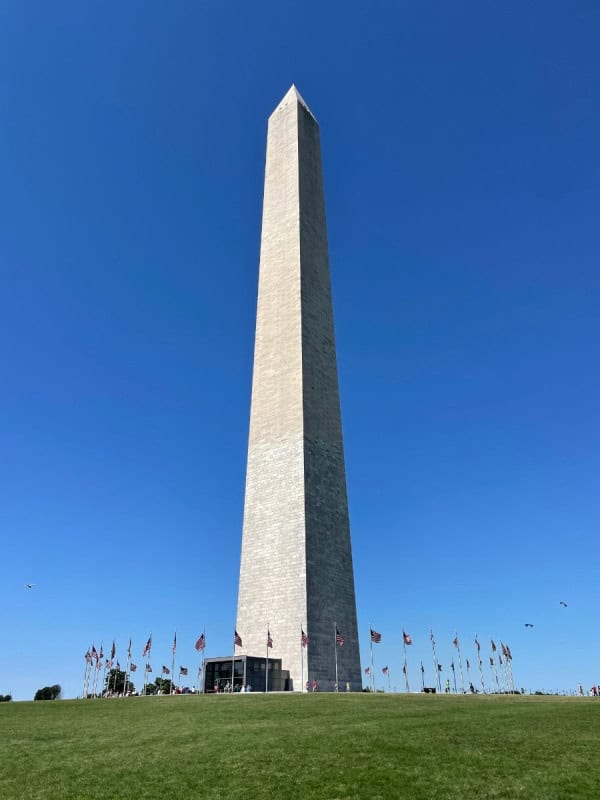
The obelisk to George Washington on the National Mall was begun in 1848 to Robert Mills’s design and took thirty-six years to finish, because the money ran out in 1854 and the Civil War intervened; the stump stood at about a third of its height for more than twenty years, and the change in the colour of the marble about 150 feet up marks where work resumed in 1879. It was completed in 1884 and dedicated in 1885, and at 555 feet (169 metres) it was the tallest structure in the world until the Eiffel Tower overtook it in 1889. It remains the tallest stone structure and the tallest obelisk in the world. Visitors ride an elevator to the observation windows at the top, and 193 memorial stones donated by states, cities, societies and foreign governments line the stairwell inside.
10. Luxor Obelisk, Paris (c. 1250 BC; erected 1836)
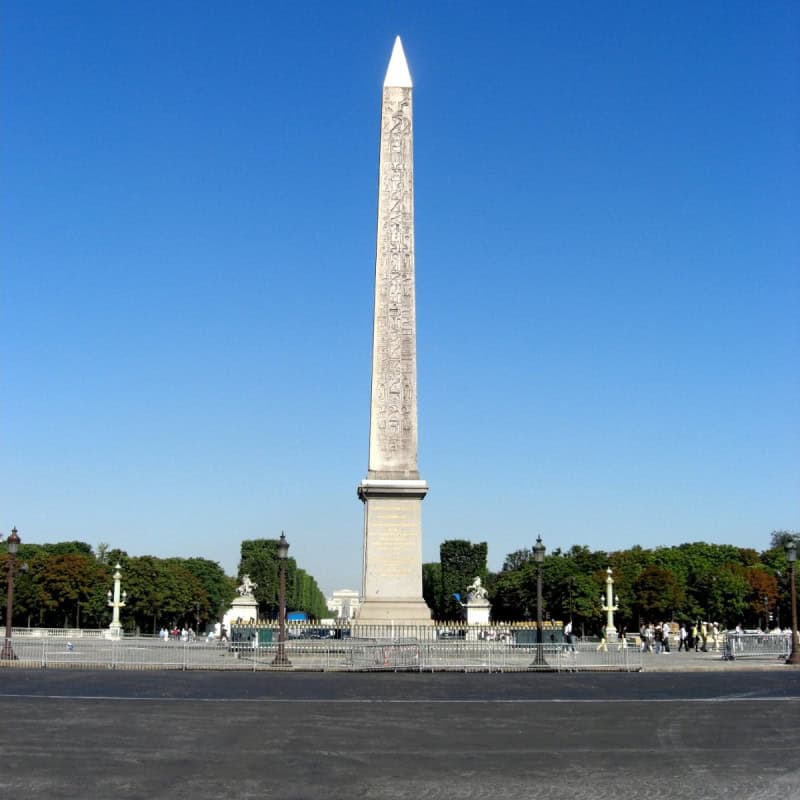
The oldest object on this list is the obelisk at the centre of the Place de la Concorde, which stood for more than three thousand years at the entrance to the temple of Luxor, where Ramesses II had raised it with its twin. Muhammad Ali, the ruler of Egypt, gave both obelisks to France in 1830; only this one, about twenty-three metres of pink granite weighing around 230 tonnes, made the journey, and the engineering of its lowering, shipping and raising is recorded in diagrams on its pedestal. It was set up on 25 October 1836 in front of the king and a crowd of two hundred thousand, on the square where Louis XVI had been guillotined. The gilded cap on its point was added in 1998 to replace one lost in antiquity, and the twin still stands at Luxor.
11. Victory Column, Berlin (1873)
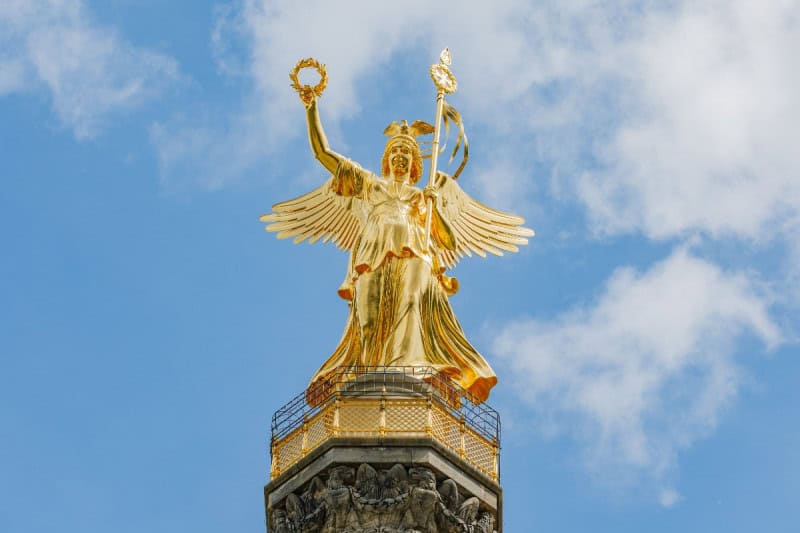
The Siegessäule was designed by Heinrich Strack to commemorate Prussia’s victory over Denmark in 1864, and by the time it was inaugurated in 1873 it had acquired two more wars to celebrate, against Austria in 1866 and France in 1870 and 1871; the gilded cannon barrels set into the column’s flutes were captured from the Danes, the Austrians and the French in turn. The bronze figure of Victoria on top, by Friedrich Drake, is eight metres tall and known to Berliners as Goldelse. The column originally stood in front of the Reichstag; in 1938 and 1939 the Nazi government moved it to its present site at the Großer Stern in the Tiergarten and added a drum, raising it to about sixty-seven metres. A viewing platform below the statue is reached by 285 steps.
12. The Monument to the Great Fire of London (1677)
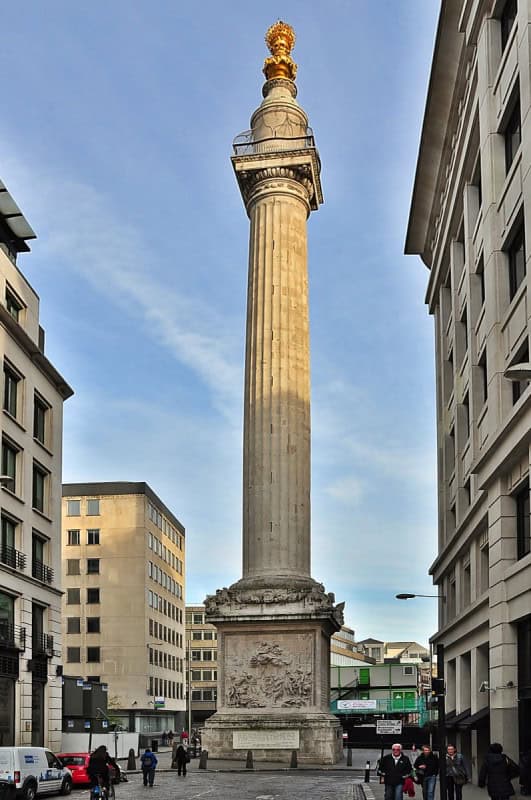
Known simply as the Monument, the Doric column near London Bridge was built between 1671 and 1677 to Christopher Wren and Robert Hooke’s design to commemorate the fire that destroyed most of the medieval City in September 1666. It is 202 feet (61.6 metres) high, and it stands 202 feet from the site of the bakery in Pudding Lane where the fire began, so that if it fell in the right direction it would touch the spot. A gilded urn of flames crowns it, and 311 steps climb inside to a viewing platform; Hooke also meant the hollow shaft to serve as a giant telescope and a laboratory for pendulum experiments, which the vibration of traffic defeated. It is the tallest isolated stone column in the world.
Tombs and mausoleums
13. Castel Sant’Angelo, Rome (AD 139)
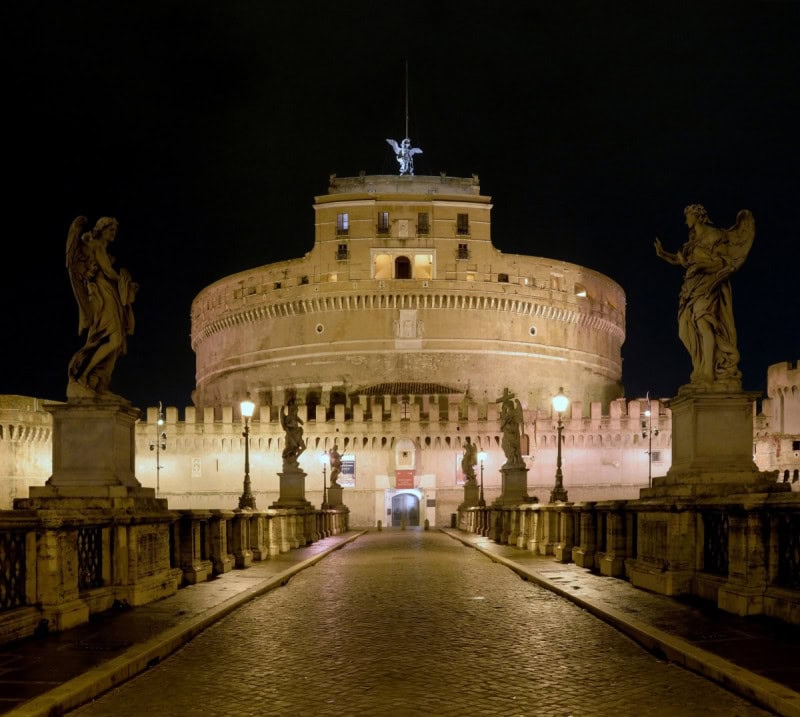
The emperor Hadrian began his own mausoleum on the right bank of the Tiber around 134 and his successor Antoninus Pius completed it in 139, a great drum of a tomb that held the ashes of emperors until Caracalla in 217. Its later life is the reason for its name: it was absorbed into the city walls, became a fortress, then the popes’ castle and prison, linked to the Vatican by the covered passage of the Passetto di Borgo along which Clement VII escaped during the Sack of Rome in 1527. The archangel Michael, who according to legend appeared on the summit sheathing his sword to signal the end of the plague of 590, stands on top in bronze, in a statue of 1753. It is now a national museum, and the bridge in front of it, Hadrian’s own, carries the angels designed by Bernini in the 1660s.
14. Humayun’s Tomb, Delhi (1572)
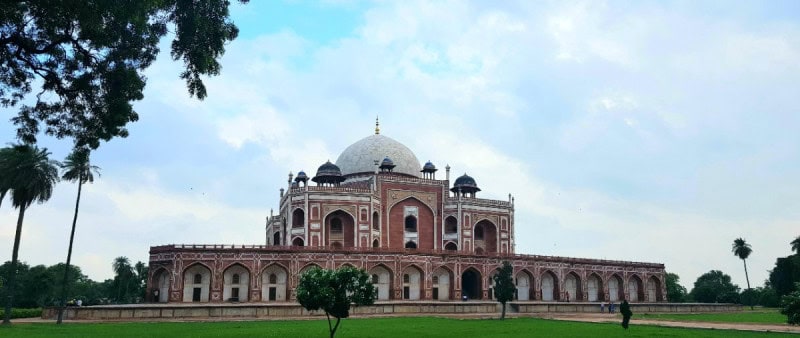
The tomb of the second Mughal emperor was commissioned by his widow, Bega Begum, designed by the Persian architect Mirak Mirza Ghiyas and completed in 1572. It was the first garden tomb on the Indian subcontinent: a red sandstone and white marble building set at the centre of a square charbagh garden divided by water channels, with a double dome and a symmetry that the dynasty would refine for the next century. Its influence is the reason it is here, because it is the direct ancestor of the Taj Mahal, begun by Humayun’s great-grandson Shah Jahan sixty years later. It has been a UNESCO World Heritage Site since 1993, and a long restoration of the building and its gardens was completed in 2013.
15. Lenin’s Mausoleum, Moscow (1930)
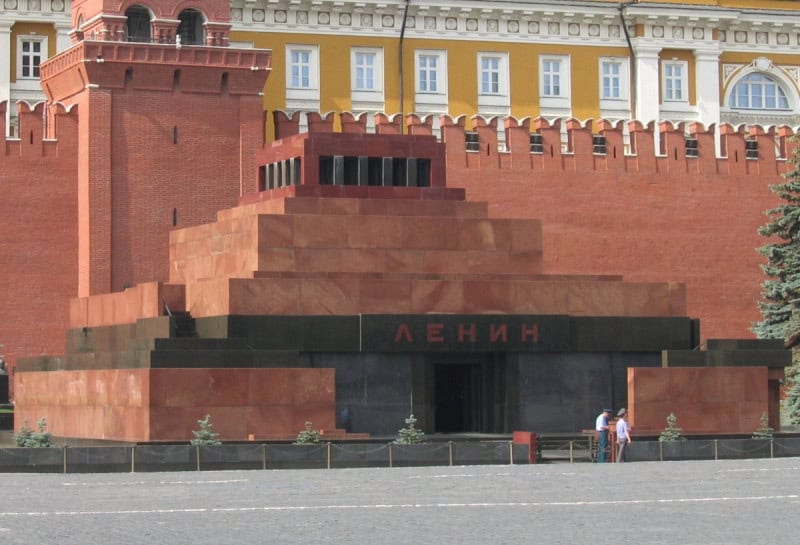
Lenin died in January 1924 and the Soviet government, against his widow’s wishes, decided to preserve his body and display it. Two temporary wooden tombs on Red Square preceded the present stepped pyramid of red granite and black labradorite, designed by Alexey Shchusev and completed in 1930. The embalmed body lies in a glass case in the dim hall below, maintained by a laboratory founded for the purpose; Stalin lay beside him from 1953 until he was removed and buried by the Kremlin wall in 1961. The mausoleum’s tribune was the platform from which Soviet leaders reviewed the parades of May Day and the October Revolution, and the question of whether to bury Lenin at last has been raised in Russia every few years since 1991 without being settled.
16. Anıtkabir, Ankara (1953)
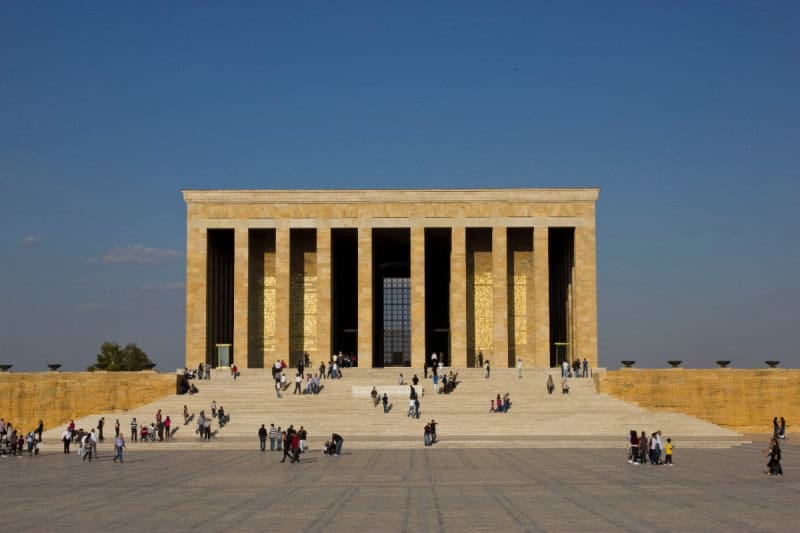
Mustafa Kemal Atatürk, the founder of the Turkish Republic, died in 1938, and the competition for his mausoleum was won in 1942 by the Turkish architects Emin Onat and Orhan Arda. The complex on a hill above Ankara was built between 1944 and 1953, and his remains were moved there on 10 November 1953, the fifteenth anniversary of his death. Visitors approach along the Road of Lions, lined with twenty-four Hittite-style stone lions, to a ceremonial plaza and the colonnaded Hall of Honour that holds the forty-tonne sarcophagus. The site mixes Anatolian, Hittite and modernist forms by design, and it is where Turkish state ceremonies begin; every 10 November at five past nine in the morning, the moment of Atatürk’s death, the country stops for a minute’s silence.
17. Tomb of the Unknown Soldier, Arlington (1921)
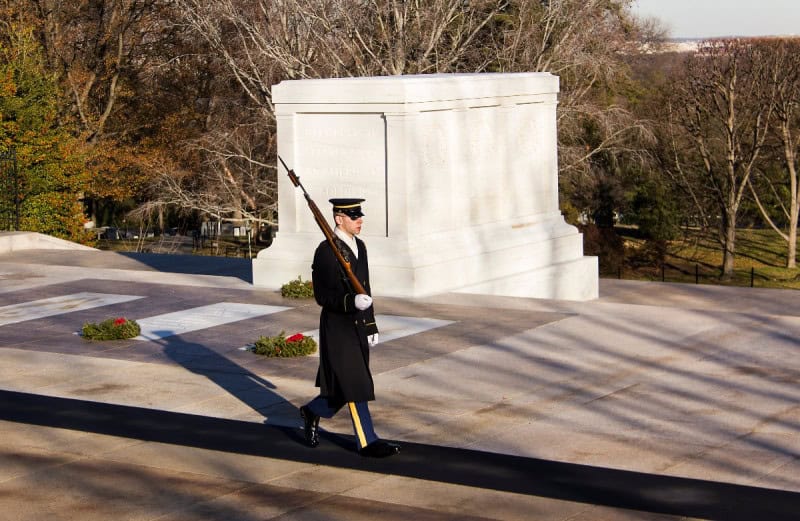
An unidentified American soldier of the First World War, chosen in France from four unmarked graves, was buried on the plaza of the Memorial Amphitheater at Arlington National Cemetery on 11 November 1921. The white marble sarcophagus above the grave, carved from Colorado Yule marble by Thomas Hudson Jones to Lorimer Rich’s design, was completed in 1932; its east face shows three figures representing Peace, Victory and Valor, and the west face reads “Here rests in honored glory an American soldier known but to God”. Unknowns from the Second World War and Korea were buried in front of it in 1958, and a Vietnam unknown in 1984, whose remains were identified by DNA testing in 1998 and returned to his family, leaving that crypt empty. The tomb has been guarded every hour of every day since 1937, by soldiers of the 3rd U.S. Infantry Regiment since 1948.
War memorials
18. Hiroshima Peace Memorial, Hiroshima (1915; preserved since 1945)
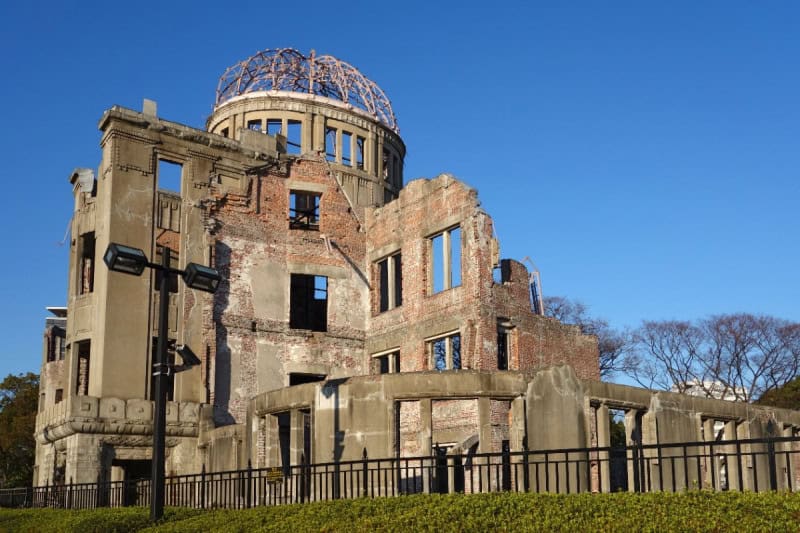
The Hiroshima Prefectural Industrial Promotion Hall, designed by the Czech architect Jan Letzel and opened in 1915, stood almost directly beneath the atomic bomb that exploded about 600 metres above the city on 6 August 1945. Because the blast came from nearly overhead, the building’s walls and the steel frame of its dome were left standing while everything around it was flattened, and everyone inside was killed. The city decided in 1966 to preserve the ruin as it was, and it has been shored up several times since without being restored. The Genbaku Dome, as it is known, was inscribed as a UNESCO World Heritage Site in 1996, over objections from the United States and China, and it stands across the river from the Peace Memorial Park and the cenotaph that holds the names of the dead.
19. Thiepval Memorial, Somme, France (1932)
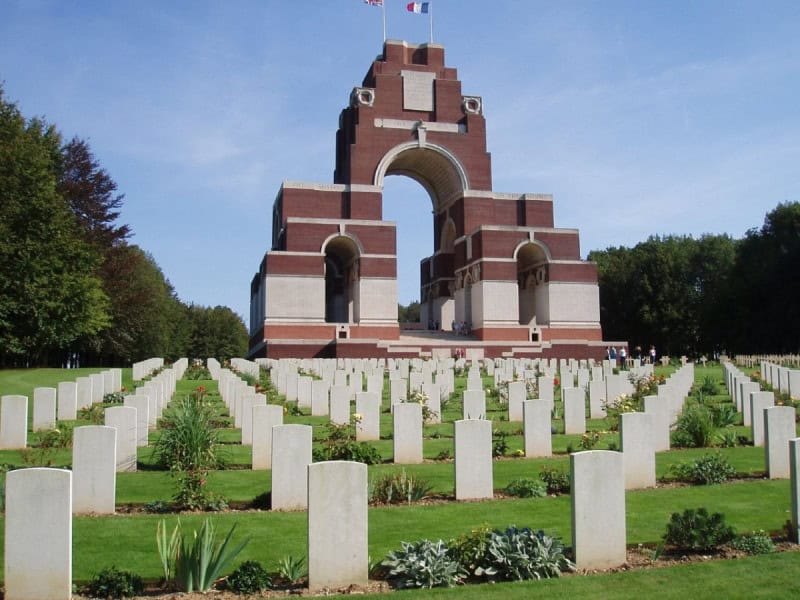
The largest Commonwealth memorial to the missing in the world is Edwin Lutyens’s arch of brick and stone on the ridge above the Somme battlefield, unveiled on 1 August 1932. Its sixteen piers carry the names of more than 72,000 British and South African soldiers who died in the Somme sector between 1915 and March 1918 and have no known grave, the great majority of them from the battle that began on 1 July 1916. The arch is forty-five metres high and built as a set of interlocking arches that grow smaller as they rise, so that every face has an opening; Lutyens designed it so that it could be seen from across the whole battlefield. An Anglo-French cemetery with three hundred graves from each country lies at its foot, and the Commonwealth War Graves Commission maintains both.
20. Canadian National Vimy Memorial, France (1936)
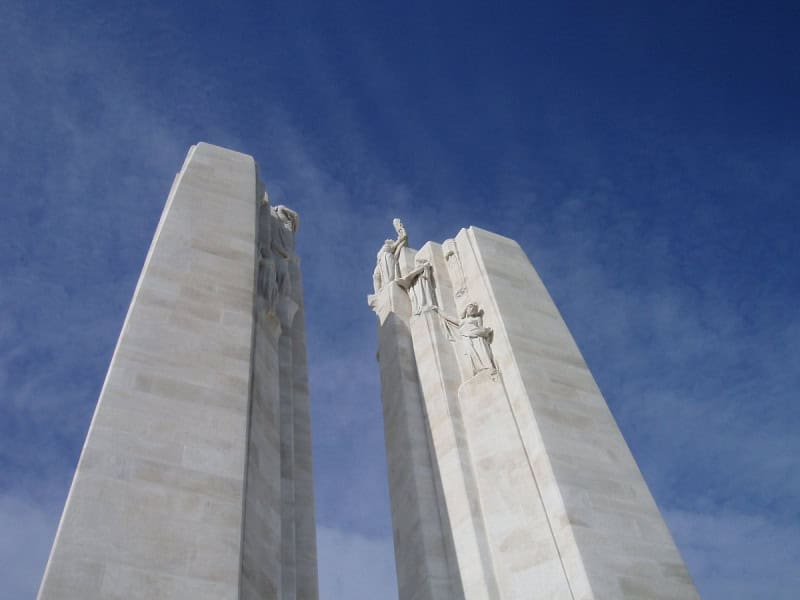
Canada’s four divisions took Vimy Ridge together on 9 April 1917, in an assault that the country has treated ever since as a founding moment, and France gave the ridge to Canada in perpetuity in 1922. Walter Allward’s memorial on its highest point took eleven years to build, from 1925 to 1936, largely because he searched for years for a stone that would weather well and finally chose limestone from a quarry in Croatia. Two pylons about twenty-seven metres high, for Canada and France, rise above twenty sculpted figures, the best known of them a cloaked woman looking down over the Douai plain, Canada mourning her dead. The names of 11,285 Canadians killed in France with no known grave are cut into the walls. King Edward VIII unveiled it on 26 July 1936, and the preserved trenches and tunnels on the ridge are part of the site.
21. The Cenotaph, London (1920)
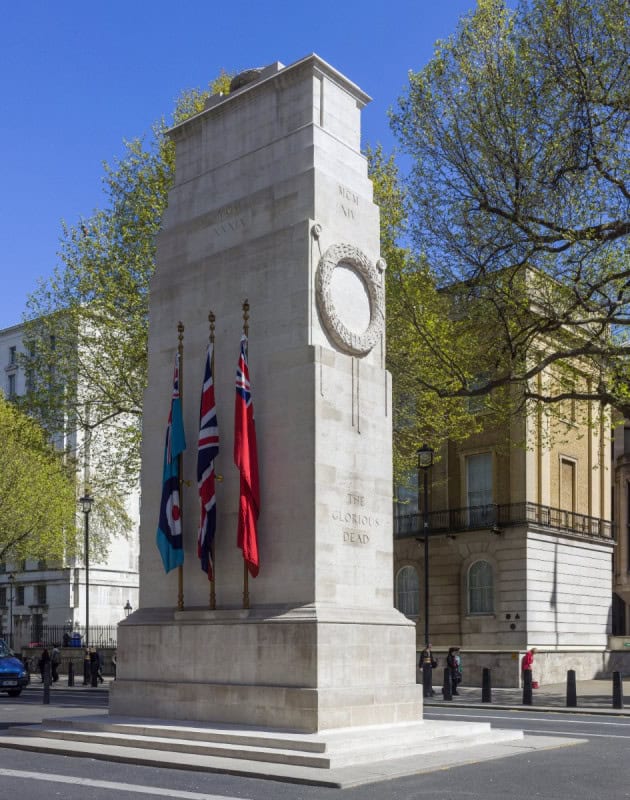
Lutyens designed the Cenotaph in Whitehall in a few days in 1919, as a temporary wood-and-plaster structure for the Peace Day parade of 19 July; the crowds that laid flowers at it over the following weeks persuaded the government to rebuild it permanently in Portland stone, and the stone version was unveiled on 11 November 1920, the day the Unknown Warrior was carried past it to Westminster Abbey. It is an empty tomb raised on a pillar, carrying only the words “The Glorious Dead”, the dates of the two world wars and the flags of the services, and deliberately no religious symbol. Its sides are not quite vertical: Lutyens gave them a subtle curve so that they would meet about three hundred metres above the ground. It is the focus of the National Service of Remembrance every November, and the model for cenotaphs across the Commonwealth.
National monuments
22. Monumento a la Revolución, Mexico City (1938)
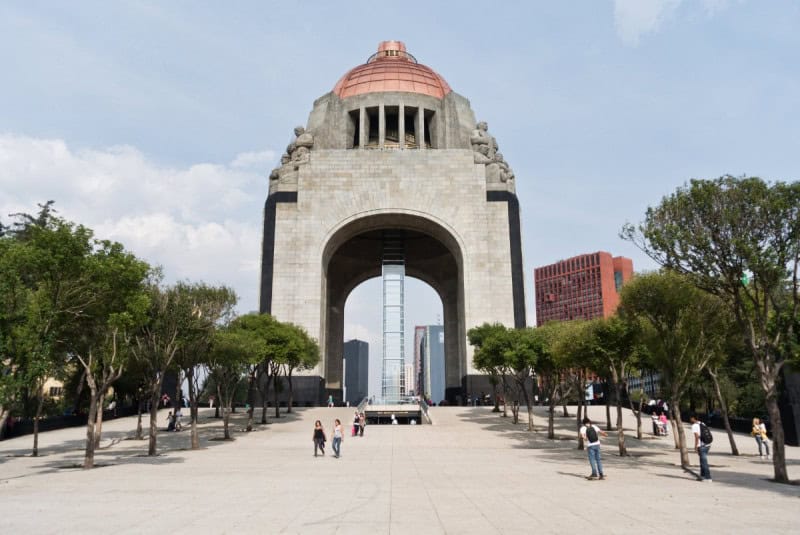
The monument began as something else. In 1910 Porfirio Díaz laid the foundation stone of a vast Federal Legislative Palace designed by the French architect Émile Bénard; the Revolution broke out the same year, Díaz fell, and the steel frame of the dome stood unfinished for twenty years. In the 1930s the architect Carlos Obregón Santacilia proposed turning the skeleton into a monument to the Revolution that had stopped it, and the stone-clad Art Deco structure with Oliverio Martínez’s sculptures at its corners was completed in 1938. It is sixty-seven metres high and is often described as the tallest triumphal arch in the world. The pillars hold the tombs of leaders of the Revolution, among them Francisco Madero, Venustiano Carranza, Pancho Villa, Plutarco Elías Calles and Lázaro Cárdenas, and an elevator and museum were added in a renovation for the Revolution’s centenary in 2010.
23. Heroes’ Square and the Millennium Monument, Budapest (1929)
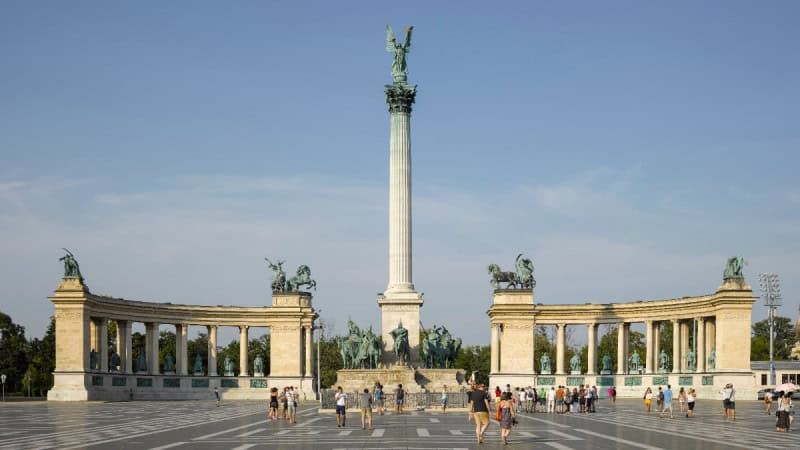
Hungary marked the thousandth anniversary of the Magyar conquest of the Carpathian basin in 1896, and the Millennium Monument at the end of Andrássy Avenue was begun that year to Albert Schickedanz’s design, with sculpture by György Zala; it was not finished until 1929. At its centre a thirty-six-metre column carries the Archangel Gabriel holding the Hungarian crown, with the seven chieftains who led the conquest on horseback around its base, and two curved colonnades behind hold fourteen statues of Hungarian kings and statesmen. The Habsburg rulers who originally filled the right-hand colonnade were replaced after 1945 with leaders of Hungary’s wars of independence. The square was the setting for the reburial of Imre Nagy in June 1989, one of the events that ended Communist rule, and it is part of the Andrássy Avenue World Heritage Site.
24. Padrão dos Descobrimentos, Lisbon (1960)
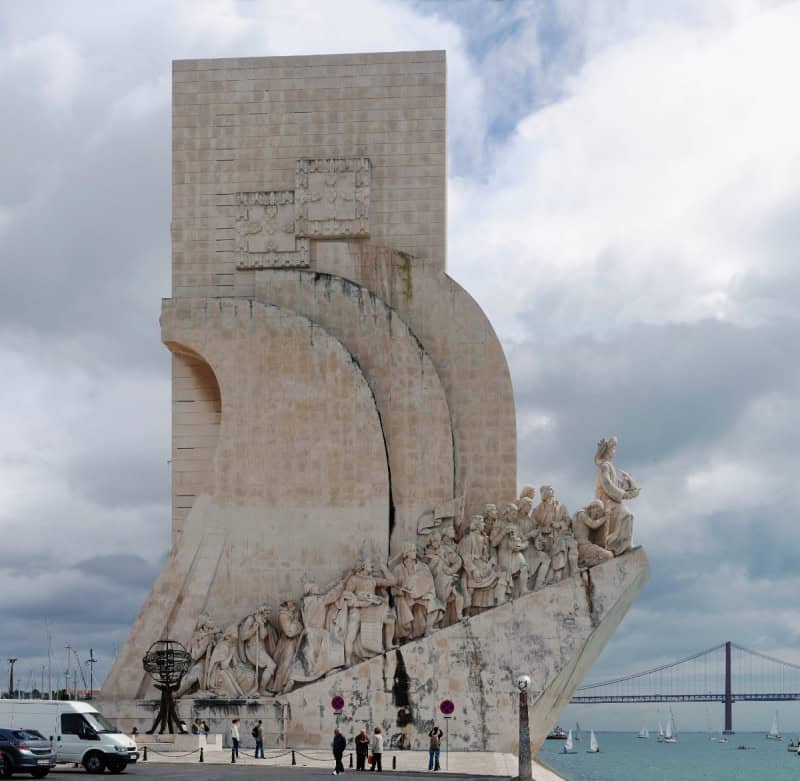
The Monument to the Discoveries stands on the bank of the Tagus at Belém, where the Portuguese caravels set out in the fifteenth and sixteenth centuries. It was first built in 1940, in perishable materials, for the Portuguese World Exhibition, to a design by the architect Cottinelli Telmo and the sculptor Leopoldo de Almeida, and rebuilt permanently in concrete and limestone in 1960 for the five hundredth anniversary of the death of Henry the Navigator. Fifty-six metres high and shaped as the prow of a ship, it carries thirty-three figures climbing towards the bow, with Henry at the front holding a model caravel and Vasco da Gama, Magellan, Camões and the rest behind him. A compass rose fifty metres across, with a map of the routes of the voyages, is set in the pavement in front of it, a gift from South Africa in 1960, and a lift inside climbs to a terrace on the top.
Prehistoric
25. Stonehenge, Wiltshire, England (c. 2500 BC)
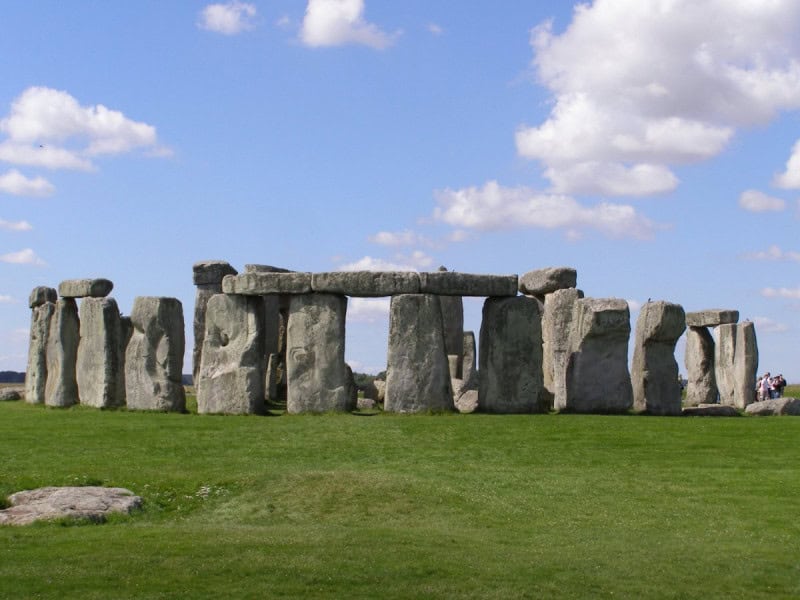
Nobody knows exactly what Stonehenge commemorates, which is why it is last, but it is the most famous prehistoric monument in the world and the word was invented for things like it. The circular earthwork on Salisbury Plain was dug around 3000 BC, and the stones that stand today were raised in stages over the following thousand years, the great sarsen circle and horseshoe of trilithons around 2500 BC. The sarsens, up to thirty tonnes each, were hauled from about twenty-five kilometres away; the smaller bluestones came from the Preseli Hills in west Wales, more than two hundred kilometres off, by means still argued over. The monument is aligned on the midsummer sunrise and the midwinter sunset, and the cremated remains buried there make it, among other things, a cemetery. It has been a World Heritage Site since 1986 and is in the care of English Heritage.
What the list leaves out
Every list like this is an argument about the word. The Taj Mahal is a mausoleum and the most visited monument in India, and it is not here because it is already one of the twenty-five famous buildings; the Lincoln Memorial, Mount Rushmore and the Statue of Liberty are monuments by any definition, and they are on the statues page for the same reason, as are the figures of the Greek gods that filled the first monuments of all. The Vietnam Veterans Memorial in Washington, the Soviet War Memorial at Treptower Park in Berlin, Jakarta’s Monas and Mexico City’s Angel of Independence were on the long list and would be on a list of thirty. The rule applied here was that a monument had to have been built, or kept, to make people remember, which is why a ruin in Hiroshima qualifies and a cathedral does not.
Sources
Dates and dimensions are taken from the bodies that look after each monument where they publish them: the Centre des monuments nationaux (Arc de Triomphe), the City of Berlin’s monument pages at berlin.de (Brandenburg Gate, Victory Column), the Parco archeologico del Colosseo (Arch of Constantine, Trajan’s Column), the U.S. National Park Service (Gateway Arch, Washington Monument), the Commonwealth War Graves Commission (Menin Gate, Thiepval Memorial), Veterans Affairs Canada (Vimy Memorial), the City of London Corporation (the Monument), the Mayor of London’s Trafalgar Square pages (Nelson’s Column), the Archaeological Survey of India (Humayun’s Tomb, India Gate), the Museo Nazionale di Castel Sant’Angelo, Arlington National Cemetery (Tomb of the Unknown Soldier), the City of Hiroshima (Peace Memorial), Historic England (the Cenotaph), English Heritage (Stonehenge), and the UNESCO World Heritage List entries for Humayun’s Tomb, the Hiroshima Peace Memorial, Andrássy Avenue and Stonehenge. The remaining entries (Luxor Obelisk, Lenin’s Mausoleum, Anıtkabir, Monumento a la Revolución, Padrão dos Descobrimentos) follow the monuments’ own visitor sites and the Encyclopaedia Britannica.
Image credits
Photographs are Creative Commons licensed via Wikimedia Commons, and every file was checked for the freedom-of-panorama rules of the country it was taken in. Attribution: Arc de Triomphe, ZeusUpsistos (CC BY-SA 4.0). Brandenburg Gate, Thomas Wolf, www.foto-tw.de (CC BY-SA 3.0). Arch of Constantine, NikonZ7II (CC BY-SA 4.0). Gateway Arch, Daniel Schwen (CC BY-SA 3.0). India Gate, AKS.9955 (CC BY-SA 4.0). Menin Gate, Marc Ryckaert (CC BY-SA 4.0). Nelson’s Column, Beata May (CC BY-SA 3.0). Trajan’s Column and Castel Sant’Angelo, Livioandronico2013 (CC BY-SA 4.0). Washington Monument, Greyfiveys (CC BY-SA 4.0). Luxor Obelisk, Craig Booth (CC BY 2.0). Victory Column, Steffen Prößdorf (CC BY-SA 4.0). The Monument, Eluveitie (CC BY-SA 3.0). Humayun’s Tomb, Rupeshsarkar (CC BY-SA 4.0). Lenin’s Mausoleum, Staron (CC BY-SA 3.0). Anıtkabir, William Neuheisel (CC BY 2.0). Tomb of the Unknown Soldier, Mobilus In Mobili (CC BY 2.0). Hiroshima Peace Memorial, Oilstreet (CC BY-SA 3.0). Thiepval Memorial, Amanda Slater (CC BY-SA 2.0). Vimy Memorial, Carcharoth (CC BY-SA 3.0). The Cenotaph and Heroes’ Square, Godot13 (CC BY-SA 4.0 and attribution licence respectively). Monumento a la Revolución, Ismael Villafranco (CC BY 2.0). Padrão dos Descobrimentos, Alvesgaspar (CC BY-SA 3.0). Stonehenge, garethwiscombe (CC BY 2.0).