
An inventor has an idea. An engineer makes it work at full size, on a budget, for people who will never know how it was done. Most of what we call the modern world, its clean water, railroads, power grids, skyscrapers, jet aircraft and software, was built by people doing the second job. Very few of them are household names.
This list takes 30 famous engineers and groups them by discipline: civil and structural, mechanical, electrical, aerospace, computing and software, and chemical and industrial. Each entry says what the person built, when, gives one number that shows the scale of it, and, where the work survives, says where it can be seen. Living engineers are included. So are engineers whose records have a dark side, which is stated where it applies.
How the 30 were chosen
Everyone here either trained as an engineer or held the job, and each has work that can be pointed to: a bridge, an engine, a patent, a spacecraft, a program. Within each group the entries run in the order the best-known work arrived. People famous mainly for a single invention are on our list of famous inventors instead. Four names appear on both pages (James Watt, Nikola Tesla, the Wright brothers and Grace Hopper), and here the entries stay with the engineering and link across for the invention. For the things rather than the people, see our 30 inventions that changed the world.
Who is the most famous engineer in the world?
There is no survey that settles it, so any answer is a judgment. The names most people can supply are Nikola Tesla (entry 13), Gustave Eiffel, whose name is on the tower (entry 5), and, among living people, Elon Musk (entry 22).
Is Elon Musk an engineer?
By degree, no. By job title and by the judgment of the US National Academy of Engineering, yes. Musk holds bachelor’s degrees in physics and economics from the University of Pennsylvania and has no engineering degree. He founded SpaceX in 2002, and the academy, which elected him a member in 2022, lists him as the company’s founder, chief executive officer and chief engineer. Entry 22 sets out the record and names the source for each part of it.
Civil and structural engineers
1. Thomas Telford: canals, roads and the Menai Bridge
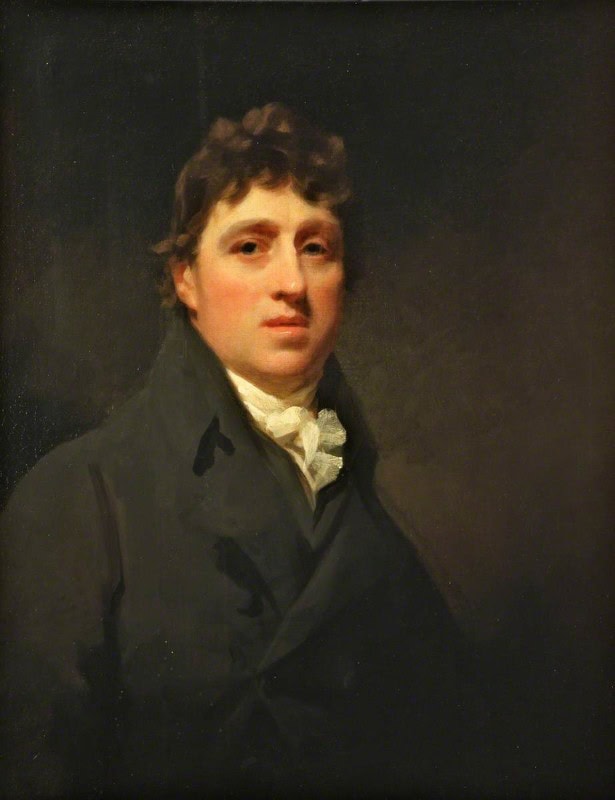
Thomas Telford (1757–1834) was born near Westerkirk in Dumfriesshire, Scotland, started work as a stonemason and taught himself the rest. Britannica credits him with more than 900 miles of roads in Scotland, along with the Caledonian Canal and the bridges that went with them.
Two structures show what he could do with iron. The Pontcysyllte Aqueduct in north Wales (1805) carries a canal in a cast-iron trough on nineteen arches, more than 1,000 feet long and 126 feet above the valley floor. The Menai Bridge, built between 1819 and 1826, crossed the strait to Anglesey with a main span of 580 feet, the longest of any suspension bridge of its day. Telford was also the first president of the Institution of Civil Engineers, founded in 1818, and is buried in the nave of Westminster Abbey. See it: both the aqueduct, a UNESCO World Heritage site since 2009, and the Menai Bridge still stand.
2. Isambard Kingdom Brunel: the Great Western Railway and the first modern ocean liner
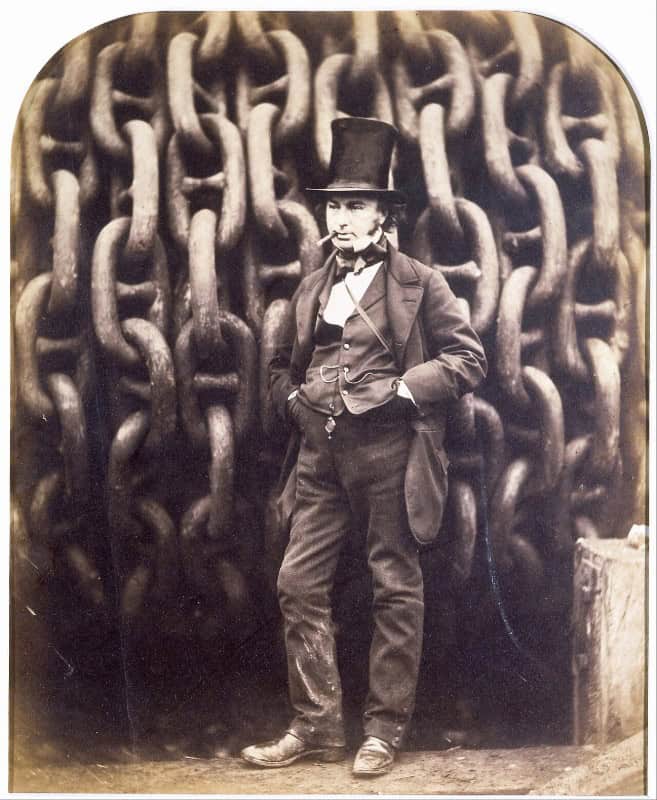
Isambard Kingdom Brunel (1806–1859) learned the trade as resident engineer on his father’s Thames Tunnel, a post he took in 1825. In March 1833, at 26, he was appointed engineer of the Great Western Railway. He built the line from London to Bristol on a broad gauge of 7 feet ¼ inch and finished it on June 30, 1841.
Then he turned to ships. The SS Great Britain, floated out in Bristol on July 19, 1843, was 322 feet long and the first large ocean-going ship to combine an iron hull with a screw propeller; in 1845 she crossed the Atlantic in 14 days. His last ship, the Great Eastern (launched 1858), was 692 feet long, the largest in the world at her launch, and later laid the first successful transatlantic telegraph cable. The photograph shows him in 1857 in front of her launching chains. See it: the Great Britain was brought home in 1970 to the Bristol dry dock where she was built and is a museum ship there. The Clifton Suspension Bridge in the same city, with a span of 702 feet, was completed to his design in 1864, five years after his death.
3. Joseph Bazalgette: the sewers that cleaned up London
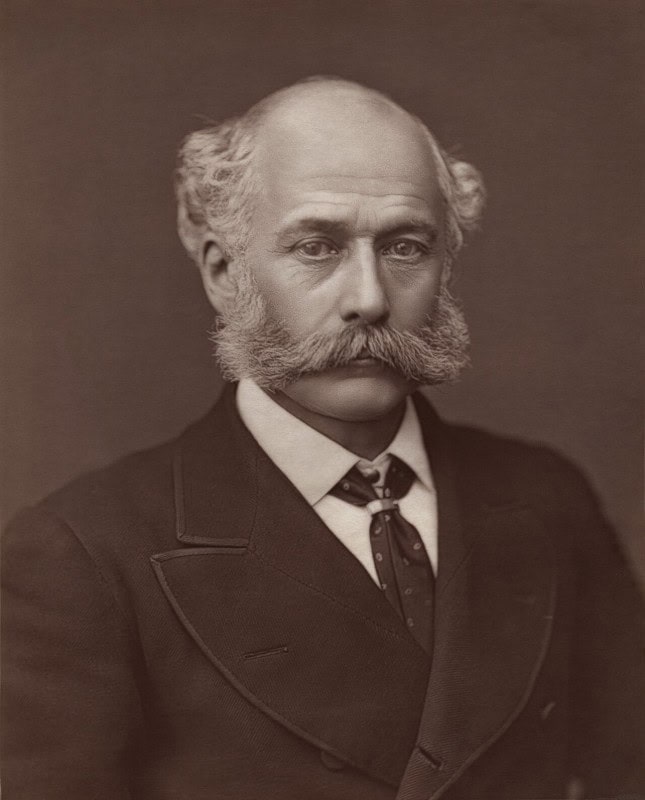
Joseph Bazalgette (1819–1891) became chief engineer of London’s Metropolitan Board of Works in 1856. Two years later came the Great Stink of 1858, when the smell of the sewage-filled Thames drove Parliament to pass the act that let him build the remedy.
The remedy was 82 miles of main intercepting sewers, fed by about 1,100 miles of street sewers, that caught the city’s waste before it reached the river and carried it east to pumping stations at Crossness (1865) and Abbey Mills (1868). The Prince of Wales opened the system in 1865, though the whole project took another ten years. Bazalgette also built the Albert, Victoria and Chelsea embankments along the river (1869 to 1874). He was knighted in 1875. See it: his memorial stands on the Victoria Embankment, which is itself his work.
4. John, Washington and Emily Roebling: the Brooklyn Bridge
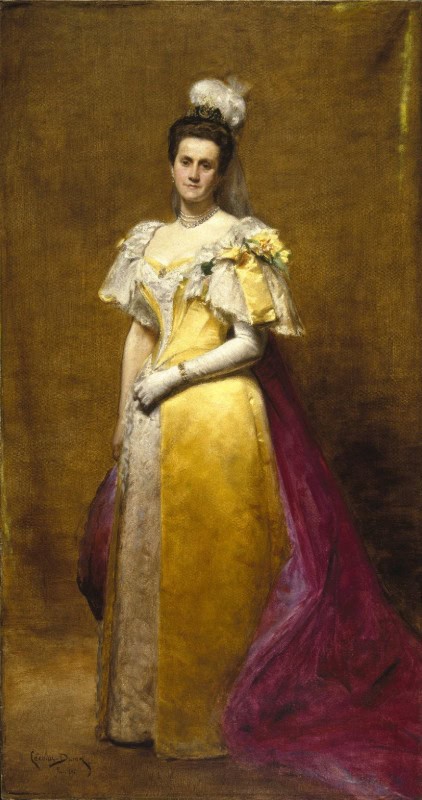
The Brooklyn Bridge took three Roeblings. John A. Roebling (1806–1869), a German-born builder of suspension bridges, designed it and died of tetanus in July 1869, after an accident at the site crushed his toes, before construction began. His son Washington Roebling (1837–1926), a Rensselaer graduate, took over as chief engineer. Construction began on January 2, 1870, and he was soon disabled by decompression sickness from working in the compressed-air caissons under the towers.
For about eleven years his wife, Emily Warren Roebling (1843–1903), was the link between the sickroom and the site. The American Society of Civil Engineers’ account has her studying the engineering, visiting the works daily and carrying his instructions to the assistant engineers. The bridge opened on May 24, 1883, with a main span of 1,595.5 feet, the longest of any suspension bridge in the world until 1903. Emily Roebling made the first crossing by carriage. The portrait of her, by Carolus-Duran, belongs to the Brooklyn Museum. See it: the bridge still carries traffic and walkers between Manhattan and Brooklyn, and a plaque on it honors all three.
5. Gustave Eiffel: the tower, and the frame inside the Statue of Liberty
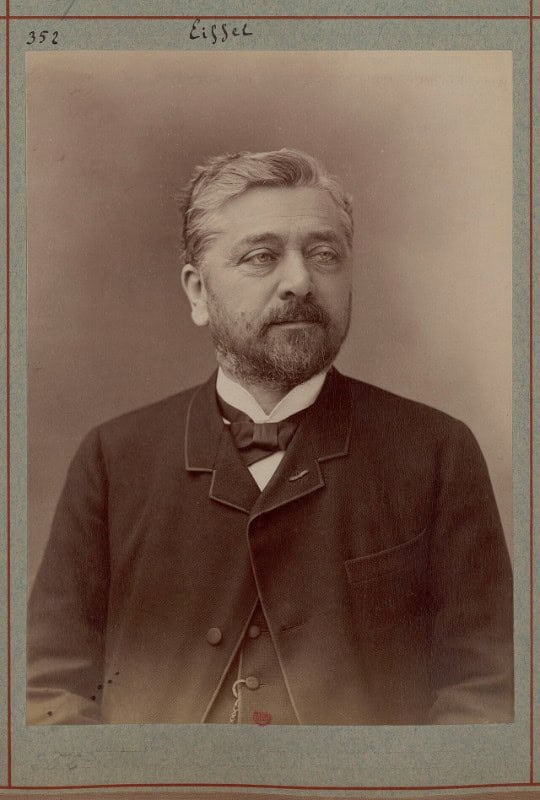
Gustave Eiffel (1832–1923), born in Dijon, was a specialist in metal structures long before the tower. His Garabit Viaduct in southern France, a 540-foot arch about 400 feet above the Truyère River, was for many years the highest bridge in the world. He also designed the iron framework that holds up the Statue of Liberty.
The Eiffel Tower was built from 1887 to 1889 for the Paris Exposition. The tower’s operating company gives the figures: 18,038 iron parts, 2,500,000 rivets, and a construction time of 2 years, 2 months and 5 days. It stood 1,024 feet tall when finished and reaches 1,083 feet today with its antennas. See it: the tower receives about 6.5 million visitors a year, by the operator’s count.
6. Fazlur Rahman Khan: the tube that made supertall buildings affordable
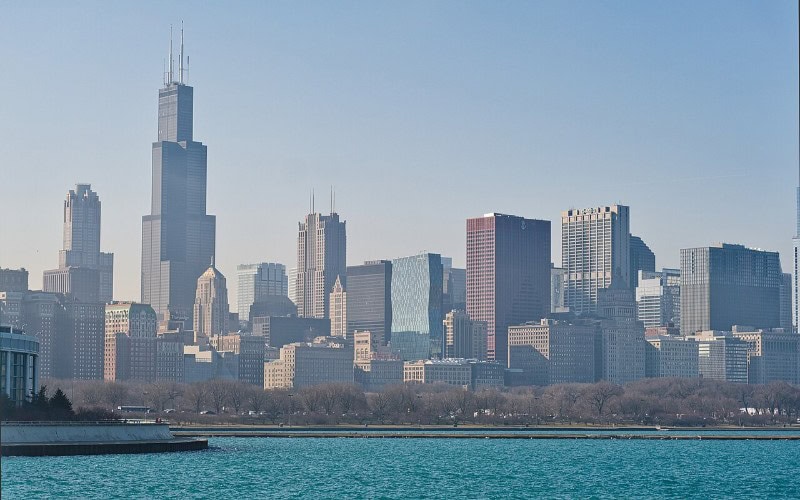
Fazlur Rahman Khan (1929–1982) was born in Dhaka, earned two master’s degrees and a doctorate at the University of Illinois, and joined the Chicago firm Skidmore, Owings & Merrill in 1955. His idea was to stop holding a tall building up from the inside. Put the strength in the outer walls, so the tower behaves like a hollow tube, and it needs far less steel to resist the wind.
He first used the framed tube on Chicago’s DeWitt-Chestnut Apartments, begun in 1963 and completed by 1966. The 100-story John Hancock Center followed, a 1,127-foot tube stiffened by X-bracing on its face. For the Sears Tower he and architect Bruce Graham bundled nine tubes, each 75 feet square, and stopped them at different heights. Topped out on May 3, 1973, at 110 stories and 1,451 feet, it was the tallest building in the world until 1998. See it: the building, renamed Willis Tower in 2009, has a public Skydeck on its 103rd floor. It is the tall dark tower at the left of the skyline above.
Famous mechanical engineers
7. James Watt: the steam engine made efficient
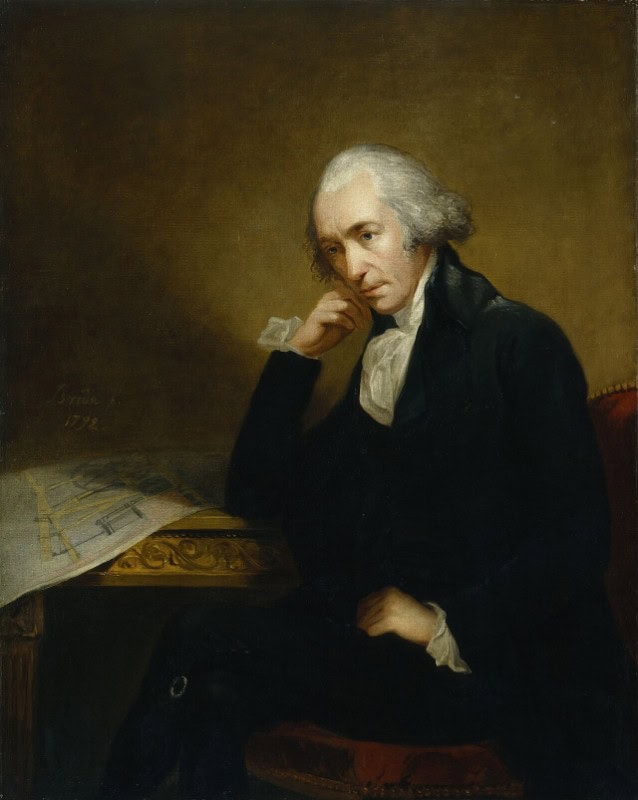
James Watt (1736–1819) was an instrument maker with a shop at the University of Glasgow when, in 1764, he was given a model Newcomen engine to repair and saw how much steam it wasted. His separate condenser, conceived in May 1765 and patented in 1769, is the invention covered on our famous inventors page. The engineering came afterward.
In partnership with Matthew Boulton from 1775, Watt spent fifteen years turning a mine pump into a general-purpose engine. The first Boulton and Watt engines were installed in 1776. The sun-and-planet gear (1781) converted the piston’s stroke into rotation, the double-acting engine (1782) made the piston push and pull, the parallel motion (1784) kept the piston rod straight, and the centrifugal governor (1788) held the speed steady. He also devised horsepower as a way of rating engines, and the unit of power has carried his own name since 1889. See it: the attic workshop from his house was given to the Science Museum in London in 1924 and has been on display there since 2011.
8. George Stephenson: the railway and its gauge
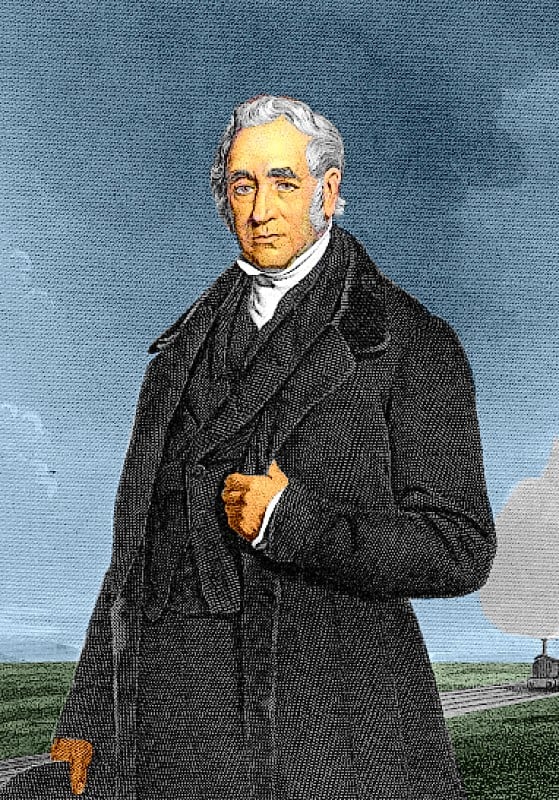
George Stephenson (1781–1848) was born in Wylam, Northumberland, and could not read until he was 18. He built his first locomotive, Blücher, in 1814 to haul coal at Killingworth.
On September 27, 1825, his Locomotion No. 1 opened the Stockton and Darlington Railway by hauling an 80-ton load nine miles in two hours. The Liverpool and Manchester Railway, which he engineered, opened on September 15, 1830. To choose its engines the directors held the Rainhill Trials in October 1829, and the winner was Rocket, built at the Newcastle works of Robert Stephenson and Company, where his son Robert did the detailed design. It reached about 30 miles an hour and took the £500 prize. The gauge Stephenson used, 4 feet 8½ inches, became the standard gauge in Britain and much of the world. See it: Rocket survives. Since leaving London’s Science Museum in 2018 it has been shown at the National Railway Museum in York and at Locomotion in Shildon, so check which before you travel.
9. Charles Parsons: the steam turbine
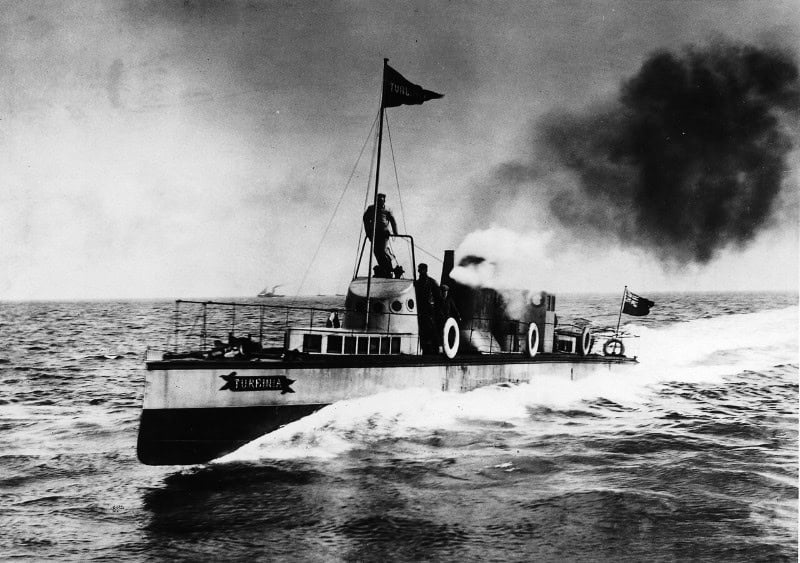
In 1884 Charles Parsons (1854–1931) built a steam engine with no pistons at all. In his turbine, steam spins rings of blades on a shaft. The first one ran at about 18,000 revolutions a minute and produced 7.5 kilowatts; in 1889 he founded C. A. Parsons and Company in Newcastle to build turbines that drove electrical generators.
To prove the turbine at sea he built Turbinia in 1894. On June 26, 1897, he took her, uninvited, to the naval review at Spithead for Queen Victoria’s Diamond Jubilee and ran her past the fleet at 34 knots. The fastest Royal Navy ships of the day managed 27. Within two years the destroyers HMS Viper and HMS Cobra were launched with his turbines, and HMS Dreadnought of 1906 was the first battleship driven by turbines. See it: Turbinia, shown above at speed, has her own gallery at the Discovery Museum in Newcastle.
10. Rudolf Diesel: the engine that carries his name
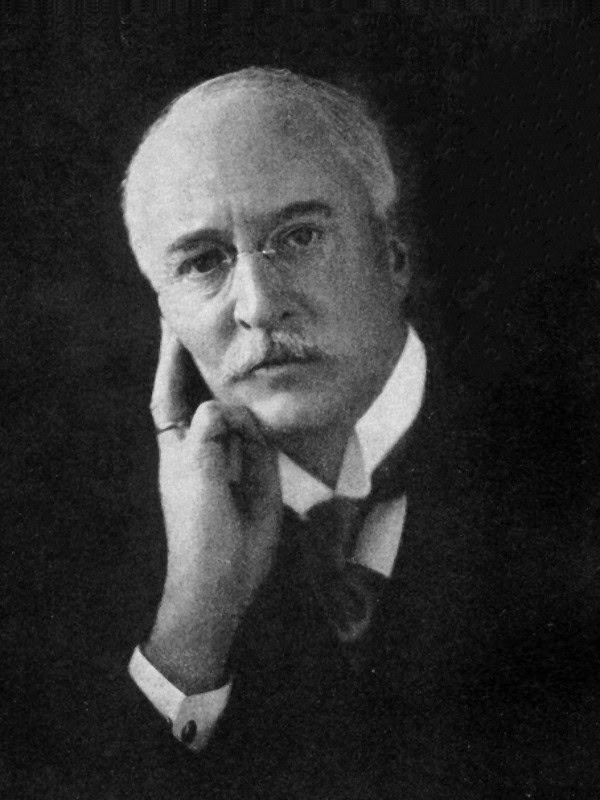
Rudolf Diesel (1858–1913) was born in Paris and graduated from the Munich polytechnic in 1880 with highest honors. The question that occupied him was how to turn more of a fuel’s heat into work than a steam engine could.
His answer was to compress air until it was hot enough to ignite the fuel without a spark. He patented the idea in Germany (patent 67207, published in 1893) and spent 1893 to 1897 at Maschinenfabrik Augsburg making it run. At the official test on February 17, 1897, conducted by Professor Moritz Schröter of Munich, the single-cylinder engine developed about 20 horsepower and, by the Deutsches Museum’s figures, turned 26.2 percent of the fuel’s heat into useful work. Diesel disappeared from the steamer Dresden on the night of September 29, 1913, while crossing from Antwerp to England, and the cause of his death has never been established. See it: the 1897 prototype is in the Deutsches Museum in Munich.
11. Henry Ford: the moving assembly line
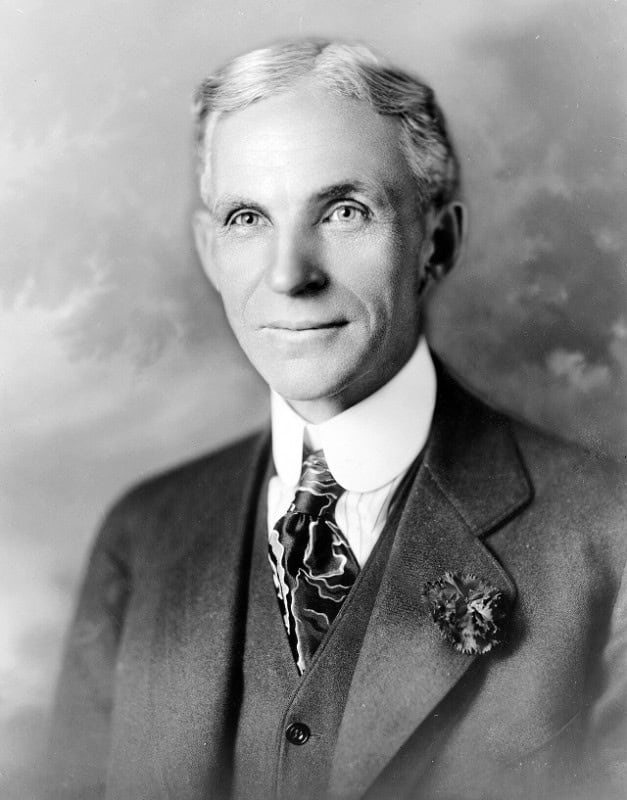
Henry Ford (1863–1947) left his father’s Michigan farm in 1879 to become an apprentice machinist in Detroit. In 1891 he joined the Edison Illuminating Company as an engineer and by 1893 was its chief engineer. He built his first car, the Quadricycle, and test-drove it on June 4, 1896. The Ford Motor Company was incorporated on June 16, 1903.
Ford did not invent the car, which is credited to Karl Benz on our 19th-century inventions list. His contribution was production engineering. The Model T went on sale in 1908, and the moving assembly line started at his Highland Park plant on October 7, 1913. By 1914 the time needed to assemble a chassis had fallen from 12½ hours to 93 minutes, and by 1925 the cheapest Model T cost $260. More than 15 million were built before production ended on May 26, 1927. The line has its own entry among our greatest inventions of the 20th century. The same record includes the antisemitic articles that Ford’s newspaper, the Dearborn Independent, ran from 1920, for which he issued a public apology in 1927. See it: the Quadricycle is in the Henry Ford Museum in Dearborn, Michigan.
Electrical engineers
12. George Westinghouse: the air brake and alternating current for cities
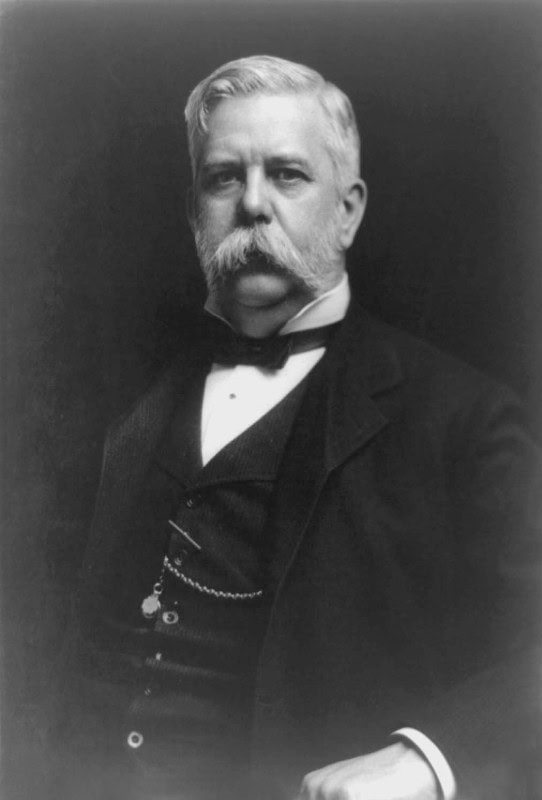
George Westinghouse (1846–1914), born in Central Bridge, New York, patented the railway air brake in 1869 and founded the Westinghouse Air Brake Company the same year. It let the engineer brake every car of a train at once. Railway signaling followed through his Union Switch and Signal company in 1881.
His second career began with the founding of Westinghouse Electric in 1886. That year William Stanley, backed by Westinghouse, installed an alternating-current system with transformers in Great Barrington, Massachusetts, and in 1888 Westinghouse bought the rights to Nikola Tesla’s polyphase patents. His company lit the 1893 World’s Columbian Exposition in Chicago and built the generators for the Adams power station at Niagara Falls, which opened in August 1895. He is credited with about 360 patents. Westinghouse lost control of the electric company in the financial panic of 1907.
13. Nikola Tesla: the motor that made the AC grid work
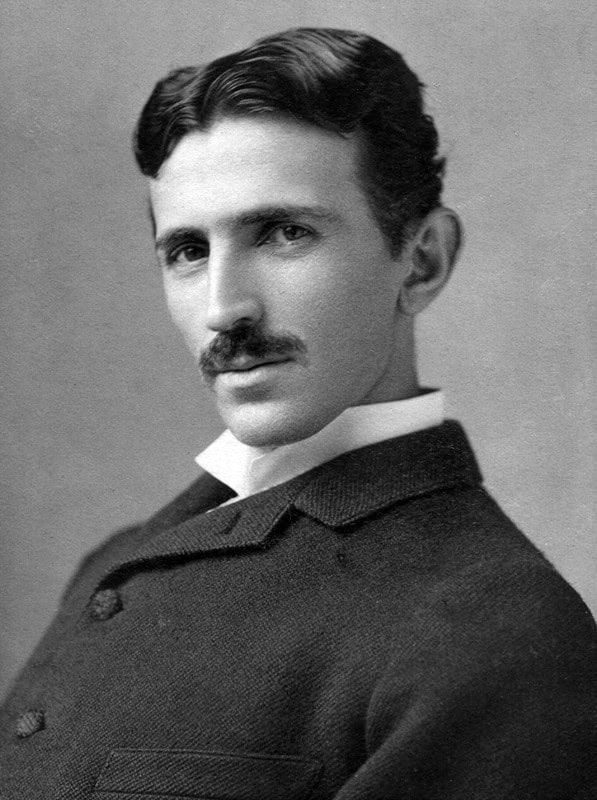
Nikola Tesla (1856–1943) was born in Smiljan, in what is now Croatia, and trained for an engineering career at the technical university in Graz and at Prague. He worked for the Continental Edison Company in Paris in 1882 and arrived in New York in 1884.
The engineering that matters is the polyphase system. On May 1, 1888, the US Patent Office granted him a group of patents for an induction motor with no brushes or commutator, the parts that wore out in every direct-current motor, together with the generators and transmission to match. Westinghouse (entry 12) bought the rights that year. Alternating current on Tesla’s system lit the Chicago exposition in 1893 and was carrying power from Niagara Falls to Buffalo by 1896, which is the pattern every power grid has followed since. Tesla’s later claims were larger than his later results, and our page on Nikola Tesla’s inventions sorts what he built and patented from what he only announced.
14. Charles Proteus Steinmetz: the mathematics of alternating current
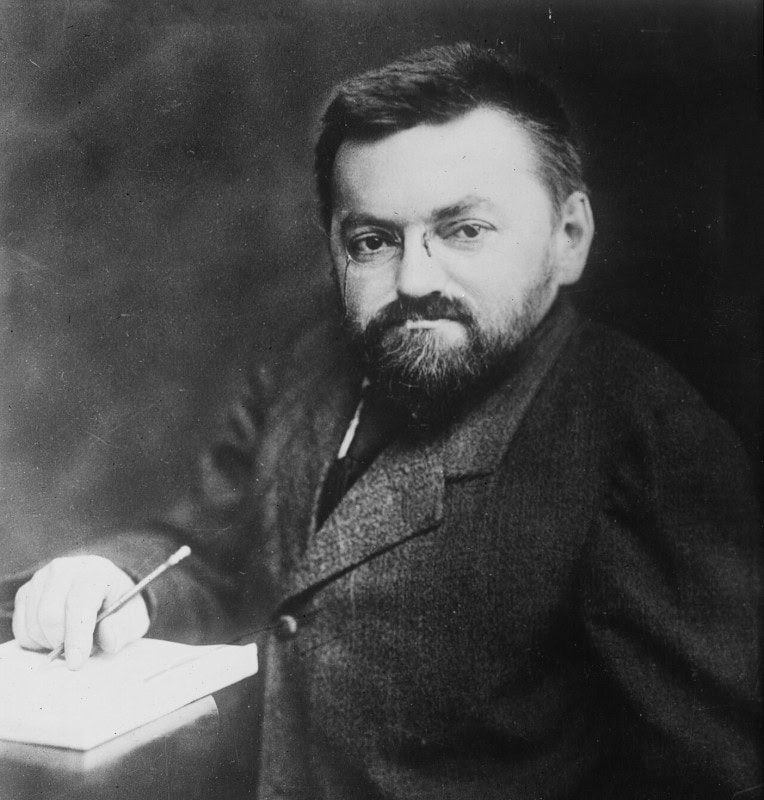
Charles Proteus Steinmetz (1865–1923) was born in Breslau, then in Prussia, and reached the United States in 1889 after leaving Germany, where his socialist activity had put him at risk of arrest. He found work with the manufacturer Eickemeyer, and when General Electric bought that company he went with it.
Two papers made his name. “On the Law of Hysteresis” (1892) gave engineers a formula for the energy lost in the iron core of a motor or transformer, so the loss could be calculated before the machine was built. In 1893 he showed how to analyze alternating-current circuits with complex numbers, which turned calculus problems into algebra and is still how the subject is taught. He held more than 200 patents, and for his lightning research at GE he designed a generator that produced a discharge of 10,000 amperes and more than 100,000 volts.
15. Edith Clarke: the calculator for long power lines
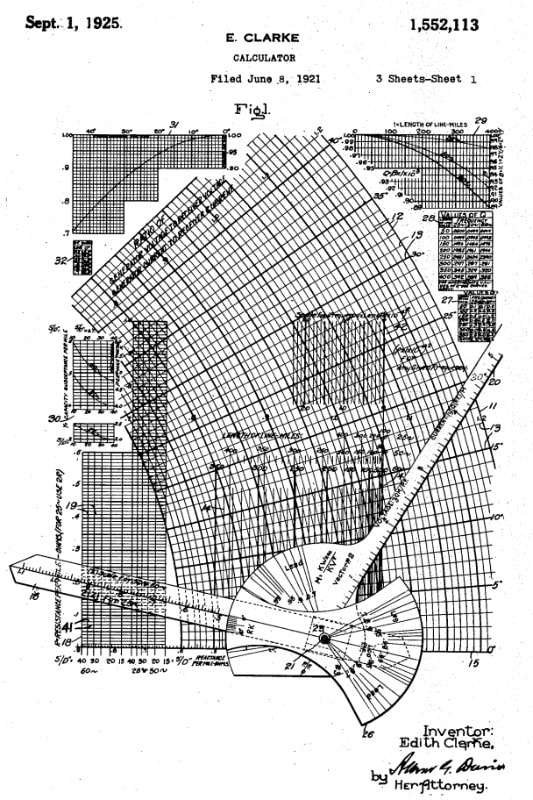
Edith Clarke (1883–1959) graduated from Vassar in mathematics in 1908 and in 1919 became the first woman to earn a master’s degree in electrical engineering from MIT. General Electric at first hired her to supervise its human computers, the staff who did calculations by hand. In 1922 it gave her the title she had trained for, and the National Inventors Hall of Fame records her as the first woman professionally employed as an electrical engineer in the United States.
Her invention is the drawing above: the Clarke calculator, US patent 1,552,113, filed in 1921 and granted on September 1, 1925. It was a graphical device for the equations that describe long transmission lines, and according to the Hall of Fame it solved them ten times faster than earlier methods. In 1926 she became the first woman to present a paper to the AIEE, and in 1943 she published a textbook, Circuit Analysis of A-C Power Systems. In 1947 she joined the University of Texas at Austin as the first woman professor of electrical engineering in the country.
16. Claude Shannon: the bit
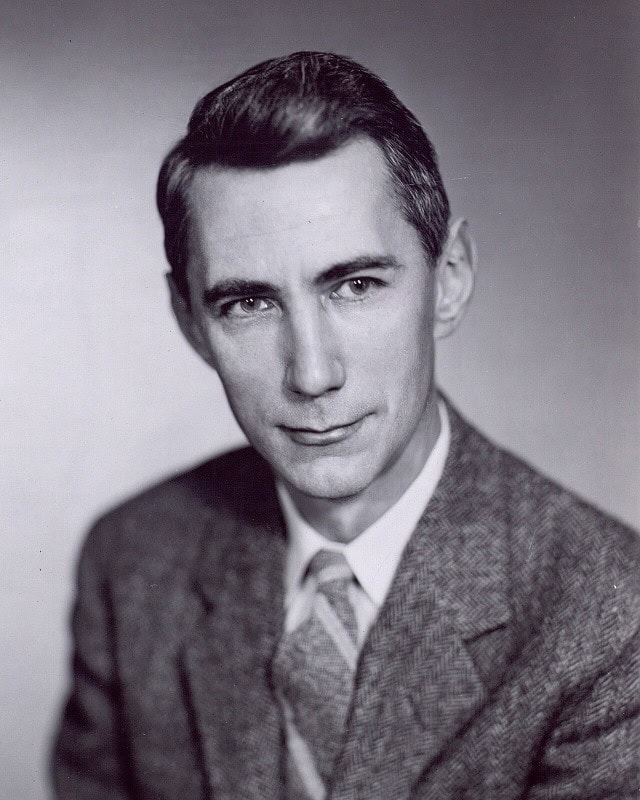
Claude Shannon (1916–2001) took two bachelor’s degrees at the University of Michigan in 1936, one in electrical engineering and one in mathematics. His 1937 master’s thesis at MIT, “A Symbolic Analysis of Relay and Switching Circuits”, showed that the on-and-off logic of telephone relays could be designed with Boolean algebra. Every digital circuit since has been designed that way.
At Bell Labs he went further. “A Mathematical Theory of Communication”, published in the Bell System Technical Journal in July and October 1948, defined information as something that can be measured, introduced the bit as its unit, and proved that any channel has a maximum rate at which it can carry messages without error. The paper founded information theory. He went to MIT as a visiting professor in 1956 and received the National Medal of Science in 1966.
Famous aerospace engineers
17. Wilbur and Orville Wright: flight as a control problem
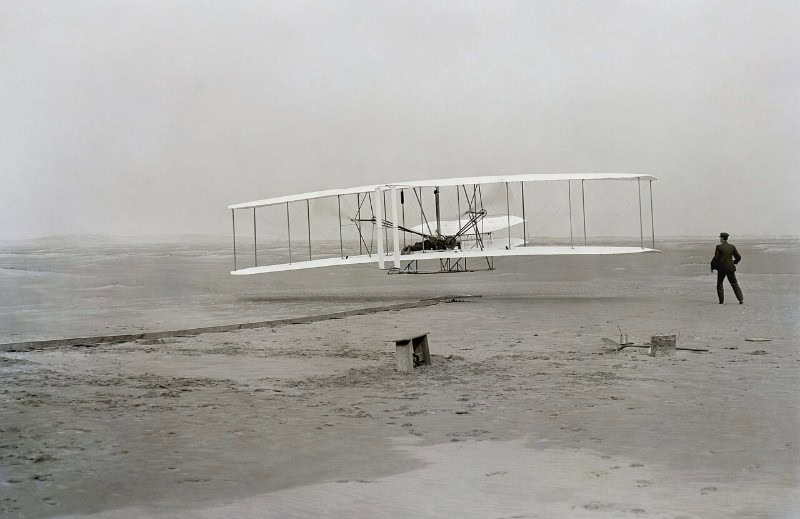
Wilbur (1867–1912) and Orville Wright (1871–1948) are on our famous inventors list for the airplane. They belong here for the method. In the fall of 1901 they built a small wind tunnel, tested model wing shapes in it and measured lift and drag for themselves.
They also treated control as the central problem. The pilot twisted, or warped, the wingtips to bank the aircraft, a forward elevator handled climb and descent, and the 1902 glider added a movable vertical tail. The Smithsonian’s National Air and Space Museum gives the figures for the powered machine that followed: a 12-horsepower engine of their own, a wingspan of 40 feet 4 inches and an empty weight of 605 pounds. On December 17, 1903, at Kitty Hawk, North Carolina, Orville flew it 120 feet in 12 seconds, and Wilbur’s best flight that day covered 852 feet in 59 seconds. The airplane is the first entry on our list of the greatest inventions of the 20th century. See it: the 1903 Flyer is in the National Air and Space Museum in Washington, DC.
18. Kelly Johnson: the Skunk Works
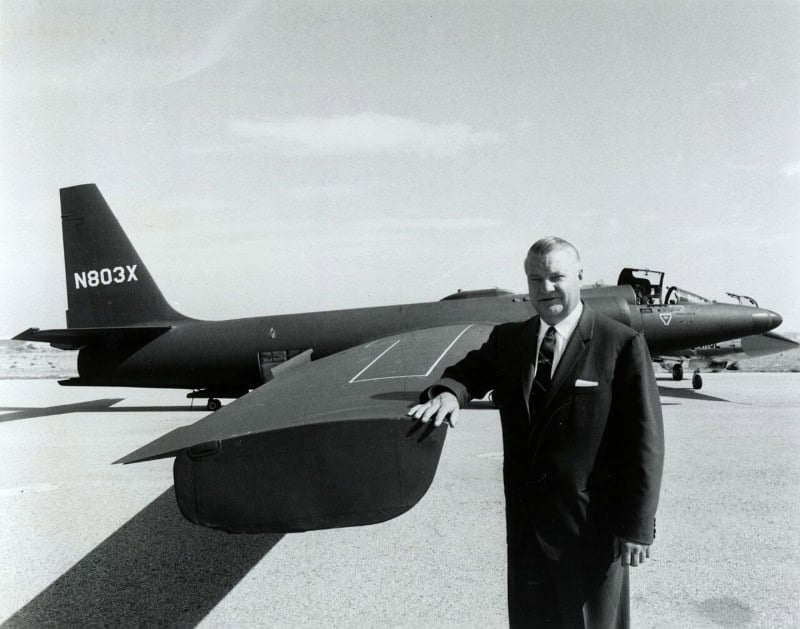
Clarence “Kelly” Johnson (1910–1990) was born in Ishpeming, Michigan, finished a master’s degree in aeronautical engineering at the University of Michigan in 1933 and joined Lockheed that year as a tool designer at $83 a month. He led the team behind the P-38 Lightning, and by the time he retired in 1975 he had contributed to more than forty aircraft.
In 1943 the Army wanted a jet fighter in a hurry. Johnson promised a prototype in 150 days, set up a small separate team that became known as the Skunk Works, and delivered in 143. The aircraft became the P-80 Shooting Star, the first operational American jet fighter. The same shop produced the U-2 spy plane, beside which he is standing above, and the SR-71 Blackbird, which first flew on December 22, 1964, and cruised above Mach 3 at more than 85,000 feet. See it: on March 6, 1990, an SR-71 flew from Los Angeles to Washington in 1 hour, 4 minutes and 20 seconds, averaging 2,124 miles an hour. That aircraft is at the Smithsonian’s Steven F. Udvar-Hazy Center in Chantilly, Virginia.
19. Sergei Korolev: Sputnik and the first man in space
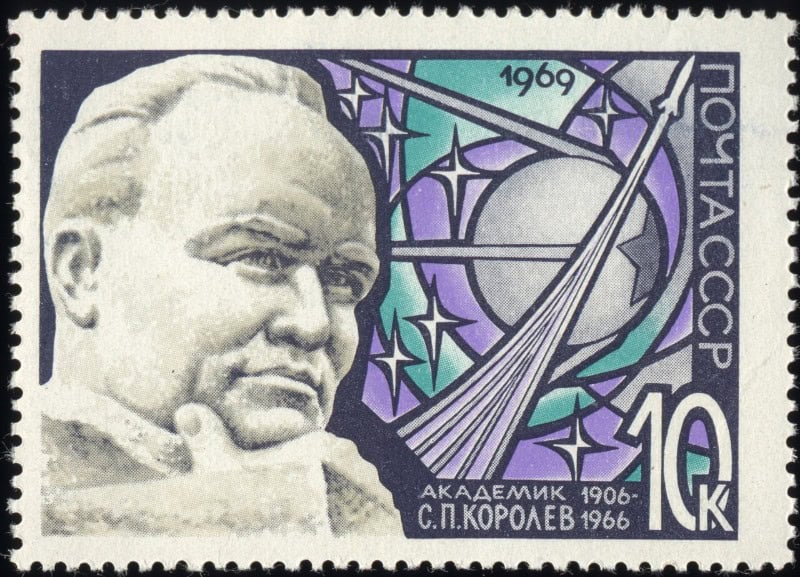
Sergei Korolev (1907–1966) was born in Zhytomyr, in present-day Ukraine, and trained as an aircraft designer in Moscow, where Andrei Tupolev was his mentor. On June 27, 1938, he was arrested in Stalin’s purges. He spent months in a gold mine in Kolyma, then worked in a prison design bureau, and was released in 1944.
After the war he led the Soviet long-range missile program. His R-7, the first intercontinental ballistic missile, made a successful full-range flight on August 21, 1957, and on October 4 an R-7 put Sputnik 1, the first artificial satellite, into orbit. Versions of the same rocket carried the dog Laika a month later, sent Luna 3 to photograph the far side of the moon in October 1959, launched Yuri Gagarin on April 12, 1961, and carried Alexei Leonov to the first spacewalk on March 18, 1965. Through all of it the Soviet state identified him only as the “Chief Designer”. His name was made public after he died in Moscow on January 14, 1966. The stamp above, issued three years later, gives his birth year as 1906 because he was born on December 30 of that year by the old Russian calendar.
20. Mary Jackson: NASA’s first Black woman engineer
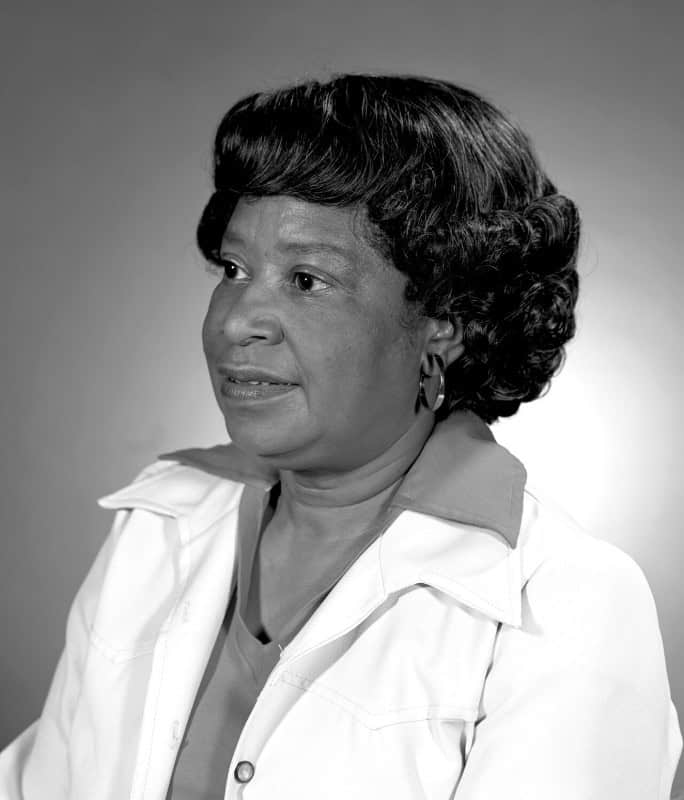
Mary Jackson (1921–2005), a native of Hampton, Virginia, earned a degree in mathematics and physical science from Hampton Institute in 1942. In April 1951 she joined the segregated West Area Computing section at the Langley laboratory of NACA, the agency that became NASA, working under Dorothy Vaughan.
After two years in the computing pool she accepted an offer to work for the engineer Kazimierz Czarnecki in the 4-by-4-foot Supersonic Pressure Tunnel, a 60,000-horsepower wind tunnel that could blast models with winds approaching twice the speed of sound. He suggested she train as an engineer. The graduate classes were held at the then-segregated Hampton High School, and NASA’s biography records that she needed special permission from the City of Hampton to attend. She completed them, and in 1958 became NASA’s first Black female engineer. Her first co-authored report, “Effects of Nose Angle and Mach Number on Transition on Cones at Supersonic Speeds”, appeared the same year. In 1979 she took a demotion to become Langley’s Federal Women’s Program Manager, and she retired in 1985. See it: on June 24, 2020, NASA named its headquarters building in Washington, DC, the Mary W. Jackson NASA Headquarters.
21. Wernher von Braun: the V-2 and the Saturn V
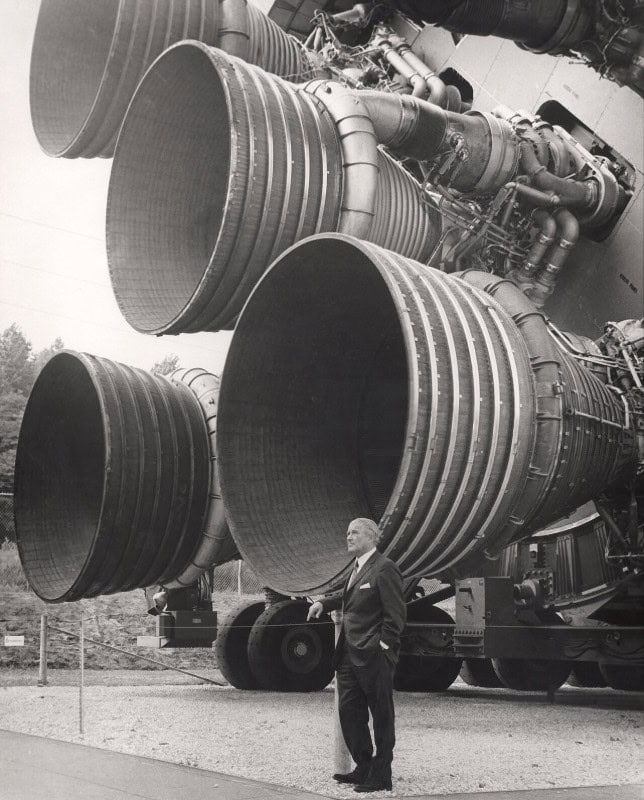
Wernher von Braun (1912–1977) earned a doctorate in physics at the University of Berlin in 1934 and became the technical head of the German army’s rocket center at Peenemünde. His A-4 rocket made its first successful flight on October 3, 1942, and went into service as the V-2.
The wartime record is specific. Von Braun joined the Nazi Party in 1937 and became an SS officer in 1940. From 1943 the V-2 was assembled in the underground Mittelwerk factory by prisoners of the Mittelbau-Dora concentration camp. Michael Neufeld, the Smithsonian curator who wrote von Braun’s biography, attributes at least 10,000 prisoner deaths to V-2 production, more than twice the number of people the rocket killed as a weapon.
Von Braun surrendered to the US Army in May 1945, moved with his team to Huntsville, Alabama, in 1950 and became a US citizen in 1955. His group launched Explorer 1, the first American satellite, on January 31, 1958. From 1960 to 1970 he directed NASA’s Marshall Space Flight Center, where the Saturn V was designed: 363 feet tall, with 7.5 million pounds of thrust from the five first-stage engines beside him in the photograph. It flew thirteen times between November 9, 1967, and 1973 and carried every crew that went to the moon. See it: a complete Saturn V test vehicle is at the US Space & Rocket Center in Huntsville.
22. Elon Musk: SpaceX and reusable rockets
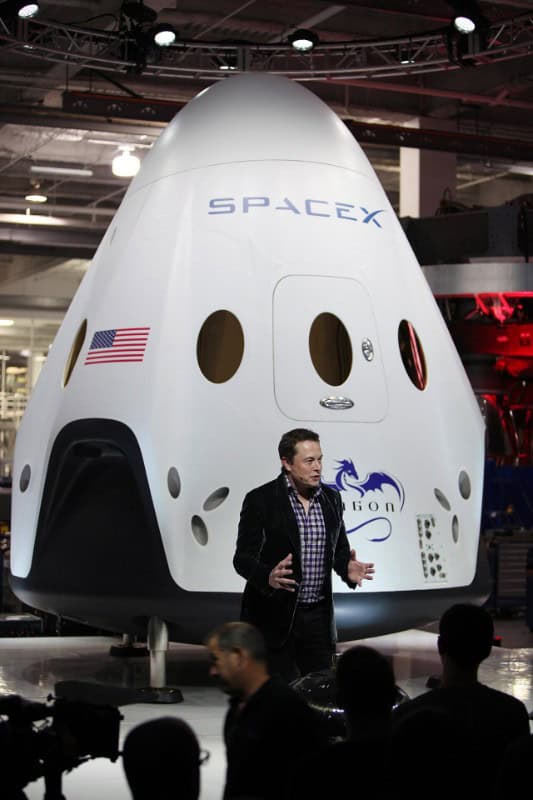
Elon Musk was born in Pretoria, South Africa, on June 28, 1971. He attended Queen’s University in Ontario, transferred to the University of Pennsylvania in 1992 and received bachelor’s degrees in physics and in economics, the second from the Wharton School. Britannica dates the degrees to 1997. Neither degree is in engineering. Zip2, the first company he co-founded, was sold to Compaq in 1999 for $307 million, and PayPal, which grew out of his second, X.com, was sold to eBay in 2002 for $1.5 billion. He founded SpaceX the same year.
His titles there are a matter of record. Tesla’s investor-relations biography, read on November 24, 2026, describes him as chief executive officer, chief technology officer and chairman of SpaceX since May 2002. The National Academy of Engineering’s 2022 membership list calls him “founder, chief executive officer, and chief engineer”. Britannica describes him as chief designer of the Falcon rockets and the Dragon and Starship spacecraft. At Tesla he has been a board member since April 2004 and chief executive since October 2008.
On SpaceX’s record, Falcon 1 became the first privately developed liquid-fueled rocket to reach orbit on September 28, 2008, after three failed launches. On May 30, 2020, a Falcon 9 and Crew Dragon carried NASA astronauts Robert Behnken and Douglas Hurley to orbit, the first crew NASA had sent up on a commercially built and operated American spacecraft. The academy elected Musk in February 2022 “for breakthroughs in the design, engineering, manufacturing, and operation of reusable launch vehicles and sustainable transportation and energy systems”. The photograph shows him in May 2014 at SpaceX’s headquarters in Hawthorne, California, unveiling the crew version of the Dragon capsule.
Computing and software engineers
23. Konrad Zuse: the first working programmable computer
Konrad Zuse (1910–1995) was a civil engineer. He graduated from the technical university in Berlin in 1935, went to work as a design engineer at the Henschel aircraft factory and set out to build a machine that would do its routine calculations for him. His first, the mechanical Z1, was put together in his parents’ apartment between 1936 and 1938.
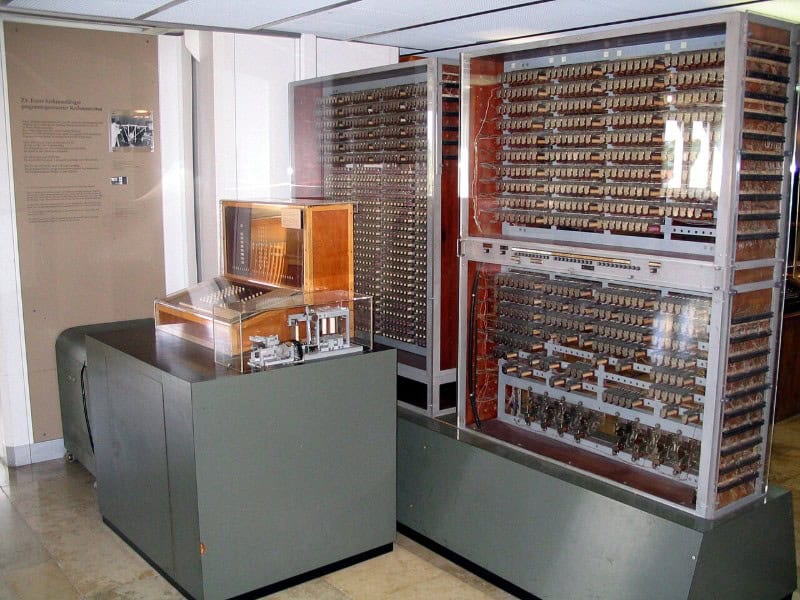
The Z3, which he presented in Berlin on May 12, 1941, is the one in the history books. It used about 2,000 to 2,600 relays (sources differ) and worked in binary floating-point numbers 22 bits long. It is generally described as the first working programmable, fully automatic digital computer. It was a wartime machine in every sense. A German aviation research institute paid part of its cost, Zuse’s later special-purpose calculators computed corrections for the wings of radio-controlled flying bombs, and the Z3 itself was destroyed in an air raid on December 21, 1943. Zuse did not join the Nazi Party. His Z4 survived the war and was delivered to ETH Zurich in July 1950. See it: the machine above is the working replica of the Z3 that Zuse’s company built in the early 1960s, on display at the Deutsches Museum in Munich.
24. Grace Hopper: programs written in words
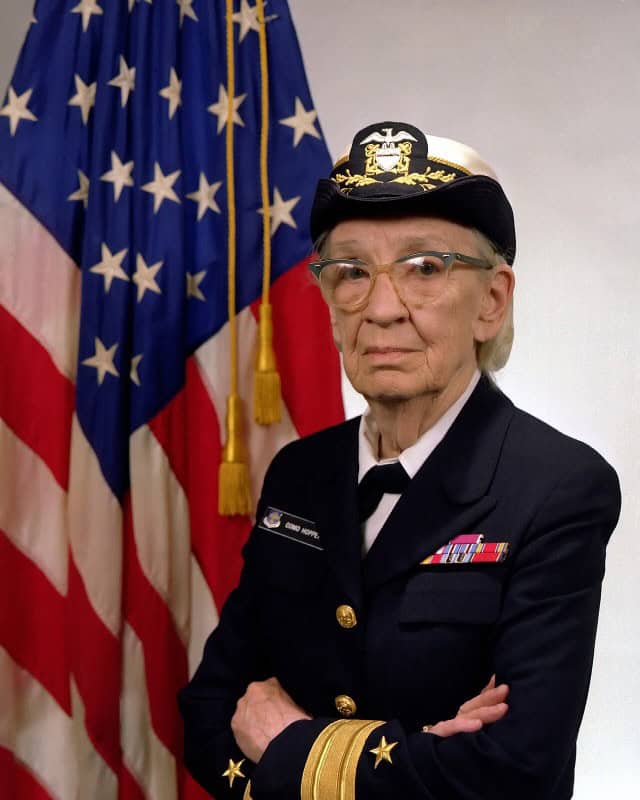
Grace Hopper (1906–1992) held a doctorate in mathematics from Yale (1934) and joined the Navy Reserve in 1943, which assigned her to the Harvard Mark I. Her compiler of 1952, which let a machine translate a programmer’s instructions into its own code, is covered on our famous inventors page and among our inventions by women.
The less famous half of her career was engineering in the plain sense. Her FLOW-MATIC language fed directly into COBOL, defined by an industry committee in 1959. From 1967 to 1977 she directed the Navy Programming Languages Group, where she wrote the validation software that tested whether each manufacturer’s COBOL compiler actually met the standard, tests that the National Bureau of Standards later took over. She retired from the Navy on August 14, 1986, as a rear admiral, aged 79. To show programmers what a nanosecond meant, she handed out pieces of wire 11.8 inches long, the distance light travels in that time. See it: the 1947 logbook with a moth taped to the page, the “bug” her team found in a relay of the Harvard Mark II, is in the Smithsonian’s National Museum of American History.
25. Margaret Hamilton: the software that landed Apollo
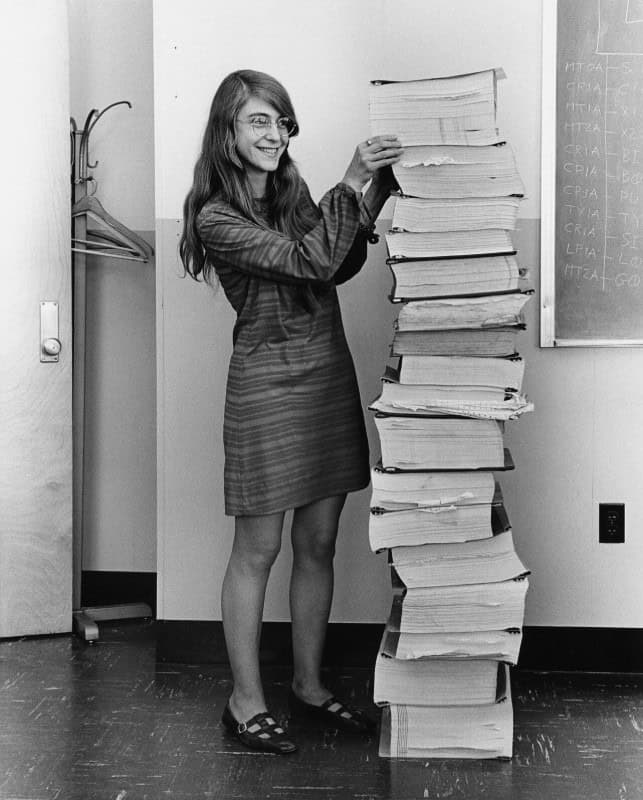
Margaret Hamilton (1936–2026) was born in Paoli, Indiana, took a mathematics degree at Earlham College in 1958 and wrote weather-prediction software at MIT before moving in 1961 to the SAGE air-defense system at MIT’s Lincoln Laboratory. In 1965 she joined MIT’s Instrumentation Laboratory, which was working for NASA on Apollo, and went on to lead the team that wrote the onboard flight software for the command module and the lunar module.
Her team designed that software to rank its own tasks. During the Apollo 11 landing in July 1969 the computer was overloaded and raised alarms, dropped the low-priority jobs, kept the ones needed for landing, and the descent continued. Hamilton is also credited with the term “software engineering”, which she used, Britannica notes, because she considered the work as much engineering as anything else on the spacecraft. She received the Presidential Medal of Freedom on November 22, 2016, and died on September 30, 2026, aged 90, according to MIT. The 1969 photograph shows her beside printed listings of the Apollo flight software.
26. Vint Cerf: the protocols of the internet
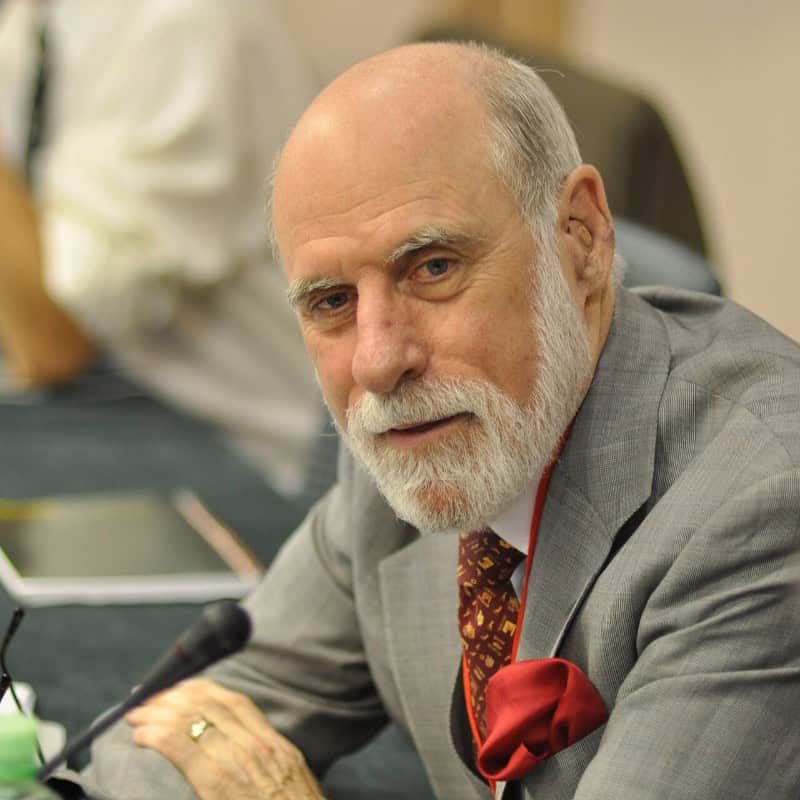
Vint Cerf, born in New Haven, Connecticut, on June 23, 1943, has a mathematics degree from Stanford and a master’s degree and doctorate from UCLA (1970 and 1972). Between them he worked as a systems engineer at IBM, and at UCLA he worked on the ARPANET’s host-to-host protocol.
The work he is known for was done with Robert Kahn. Their paper “A Protocol for Packet Network Intercommunication”, published in IEEE Transactions on Communications in May 1974, described how separate networks could be joined into one by a shared set of rules, the design that became TCP/IP. The ARPANET switched to it on January 1, 1983, the date our list of inventions that changed the world gives as one of the internet’s two birthdays. Cerf became the first president of the Internet Society in 1992 and chaired ICANN from 2000 to 2007. He was Google’s chief internet evangelist from 2005 until he retired in the summer of 2026. His honors include the Turing Award (2004), the Presidential Medal of Freedom (2005) and the Queen Elizabeth Prize for Engineering (2013).
27. Steve Wozniak: the Apple I and Apple II
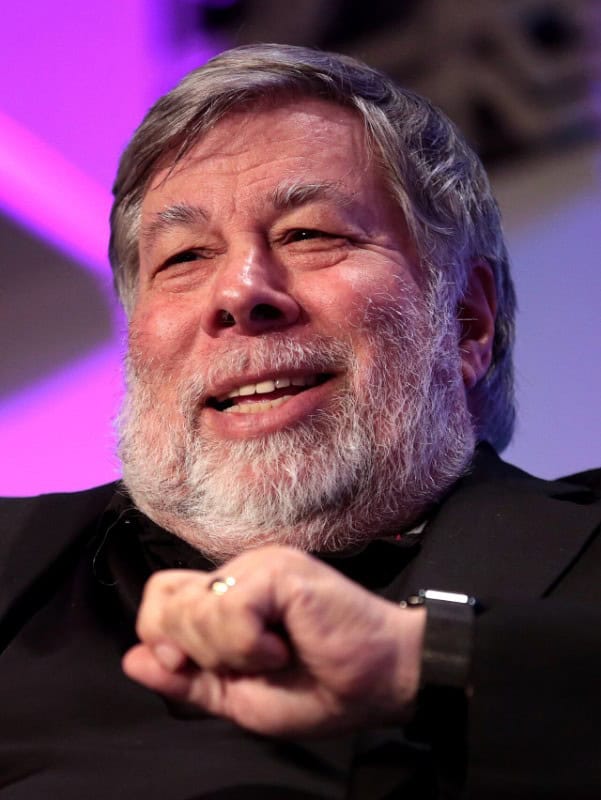
Steve Wozniak, born in San Jose, California, on August 11, 1950, was designing calculators at Hewlett-Packard when he built a computer of his own. The basic design was finished by March 1, 1976. He showed the prototype at the Homebrew Computer Club in 1976, the same year that he, Steve Jobs and Ronald Wayne founded Apple, on April 1, to sell it. The Smithsonian’s catalog record for its Apple I says about 200 were made, sold as a single circuit board for $666.66.
The Apple II, introduced at the West Coast Computer Faire in April 1977, had color graphics, BASIC built in, and eight expansion slots so that owners could add to it. His floppy-disk drive for it, the Disk II, followed in 1978. He and Jobs received the National Medal of Technology in 1985, the year he stopped working at Apple full time. He re-enrolled at the University of California, Berkeley, in 1981 under the name Rocky Raccoon Clark and completed his degree in electrical engineering and computer sciences. The personal computer has its own entry on our 20th-century inventions list. See it: an Apple I is in the collection of the Smithsonian’s National Museum of American History in Washington, DC.
Chemical and industrial engineers
28. Carl Bosch: fertilizer from the air
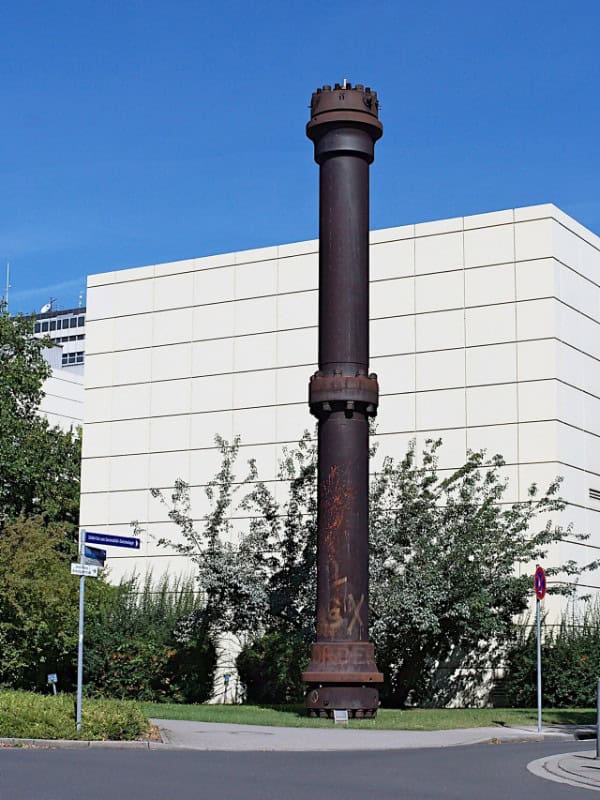
Carl Bosch (1874–1940), born in Cologne, studied metallurgy and mechanical engineering in Berlin before taking a doctorate in chemistry at Leipzig in 1898, and joined the chemical company BASF in 1899. A decade later BASF acquired Fritz Haber’s laboratory method for making ammonia from the nitrogen in air, and Bosch was given the job of turning a bench-top demonstration into a factory.
That meant plant that could run at high gas pressures and temperatures, and a cheaper catalyst: his team replaced Haber’s osmium and uranium with iron. The first plant opened at Oppau in 1913 and a second at Leuna in 1917. Bosch shared the 1931 Nobel Prize in Chemistry with Friedrich Bergius “for their contributions to the invention and development of chemical high pressure methods”. He became head of the IG Farben combine in 1925, criticized the Nazi government’s antisemitic policies after 1933 and was moved out of his executive posts. Ammonia made by the Haber-Bosch process now goes into about a third of the world’s food production, by the estimate of The Chemical Engineer magazine. The steel column in the photograph is an ammonia synthesis reactor built by BASF in 1921.
29. Lillian Gilbreth: engineering the work itself
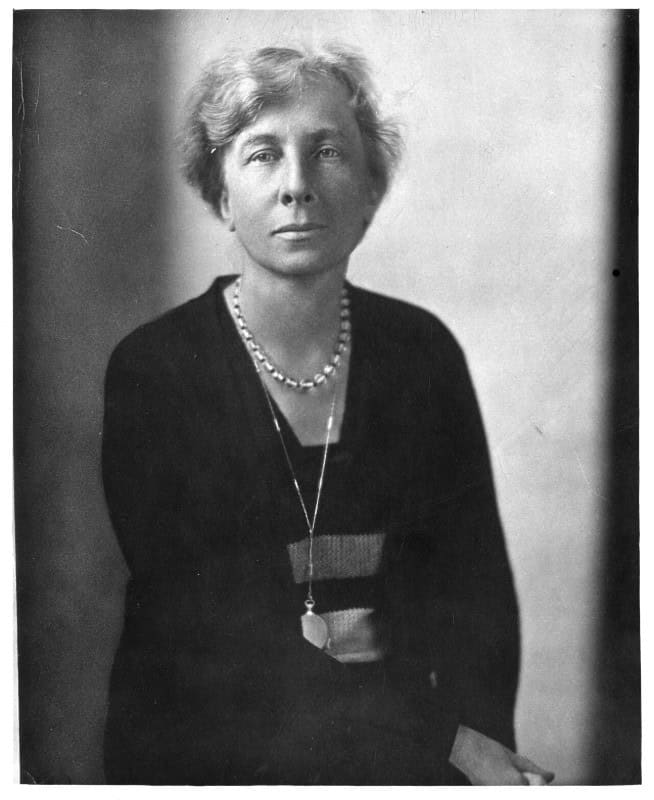
Lillian Gilbreth (1878–1972) was born in Oakland, California, took two degrees at the University of California and a doctorate in applied psychology at Brown University in 1915. With her husband, Frank, she filmed people at work and broke each task into its motions in order to remove the wasted ones. After Frank died in 1924 she ran their consulting firm, Gilbreth, Inc., herself, while raising eleven children; two of them wrote Cheaper by the Dozen (1948) about the household.
She took the same methods into the home. The pedal-operated trash can and the shelves inside refrigerator doors are both credited to her, and they have an entry on our list of inventions by women. In 1926 she became the second woman admitted to the American Society of Mechanical Engineers, and in 1935 Purdue University made her a professor of management in its School of Mechanical Engineering. In 1965 she was the first woman elected to the National Academy of Engineering, and in 1966 the first to receive the Hoover Medal.
30. Frances Arnold: evolution as an engineering tool
Frances Arnold, born on July 25, 1956, holds a bachelor’s degree in mechanical and aerospace engineering from Princeton (1979) and a doctorate in chemical engineering from the University of California, Berkeley (1985). She has been at the California Institute of Technology since 1986.
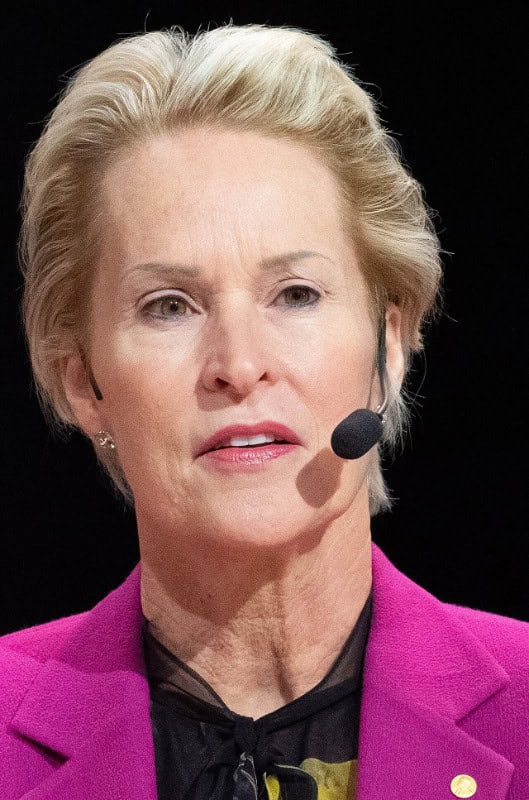
Enzymes, the proteins that speed up chemical reactions in living cells, are too complicated to design from first principles. In 1993 Arnold showed another way: make many random variants of an enzyme, test them, keep the best and repeat. The Nobel Foundation describes this as the first directed evolution of enzymes, and enzymes made this way are now used to manufacture chemicals, drugs and renewable fuels with less waste. She received half of the 2018 Nobel Prize in Chemistry “for the directed evolution of enzymes”, the fifth woman to win that prize. She has been elected to all three US national academies: Engineering, Medicine and Sciences. The photograph was taken in Stockholm in December 2018.
Famous people who trained as engineers
Engineering is also a common first career for people who became famous for something else. The names below are checked against the sources given.
Neil Armstrong studied aeronautical engineering at Purdue University, completed his degree in 1955 and, after the moon landing, was a professor of aerospace engineering at the University of Cincinnati from 1971 to 1979 (Britannica). Herbert Hoover, the 31st US president, graduated in geology with Stanford’s first class in 1895 and worked as a mining engineer on four continents before entering public life (Britannica). Jimmy Carter graduated from the US Naval Academy in 1946 and was preparing to become the engineering officer of the submarine Seawolf when his father died in 1953 and he went home to Georgia (Britannica).
Outside politics and spaceflight, Alfred Hitchcock studied at the London County Council School of Marine Engineering and Navigation in 1913 and 1914 and then worked for a telegraph cable company (Britannica). Rowan Atkinson, the actor behind Mr. Bean, studied electrical engineering at Newcastle University before a master’s degree at Oxford (Britannica). Bill Nye, television’s “Science Guy”, has a bachelor’s degree in mechanical engineering from Cornell (1977) and worked as an engineer at Boeing near Seattle before turning to comedy in 1986. Tim Cook, who succeeded Steve Jobs as Apple’s chief executive and became its executive chairman in 2026, holds a Bachelor of Science in industrial engineering from Auburn University, according to Apple’s own biography of him.
Where to see the work
Engineering has one advantage over most kinds of fame: much of the evidence is still standing. Britain has the Great Britain in Bristol and Turbinia in Newcastle. In the United States the Brooklyn Bridge and Willis Tower are in daily use, the 1903 Wright Flyer is in Washington, an SR-71 is at the Udvar-Hazy Center in Virginia and a Saturn V is in Huntsville. Munich has both Diesel’s first engine and the rebuilt Z3. The rest is harder to visit and used more often: the standard railway gauge, the alternating current in the wall and the protocols under every web page.
If you want the inventions rather than the people, start with our 18 famous inventors and the lists of 19th-century and 20th-century inventions.
Image credits
All images are from Wikimedia Commons and have been resized. Public domain: the portraits of Telford, Brunel, Bazalgette, Emily Roebling, Eiffel, Watt, Stephenson, Diesel, Ford, Westinghouse, Tesla and Steinmetz; the photograph of Turbinia; the Clarke patent drawing; the Wright brothers’ first flight (John T. Daniels, Library of Congress); the Soviet stamp; the US Air Force photograph of Kelly Johnson; the NASA photographs of Mary Jackson, Wernher von Braun and Elon Musk; the US Navy portrait of Grace Hopper; and the Draper Laboratory photograph of Margaret Hamilton. The portrait of Lillian Gilbreth is from the Smithsonian Institution, which lists no known copyright restrictions. CC BY: Willis Tower and the Chicago skyline by Chris Rycroft (CC BY 2.0); Claude Shannon, Bell Telephone Laboratories photograph from Tekniska museet (CC BY 2.0); Vint Cerf by Veni Markovski (CC BY 3.0); Frances Arnold by Bengt Nyman (CC BY 2.0). CC BY-SA: the Z3 replica by Venusianer, Steve Wozniak by Gage Skidmore and the ammonia reactor by Drahkrub (all CC BY-SA 3.0). Title card by The Popular List.


