
Some buildings are famous because they are enormous, some because they are beautiful, some because of what happened inside them, and a few because they are simply older than anything else still standing. The twenty-five below are the ones that turn up on postcards in every language, and this list puts them in the order they were built, from a tomb that was already ancient when Rome was founded to a pair of towers finished in the 1990s.
Each entry gives the city, the architect where one is known, the year of completion, and the one or two facts that explain why the building matters, with the sources listed at the end. The photographs are all licensed for reuse and were checked one by one; a few famous modern buildings are missing from this list for exactly that reason, because the copyright law of the countries they stand in has no exception that lets photographs of their architecture be published under a free licence, and a list without pictures is not much of a list.
The ancient world
1. The Great Pyramid of Giza, Egypt (c. 2560 BC)
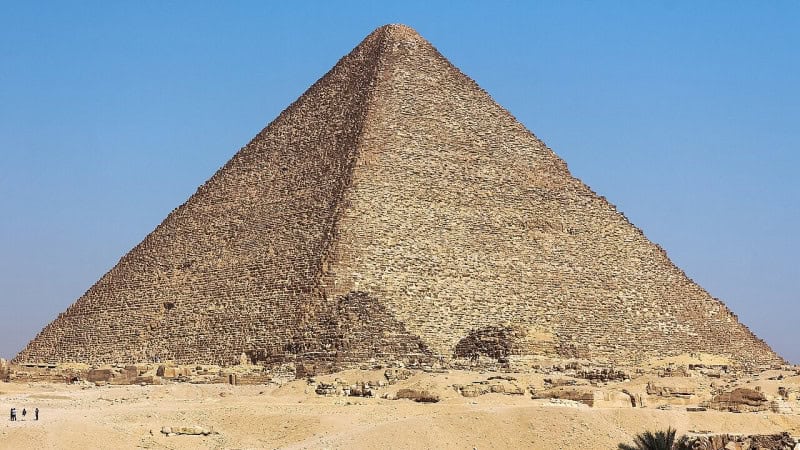
The oldest building on this list and the only survivor of the Seven Wonders of the ancient world. It was built as the tomb of the pharaoh Khufu, of Egypt’s Fourth Dynasty, on the Giza plateau outside modern Cairo, and its original height of about 146 metres made it the tallest structure people had ever built, a record it held for close to four thousand years. Nobody knows the architect; the tradition names Hemiunu, Khufu’s vizier, whose own tomb stands beside it. The pyramid and the rest of the Memphis necropolis have been a UNESCO World Heritage Site since 1979.
2. The Parthenon, Athens (438 BC)
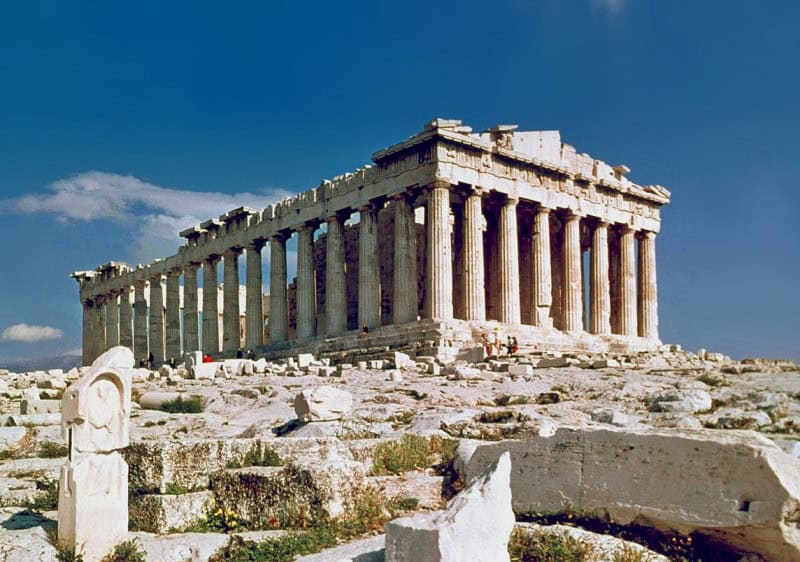
The temple of Athena on the Acropolis is the building every later classical building is measured against. The architects were Ictinus and Callicrates, working under the sculptor Phidias, and the structure was finished in 438 BC with the sculptural decoration completed six years later. It has been a temple, a church, a mosque and, in 1687, a Venetian target: a shell hit the gunpowder the Ottoman garrison had stored inside and blew the roof and much of the interior away, which is why it stands open to the sky. Its surviving sculptures are split between Athens and the British Museum, an argument that is not over. If the statues interest you more than the building, our guide to the most famous statues of the Greek gods starts here.
3. Al-Khazneh, the Treasury at Petra, Jordan (1st century AD)
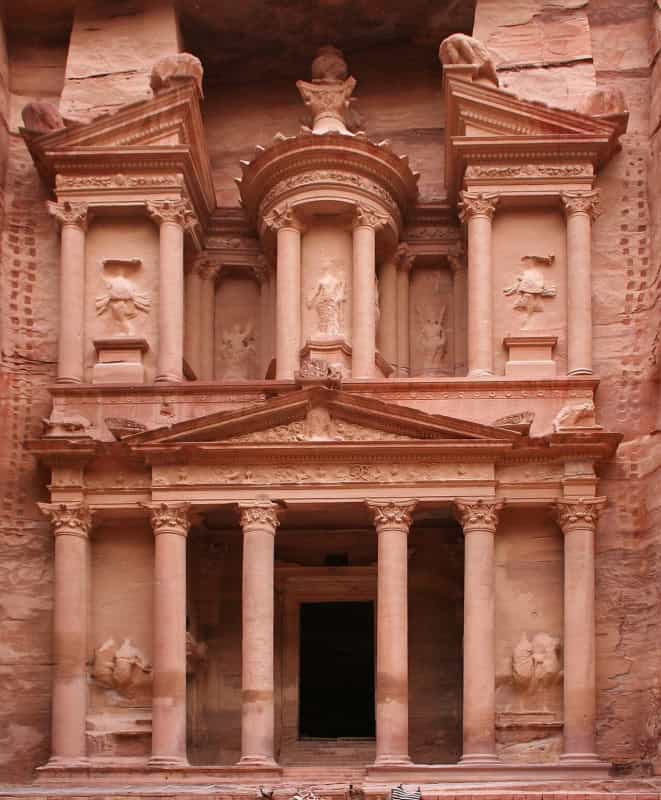
Not built but carved: the Treasury is a facade nearly 40 metres high cut straight into the sandstone cliff at the end of the narrow gorge that leads into Petra, the capital of the Nabataean kingdom. Its architect is unknown. It is thought to have been the tomb of a Nabataean king, most likely Aretas IV, who ruled in the first decades of the first century AD, and the “treasury” name comes from a Bedouin legend that the urn on top held a pharaoh’s gold; the bullet marks on the urn are from people testing the story. Petra was inscribed by UNESCO in 1985 and was largely unknown to Europeans until the Swiss explorer Johann Ludwig Burckhardt reached it in 1812.
4. The Colosseum, Rome (AD 80)
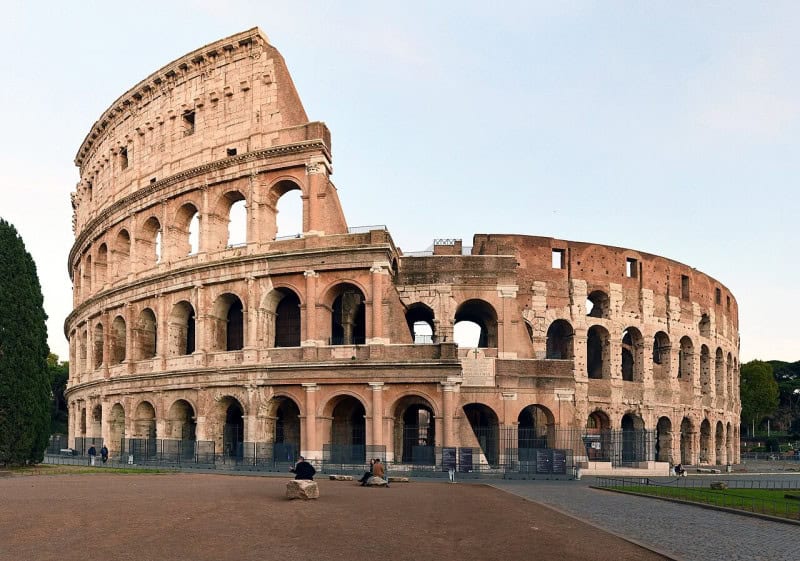
The largest amphitheatre the Romans ever built, by an architect whose name is not recorded, begun by the emperor Vespasian around AD 72 and inaugurated by his son Titus in AD 80 with games that, according to the Roman historian Cassius Dio, ran for a hundred days. It held tens of thousands of spectators (estimates run from 50,000 upwards) in a building whose engineering, a ring of concrete vaults faced in travertine, is the reason it is still standing after earthquakes, fires and centuries of being quarried for stone. The historic centre of Rome, which includes it, has been a World Heritage Site since 1980.
5. The Pantheon, Rome (c. AD 126)
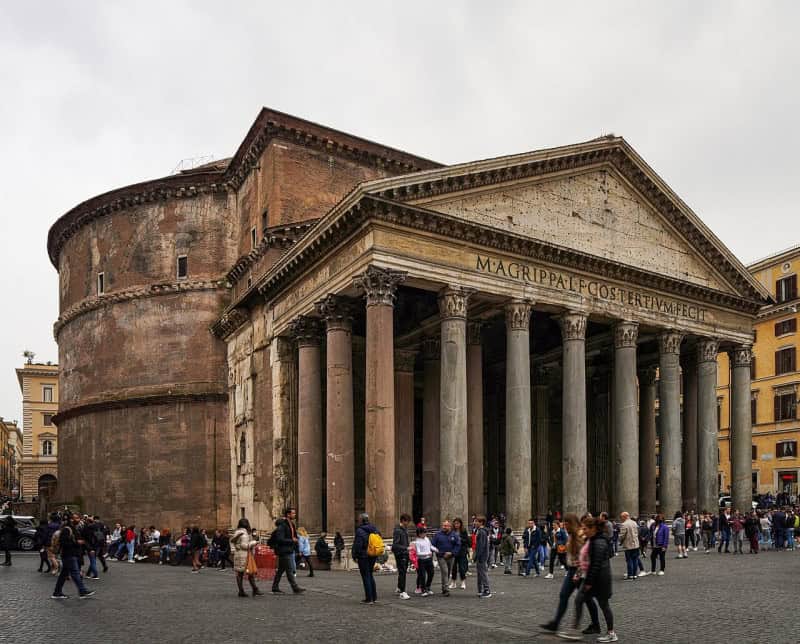
The best-preserved building of ancient Rome, and the one with the most surprising statistic: its concrete dome, 43 metres across, was the largest in the world for more than thirteen centuries and is still the largest unreinforced concrete dome ever built. The present building, whose architect is not recorded (the tradition sometimes names Apollodorus of Damascus, Hadrian’s engineer, but the attribution is unproven), was completed under the emperor Hadrian around AD 126, though the inscription across the front still credits Marcus Agrippa, whose earlier temple on the site burned down. It survived because it was turned into a church in 609, and it has been in continuous use ever since; the painter Raphael is buried inside.
6. Hagia Sophia, Istanbul (537)
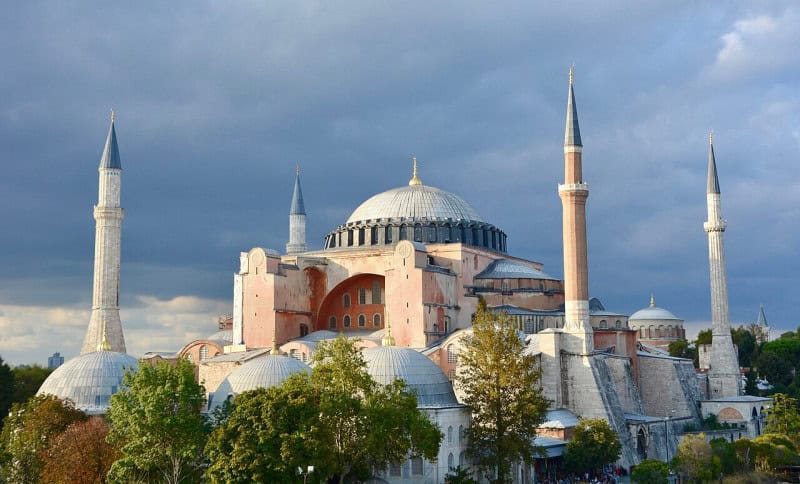
Built in just under six years for the Byzantine emperor Justinian by two mathematicians, Anthemius of Tralles and Isidore of Miletus, and dedicated in 537, Hagia Sophia was the largest cathedral in the world for nearly a thousand years. Its dome, more than 30 metres across and seemingly floating on a ring of windows, collapsed in an earthquake in 558 and was rebuilt higher. After the Ottoman conquest of Constantinople in 1453 it became a mosque and gained its minarets; it was a museum from 1935 and was reconverted to a mosque in 2020. It sits inside the Historic Areas of Istanbul World Heritage Site, inscribed in 1985.
The medieval world
7. Angkor Wat, Cambodia (12th century)
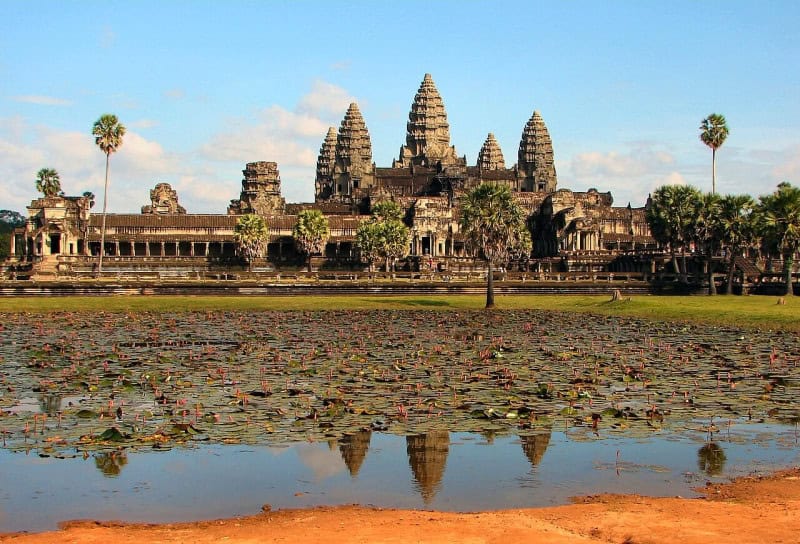
The largest religious monument in the world by area, built in the first half of the twelfth century for the Khmer king Suryavarman II by builders whose names are not recorded, as a Hindu temple to Vishnu and later converted to Buddhist use. Its five towers represent the peaks of Mount Meru, the home of the gods, and the moat around it stands in for the oceans. The whole Angkor site, the capital of the Khmer Empire from the ninth to the fifteenth century, was inscribed by UNESCO in 1992, and the temple appears on Cambodia’s national flag, which is more than any other building on this list can claim.
8. The Alhambra, Granada, Spain (13th to 14th century)
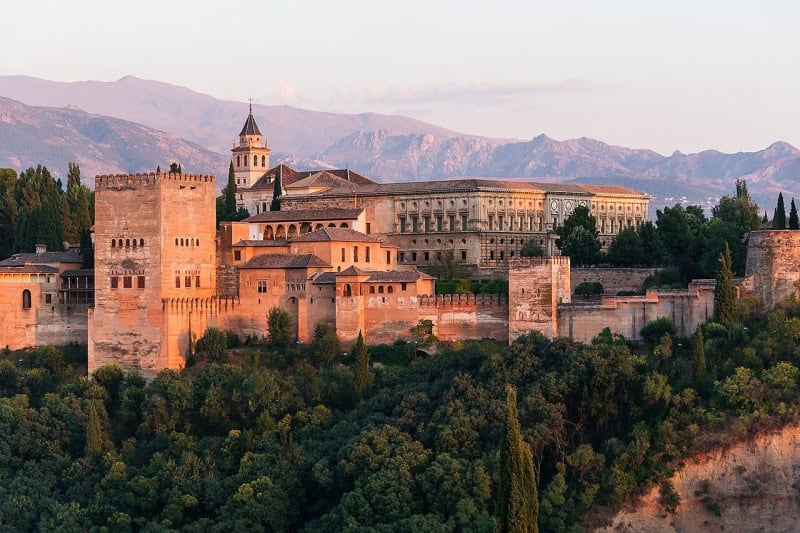
A fortress and palace on a hill above Granada, its architects unrecorded, built mostly under the Nasrid dynasty, the last Muslim rulers of Spain, from the thirteenth century until the city fell to Ferdinand and Isabella in 1492. The outside is plain red walls; the inside is the finest surviving example of Islamic palace architecture in Europe, courtyards of carved stucco, tilework and water. The square block behind the Nasrid walls and the Comares Tower in the photograph is the Palace of Charles V, a Renaissance square-and-circle added by the Habsburg emperor in the sixteenth century. UNESCO inscribed the Alhambra and the Generalife gardens in 1984 and extended the listing to the Albayzín quarter in 1994.
9. The Leaning Tower of Pisa, Italy (1372)
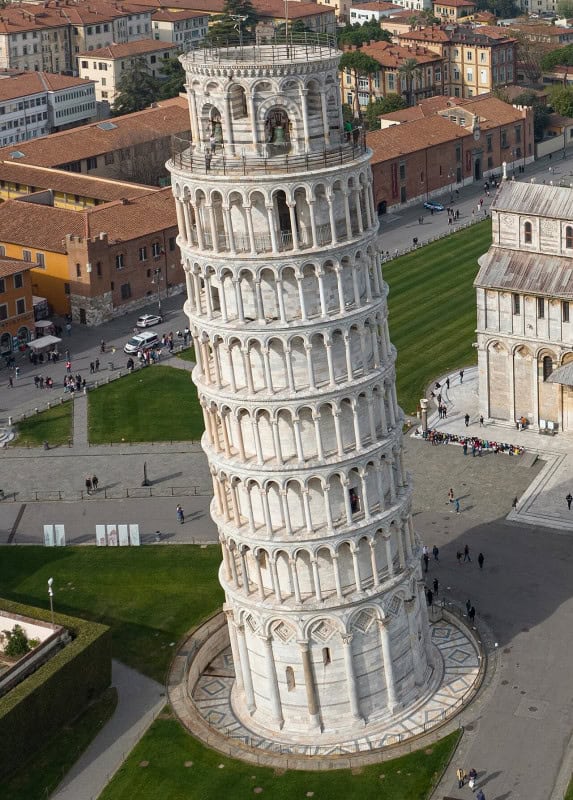
The bell tower of Pisa Cathedral began leaning before it was finished. Construction started in 1173, traditionally under the architect Bonanno Pisano, stopped for almost a century, with the soft ground already giving way under the first three storeys and Pisa at war, and was completed in 1372 with the upper floors built slightly curved to compensate. By 1990 the tilt had reached about 5.5 degrees and the tower was closed; an international engineering project that removed soil from under the high side brought it back by about 45 centimetres, and it reopened in 2001. The Piazza del Duomo, with the cathedral, baptistery and tower, has been a World Heritage Site since 1987.
10. The Forbidden City, Beijing (1420)
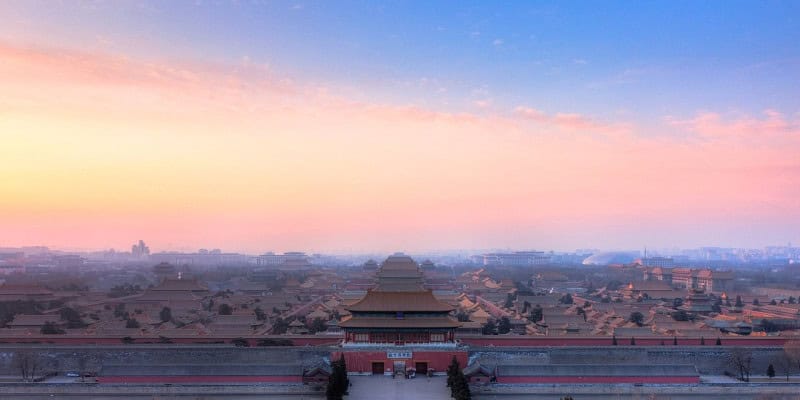
The palace of the Ming and Qing emperors for almost five hundred years, from its completion in 1420 under the Yongle Emperor to the abdication of the last emperor in 1912. The tradition credits its design to Kuai Xiang, a carpenter-architect in the Yongle Emperor’s service. It is the largest palace complex in the world, some 980 buildings inside a walled rectangle of 72 hectares, and it was forbidden in the literal sense: ordinary people could not enter without permission. It has been the Palace Museum since 1925 and was inscribed by UNESCO in 1987. The photograph is taken from Jingshan, the artificial hill built north of the palace from the earth dug out for its moat.
11. Notre-Dame de Paris (1345; restored 2024)
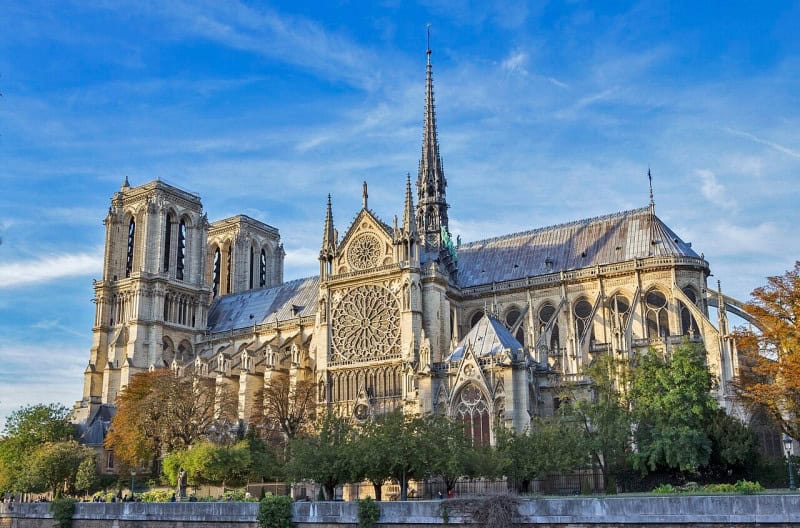
The cathedral of Paris was begun in 1163 under Bishop Maurice de Sully and substantially finished by 1345. Its first master builder is unrecorded; two later ones, Jean de Chelles and Pierre de Montreuil, are known by name. It is the building most people picture when they hear the word Gothic: flying buttresses, rose windows, and the gargoyles that are really drainpipes. Victor Hugo’s 1831 novel rescued it from neglect and led to the nineteenth-century restoration by Viollet-le-Duc, who added the spire that the world watched fall on 15 April 2019 when fire destroyed the roof. The rebuilt cathedral reopened in December 2024. The photograph was taken in 2017, with the old spire still in place; the banks of the Seine, including the cathedral, are a World Heritage Site.
12. Machu Picchu, Peru (c. 1450)
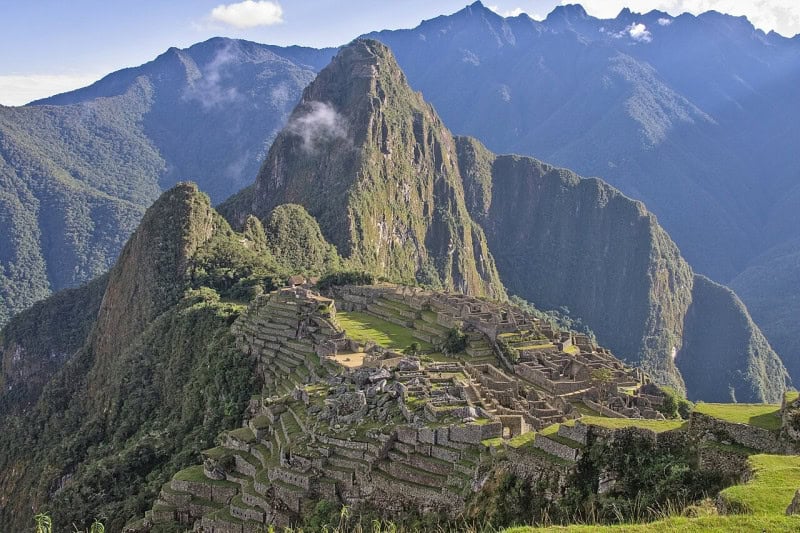
A city rather than a single building, but no list of famous architecture leaves it out. Machu Picchu was built by the Inca, by builders whose names are lost, most likely as an estate for the emperor Pachacuti, around 1450, on a ridge 2,430 metres up in the Andes, and abandoned about a century later at the time of the Spanish conquest. The Spanish never found it, which is why its dry-stone walls, fitted without mortar so precisely that a knife blade will not go between the blocks, survived intact until the American explorer Hiram Bingham brought it to the world’s attention in 1911. UNESCO inscribed it in 1983.
The age of domes and palaces
13. Saint Basil’s Cathedral, Moscow (1561)
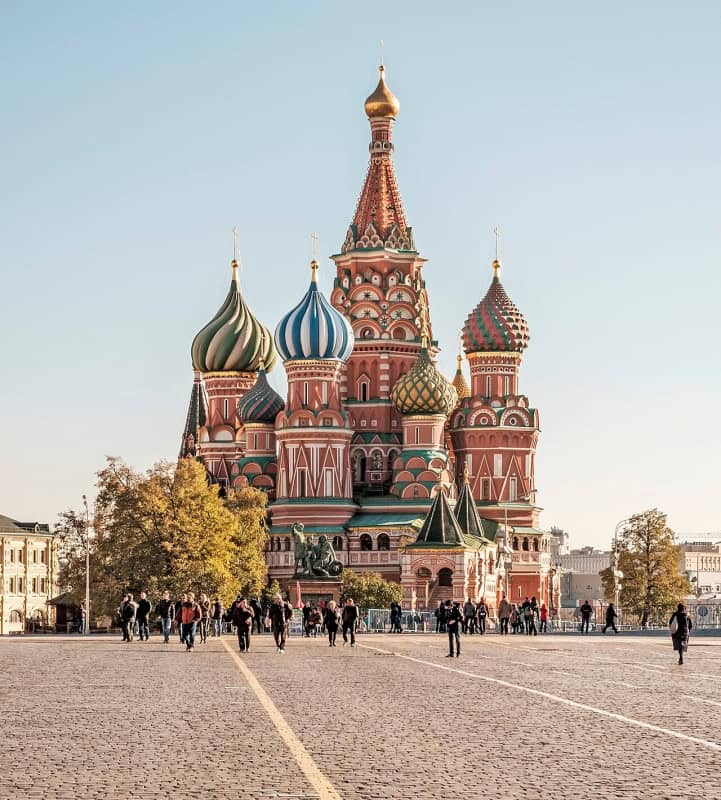
The building on Red Square that most people think is the Kremlin is in fact a cathedral, built on the orders of Ivan the Terrible between 1555 and 1561 to mark his capture of Kazan; the tradition names its architects as Barma and Postnik Yakovlev, who may have been one man. It is nine chapels on one foundation, each with its own tower, with a tenth added in 1588 over the grave of Basil the Blessed, and the painted onion domes that make it unmistakable were added in the seventeenth century; the original domes were plainer. It narrowly survived both Napoleon, who is said to have ordered it blown up in 1812, and Stalin’s planners. It stands inside the Kremlin and Red Square World Heritage Site, inscribed in 1990.
14. St Peter’s Basilica, Vatican City (1626)
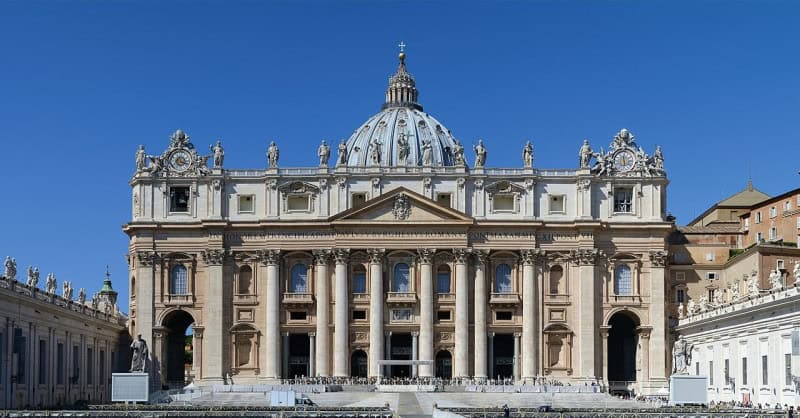
One of the largest churches in the world, built over 120 years on the traditional site of Saint Peter’s tomb by a roll-call of Renaissance architects: Bramante drew the first plan in 1506, Michelangelo designed the dome in his seventies, Carlo Maderno added the long nave and the facade, and Bernini laid out the colonnaded square in front of it after the church was consecrated in 1626. Michelangelo’s dome rises about 136 metres to the top of the cross. Vatican City as a whole has been a World Heritage Site since 1984.
15. The Taj Mahal, Agra, India (1648)
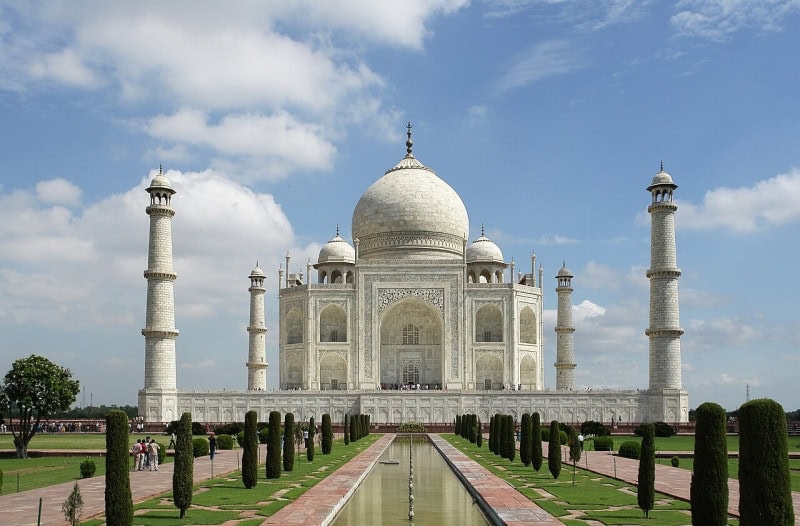
A tomb, like the Great Pyramid, and the most famous building in India. The Mughal emperor Shah Jahan built it for his wife Mumtaz Mahal, who died in 1631; UNESCO dates the construction to 1631 to 1648, with the mosque, guesthouse and gateway completed by 1653. The white marble came from Rajasthan and the inlay of semi-precious stones from across Asia. The architect is traditionally named as Ustad Ahmad Lahauri. UNESCO inscribed it in 1983.
16. The Palace of Versailles, France (1682)
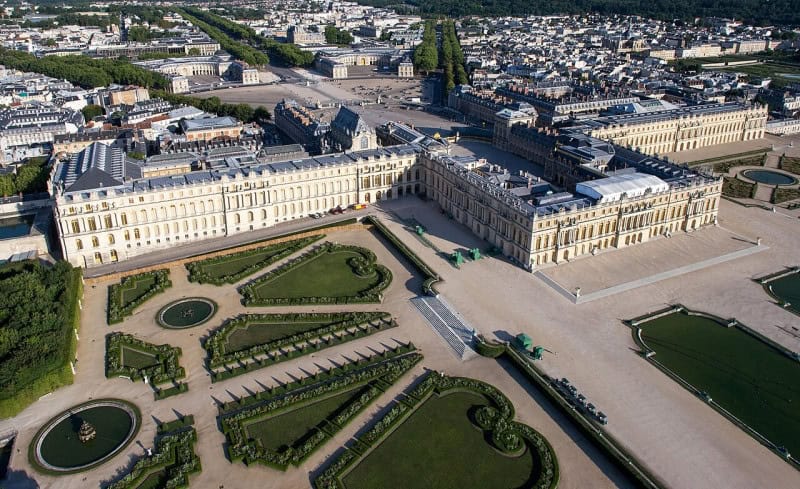
Louis XIII’s hunting lodge, turned by his son Louis XIV into the seat of the French court and government from 1682 until the Revolution of 1789. The architects were Louis Le Vau and then Jules Hardouin-Mansart, the painter Charles Le Brun decorated the interiors including the Hall of Mirrors, and André Le Nôtre laid out the gardens, which stretch for kilometres beyond the frame of the photograph. The Treaty of Versailles that ended the First World War was signed in the Hall of Mirrors in 1919. The palace and park have been a World Heritage Site since 1979.
17. The Palace of Westminster, London (1870)
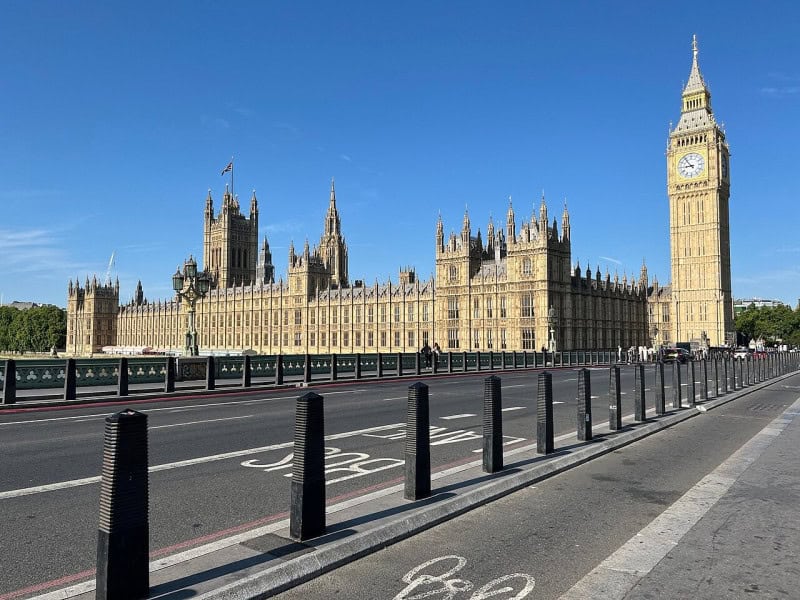
The Houses of Parliament are younger than they look. The medieval palace burned down in 1834, and the building that replaced it was designed by Charles Barry with Augustus Pugin responsible for the Gothic detail, built between 1840 and 1870. The clock tower at the north end, renamed the Elizabeth Tower in 2012, houses the bell whose nickname, Big Ben, has attached itself to the whole tower. Westminster Hall, at the heart of the complex, survived the fire and dates from 1097. The palace, Westminster Abbey and St Margaret’s Church were inscribed by UNESCO together in 1987.
18. Neuschwanstein Castle, Bavaria, Germany (1886, unfinished)
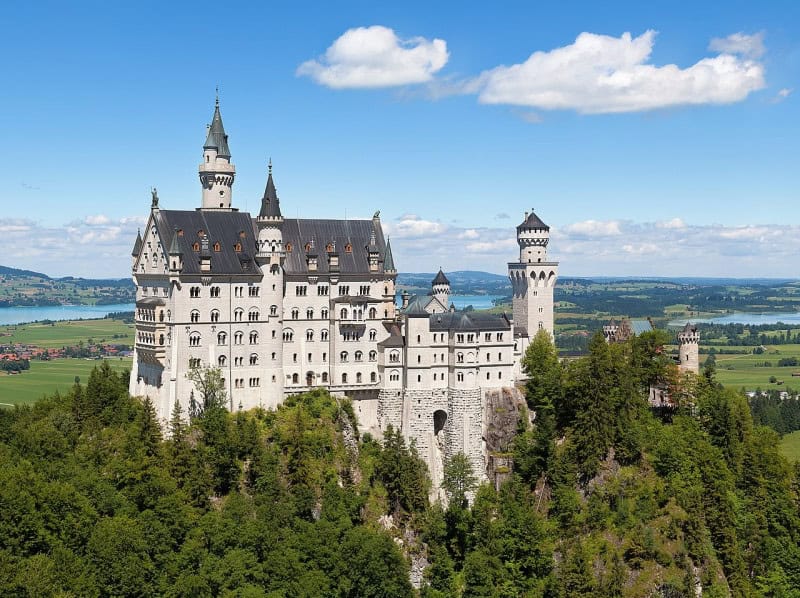
The castle that looks like a fairy tale was built to look like one. King Ludwig II of Bavaria commissioned it in 1868 as a private retreat in the style of a medieval knight’s castle, with the stage designer Christian Jank producing the first drawings and the architect Eduard Riedel turning them into a building. Ludwig lived in it for a few months before his death in 1886, when it was still unfinished, and it was opened to the public within weeks. It was an inspiration for the castle in Disney’s Sleeping Beauty, and it was added to the World Heritage List in 2025 with Ludwig’s other palaces.
The modern world
19. The Eiffel Tower, Paris (1889)
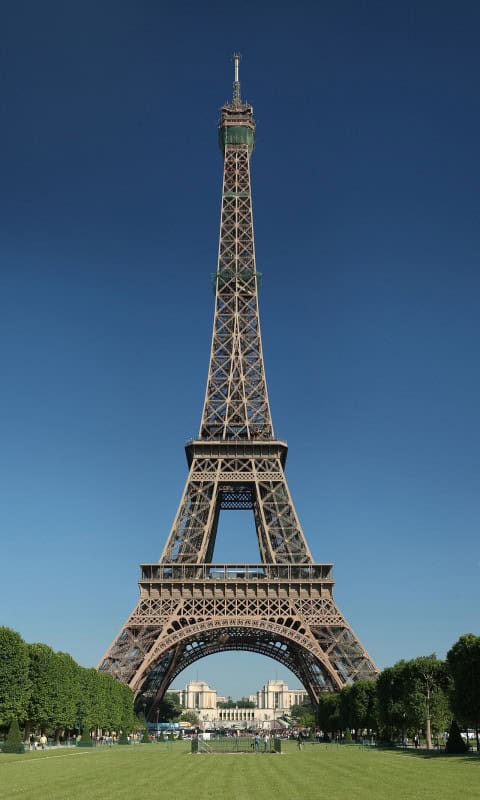
Built as the entrance arch to the 1889 World’s Fair by Gustave Eiffel’s engineering company, to a design by his engineers Maurice Koechlin and Émile Nouguier with the architect Stephen Sauvestre, and finished in two years, two months and five days. At about 300 metres it was the tallest structure in the world until the Chrysler Building overtook it in 1930, and it was meant to be dismantled after twenty years; its usefulness as a radio mast saved it. The tower’s operating company, SETE, reported about 6.75 million visitors in 2025. One legal oddity worth knowing if you photograph it: the tower itself is long out of copyright, but its night-time lighting is not, which is why the picture above was taken in daylight. For a different kind of Paris landmark, the bridges where couples once fastened padlocks are in our guide to love-lock locations.
20. The Sagrada Família, Barcelona (begun 1882, still unfinished)
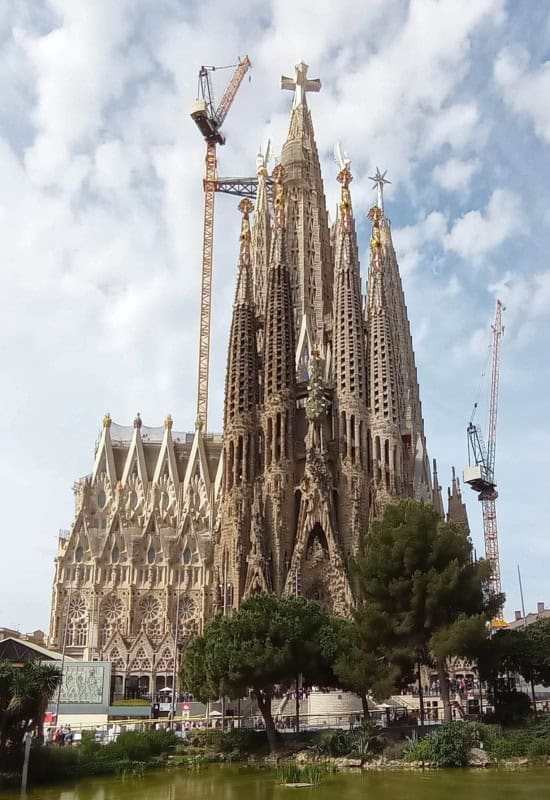
The only building on this list still under construction. Antoni Gaudí took over the project in 1883, a year after the first stone was laid, and worked on it for the rest of his life; when he died in 1926 after being hit by a tram, less than a quarter of it was built. Construction has continued since, funded by visitors, and the tallest of its eighteen planned towers, the Tower of Jesus Christ, was completed in 2026 at 172.5 metres, which makes it the tallest church in the world. The parts Gaudí built, the crypt and the Nativity facade, were added in 2005 to UNESCO’s listing of his works in Barcelona. The cranes in the photograph have been part of the skyline for decades and the facades are still being finished.
21. The Empire State Building, New York (1931)
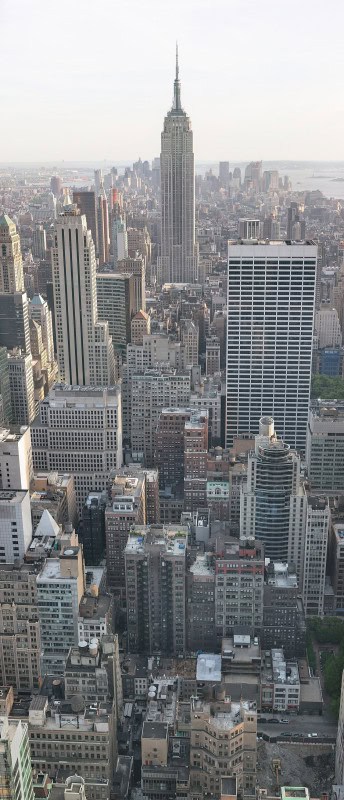
The building that held the title of tallest in the world for longer than any other in the twentieth century, from its opening in 1931 until the World Trade Center was completed in 1971. It was designed by the firm Shreve, Lamb and Harmon in the Art Deco style and built in a little over a year, during the Depression, at a pace of more than four floors a week; it stands 381 metres to the roof and 443 to the tip of the antenna. It was so empty in its early years that New Yorkers called it the Empty State Building. It has been a National Historic Landmark since 1986.
22. Fallingwater, Pennsylvania, United States (1937)
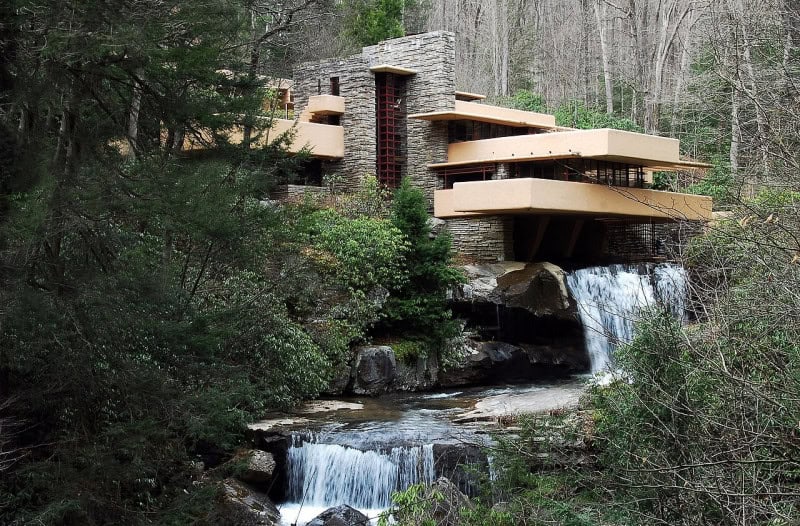
The most famous private house in the world, designed by Frank Lloyd Wright in 1935 for the Pittsburgh department-store owner Edgar Kaufmann and completed in 1937. Kaufmann expected a house with a view of the waterfall on his land; Wright put the house on top of the waterfall, with concrete terraces cantilevered out over the stream. The terraces sagged for decades and were reinforced in 2002. It has been open to the public since 1964 and was one of eight Wright buildings inscribed by UNESCO in 2019.
23. The Sydney Opera House, Australia (1973)
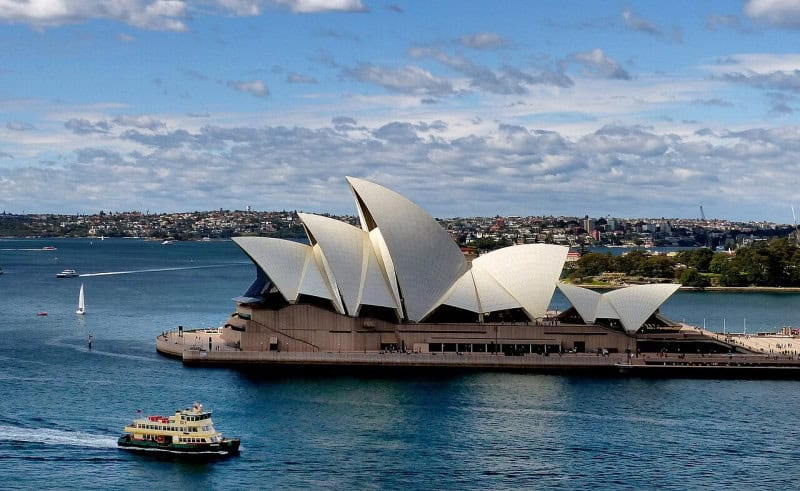
The Danish architect Jørn Utzon won the design competition in 1957 with a sketch of sail-like shells, and then spent years working out how to build them; the answer, that every shell could be cut from the surface of a single sphere, is what made the roof possible. Utzon resigned in 1966 after disputes with the state government and never saw the finished building, which opened in 1973, ten years late and many times over budget. It was inscribed by UNESCO in 2007, while Utzon was still alive, one of the few buildings to be listed in its architect’s lifetime.
24. The Guggenheim Museum Bilbao, Spain (1997)
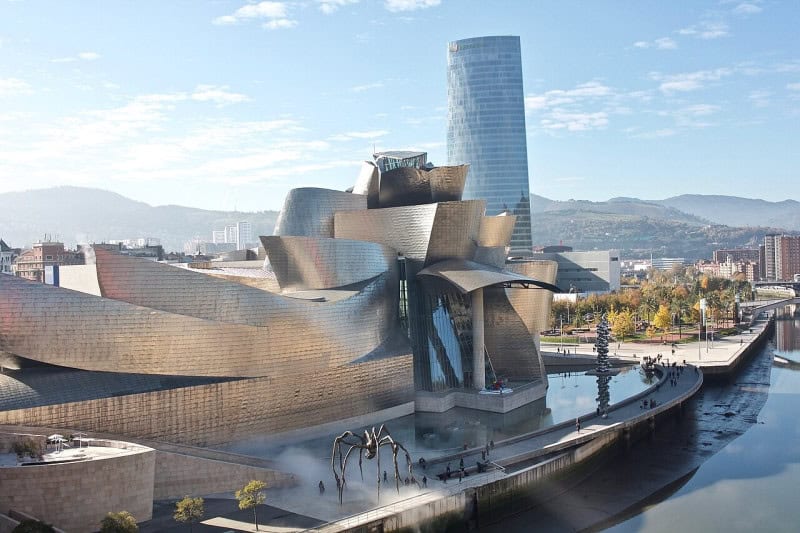
Frank Gehry’s museum on the river in Bilbao, opened in 1997, is the building that gave a name to the idea that one piece of architecture can change a city’s fortunes: the “Bilbao effect.” Its curved titanium skin was designed with aerospace software, and it drew more than a million visitors in its first year, according to the museum’s own figures.
25. The Petronas Twin Towers, Kuala Lumpur (1998)
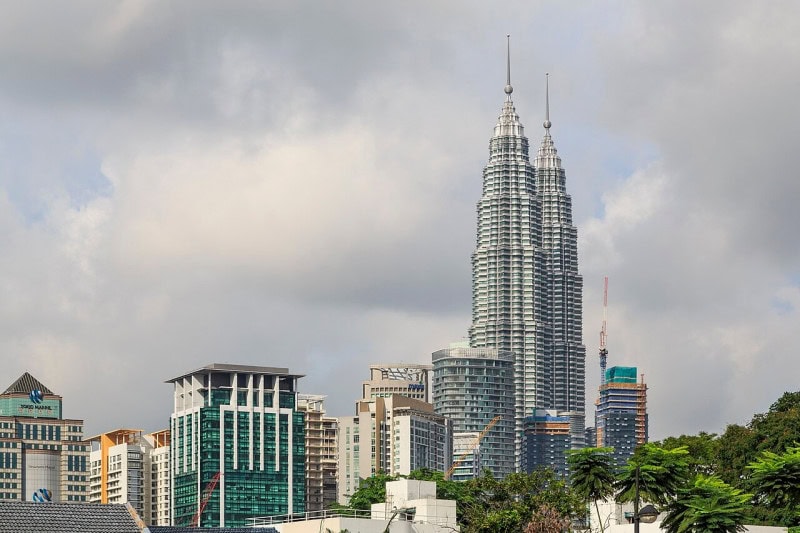
Designed by the Argentine-American architect César Pelli and completed in 1998, the twin towers were the tallest buildings in the world until Taipei 101 overtook them in 2004, and they remain the tallest twin towers ever built, at 452 metres. Their floor plan is an eight-pointed star drawn from Islamic geometry, and the two towers are joined by a skybridge at the 41st and 42nd floors. They are here in place of the Burj Khalifa, the current record holder, for a reason explained in the introduction: the United Arab Emirates has no freedom-of-panorama exception in its copyright law, so no photograph of the Burj Khalifa can be published under a free licence, and this list only shows what it can show.
What the list leaves out
Twenty-five is a hard cut, and the buildings just outside it are famous too: the Chrysler Building and the White House, the Louvre and its pyramid, Westminster Abbey, the Blue Mosque, the Golden Temple at Amritsar, the Potala Palace, Himeji Castle, the Chartres and Cologne cathedrals, Brasília’s cathedral, the Burj Khalifa and the Louvre Abu Dhabi. Some were left out for balance across centuries and continents; a few, as the introduction says, because their countries’ copyright law does not allow photographs of their architecture to be freely licensed. Monuments that are statues rather than buildings, the Statue of Liberty and Christ the Redeemer among them, have a list of their own.
Sources
UNESCO World Heritage Centre entries: Memphis and its Necropolis (1979); Acropolis, Athens (1987); Petra (1985); Historic Centre of Rome (1980); Historic Areas of Istanbul (1985); Angkor (1992); Alhambra, Generalife and Albayzín (1984; extended 1994); Piazza del Duomo, Pisa (1987); Imperial Palaces of the Ming and Qing Dynasties (1987); Paris, Banks of the Seine (1991); Historic Sanctuary of Machu Picchu (1983); Vatican City (1984); Taj Mahal (1983); Palace and Park of Versailles (1979); Kremlin and Red Square (1990); Palace of Westminster and Westminster Abbey (1987); The Palaces of King Ludwig II of Bavaria (2025); Works of Antoni Gaudí (1984; Sagrada Família elements added 2005); Sydney Opera House (2007); The 20th-Century Architecture of Frank Lloyd Wright (2019). Encyclopaedia Britannica entries for the Pyramids of Giza, the Parthenon, the Colosseum, the Pantheon, Hagia Sophia, Notre-Dame de Paris, the Leaning Tower of Pisa, Saint Basil’s Cathedral, the Eiffel Tower, the Empire State Building, Fallingwater, the Guggenheim Museum Bilbao and the Petronas Twin Towers. Cassius Dio, Roman History, book 66 (the Colosseum’s inaugural games). Société d’Exploitation de la Tour Eiffel, visitor figures and the tower’s history. Palace Museum, Beijing (the Forbidden City’s dimensions and history; the traditional attribution to Kuai Xiang). Sagrada Família Foundation (construction history; the Tower of Jesus Christ, 2026). Guggenheim Museum Bilbao (first-year visitor figures). Notre-Dame de Paris, official site (master builders). Opera della Primaziale Pisana (the tower’s traditional attribution to Bonanno Pisano and its construction history). Council on Tall Buildings and Urban Habitat (heights of the Empire State Building and the Petronas Twin Towers). Western Pennsylvania Conservancy, Fallingwater (the 2002 structural repair). Neuschwanstein Castle administration, Bavarian Palace Department (the castle’s history).
Image credits
Images are Creative Commons licensed or CC0, via Wikimedia Commons, and every file was checked for the freedom-of-panorama rules of the country it was taken in. Attribution where the licence requires it: Great Pyramid, Douwe C. van der Zee (CC BY-SA 4.0). Parthenon, Steve Swayne (CC BY 2.0). Al-Khazneh, Graham Racher, derivative work by MrPanyGoff (CC BY-SA 2.0). Colosseum, FeaturedPics (CC BY-SA 4.0). Pantheon, NikonZ7II (CC BY-SA 4.0). Hagia Sophia, Adli Wahid (CC BY-SA 3.0). Angkor Wat, Bjørn Christian Tørrissen (CC BY-SA 4.0). Leaning Tower of Pisa, Arne Müseler / www.arne-mueseler.com (CC BY-SA 3.0 DE). Forbidden City, Pixelflake (CC BY-SA 3.0). Machu Picchu, Draceane (CC BY-SA 4.0). Taj Mahal, Yann, edited by Jim Carter (CC BY-SA 4.0). St Peter’s Basilica, Alvesgaspar (CC BY-SA 4.0). Versailles, ToucanWings (CC BY-SA 3.0). Saint Basil’s Cathedral, Tsy1980 (CC BY-SA 4.0). Neuschwanstein, Thomas Wolf, www.foto-tw.de (CC BY-SA 3.0 DE). Sagrada Família, Canaan (CC BY-SA 4.0). Eiffel Tower, Benh Lieu Song (CC BY-SA 3.0). Empire State Building, Daniel Schwen (CC BY-SA 4.0). Guggenheim Bilbao, Naotake Murayama (CC BY 2.0). Petronas Towers, Photo by CEphoto, Uwe Aranas (CC BY-SA 3.0). The Alhambra (Jebulon), Notre-Dame (Ali Sabbagh), Palace of Westminster (ThatsTheBoss), Fallingwater (lachrimae72) and Sydney Opera House (Bernard Spragg) are CC0.