
There is no single list of Celtic gods, and any page that pretends otherwise is hiding something. The Celts never wrote their myths down while they still believed them. What survives comes in three separate bodies of evidence: the Irish stories copied by monks from the 8th century onwards, the Welsh tales gathered in the Mabinogion, and the gods of Gaul and Britain known only from Roman inscriptions, a few statues and the remarks of Caesar and Lucan. The Dagda belongs to the first, Rhiannon to the second, Cernunnos to the third, and the three groups rarely overlap by name. So this list keeps them apart. For each god it gives the branch, what they ruled, the text or object that names them, the Greek or Norse figure they are most often compared with, and one thing you can still go and see.
Where this page sits on the site: the Irish gods of the dead here are the Celtic branch of the gods of death and the underworld, the Norse comparisons point to the Norse gods, and the Gaulish gods the Romans adopted are the imports at the end of the Roman gods and goddesses list.
Three branches, not one pantheon
Ireland. The gods are the Tuatha Dé Danann, “the peoples of the goddess Danu”, who arrive in Ireland in the Lebor Gabála Érenn (the Book of Invasions), win it from the Fir Bolg and the Fomorians in the two battles of Mag Tuired, and lose it to the Milesians, the ancestors of the Irish, after which they retreat into the hollow hills and become the aes sídhe, the people of the mounds. The main texts are the Lebor Gabála, Cath Maige Tuired (the Second Battle of Mag Tuired), the Ulster Cycle tales around the Táin, and the Dindshenchas, the lore of place names.
Wales. The Four Branches of the Mabinogi, written down around the 12th to 13th centuries, never call their characters gods at all. Rhiannon, Brân, Lleu and Gwydion appear as kings, queens and magicians, but their names, their powers and their parallels in Irish and Gaulish religion mark them as older than the stories they survive in.
Gaul and Britain. No stories survive at all. Caesar, in the Gallic War, says the Gauls worship Mercury most, then Apollo, Mars, Jupiter and Minerva, using Roman names for gods he does not name. Lucan’s Pharsalia gives three native names, Teutates, Esus and Taranis. The rest come from roughly four hundred inscriptions and a handful of carvings, which is why the Gaulish entries below name an object rather than a tale.
Celtic gods and their symbols at a glance
| God | Branch | Domain | Symbol or attribute | Usual comparison |
|---|---|---|---|---|
| The Dagda | Irish | Abundance, kingship, druidry | Club, cauldron, harp | Zeus or Odin (loosely) |
| The Morrígan | Irish | War, fate, sovereignty | Crow | None exact |
| Lugh | Irish (Lugus in Gaul) | Skill, kingship, light | Spear, sling | Mercury (scholars’ reading of Caesar) |
| Brigid | Irish (Brigantia in Britain) | Poetry, healing, smithcraft | Fire, the rush cross | Minerva |
| Danu / Anu | Irish | Mother of the gods | The land itself | Gaia (loosely) |
| Nuada | Irish (Nodens in Britain) | Kingship | Silver arm, sword | Tyr (the lost hand) |
| Manannán mac Lir | Irish and Manx | The sea, the Otherworld | Cloak of mist, wave-horse | Poseidon, Njord |
| Aengus | Irish | Love, youth, poetry | Swans, birds | Eros |
| Macha | Irish | Sovereignty, horses, war | Horse | None exact |
| Ogma | Irish (Ogmios in Gaul) | Eloquence, strength, writing | Ogham letters | Hercules, per Lucian |
| Goibniu | Irish (Gofannon in Wales) | Smithcraft, the feast | Hammer, ale | Hephaestus, Vulcan |
| Donn | Irish | The dead | The Bull Rock | Hades (as host, not judge) |
| The Cailleach | Irish and Scottish | Winter, the landscape | Hammer, veil | None |
| Ériu | Irish | The sovereignty of Ireland | The island’s name | None |
| Boann | Irish | The River Boyne, inspiration | The river | River nymphs |
| Arawn | Welsh | Annwn, the Otherworld | White hounds with red ears | Hades (as king, not god of death) |
| Rhiannon | Welsh | Horses, sovereignty, birds | White horse, singing birds | Epona |
| Brân the Blessed | Welsh | Kingship, protection | Severed head, raven | None exact |
| Branwen | Welsh | Sorrow, the wronged queen | Starling | None |
| Lleu Llaw Gyffes | Welsh | Skill, kingship, light | Eagle, spear | Lugh |
| Ceridwen | Welsh | Inspiration, transformation | Cauldron | None exact |
| Gwydion | Welsh | Magic, trickery | Wand, the Milky Way | Odin or Loki (loosely) |
| Blodeuwedd | Welsh | Flowers, betrayal | Owl | None |
| Cernunnos | Gaulish | Animals, wealth, the wild | Antlers, torc, serpent | None exact |
| Epona | Gaulish | Horses, cavalry, plenty | Mare, foal | None (adopted by Rome as herself) |
| Taranis | Gaulish | Thunder, the sky | Wheel, thunderbolt | Jupiter |
| Sulis | British | The hot spring at Bath, justice | The spring | Minerva |
| Esus | Gaulish | Unknown; shown cutting a tree | Axe, willow, cranes | Mars or Mercury, per the scholia |
| Sucellus | Gaulish | Agriculture, wine, the household | Mallet, pot | Silvanus, Dis Pater |
| Nehalennia | Gaulish or Germanic | Seafarers and traders | Dog, basket of apples, ship | Isis, Fortuna (loosely) |
The Irish gods: the Tuatha Dé Danann
1. The Dagda
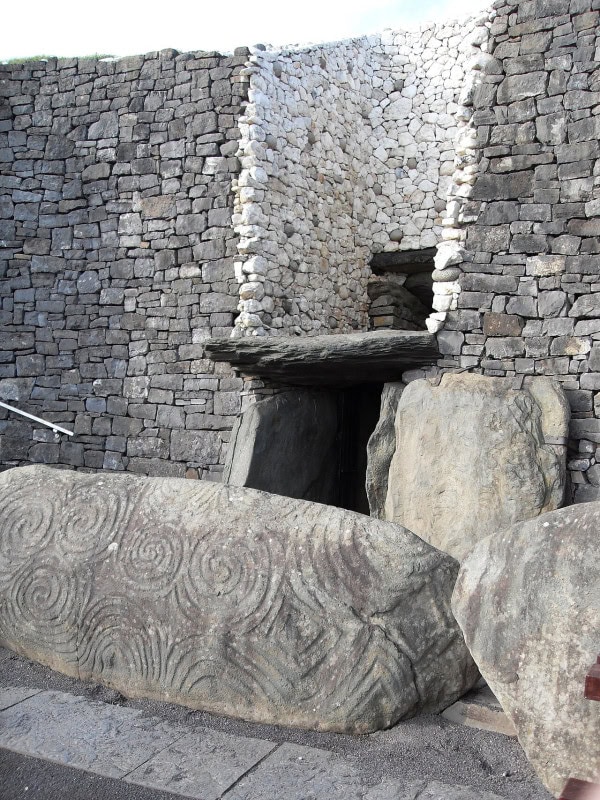
The “good god”, good meaning skilled rather than kind. The Dagda is the father figure and chief druid of the Tuatha Dé Danann, a huge, ungainly, comic and formidable god who owns three things every Irish schoolchild once knew: a club that kills with one end and revives with the other, a cauldron from which no company goes away unsatisfied, and a harp that plays the three strains of grief, laughter and sleep. Cath Maige Tuired names the cauldron among the four treasures the Tuatha Dé brought to Ireland and gives him the scene where the Fomorians force him to eat a porridge pit the size of a lake. The Dindshenchas makes Newgrange, Brú na Bóinne, his house; a short tale, De Gabáil in t-Shída, has his son Aengus trick him out of it. He is often compared to Zeus or Odin, but neither fits: he is a god of plenty and of druidic craft, not of the sky.
2. The Morrígan
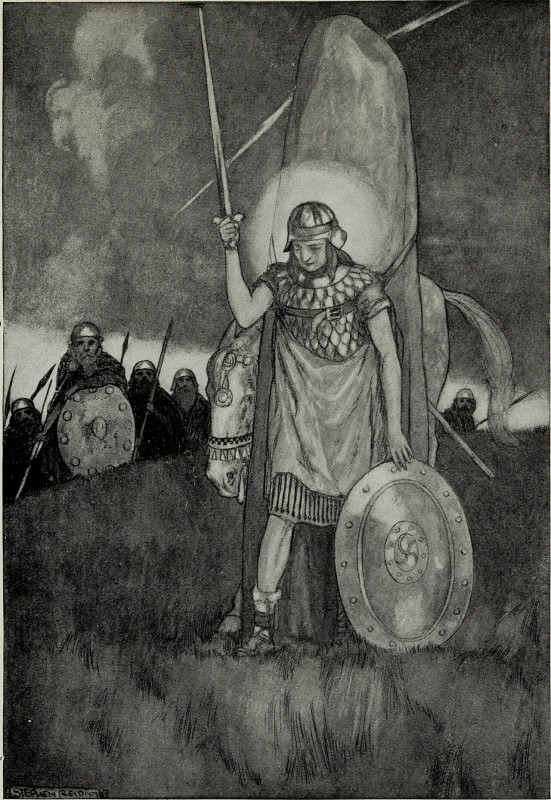
The “great queen” or “phantom queen”, a goddess of war, fate and the land who appears most often as a crow. She is one and three at once: the Lebor Gabála lists Badb, Macha and the Morrígan as the three daughters of Ernmas, and the name is used for the trio as well as for one of them. In Cath Maige Tuired she meets the Dagda at the river before the battle, at Samhain, and promises him victory; in the Táin she offers herself to Cú Chulainn, is refused, and attacks him in the ford as an eel, a wolf and a heifer; and in the tale of his death she settles on the shoulder of the dying hero as a crow, which is how his enemies know they can approach. If you are looking for a Celtic god of death she is the usual answer, though she decides who dies rather than ruling the dead, a role that belongs to Donn.
3. Lugh
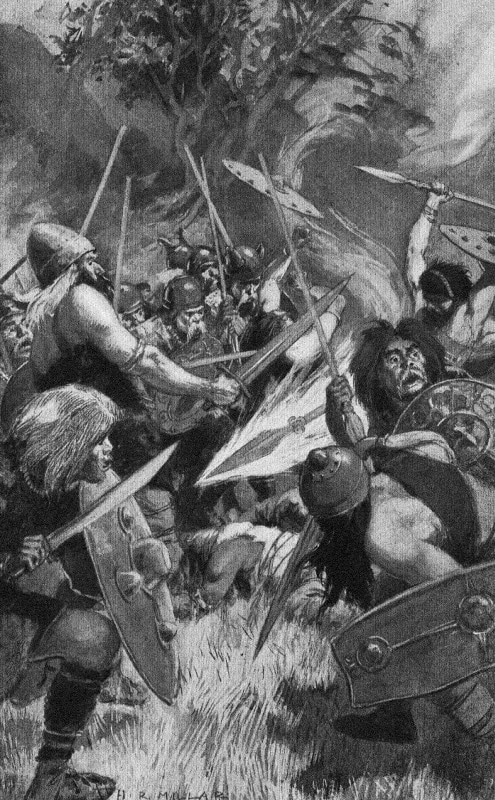
Lugh Lámhfhada, “of the long arm”, and Samildánach, “skilled in all the arts together”. In Cath Maige Tuired he arrives at the gate of Tara, is refused entry because the king already has a smith, a harper, a champion and so on, and gets in by being the only man who is all of them at once. He then leads the Tuatha Dé against the Fomorians and kills his own grandfather, Balor of the evil eye, with a sling stone through the eye. The harvest festival of Lughnasadh, the first of August, is named for the funeral games he founded for his foster mother Tailtiu. He is the god with the clearest continental twin: Lugus, whose name sits inside Lugdunum, the Roman name of Lyon, and who is the best candidate for the “Mercury” Caesar says the Gauls worshipped most. In the Táin he is the father of Cú Chulainn.
4. Brigid
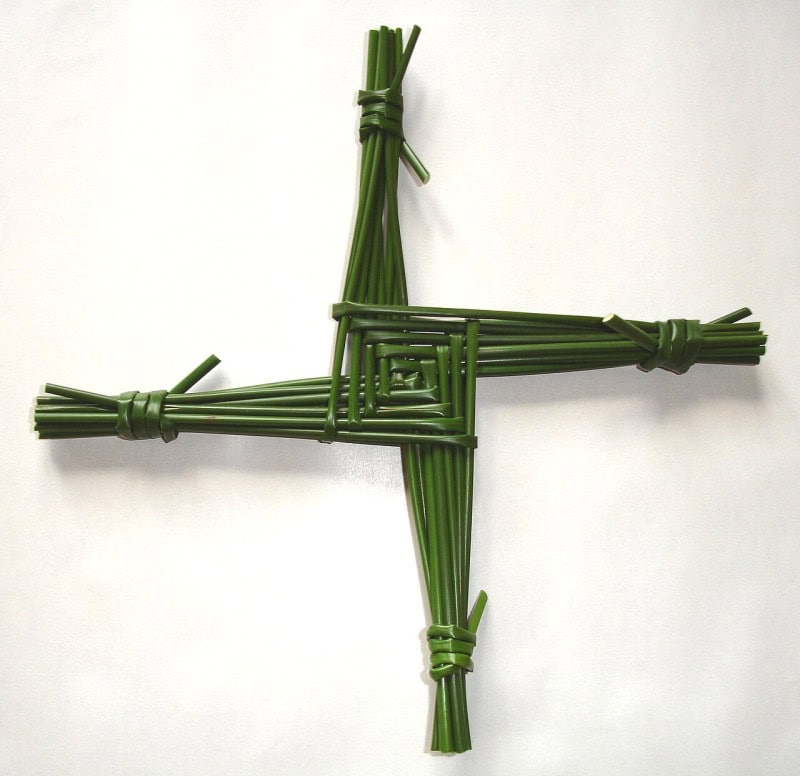
Cormac’s Glossary, a dictionary compiled around the year 900, defines Brigit as a daughter of the Dagda and a poetess whom the poets worshipped, with two sisters of the same name, one a healer and one a smith. That triple role, poetry, healing and metalwork, is what the goddess rules. Her feast is Imbolc, the first of February and the first day of spring in the Irish reckoning, and it is the same day as the feast of Saint Brigid of Kildare, whose perpetual fire, tended by nuns, Gerald of Wales saw still burning in the 12th century. Whether the saint absorbed the goddess is a long argument; what is certain is that the rush cross woven for the saint’s eve is the one Celtic religious object still made in ordinary kitchens. Britain had a cognate goddess, Brigantia, patron of the Brigantes tribe, whom the Romans paired with Minerva and Victory.
5. Danu, or Anu
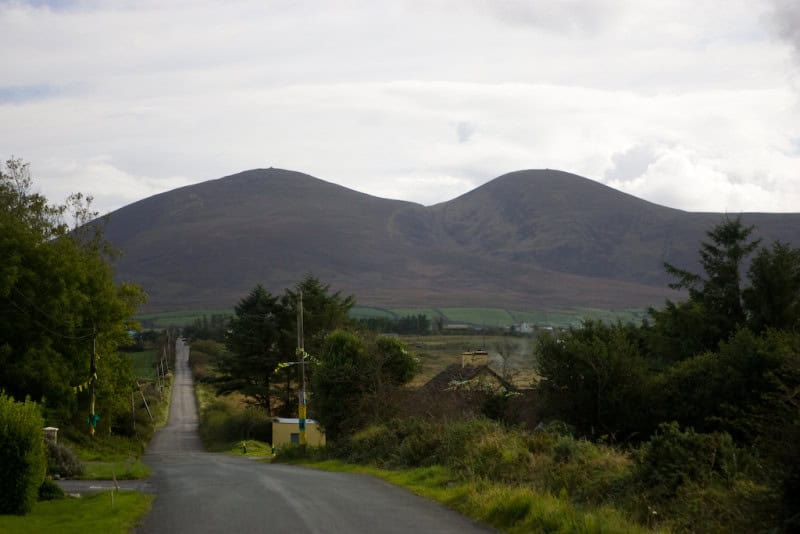
The goddess who gives the Tuatha Dé Danann their name and then never appears in a single story. “Danann” is a genitive, “of Danu”, but no surviving tale has her act, speak or die, and the form Danu is a scholars’ reconstruction. What the medieval texts do have is Anu: Cormac’s Glossary calls her “mother of the Irish gods”, and the two breast-shaped hills near Killarney are still Dá Chích Anann, the Paps of Anu, each with a Bronze Age cairn on its summit. She belongs with the mother goddesses of the Continent, the Matres and Matronae of hundreds of Gaulish and British altars, and with the river Danube, whose name is from the same root; beyond that, the honest answer is that she is a name the gods carried rather than a character they knew.
6. Nuada
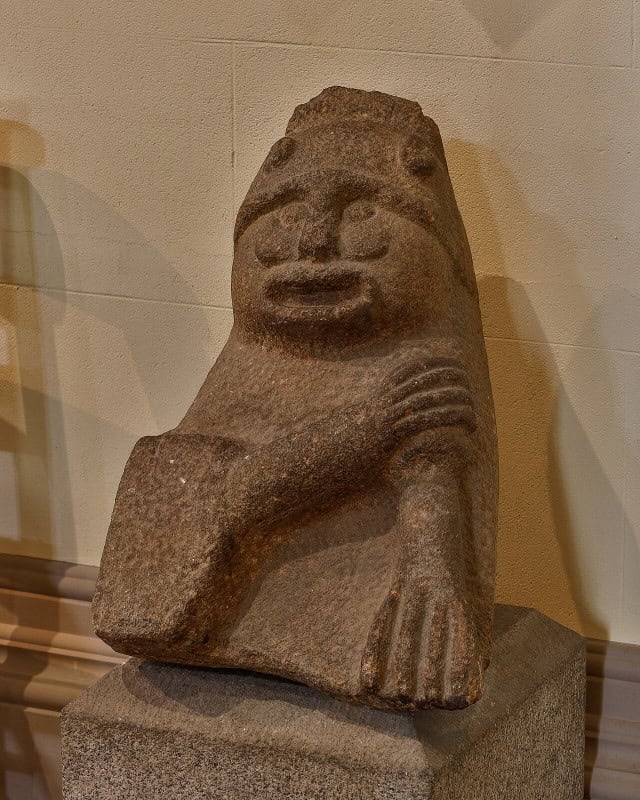
Nuada Airgetlám, “of the silver arm”, first king of the Tuatha Dé in Ireland. Cath Maige Tuired tells how he lost his arm in the first battle of Mag Tuired against the Fir Bolg, and how, because a king with a blemish could not rule, he gave up the throne to the half-Fomorian Bres, whose stinginess nearly ruined the gods. The physician Dian Cécht and the smith Creidne made him an arm of silver that moved like a living one, he was restored, and he died in the second battle at the hands of Balor before Lugh avenged him. His sword, from the city of Findias, is one of the four treasures. Across the water he is Nodens, who had a Romano-British temple at Lydney Park above the Severn, where pilgrims left bronze dogs and a curse tablet about a stolen ring.
7. Manannán mac Lir
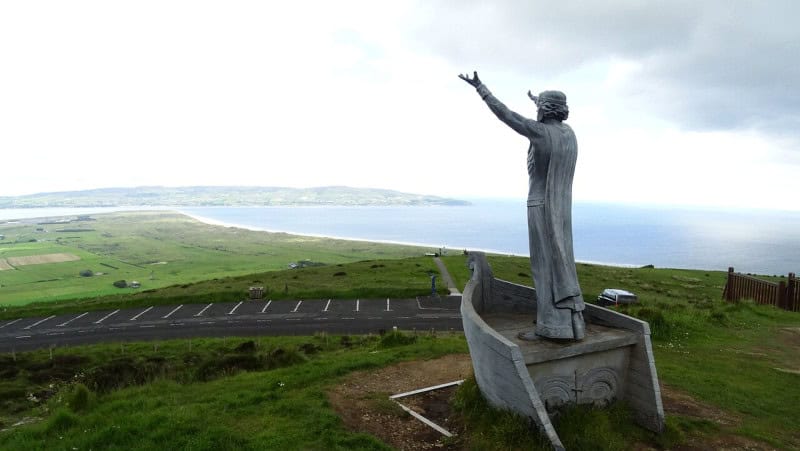
The sea god, “son of the sea”, and the one Irish god who gave his name to a country: the Isle of Man is his island, and Manx tradition kept him as a magician-king who hid the island in mist. In Immram Brain, the Voyage of Bran, he rides his chariot across the waves towards the sailors and tells them that what they see as sea is to him a flowering plain. He owns a horse, Enbarr, that runs over water, a boat that obeys thought, a cloak of mists and a crane-skin bag; in the tale of Mongán he fathers a king on a mortal queen; in later stories he fosters Lugh. The Gortmore statue in the photograph was stolen in 2015, with a cross left in its place, and a replacement now stands on the hill.
8. Aengus
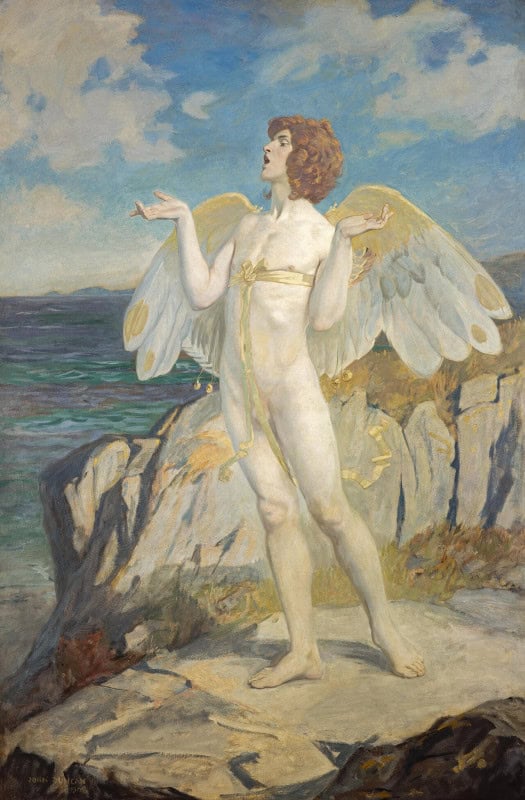
Aengus Óg, “Aengus the young”, god of love, youth and poetry, son of the Dagda and Boann. Tochmarc Étaíne, the Wooing of Étaín, gives his conception: the Dagda made the sun stand still so that nine months passed as one day and the child was born before Boann’s husband came home. The same text has Aengus win Newgrange from Elcmar, Boann’s husband, on the Dagda’s advice, by asking to have it “for a day and a night” and pointing out that all time is made of days and nights; the shorter De Gabáil in t-Shída has him play the same trick on the Dagda himself. In Aislinge Óenguso, the Dream of Aengus, he wastes away for a girl he has seen only in dreams, finds her as a swan among a hundred and fifty swans on a lake at Samhain, becomes a swan himself and flies away with her. Yeats’s “Song of Wandering Aengus” is loosely inspired by that story; John Duncan’s painting shows a different, Scottish-revival Aengus, calming the sea with his birds about him.
9. Macha
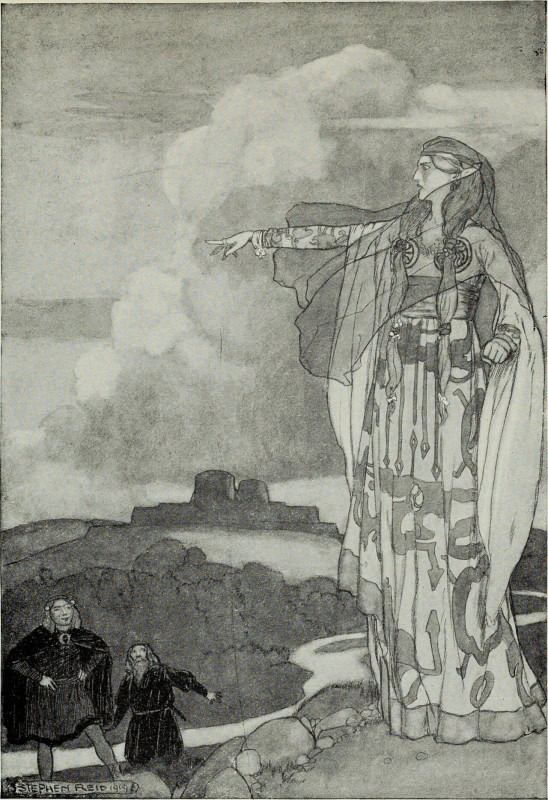
There are at least three Machas in the texts, and the one everybody remembers is the wife of the farmer Cruinniuc. In Noínden Ulad, the Debility of the Ulstermen, he boasts at the king’s assembly that his wife can outrun the royal horses; she is fetched, heavily pregnant, and made to race; she wins, gives birth to twins at the finishing line, and curses the men of Ulster to suffer the pains of childbirth for five days and four nights whenever their need is greatest, for nine generations. That curse is why Cú Chulainn fights the whole army of Connacht alone in the Táin. Her name is on Emain Macha, the royal site now called Navan Fort, and on Ard Mhacha, Armagh. The other Machas are a war goddess among the Morrígan’s three and a queen who ruled Ireland in her own right.
10. Ogma
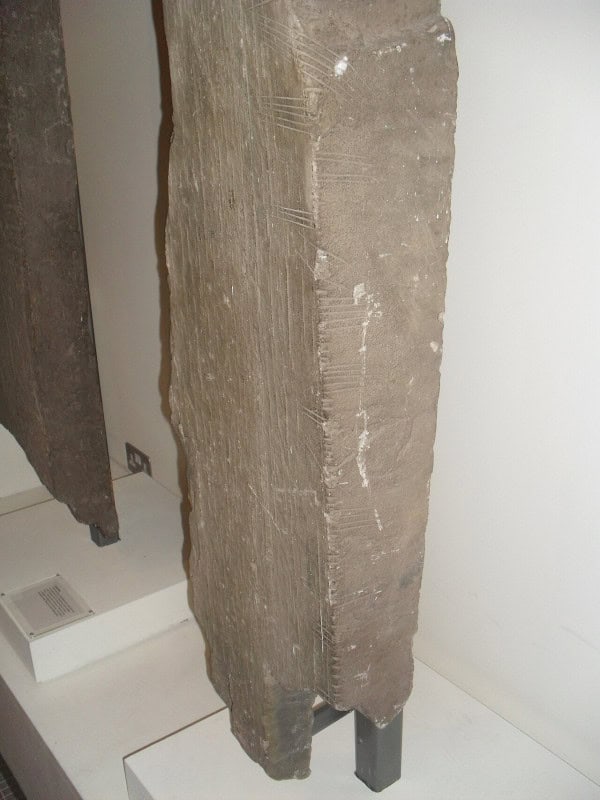
Ogma “sun-faced”, the champion of the Tuatha Dé, their strongman and their god of eloquence, which the Irish did not think of as opposites. The medieval tract In Lebor Ogaim credits him with inventing ogham, the alphabet of strokes cut along the edge of a stone, some four hundred examples of which survive on pillars in Ireland, Wales and Scotland, most of them 5th and 6th century grave markers. He has a Gaulish twin in Ogmios, described by the Greek writer Lucian in the 2nd century: an old, bald, sunburnt Hercules with a club and a bow, drawing a crowd of happy followers by thin gold chains that run from his tongue to their ears. Lucian says a Gaul explained the picture to him as eloquence, which grows stronger with age.
11. Goibniu
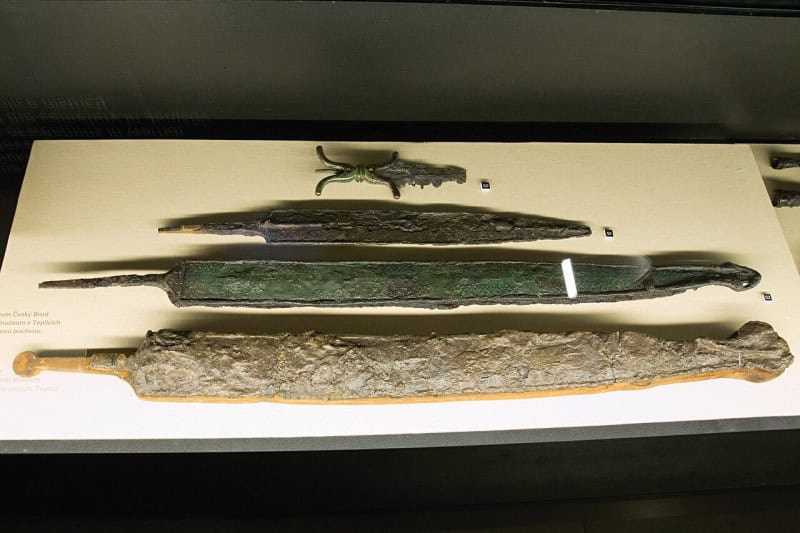
The smith of the gods. In Cath Maige Tuired he promises that every spear he makes will hit its mark and every man it hits will not live, and with the wright Luchta and the brazier Creidne he re-arms the Tuatha Dé overnight through the battle, three blows to a spearhead, while the Fomorians’ broken weapons stay broken. He also keeps the Otherworld feast, Fled Goibnenn, whose ale keeps those who drink it from age and death, which makes him a god of the feast as much as the forge. The Welsh Gofannon is the same name; in the Fourth Branch of the Mabinogi he kills his nephew Dylan with a blow that the poets called one of the three unfortunate strokes of Britain.
12. Donn
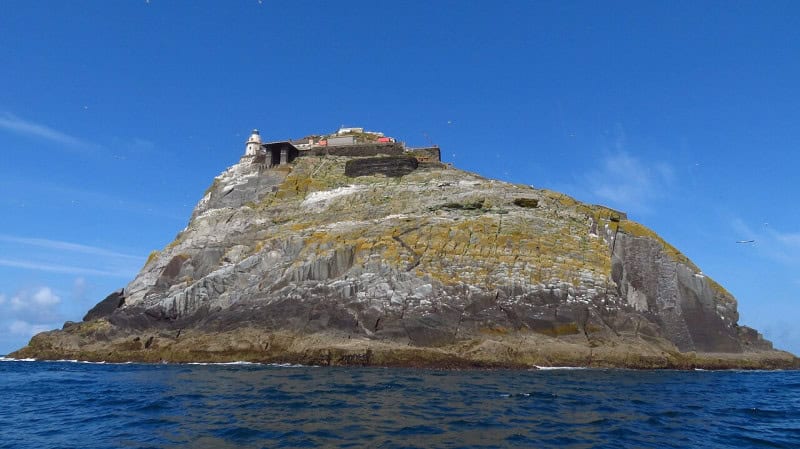
The lord of the dead, and the one figure on this list who was first a man. In the Lebor Gabála Donn is the eldest of the sons of Míl, the Milesians who take Ireland from the Tuatha Dé; he insults the goddess Ériu, is drowned off the south-west coast, and is buried on a rocky island that becomes Tech Duinn, the House of Donn. A 9th-century poem has him say that to his house all the Irish shall come after their deaths, which made him the ancestor and host of the dead rather than their judge. The island is usually taken to be the Bull Rock, where the sea runs through a natural tunnel under the lighthouse. Folklore kept him as a storm-raiser and a rider of the night; he belongs beside the figures on this site’s gods of death and the underworld list.
13. The Cailleach
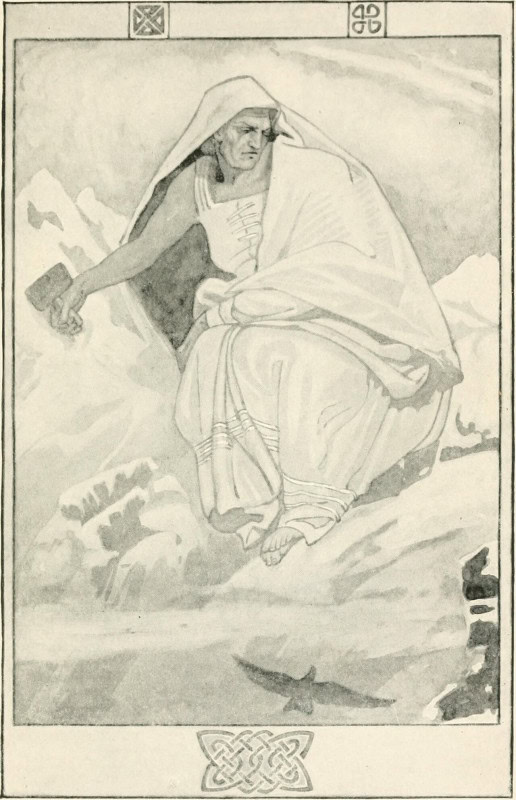
The “veiled one”, the hag of winter and the maker of mountains, who belongs to Ireland and Scotland together. The Lament of the Old Woman of Beare, a 9th-century Irish poem, gives her voice as a woman who has outlived seven ages of youth and watches the tide ebb; the Beara peninsula in Cork has the Hag of Beara, a rock on the shore at Kilcatherine said to be her turned to stone, which visitors still cover with coins. In Scotland she is the Cailleach Bheur, who strikes the ground with her hammer to freeze it, drops boulders from her creel to make the hills, and gives way to spring each year. Donald Mackenzie’s 1917 “Beira, Queen of Winter” is a modern retelling that stitched the Scottish stories into one, which is worth knowing before quoting it as ancient.
14. Ériu
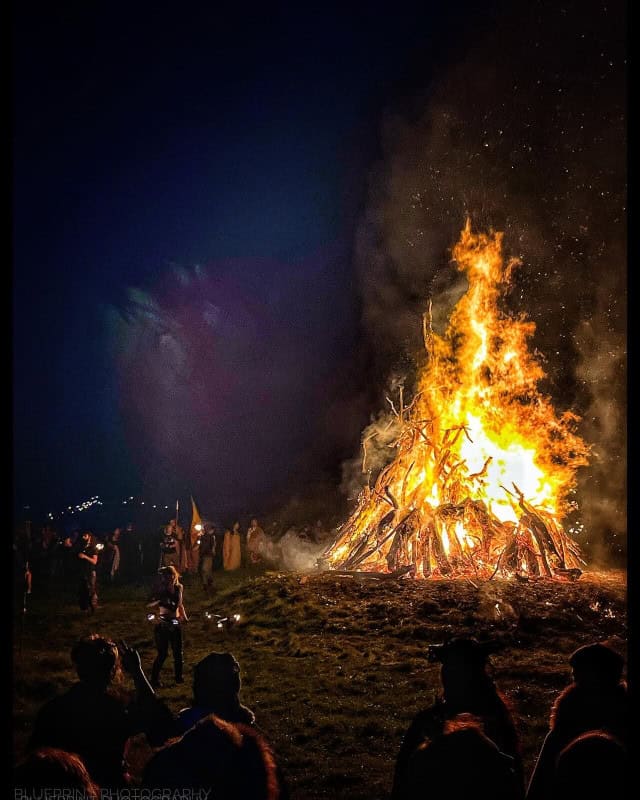
The goddess who is Ireland. In the Lebor Gabála the invading Milesians meet three queens of the Tuatha Dé in turn, Banba, Fódla and Ériu, and each asks that the island bear her name; the poet Amergin promises Ériu that hers will be the chief name, and Éire it is. She is the sovereignty of the land in person, the figure the king marries in the old inauguration rites, and the Lebor Gabála has her fall at Uisneach; tradition puts her grave under the Ail na Míreann, the Stone of Divisions, on that hill, the ceremonial centre of Ireland where the five provinces were said to meet and where the Bealtaine fire was lit. The modern Festival of Fires relit it in 2009.
15. Boann
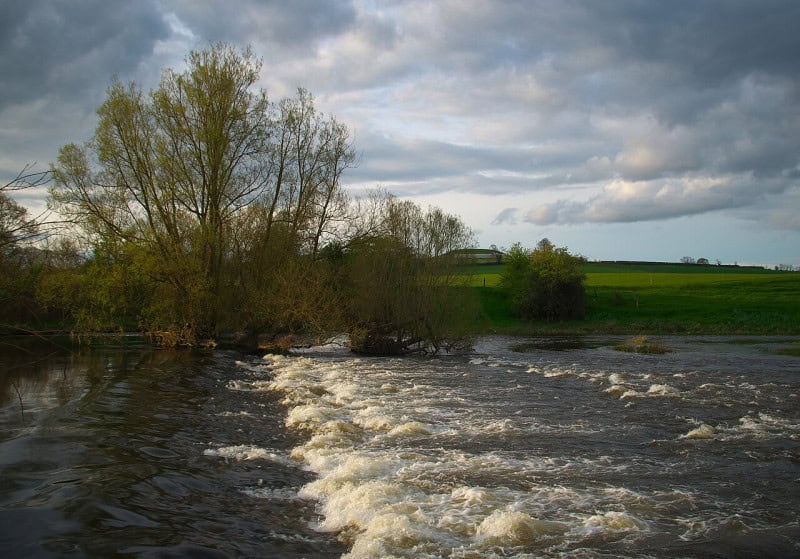
The goddess of the River Boyne, whose name is in the river’s. The Dindshenchas tells how she went to the forbidden well of Segais, whose hazel nuts gave wisdom to the salmon that ate them, and walked three times around it against the sun; the water rose up, took her eye, hand and thigh, and chased her to the sea, and the path it cut is the Boyne. She is the wife of Nechtan, keeper of the well, and the mother of Aengus by the Dagda, so that the river, the god of plenty and the god of love all meet at Newgrange. Irish rivers were goddesses as a rule: the Shannon has the same story told of Sinann.
The Welsh gods: the Four Branches of the Mabinogi
16. Arawn
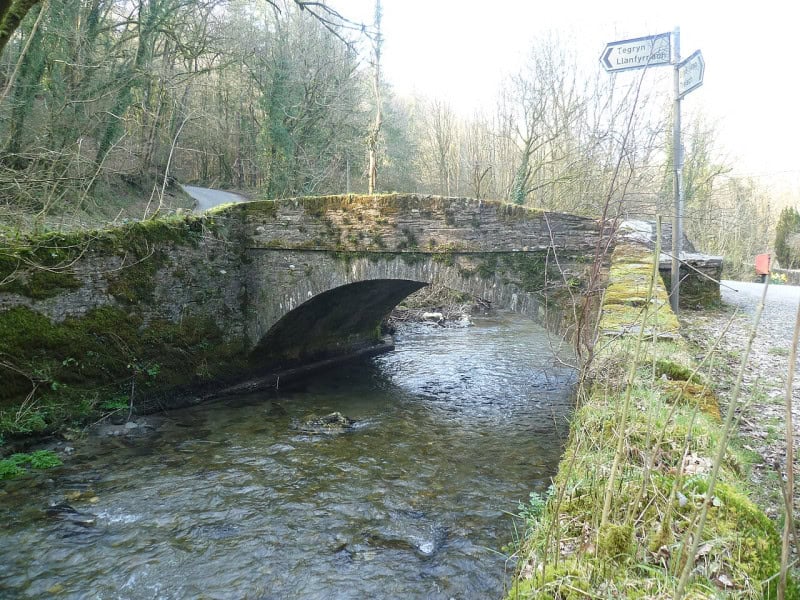
King of Annwn, the Welsh Otherworld, which is not a land of the dead but a parallel kingdom reached through the woods. The First Branch opens with Pwyll, prince of Dyfed, hunting in Glyn Cuch, where he drives a strange pack, gleaming white with red ears, off a stag they have killed. Their master is Arawn, and the price of the insult is that the two men exchange shapes and kingdoms for a year, during which Pwyll sleeps beside Arawn’s queen without touching her and kills Arawn’s rival Hafgan with a single blow, as instructed. The friendship that follows is why Pwyll is called Pen Annwn, head of the Otherworld, and why Arawn later sends the first pigs into Wales as a gift to Pryderi. The white, red-eared hounds, the Cŵn Annwn, ran on in Welsh folklore as the hounds heard in the sky on winter nights.
17. Rhiannon
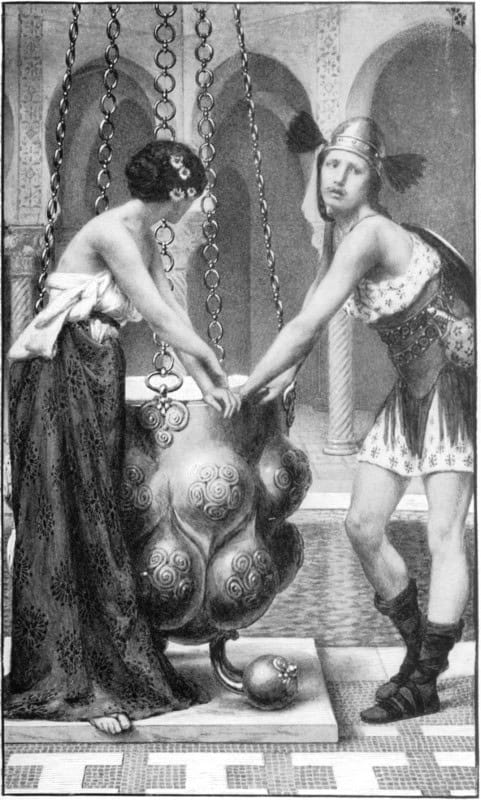
The horse goddess of the Mabinogi, though the text calls her a queen. In the First Branch she rides past Pwyll on a white horse at an easy walk, and no rider he sends can catch her however hard they gallop, until he simply asks her to stop. She chooses him over the suitor she was promised to, bears Pryderi, and when the baby vanishes on the night of his birth she is accused of killing him and sentenced to sit at the mounting block outside the court and carry visitors on her back like a horse. In the Second Branch her three birds sing over the sea at Harlech so sweetly that seven years pass unnoticed; in the Third she and her son are frozen to a golden bowl in an enchanted castle. The Gaulish Epona, below, is the same goddess seen through Roman eyes.
18. Brân the Blessed
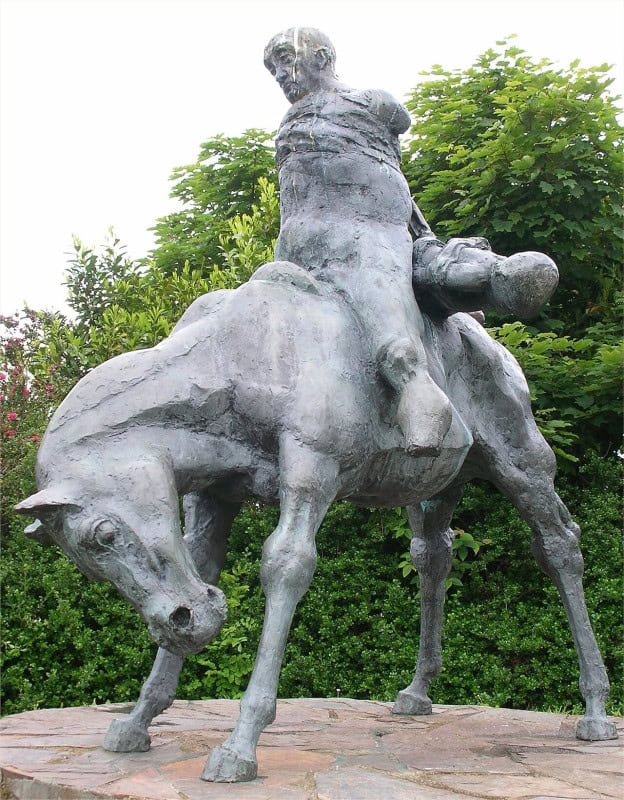
Bendigeidfran, “Brân the Blessed”, king of the Island of the Mighty, so large that no house can hold him and he wades the Irish Sea beside his fleet. The Second Branch is his: he gives his sister Branwen to the king of Ireland, gives the Irish a cauldron that brings dead warriors back to life without speech, and when Branwen is mistreated he carries his army to Ireland and lies across the river Llinon so that they can cross him, saying the line that became a Welsh proverb, “he who would be a leader, let him be a bridge”. Wounded by a poisoned spear, he orders his own head cut off; it talks and feasts with his seven survivors for seven years at Harlech and eighty at Gwales, and is finally buried under the White Hill in London, facing France, so that no invasion can land while it lies there. The ravens of the Tower of London are the far end of that story.
19. Branwen
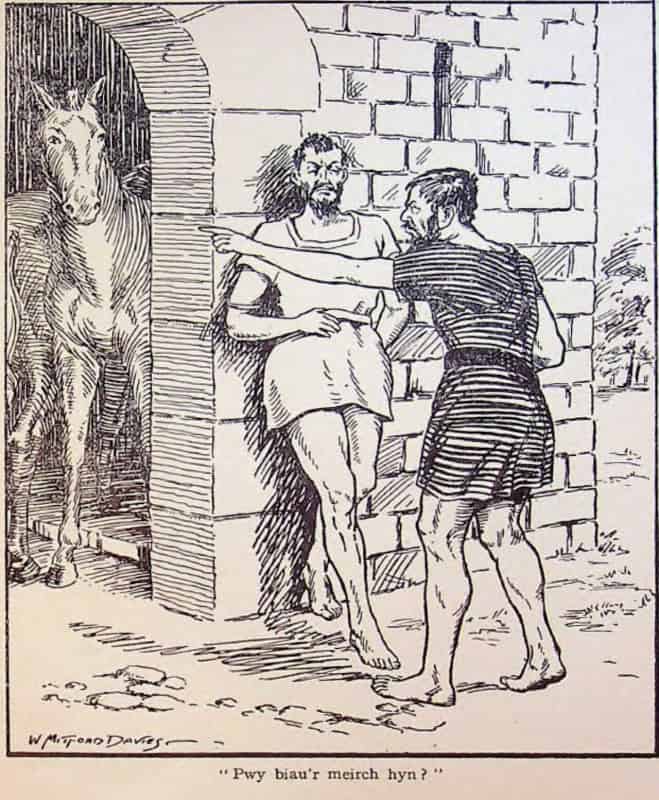
Branwen ferch Llŷr, “one of the three chief ladies of the Island”, whose marriage to Matholwch of Ireland was meant to bind the two countries and instead destroyed them both. After her half-brother Efnisien mutilates the Irish horses at the wedding feast, the Irish take their revenge on her: she is sent to the kitchens and the butcher strikes her every day for three years. She tames a starling, teaches it to speak, ties a letter under its wing and sends it to Brân across the sea, which brings the war in which her son Gwern is thrown into the fire and only seven men of Britain come home. She lands with them on Anglesey, looks back towards Ireland, says that two good islands have been laid waste because of her, and dies of a broken heart at the mouth of the Alaw. A Bronze Age cairn there is still called Bedd Branwen, Branwen’s grave.
20. Lleu Llaw Gyffes
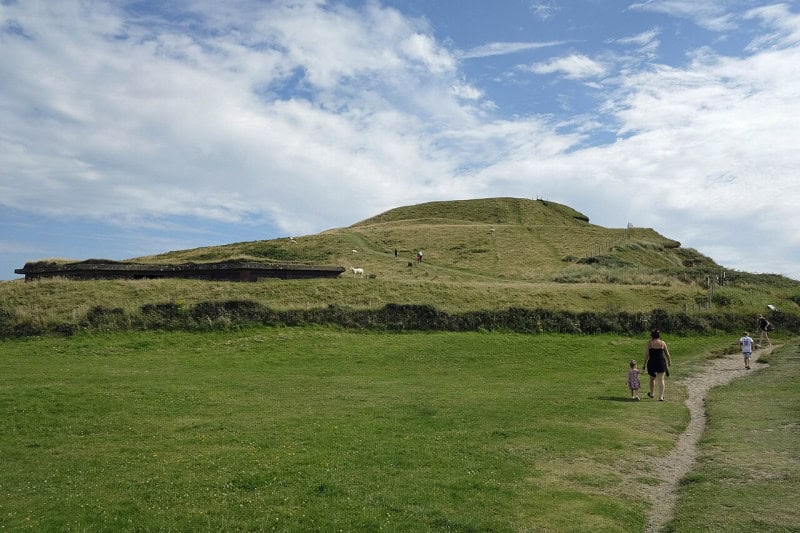
The Welsh Lugh, “the fair one with the skilful hand”, hero of the Fourth Branch. His mother Arianrhod, shamed by his birth, lays three destinies on him: he shall have no name, no weapons and no human wife unless she gives them, and his uncle Gwydion tricks her out of the first two, the name when she admires a boy’s aim at a wren (“the fair one struck it with a skilful hand”) and the arms when Gwydion conjures a fleet attacking her castle. For the third, Gwydion and Math make him a wife out of flowers. Lleu can be killed only in an impossible posture, one foot on a bath and one on a goat, which his wife’s lover arranges; struck, he turns into an eagle and rots in an oak until Gwydion sings him down. His court was at Mur Castell in Ardudwy, and the hillfort of Dinas Dinlle, “Lleu’s fort”, keeps his name on the coast.
21. Ceridwen
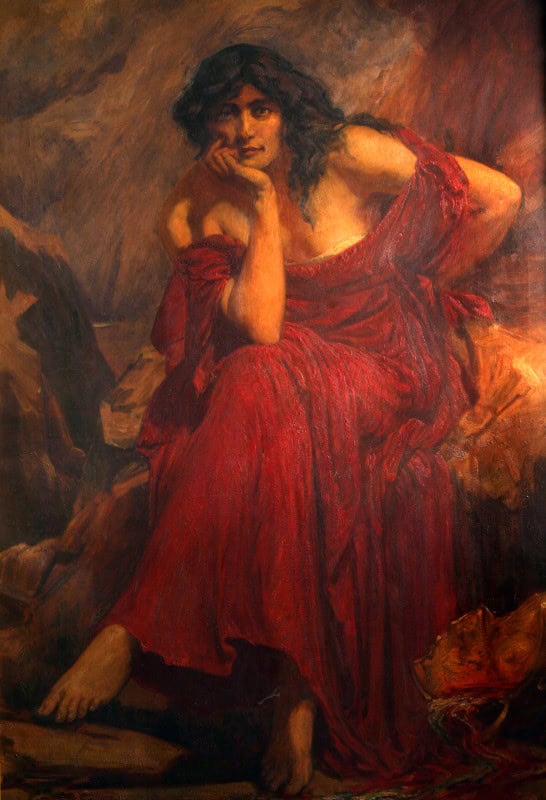
The keeper of the cauldron of inspiration, whose story is not in the Four Branches but in Hanes Taliesin, written down in the 16th century from older material. Ceridwen brews a potion for a year and a day to make her ugly son wise; the first three drops splash onto the thumb of the boy Gwion Bach who stirs the pot, he sucks it, and all the wisdom is his. She chases him as a greyhound while he runs as a hare, as an otter while he swims as a fish, as a hawk while he flies as a bird, and as a hen while he hides as a grain of wheat, which she swallows. Nine months later she bears him again, cannot bring herself to kill him, and sets him adrift in a leather bag; he is found and named Taliesin, the greatest of the Welsh poets. The lake in the story is Llyn Tegid at Bala, and Awen, the inspiration in her cauldron, is still the word for the poet’s gift at the Eisteddfod.
22. Gwydion
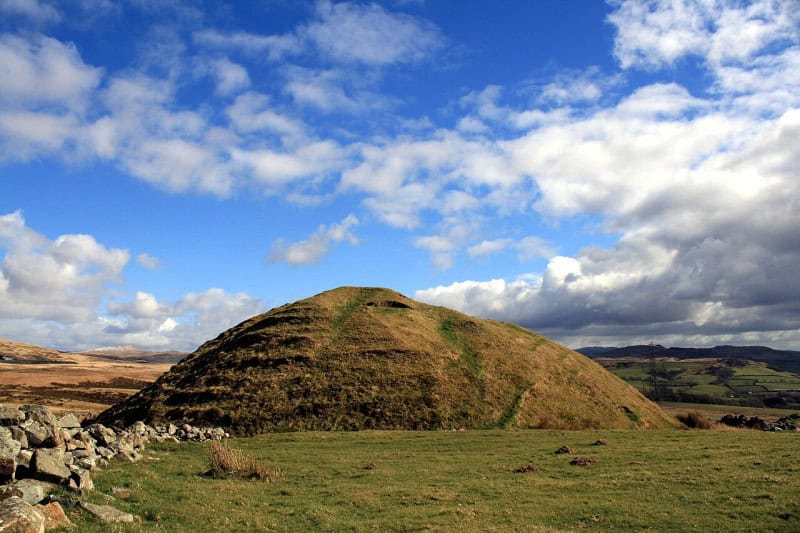
The magician of the Fourth Branch, nephew of Math and the cleverest and least trustworthy figure in the Mabinogi. He starts a war to steal Pryderi’s pigs with horses and hounds conjured from toadstools that turn back the next day, kills Pryderi in single combat by magic as much as by arms, and is punished by Math by spending three years as a stag, a sow and a wolf, bearing young each year with his brother. He then raises Lleu, breaks each of Arianrhod’s curses by a trick, builds the flower-wife with Math, and when Lleu is struck down finds him as a rotting eagle in a tree and sings him down with three englynion. In the Book of Taliesin poem Cad Goddeu he enchants a forest to fight for him. Welsh called the Milky Way Caer Gwydion, Gwydion’s fort.
23. Blodeuwedd
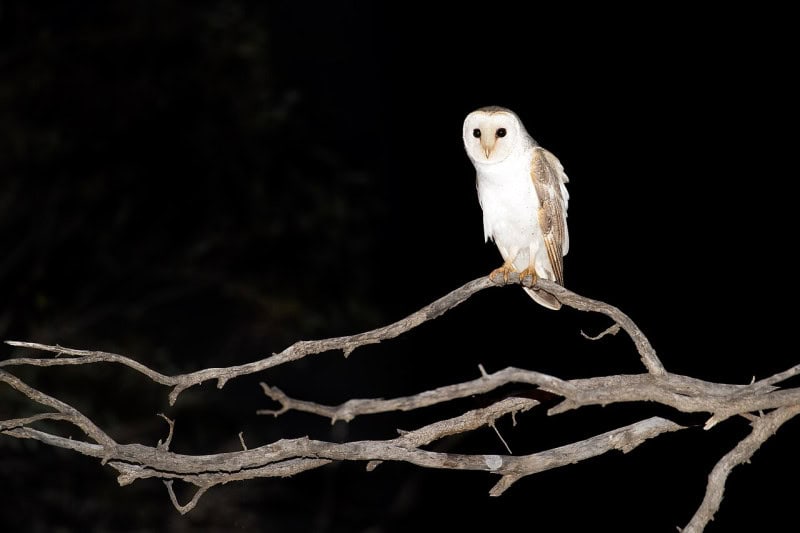
“Flower-face”, the wife made for Lleu out of the blossoms of the oak, the broom and the meadowsweet, because his mother had sworn he should never have a wife of any race on earth. Made to order, she chooses otherwise: while Lleu is away she falls in love with the hunting lord Gronw Pebr, learns from her husband the one way he can be killed, and arranges it. When Gwydion returns and restores Lleu, he does not kill her. He turns her into an owl, a bird that the other birds hate and that may never show its face by day, and tells her that her name will be the owl’s name for ever; blodeuwedd is still a Welsh word for the bird. Gronw is allowed to hold a stone between himself and Lleu’s spear, and the spear goes through it. A holed slab by the Afon Cynfal, Llech Ronw, is shown as that stone.
The gods of Gaul and Britain: known from stone and bronze
24. Cernunnos
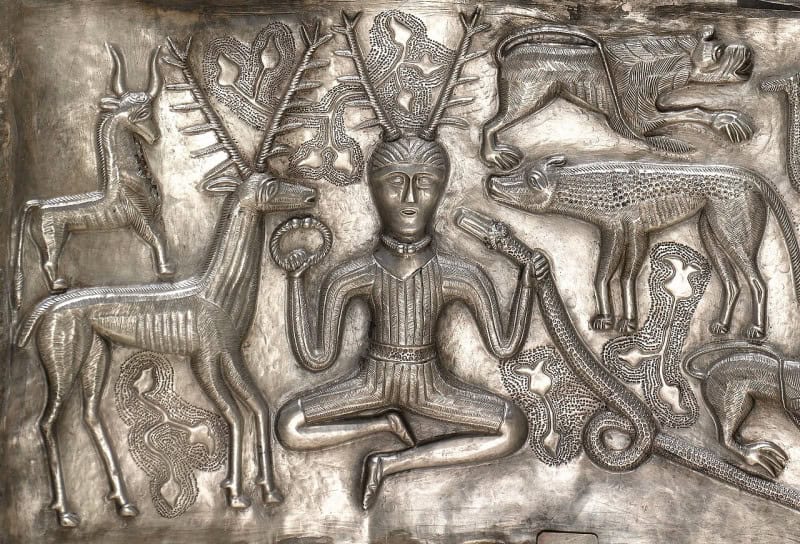
The antlered god. His name survives clearly only once, on the Pillar of the Boatmen, a monument set up by the Seine boatmen’s guild in Paris under Tiberius and found under Notre-Dame in 1711, where a horned head with torcs hanging from its antlers is labelled “[C]ernunnos”, the first letter lost to damage. The image is older and wider than the name: the silver Gundestrup Cauldron, found in a Danish bog in 1891 and made somewhere in the 1st century BC, shows him seated cross-legged with a torc in one hand and a ram-horned serpent in the other, a stag at his side; a rock carving in Val Camonica in the Italian Alps shows the same figure centuries earlier. Antlers, torc, serpent and animals read as wealth and the wild. Everything else said about him, horned god of the witches included, is modern.
25. Epona
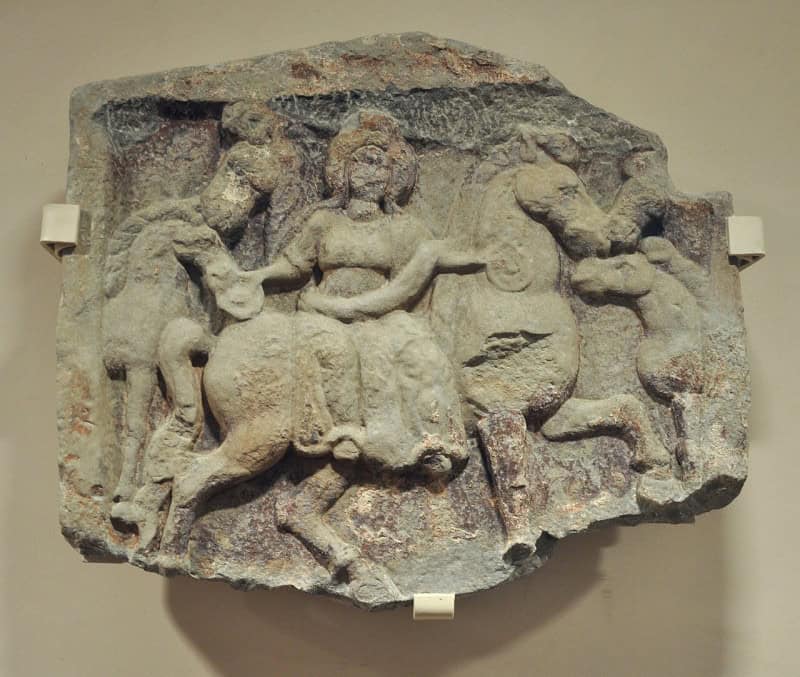
The horse goddess, and the one Celtic deity the Romans took up wholesale and carried across the empire. Her name is the Gaulish word for horse with a divine ending, and she is shown either riding side-saddle on a mare or seated between horses and foals, often with a basket of fruit or a dish of grain. Roman cavalry units, many of them recruited in Gaul, adopted her as their protector, so her altars turn up from Spain to the Danube and in Rome itself; Juvenal mocks a consul who swears by her, and Apuleius describes her little shrine in a stable, decked with fresh roses. A calendar from Guidizzolo in northern Italy gives her a feast day on 18 December, the only Celtic goddess with a fixed date in a Roman calendar. Rhiannon, above, is her Welsh reflection.
26. Taranis
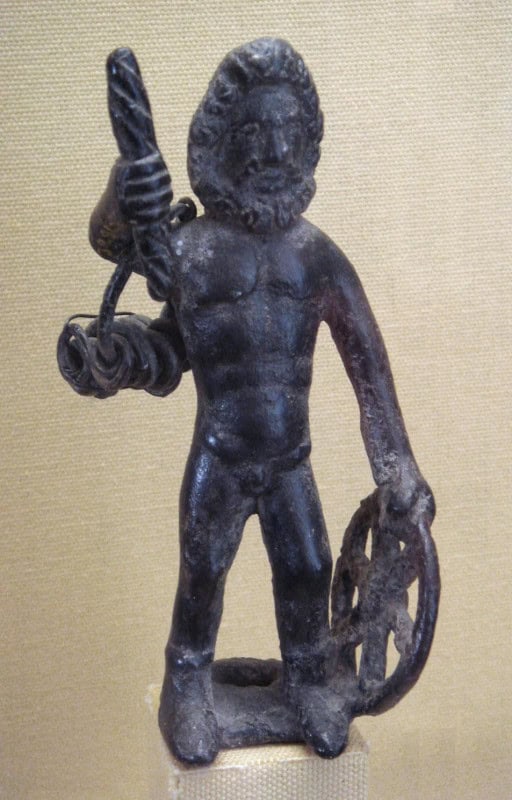
The thunderer: his name is the Celtic word for thunder. Lucan names him with Teutates and Esus as the three gods to whom the Gauls made cruel offerings, and the later commentators on Lucan match him to Jupiter, or in one gloss to Dis Pater. His own attribute is the wheel, which the Romans never gave their sky god: dozens of small bronzes from Gaul show a bearded Jupiter with a thunderbolt in one hand and a spoked wheel in the other, like the figure from Le Châtelet photographed here, and wheel-shaped pendants and votive wheels turn up at shrines and in graves across the Celtic world. Whether the wheel is the sun, the thunder’s rolling, or the chariot is argued; that it marks Taranis is the one point of agreement.
27. Sulis
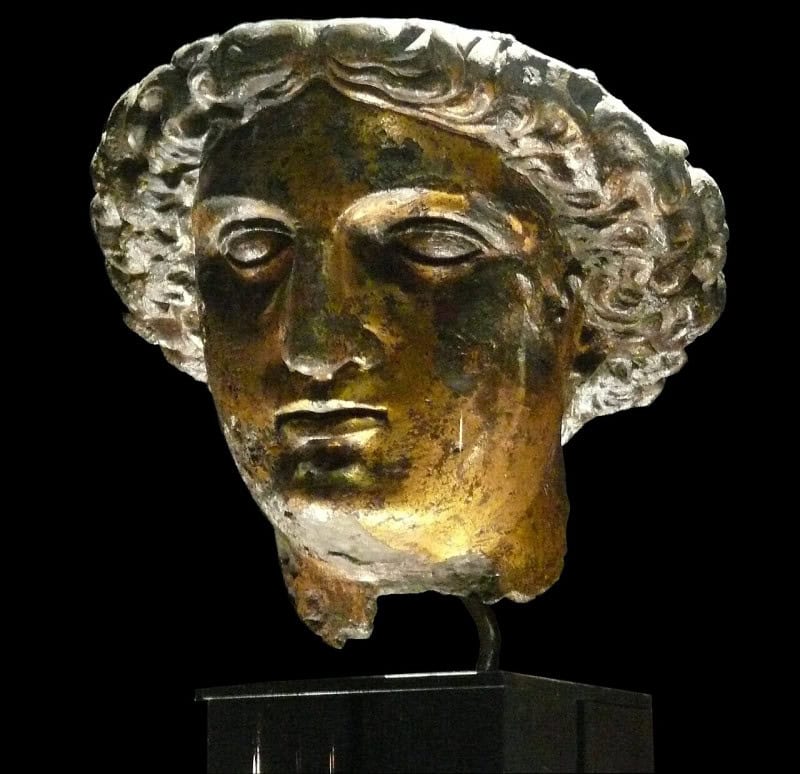
The goddess of the hot spring at Bath, which the Romans called Aquae Sulis after her and where they built her a temple and the great bathing complex that still steams in the centre of the city. They paired her with Minerva, and the gilded bronze head of Sulis Minerva, dug up by workmen in 1727, is one of the finest pieces of Roman Britain. What makes Sulis unusual is her paperwork. About 130 lead tablets thrown into the sacred spring have been recovered and read: ordinary people asking the goddess to punish whoever stole their cloak, their gloves, their six silver coins, naming suspects and specifying the vengeance, down to the thief’s blood and eyes. No other Celtic god has left so direct a record of what was asked of them.
28. Esus
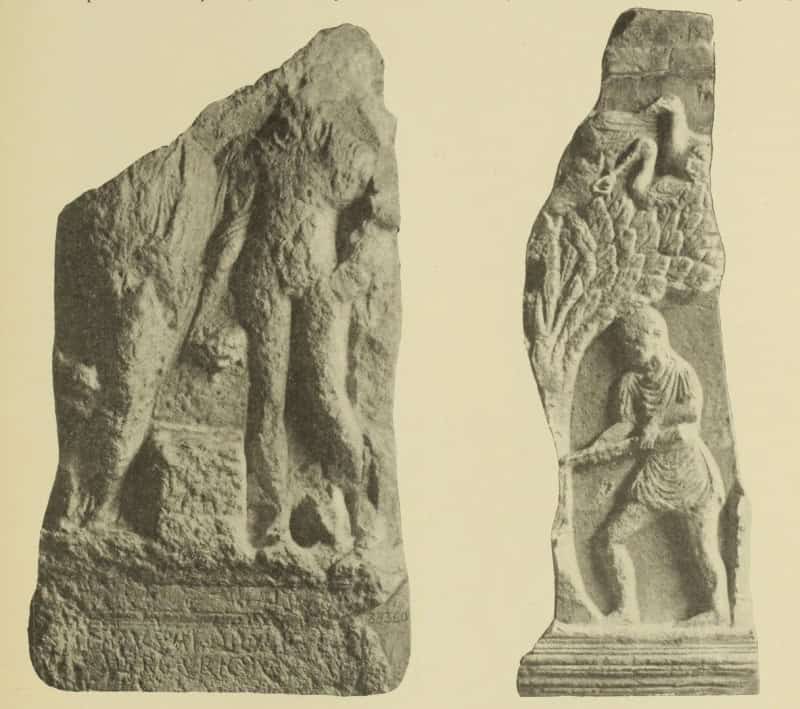
The second of Lucan’s three Gaulish gods, and the most mysterious, because the two carvings that name or show him agree on a scene nobody can explain. On the Pillar of the Boatmen a man labelled ESVS cuts at a willow tree with an axe, and the next panel shows a bull with three cranes standing on it, labelled Tarvos Trigaranus; on a block from Trier the same woodcutter, the bull and the birds share one scene. The medieval scholia on Lucan match him to Mercury in one manuscript and Mars in another, which tells you how little the Romans knew either. The name may mean “lord” or “good”; the scene may be a myth of the seasons, a hunt or a sacrifice. He is on this list because he is a reminder of how much Gaulish religion is lost.
29. Sucellus
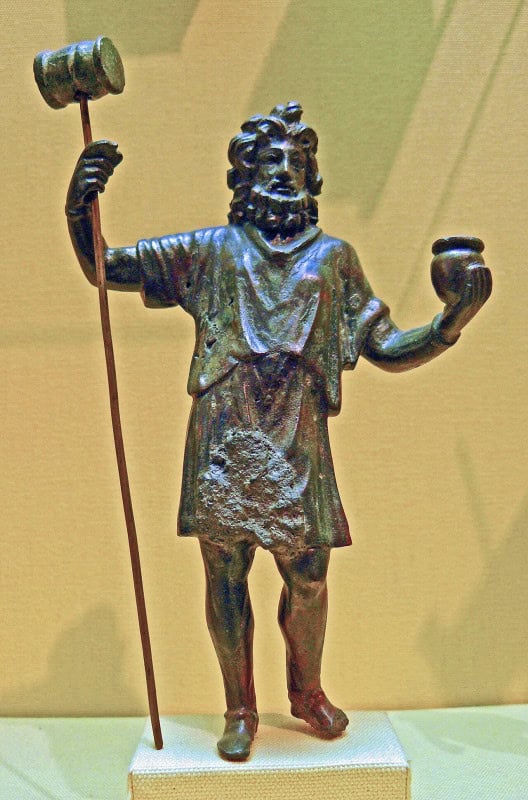
“The good striker”, a bearded, kindly looking god in a wolfskin or a workman’s tunic who carries a long-handled mallet in one hand and a small pot in the other. Some two hundred images and a dozen inscriptions are known, nearly all from Gaul, with a cluster in the wine country of the Rhône and Burgundy, which has made him a god of vineyards and barrels in some readings and of the household and the dead in others; the mallet has been read as the cooper’s tool, the farmer’s and the executioner’s. He is often shown with a consort, Nantosuelta, who carries a little house on a pole. The Romans matched him to Silvanus in Gaul and, through the mallet, to Dis Pater, the god Caesar says the Gauls claimed as their ancestor.
30. Nehalennia
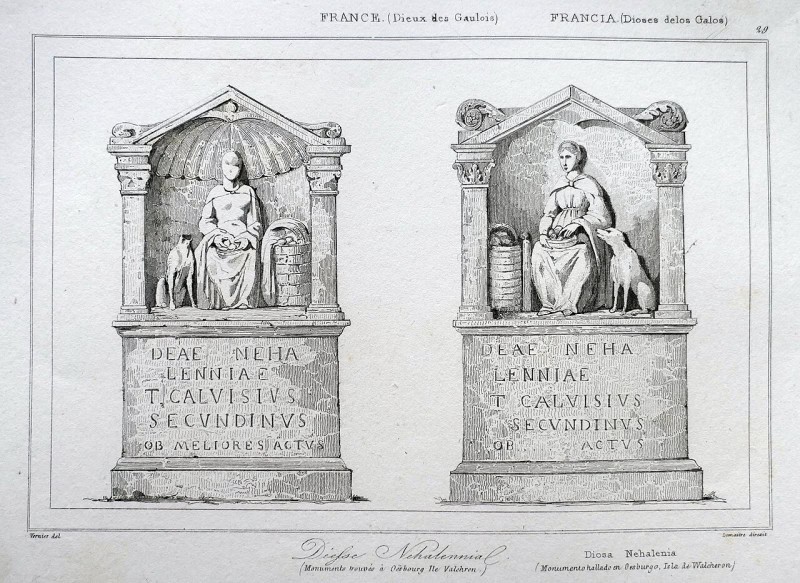
The goddess of the North Sea crossing, included with a caveat: scholars still argue whether her name is Celtic or Germanic. What is not in doubt is her following. In 1647 a storm stripped the dunes at Domburg on Walcheren and uncovered a temple full of her altars; in 1970 fishermen’s nets began pulling more of them out of the Oosterschelde off Colijnsplaat, where a second temple had gone under the sea, and the count now passes 160. The altars were set up by merchants and shipmasters, several of them traders in salt, fish sauce and pottery with Britain, in thanks for safe passage, and they show her seated with a basket of apples, a dog at her side and often a ship’s prow under her foot. She is the clearest picture we have of a Celtic-world god being thanked by named, ordinary people.
Creatures of the Celtic Otherworld
The gods share their world with beings that are not gods, and the two are often confused in lists. The banshee (bean sídhe, “woman of the mound”) is a spirit of the old families whose cry foretells a death, a descendant of the sovereignty goddesses rather than one of them. The púca is a shape-shifter, most often a dark horse that offers a ride and bolts. Selkies are seals who shed their skins to walk as people, a story of Orkney and the Hebrides as much as Ireland. The kelpie is the Scottish water horse that drowns its riders, and the each-uisce its Irish cousin. The Cŵn Annwn are Arawn’s white, red-eared hounds. Cú Chulainn, who appears so often beside the gods above, is a hero, the son of Lugh, not a god. For the Greek and Norse equivalents of these, see the creatures of Greek myth and the creatures of Norse mythology.
Celtic gods vs Norse gods
The two are often confused and they did meet: the Norse raided and settled Ireland from the 790s, founded Dublin, and fought the Irish kings for two centuries before Clontarf in 1014, which is why the famous Vikings on this site keep turning up in Irish annals. But the religions are different in shape. The Norse had one pantheon with a family tree, a creation, a home (Asgard) and an end (Ragnarök), all written down in the Eddas; the Celts had regional gods, no single genealogy, and no end-of-the-world myth that survives. The Norse gods live apart from humans; the Irish gods live under the hills of Ireland itself and keep interfering. The nearest pairs are Lugh and Odin (Lugh closes one eye to chant over the battle in Cath Maige Tuired, Odin gave one for wisdom; both are gods of skill and kingship), the Dagda and Thor (the club and the hammer, the appetite), Goibniu and the dwarf smiths, and Manannán and Njord. The question “who is the Celtic version of Odin?” has no clean answer: Lugh for the cunning and the spear, the Dagda for the fatherhood, Ogma for the writing. The Norse gods list on this site is the place to set them side by side.
The Celtic gods today
Halloween is Samhain, the night the Tuatha Dé left the mounds, moved to the Christian eve of All Saints. Saint Brigid’s Day on 1 February became an Irish public holiday in 2023, with the goddess and the saint sharing the date. Lughnasadh survives as the Puck Fair in Killorglin and the pilgrimage up Croagh Patrick on the last Sunday of July. Lyon still carries Lugus in its name and Armagh carries Macha. Rhiannon has a Fleetwood Mac song, the Morrígan has a place in most fantasy games, and Cernunnos became, in the 20th century, the horned god of modern paganism. The sources, meanwhile, are all in print: Rolleston’s 1911 retelling, Lady Charlotte Guest’s and Sioned Davies’s translations of the Mabinogion, and the Cath Maige Tuired in Elizabeth Gray’s edition, which is the one to read if you want the Dagda’s porridge in the original.
Frequently asked questions
Who is the most famous Celtic god?
Lugh, if fame means breadth: he is the one god with a name in Ireland, Wales (as Lleu) and Gaul (as Lugus), a festival still kept, a city named after him and a Roman writer’s testimony. The Dagda is better known inside Irish tradition, and the Morrígan is the one most people outside it have heard of.
Is a Celt a Viking?
No. “Celt” is a label for the peoples who spoke Celtic languages, from Ireland and Britain across Gaul to central Europe and Galatia, roughly from the 6th century BC onwards. The Vikings were Scandinavians of the 8th to 11th centuries who spoke Old Norse. They met, traded, fought and intermarried in Ireland and Scotland, but their gods were different.
Are the Celtic gods still worshipped?
Yes, by modern Celtic pagans and Druid groups in Ireland, Britain, North America and elsewhere, who honour gods including Brigid, the Morrígan, Lugh and Cernunnos; this page describes the gods as the medieval texts and ancient monuments present them, which is a different thing from how they are worshipped now.
How many Celtic gods are there?
Nobody knows. Over three hundred names are recorded from Gaulish and British inscriptions alone, most of them once, and the Irish and Welsh texts add dozens more. The thirty here are the ones with a story, an image or a cult you can still point to.
Image credits
Photographs via Wikimedia Commons under Creative Commons licences, in entry order: Newgrange entrance by Frabjousone, CC BY-SA 4.0; Brigid’s cross by Culnacreann, CC BY 3.0; the Paps of Anu by Gerard Lovett, CC BY 2.0; the Tandragee Idol by Andreas F. Borchert, CC BY-SA 4.0; the Manannán statue by Colin Park, CC BY-SA 2.0; ogham stone by Sheila1988, CC BY-SA 4.0; La Tène swords by Zde, CC BY-SA 4.0; the Bull Rock by Colin Park, CC BY-SA 2.0; the Uisneach fire by LookLookNoHands, CC BY-SA 4.0; the River Boyne by Rob Hurson, CC BY-SA 4.0; Pont Cych by Tony Holkham, CC BY-SA 4.0; The Two Kings at Harlech by Oosoom, CC BY-SA 3.0; Dinas Dinlle and Tomen y Mur by Jeff Buck, CC BY-SA 2.0; barn owl by JJ Harrison, CC BY-SA 3.0; the head of Sulis Minerva by Ad Meskens, CC BY-SA 3.0; Sucellus by Siren-Com, CC BY-SA 3.0; the Nehalennia altars by Adam Cli, CC BY-SA 4.0. The Gundestrup Cauldron photograph is by Roberto Fortuna for the National Museum of Denmark, released to the public domain; the Epona relief and the Taranis statuette photographs were released to the public domain by their photographers. The Reid, Millar, Herter, Tegla Davies and Espérandieu illustrations and the paintings by John Duncan and Christopher Williams are in the public domain.
Related guides
More mythology on this site: the Norse gods, the Roman gods and goddesses, the male Greek gods, the gods of death and the underworld, and the creatures of Greek myth.