
Ask who the Roman gods were and most answers hand you the Greek gods with new names: Jupiter for Zeus, Venus for Aphrodite, Mars for Ares. That is half the story. The Romans did identify their great gods with the Olympians, borrowed the myths wholesale and had their poets retell them in Latin, but they also kept gods the Greeks never had. Janus, the two-faced god of doorways, opened every prayer. Vesta’s fire burned in the Forum for a thousand years. Terminus was a boundary stone, the Lares lived in a cupboard in the kitchen, and when the city needed a new god it imported one, from Asia Minor, from Egypt, from Persia. This list covers all of them: the twelve great gods first, then the other Olympians, then the gods that belong to Rome alone, and finally the foreign cults that Rome made its own.
Each entry gives the god’s domain, the Greek counterpart (or the fact that there is none), a festival or a temple a visitor to Rome can still stand in front of, and the ancient source that names the detail, so that nothing here rests on a modern retelling. The images are the paintings, frescoes, mosaics and statues through which the gods have reached us, from a Herculaneum wall to Rembrandt. For the Greek side of the same family, this site’s male Greek gods and famous statues of the Greek gods are the companion pages; for the dark end of the pantheon, the gods of death and the underworld.
The twelve, the three and the ones with no Greek twin
Three groupings explain most of Roman religion. The Dii Consentes were the twelve great gods, six male and six female, whose gilded statues stood together in the Forum; the poet Ennius listed them in a two-line verse (Juno, Vesta, Minerva, Ceres, Diana, Venus, Mars, Mercury, Jupiter, Neptune, Vulcan, Apollo) that the writer Apuleius later quoted, and they match the Greek twelve almost exactly. The Capitoline Triad of Jupiter, Juno and Minerva shared the great temple on the Capitoline Hill and were the state’s own gods; Roman colonies built them temples of their own. And the native gods, Janus, Vesta, Quirinus, Terminus, Faunus, the Lares and the rest, were older than the Greek borrowings and never fully matched to anything Greek, which is why “Roman gods versus Greek gods” is a real question and not just a vocabulary list.
Roman gods and their Greek counterparts at a glance
| Roman name | Greek counterpart | Domain | Symbol |
|---|---|---|---|
| Jupiter | Zeus | Sky, thunder, the state | Thunderbolt, eagle, oak |
| Juno | Hera | Marriage, women, the state | Peacock, diadem |
| Neptune | Poseidon | Sea, fresh water, horses | Trident, dolphin |
| Minerva | Athena | Wisdom, crafts, strategy | Owl, helmet, aegis |
| Mars | Ares | War, farmland, Rome’s founders | Spear, wolf, woodpecker |
| Venus | Aphrodite | Love, beauty, the Julian line | Dove, myrtle, rose |
| Apollo | Apollo | Prophecy, music, healing, the sun | Lyre, laurel, bow |
| Diana | Artemis | Hunt, moon, childbirth | Bow, crescent, deer |
| Vulcan | Hephaestus | Fire, the forge | Hammer, anvil |
| Vesta | Hestia | Hearth, home, the sacred fire | Fire, donkey |
| Mercury | Hermes | Trade, travel, messages | Winged sandals, caduceus |
| Ceres | Demeter | Grain, harvest, the plebs | Wheat, torch |
| Saturn | Cronus | Sowing, time, the Golden Age | Sickle, veiled head |
| Pluto (Dis Pater) | Hades | The underworld, wealth below ground | Sceptre, Cerberus |
| Bacchus (Liber) | Dionysus | Wine, release, theatre | Grapes, thyrsus, leopard |
| Cupid | Eros | Desire | Bow and arrows, wings |
| Proserpina | Persephone | Spring, queen of the underworld | Pomegranate, torch |
| Fortuna | Tyche | Luck, fate | Wheel, rudder, cornucopia |
| Sol Invictus | Helios (in part) | The sun, the emperor’s patron | Radiate crown, chariot |
| Cybele (Magna Mater) | Rhea (identified) | Mother of the gods, mountains | Turreted crown, lions |
| Janus | None | Doorways, beginnings, endings | Two faces, key |
| Quirinus | None | The Roman people; the deified Romulus | Spear, myrtle |
| Terminus | None | Boundaries | The boundary stone itself |
| Flora | Chloris (identified) | Flowers, spring | Flowers, garland |
| Faunus | Pan (identified) | Wild places, flocks, prophecy | Goat legs, pipes |
| Bellona | Enyo (identified) | War, declared by rite | Helmet, torch, whip |
| Pomona | None | Orchards and fruit | Pruning knife, fruit |
| Lares and Penates | None | The household, the storeroom | Dancing youths with drinking horns |
| Isis | None (Egyptian) | Magic, motherhood, the sea voyage | Sistrum, knot, moon disc |
| Mithras | None (Persian in origin) | Soldiers’ mystery cult | Phrygian cap, the slain bull |
The Dii Consentes: the twelve great gods
1. Jupiter
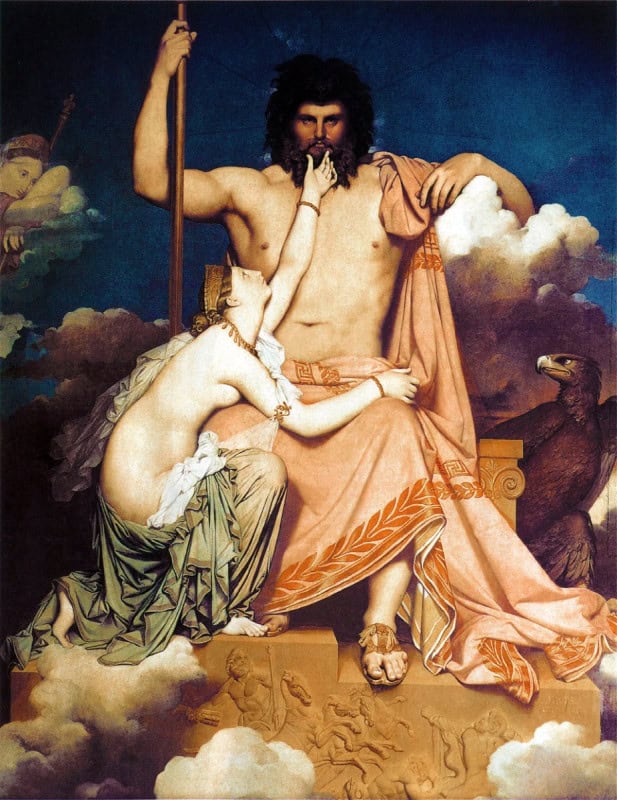
Greek counterpart: Zeus. Jupiter Optimus Maximus, “best and greatest”, was the god of the sky and the thunderbolt and, more than that, the god of the Roman state: oaths were sworn by him, treaties were kept under his eye, and a victorious general’s triumph ended at his temple on the Capitoline Hill, where he shared the building with Juno and Minerva. The eagle was his bird and became the legions’ standard. Livy makes his temple the first great project of the kings, dedicated in the first year of the Republic. The name is the same word as Zeus with “father” attached (Dies-pater), which is the one place the two really are the same god rather than a translation. Thursday, in Latin Iovis dies, is still his day in French and Italian.
2. Juno
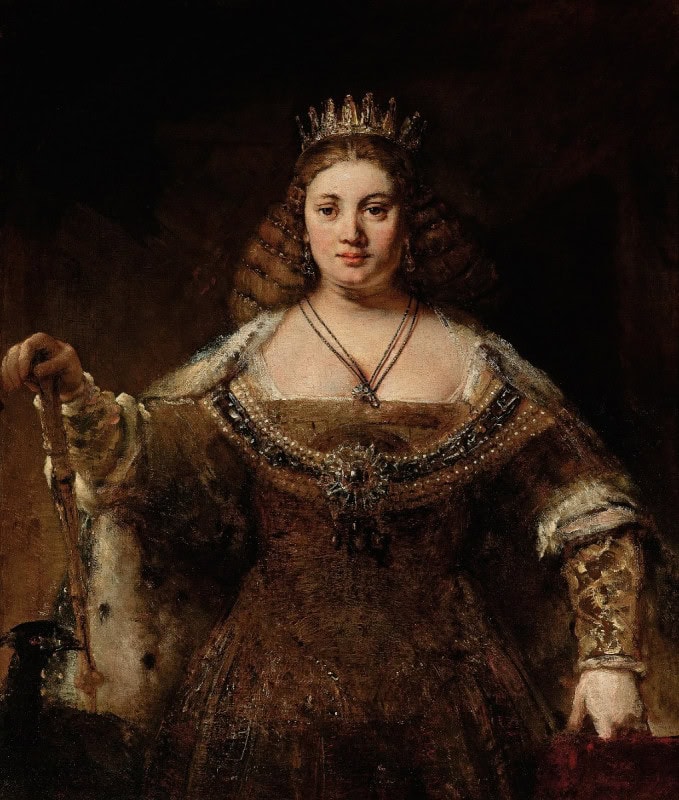
Greek counterpart: Hera. Jupiter’s wife and sister, queen of the gods, protector of marriage and of women, and in Rome something more political: as Juno Regina she was one of the three gods of the Capitol, and as Juno Moneta, “the warner”, her temple on the Arx housed the Roman mint, which is why “money” and “mint” both descend from her title. Ovid’s Fasti opens the month of June with a dispute over whether it is named for her; she claims it is. The Matronalia on the first of March was her festival, when husbands gave their wives presents and the women of the house served a meal to its slaves, as Macrobius records. Rembrandt gave her the crown and sceptre of a queen; the peacock, inherited from Hera, is her bird.
3. Neptune
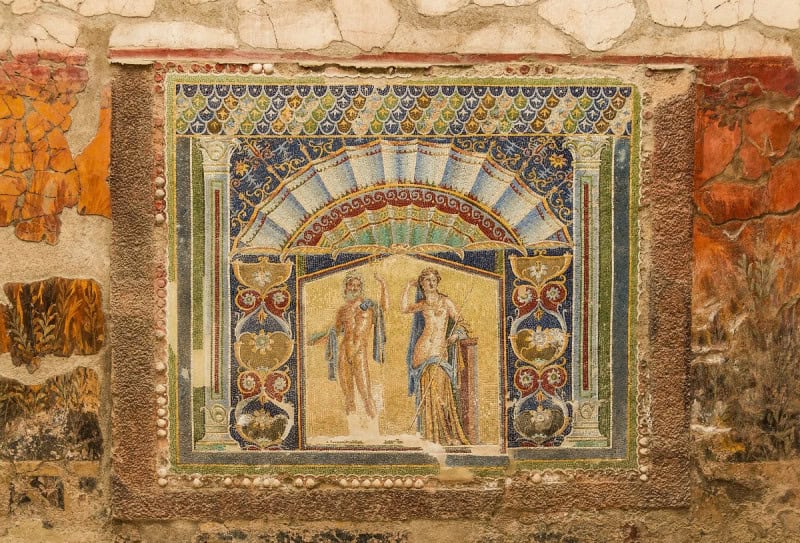
Greek counterpart: Poseidon. Rome was not a seafaring city when its gods were formed, and the original Neptune seems to have been a god of fresh water and springs; the Neptunalia fell on 23 July, in the dry heat of summer, when the Romans built shelters of branches and stayed out of doors. He took on Poseidon’s sea, trident and horses as Rome took on the Mediterranean, and by the end of the Republic a naval victor like Agrippa could raise a basilica in his name in the Campus Martius. The mosaic above, on the wall of a Herculaneum courtyard built for summer dining, shows him with his wife Amphitrite in the colours that only glass can hold.
4. Minerva
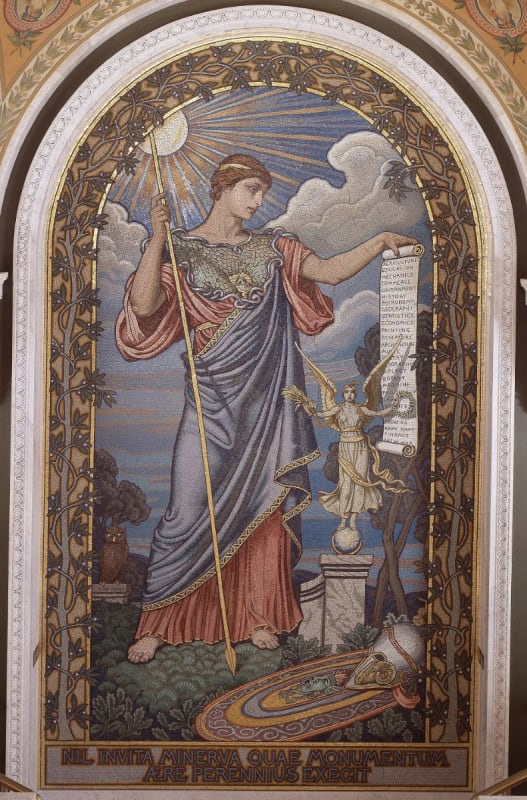
Greek counterpart: Athena. Goddess of wisdom, of crafts and the people who practised them, and of war fought with a plan rather than a rage. She was the third of the Capitoline Triad and probably reached Rome through the Etruscans, whose Menrva she resembles in name. Her festival, the Quinquatrus in March, was the holiday of schoolteachers and their pupils, of doctors, and of every trade that worked with its hands; Ovid, in the Fasti, lists the weavers, fullers, dyers, shoemakers, carpenters, painters and sculptors who kept it. The owl came with her from Athens. In the mosaic above, which greets visitors to the Library of Congress, she holds a scroll listing the arts and sciences, a nineteenth-century idea of exactly what the Romans meant by her.
5. Mars
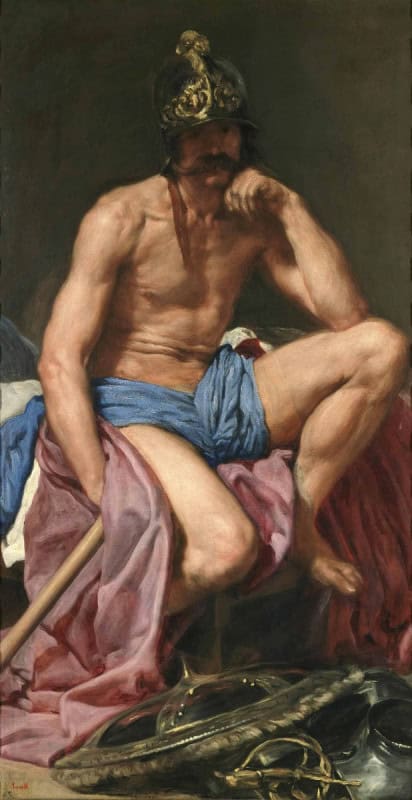
Greek counterpart: Ares, with a difference. The Greeks disliked Ares; the Romans loved Mars, who was second only to Jupiter, the father of Romulus and Remus by the Vestal Rhea Silvia, and so the ancestor of the city. He was also, in the oldest layer, a god of the farmland that war protected: the farmer’s prayer that Cato preserved in his book on agriculture is addressed to Mars, and the month of March, when campaigning and ploughing both began, is his. His priests, the Salii, danced through the city in March and October carrying the sacred shields. The wolf and the woodpecker were his animals. Velázquez painted him, above, as a soldier the morning after, which is the least Roman and most human Mars there is.
6. Venus
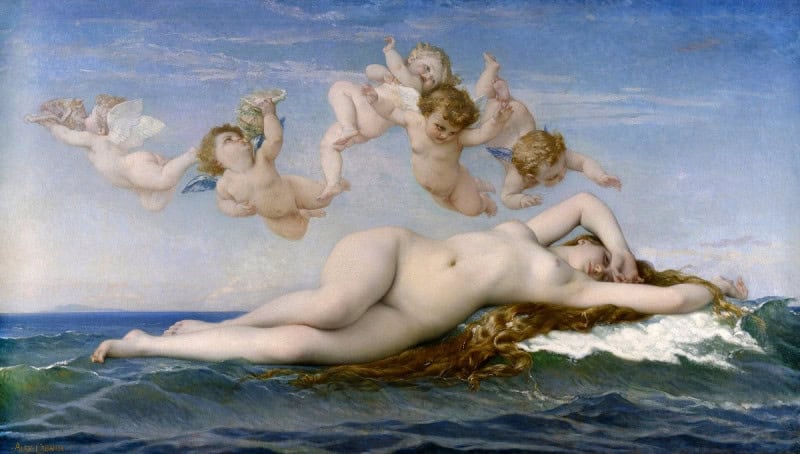
Greek counterpart: Aphrodite. Goddess of love and beauty, and in Rome of something else again: through her son Aeneas, the Trojan hero of Virgil’s Aeneid, she was the ancestor of the Julian family, so that Julius Caesar built her a temple as Venus Genetrix, “the mother”, in his new forum, and Augustus could call himself her descendant. Her older Italian self seems to have been a goddess of gardens; the name is related to the Latin for charm and favour. April was her month, the Veneralia fell on its first day, and the myrtle, the rose and the dove were hers. Cabanel’s painting, above, was the sensation of the Paris Salon of 1863 and was bought by Napoleon III.
7. Apollo
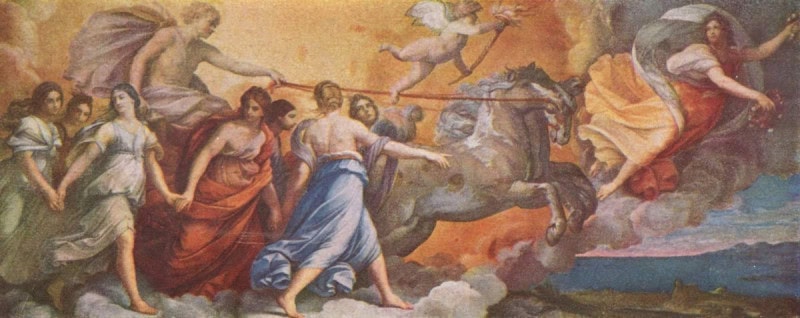
Greek counterpart: Apollo, the one god who kept his name. He came to Rome from the Greek cities of Italy as a healer, in a plague year of the fifth century BC according to Livy, and his first temple stood outside the old city boundary because he was a foreign god. Augustus changed that: he credited Apollo with the victory at Actium, built him a marble temple on the Palatine beside his own house, and made him the patron of a new age. Prophecy (the Sibylline Books were kept in that temple), music, the lyre, the laurel and, increasingly, the sun were his. Reni’s fresco, above, puts him where the Romans of the empire put him, driving the sun across the sky.
8. Diana
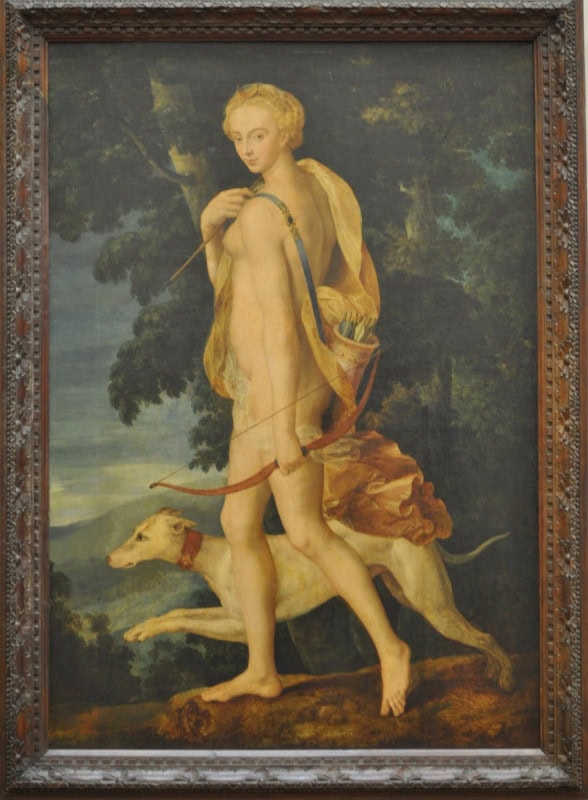
Greek counterpart: Artemis. Goddess of the hunt, the wild wood and the moon, and of women in childbirth. Her oldest Italian shrine was not in Rome at all but at Lake Nemi in the Alban Hills, where her priest was a runaway slave who held the post by killing his predecessor, the custom that opens Frazer’s Golden Bough. In the city her temple on the Aventine, which Livy credits to King Servius Tullius, was shared by the Latin towns and was a sanctuary for slaves; her festival on 13 August was a slaves’ holiday. The crescent in the painting’s hair is the moon she took over from Artemis and the hound is the hunt.
9. Vulcan
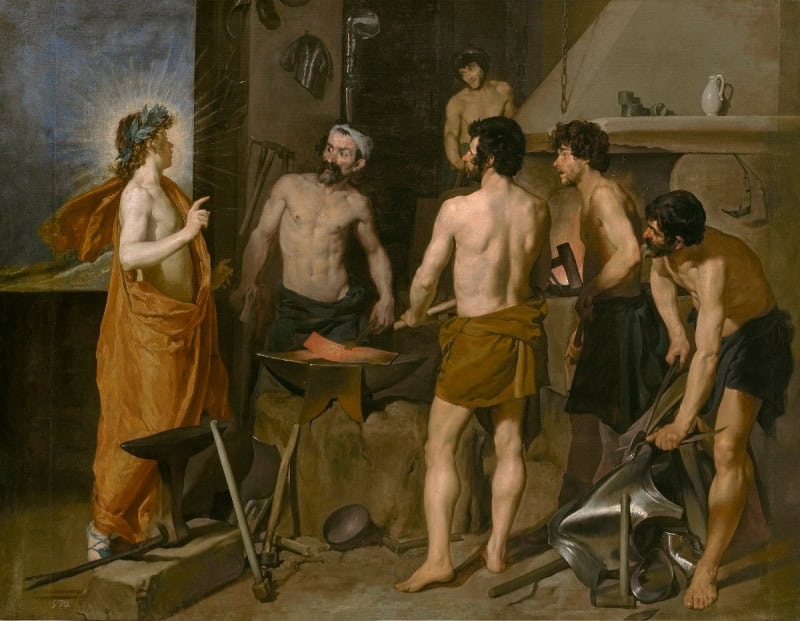
Greek counterpart: Hephaestus. God of fire, which for a city built of timber meant destructive fire first and the forge second. His festival, the Vulcanalia on 23 August at the height of the fire season, involved throwing live fish from the Tiber onto a bonfire, lives offered in place of human ones, and his shrine, the Volcanal, stood at the foot of the Capitol in the oldest part of the Forum. Temples to him were deliberately built outside the city walls. The scene Velázquez painted, above, is the Greek story, Apollo arriving at the forge to tell Vulcan that Venus has been unfaithful with Mars, told in Ovid’s Metamorphoses.
10. Vesta
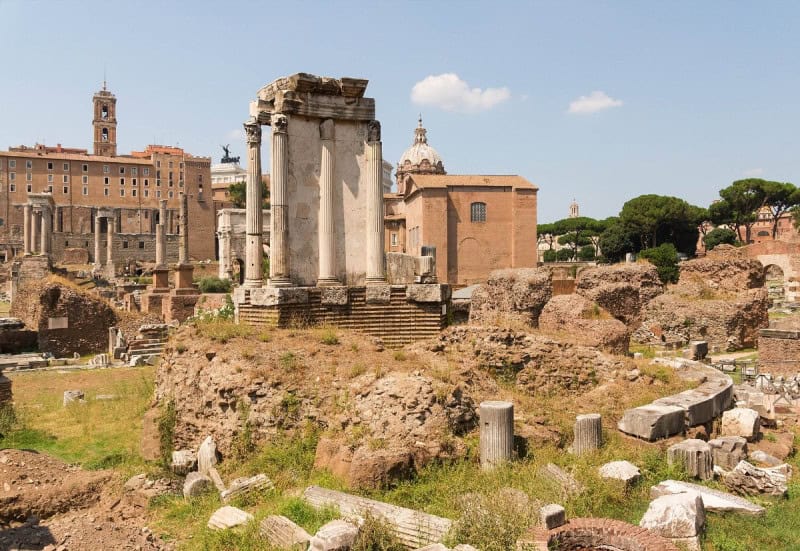
Greek counterpart: Hestia, though Vesta mattered far more in Rome than Hestia did in Greece. She was the hearth, of the house and of the state, and her round temple in the Forum held no statue, only the fire, which six Vestal Virgins kept alight; if it went out the Vestal responsible was beaten, and a Vestal who broke her vow of chastity was buried alive. Ovid, who says he was long foolish enough to think there was an image of Vesta, explains in the Fasti that the goddess is the living flame itself. The Vestalia in June was the one week the inner shrine was open to married women. The order lasted until AD 394, when the Christian emperor Theodosius closed it.
11. Mercury
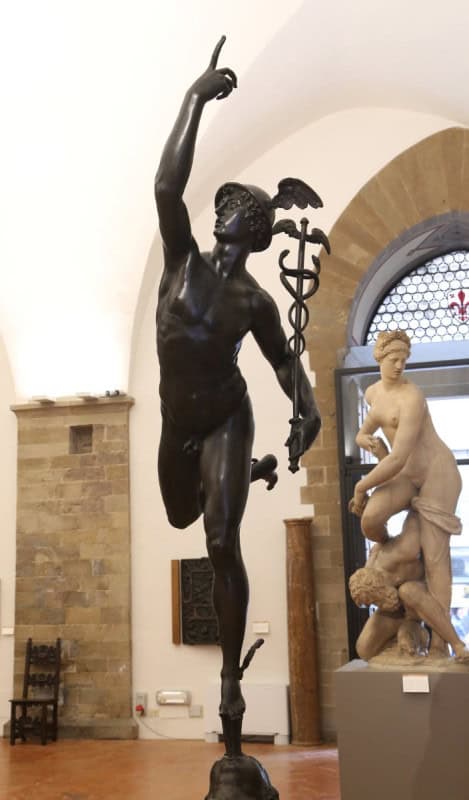
Greek counterpart: Hermes. God of trade, of travellers and of messages, and the guide who took the dead to the underworld. His name comes from the Latin for merchandise, which tells you what the Romans wanted from him; Livy dates his temple near the Circus Maximus to 495 BC, and his festival, the Mercuralia on 15 May, was the merchants’ holiday, when traders sprinkled themselves and their goods with water from his sacred spring. The winged sandals, the winged hat and the caduceus, the herald’s staff with two snakes, are all Greek, and Giambologna’s bronze, above, is the image of him that every later sculptor copied.
12. Ceres
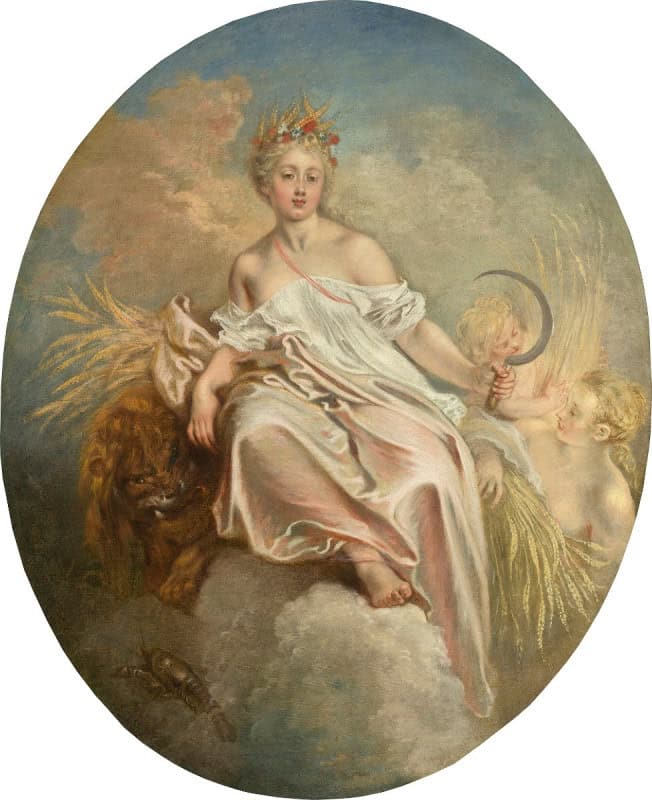
Greek counterpart: Demeter. Goddess of grain, and so of the thing Rome could never have enough of; “cereal” is her name. Her temple on the Aventine, which tradition dates to 493 BC, was the headquarters of the plebeians, the common citizens, whose officials kept their records there and whose protection was in her gift. The Cerealia in April ended with games in the Circus, and Ovid describes, without approving, a rite in which foxes with burning torches tied to their tails were let loose. With her daughter Proserpina she held the mysteries that the Greeks held at Eleusis. Watteau’s Ceres, above, is summer itself, sickle and wheat in hand.
The other great gods, and the first import
13. Saturn
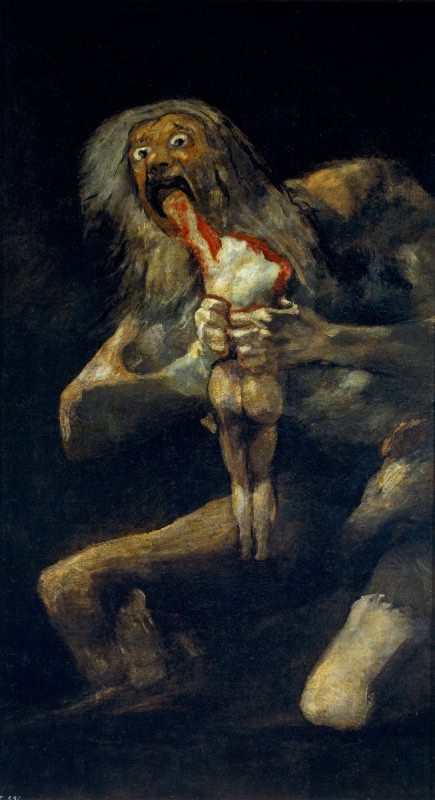
Greek counterpart: Cronus, whose story of swallowing his children Goya painted on the wall of his own dining room, above. The Roman Saturn was gentler: an old god of sowing (the sickle is his), who in Virgil’s telling fled to Italy when Jupiter overthrew him and ruled a Golden Age there before there were laws or wars. His temple at the foot of the Capitol, whose eight columns still stand, held the state treasury. His festival, the Saturnalia, began on 17 December and ran for days: shops and courts closed, slaves dined with their masters, gifts were exchanged, and a mock king presided. Several of its customs survived into Christmas. Saturday is still his day.
14. Pluto, or Dis Pater
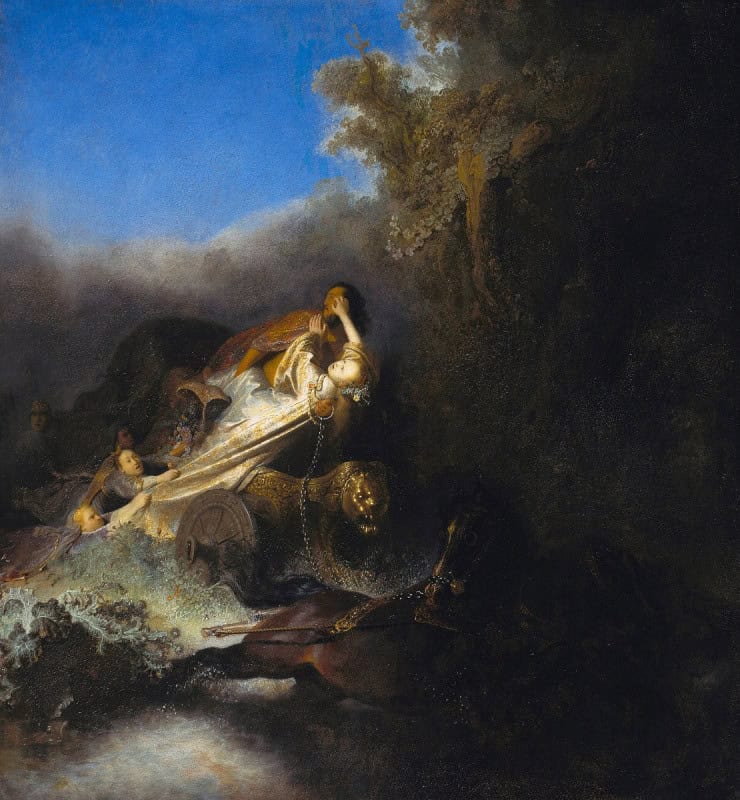
Greek counterpart: Hades. The Romans called the lord of the dead Dis Pater, “the rich father”, and Orcus, and borrowed the Greek Pluto, “wealth”, for the same reason: everything buried, the dead and the metals and the seed corn, was his. He had almost no temples and no festival of his own; his altar in the Campus Martius was kept underground and uncovered only for the Secular Games, held once in a lifetime. Rembrandt’s painting, above, is the one myth he has, the seizing of Proserpina, which Ovid tells twice. For the rest of the Roman underworld, the gods of death and the underworld on this site carry on from here.
15. Bacchus, or Liber
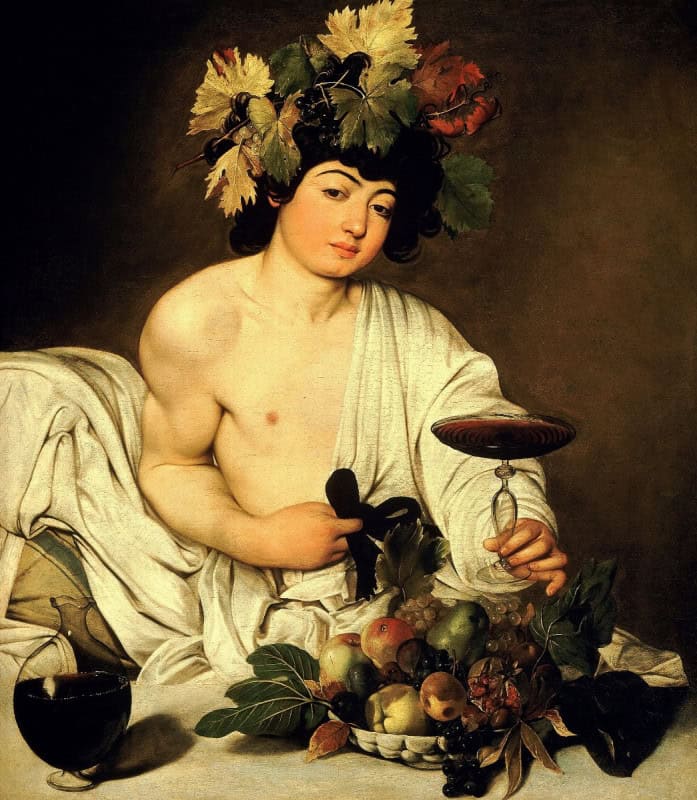
Greek counterpart: Dionysus. The old Italian god of fertility and wine was Liber, “the free one”, who shared the plebeian temple on the Aventine with Ceres and whose spring festival, the Liberalia on 17 March, was the day Roman boys put on the toga of manhood. Bacchus is the Greek god’s other name, and his cult arrived with a reputation: in 186 BC the Senate suppressed the Bacchanalia across Italy in a panic that Livy describes at length, and the bronze tablet recording the decree survives. By the empire he was respectable again, the god of wine, theatre and the vine on every mosaic. Caravaggio’s Bacchus, above, is a Roman boy in a sheet, which is probably closer to the truth than the Greek god ever was.
16. Cupid
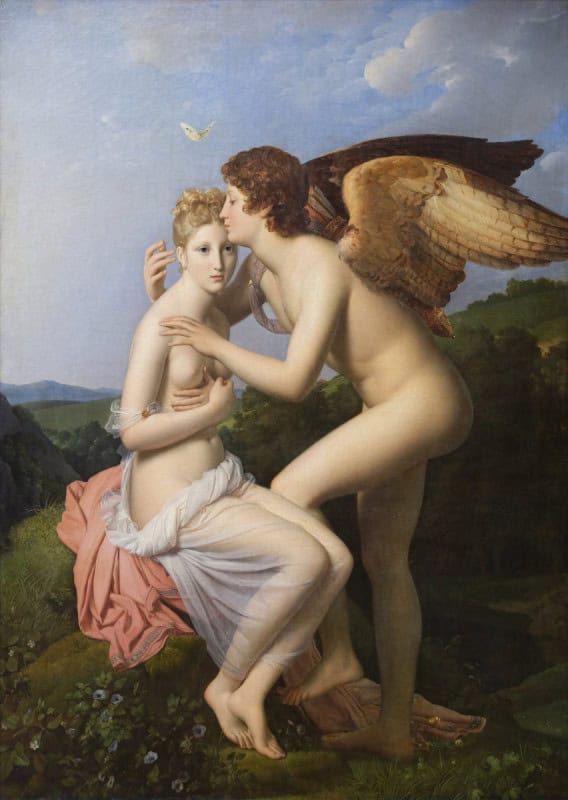
Greek counterpart: Eros. Venus’s son, the winged boy with the bow whose arrows start love, called both Cupido (desire) and Amor (love) in Latin. He has no temples and no festival; he is a poet’s god, and the Roman poets used him constantly, Ovid above all, whose Amores open with Cupid stealing a foot from the poet’s epic metre to turn it into love poetry. The one full story he has is Roman: Cupid and Psyche, the girl forbidden to look at her divine husband, told by Apuleius in The Golden Ass in the second century AD and painted ever since, as in Gérard’s version above. The modern valentine cherub is him, shrunk.
17. Proserpina
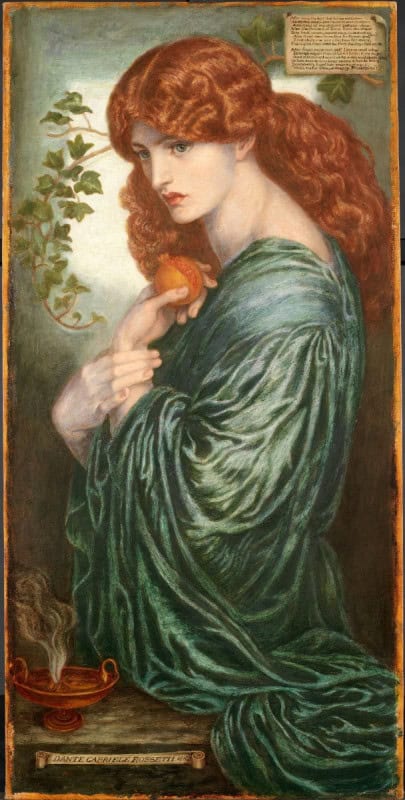
Greek counterpart: Persephone. Ceres’s daughter, carried off by Pluto while picking flowers in Sicily, and brought back for part of each year because her mother stopped the crops until she was; the pomegranate seeds she ate below are why she must return. The Romans worshipped her with Ceres on the Aventine and with Dis Pater at the underground altar, and her Latin name may come from the verb for creeping forth, the shoot breaking the soil. Ovid tells the abduction in the Metamorphoses and again in the Fasti. Rossetti, above, shows her in the underworld with the bitten fruit, a subject he painted eight times.
18. Fortuna
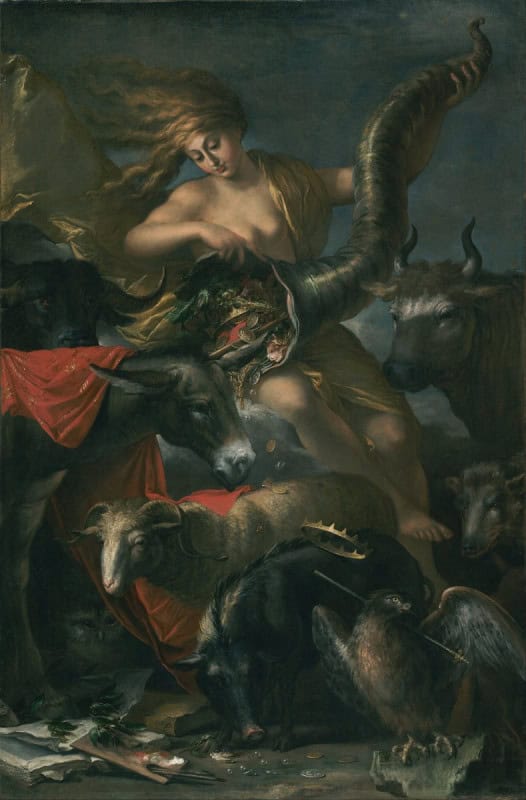
Greek counterpart: Tyche, loosely. Fortuna was luck, good and bad, and the Romans, who left little to chance, gave her more temples than almost any other goddess: Fortuna of this day, Fortuna of the first-born, Fortuna of women, Fortuna of the Roman people. Her great sanctuary at Praeneste, modern Palestrina, climbed a whole hillside in terraces and gave oracles by lot. Her symbols were the wheel, the rudder that steers a life and the cornucopia that pours out its goods; Rosa’s painting, above, has Fortune emptying the horn onto a herd of swine, which got him into trouble with the papal court. The wheel of fortune outlived the goddess by two thousand years.
19. Sol Invictus
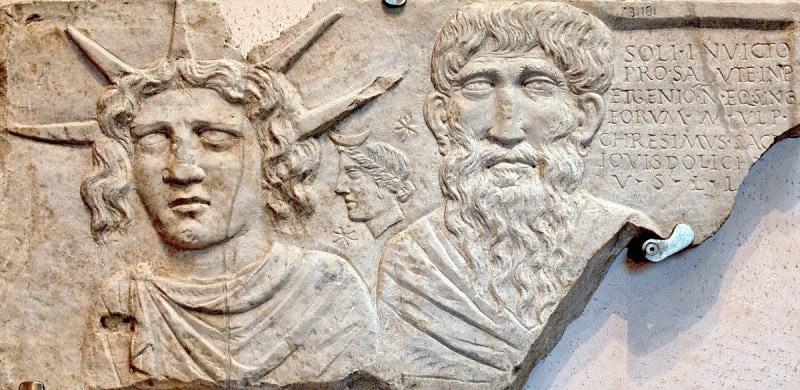
Greek counterpart: Helios, in part. Rome had an old sun god, Sol Indiges, with a shrine on the Quirinal, but Sol Invictus, “the Unconquered Sun”, is a god of the late empire. The emperor Aurelian built him a great temple in 274 and made his priests a college of senators; Constantine’s coins carried the sun with the legend “to the Unconquered Sun, companion” until the 320s. His festival on 25 December, the birthday of the sun at the turn of the year, is recorded in a calendar of 354 that also records Christmas on the same day, a coincidence historians still argue about. The radiate crown in the relief, above, is how Sol appears on the coins of the third century, and the emperors borrowed it from him.
20. Cybele, the Great Mother
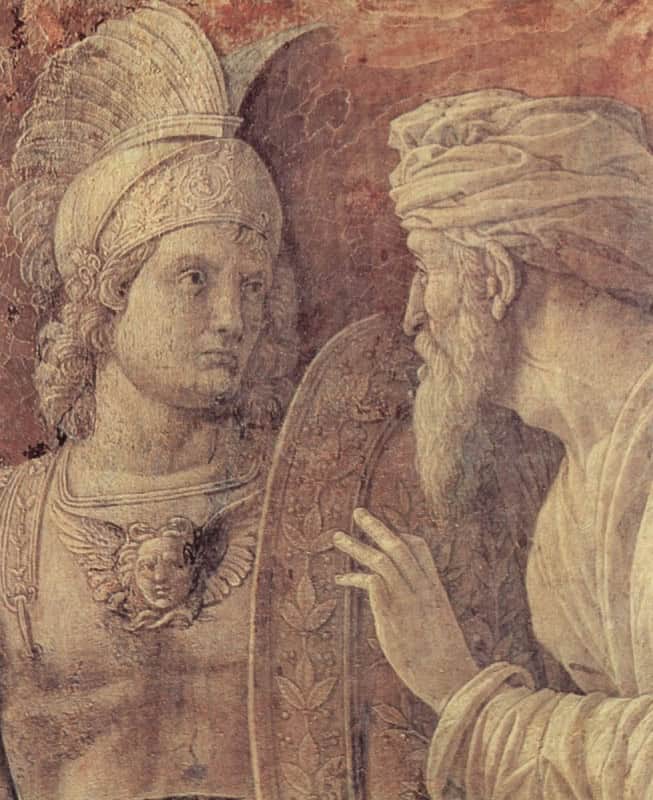
Greek counterpart: identified with Rhea, mother of the gods. Cybele was the mountain mother of Phrygia in Asia Minor, and Rome imported her on purpose: in 204 BC, during the war with Hannibal, the Sibylline Books advised bringing the Great Mother to Rome, and her sacred black stone was carried from Pessinus and received at Ostia, the scene Mantegna painted, above, for a Venetian family that claimed descent from the young Scipio chosen to meet it. She got a temple on the Palatine and games, the Megalensia, in April. Her priests, the Galli, were eunuchs who had made themselves so in her honour, which Roman citizens were forbidden to do, so that for two centuries the state kept a goddess it would not let its own people serve.
The gods Rome did not borrow
21. Janus
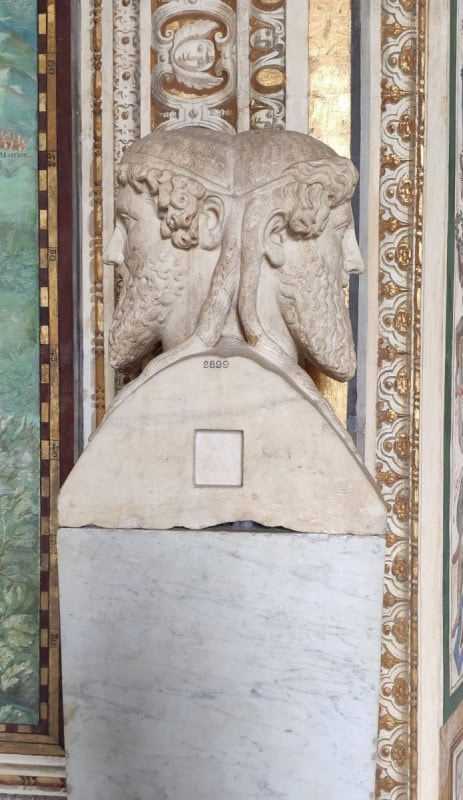
Greek counterpart: none. Janus is the most Roman god there is, the two-faced god of doors, gates, beginnings and endings, who looked both ways because a door does. He was named first in every prayer, before Jupiter, and January is his month. His shrine in the Forum was a gateway whose doors stood open in wartime and were closed when Rome was at peace, which Livy says had happened only twice between Numa and his own day, once after the First Punic War and once under Augustus, who in his own record of his reign claims three closings. Ovid, in the first book of the Fasti, lets Janus explain himself, and he gives a dozen answers, which is about right. The Romans themselves could not agree what he had been before he was a doorway.
22. Quirinus
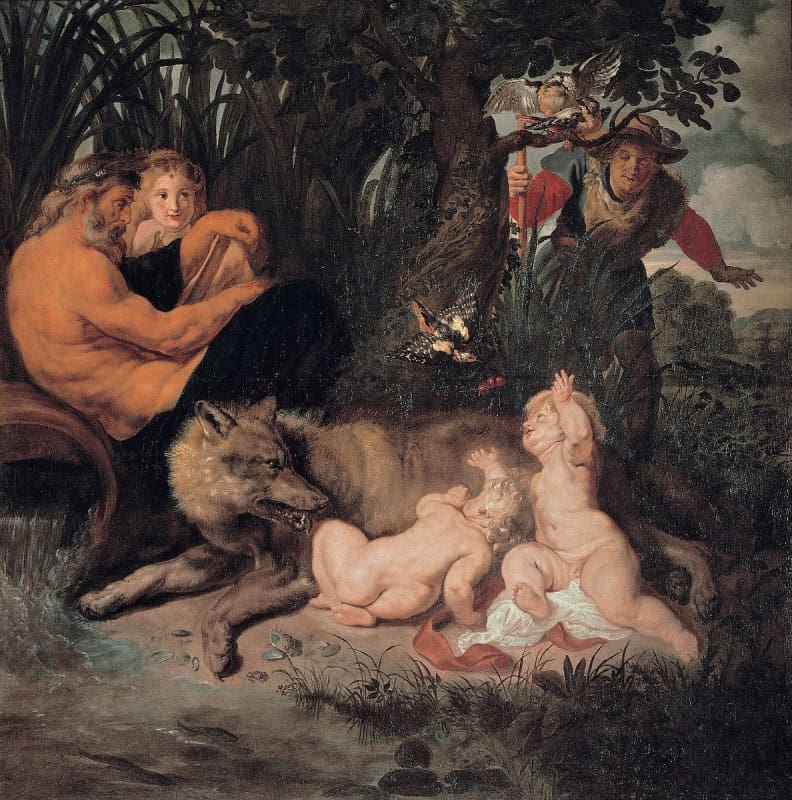
Greek counterpart: none. Quirinus was the third god of Rome’s oldest triad, with Jupiter and Mars, before Juno and Minerva took the places on the Capitol; he gave his name to the Quirinal Hill and, as Quirites, to the Roman citizens themselves when they were addressed as a people rather than an army. He is so old that the Romans had lost his meaning, and by the late Republic they had settled on an answer: he was Romulus, the founder, taken up to heaven in a storm and returned to tell a senator that he was now a god, the story Livy tells with visible reserve. Rubens’s twins and their wolf, above, are the beginning of that story; the temple on the Quirinal was its end.
23. Terminus
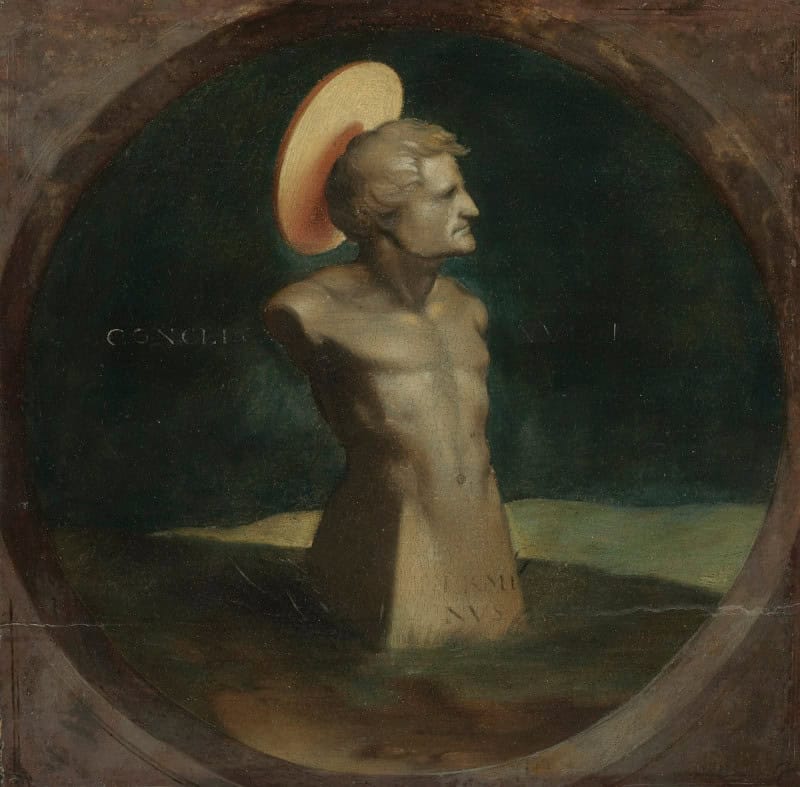
Greek counterpart: none. Terminus was the god of the boundary stone, and the boundary stone was the god: farmers garlanded the markers between their fields at the Terminalia on 23 February and sacrificed on them, and Ovid, who describes the rite in the Fasti, has the stone itself addressed as a god. The story the Romans liked best was that when the great temple of Jupiter was planned on the Capitol, every god consented to have his shrine moved except Terminus, who would not budge, so the temple was built around his stone with an opening in the roof above it, and Rome took it as a sign that its boundaries would never retreat. Erasmus adopted him as a personal emblem, painted by Holbein above, with the motto “I yield to no one”.
24. Flora
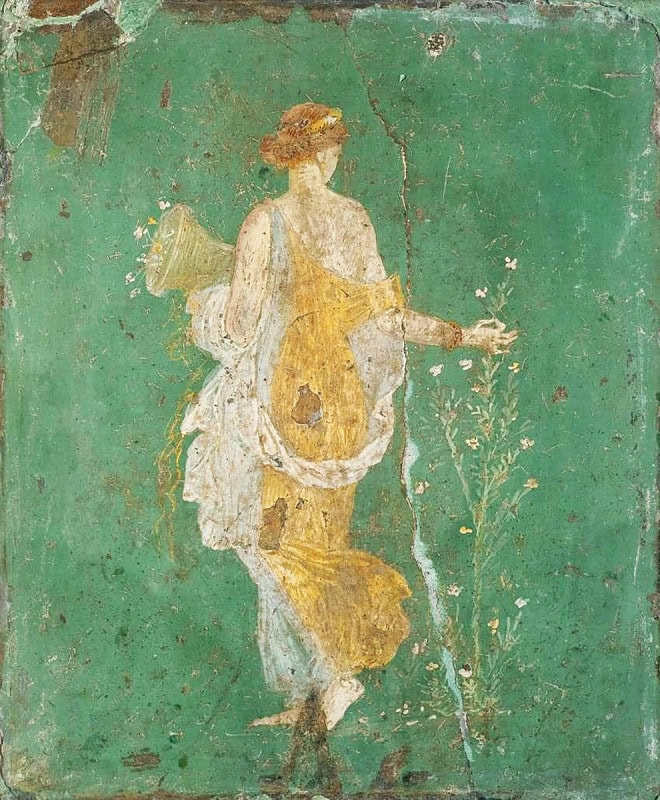
Greek counterpart: Ovid identifies her with the nymph Chloris, but the goddess is Italian. Flora was the goddess of flowering, of everything that blooms before it fruits, with a priest of her own among Rome’s oldest, and her festival, the Floralia from 28 April into May, was the most cheerful in the calendar: games, hares and goats let loose in the Circus, coloured clothes instead of white, and theatrical shows notorious for their licence. Ovid gives her a long interview in the Fasti in which she explains that she makes the crops flower, the vines flower and even the honey, since bees need blossom. The fresco above, from a seaside villa buried by Vesuvius, is the most famous image of her and was painted while her festival was still being held.
25. Faunus
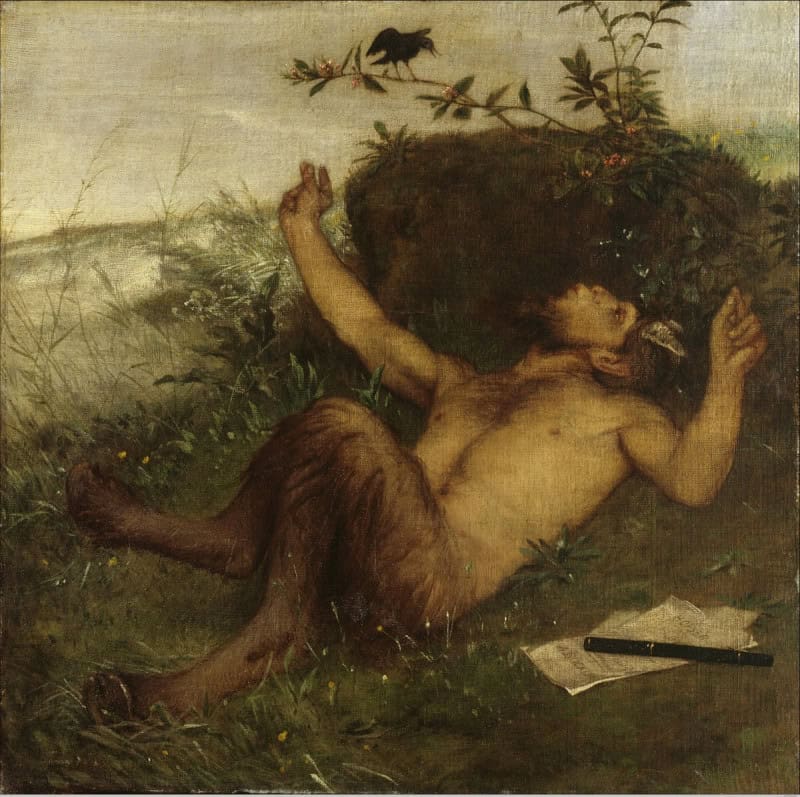
Greek counterpart: identified with Pan, but older in Italy. Faunus was the god of the wild country beyond the fields, protector of flocks against wolves, and a giver of prophecy through voices in the woods and dreams in his sanctuaries; Virgil has King Latinus consult him in the Aeneid. His festival, the Lupercalia on 15 February, was the strangest Rome kept: young men ran a course around the Palatine striking bystanders with strips of goatskin, a fertility rite that outlived the empire’s conversion and was abolished only in the 490s. The goat legs and pipes he shares with Pan became the fauns of later art, like Böcklin’s, above, and the satyrs they are often confused with.
26. Bellona
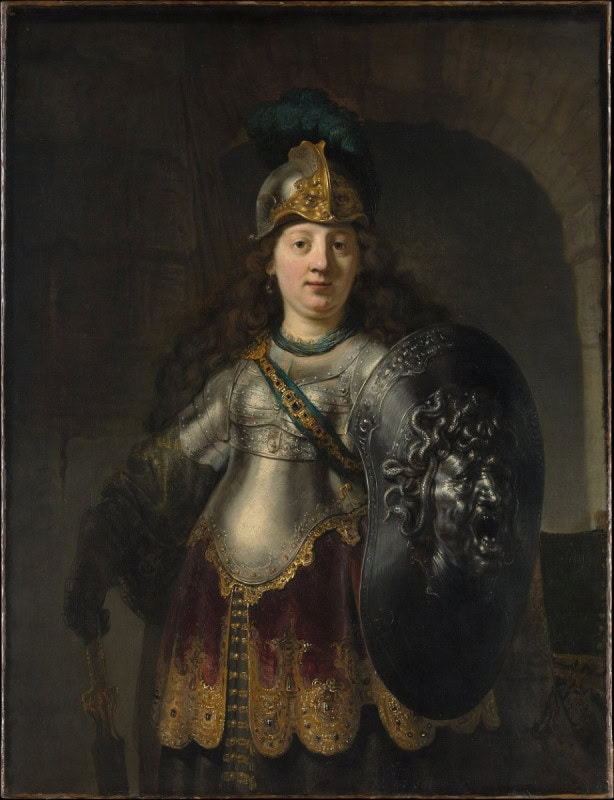
Greek counterpart: identified with Enyo, but the function is Roman. Bellona was the goddess of war as a thing the state declares. Her temple stood outside the old boundary in the Campus Martius, and in front of it was the columna bellica, the war column: when Rome’s enemies were too far away to reach with the ceremonial spear that the fetial priests threw into enemy land to declare war, a patch of ground before the column was declared foreign and the spear was thrown there instead. The Senate met in her temple to receive foreign ambassadors and generals who could not enter the city without giving up their command. Rembrandt’s Bellona, above, is a Dutch girl in armour with Medusa on her shield, the way the seventeenth century liked its war goddesses.
27. Pomona
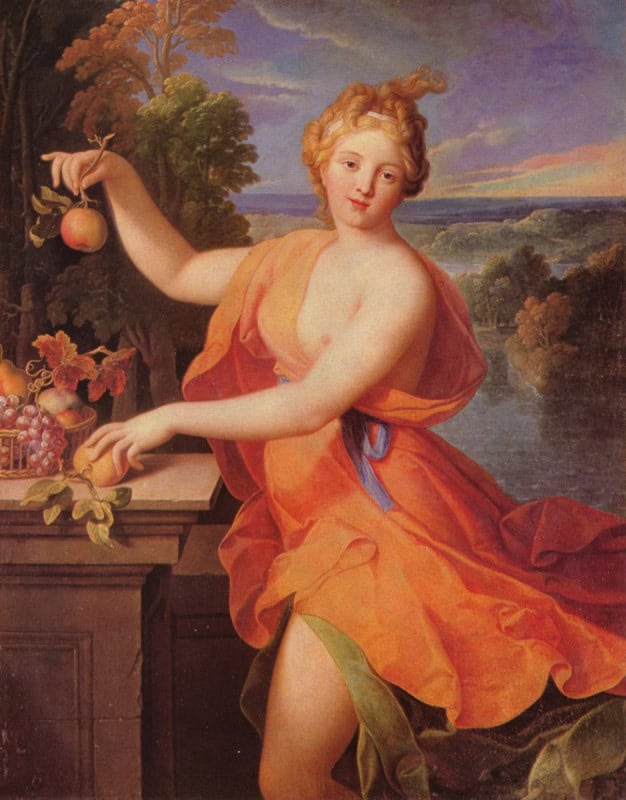
Greek counterpart: none. Pomona was the goddess of fruit trees and orchards, of the apple and the pear rather than the grain field, with a priest of her own, the flamen Pomonalis, the lowest in rank of the fifteen, and a sacred grove on the road to Ostia. She is one of the few Roman gods with a story that is Roman from the start: Ovid, in the Metamorphoses, tells how the wood nymph who cared only for her pruning knife was courted by Vertumnus, the god of the turning seasons, who got into her orchard disguised as an old woman and won her by arguing his own case. Fouché’s painting, above, gives her the basket of fruit that is her only attribute.
28. The Lares and Penates
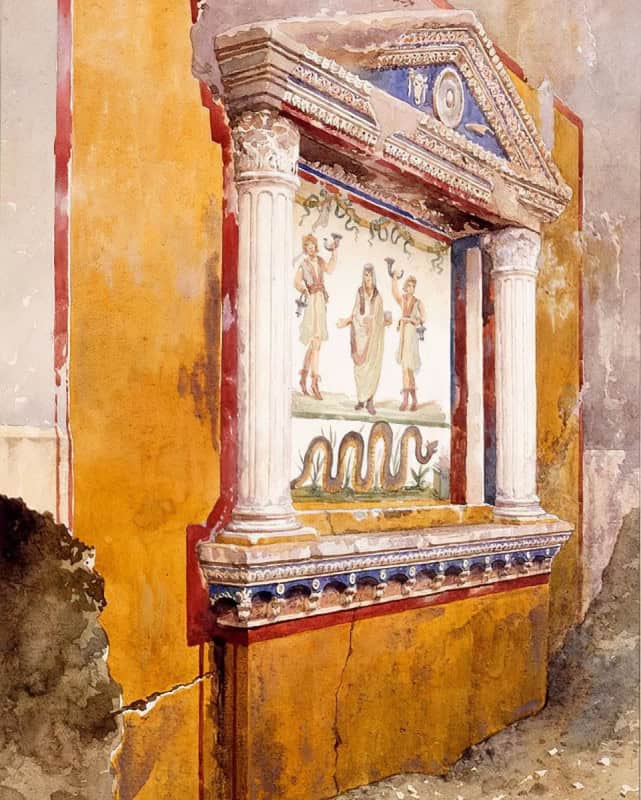
Greek counterpart: none. These were the gods of the house. The Lares, usually a pair of dancing youths in short tunics pouring wine from drinking horns, guarded the household and its land; the Penates guarded the storeroom, the penus, and so the family’s food. Every Roman house had a shrine to them, the lararium, where the family prayed daily and offered a share of the meal, and Pompeii preserved hundreds, like the one painted above with the serpent of the place below. The Lares also stood at crossroads, where the neighbourhoods kept their shrines, and Augustus quietly put his own Genius between them. Virgil’s Aeneas carries the Penates of Troy out of the burning city, so Rome’s own household gods were older than Rome.
The imported gods
29. Isis
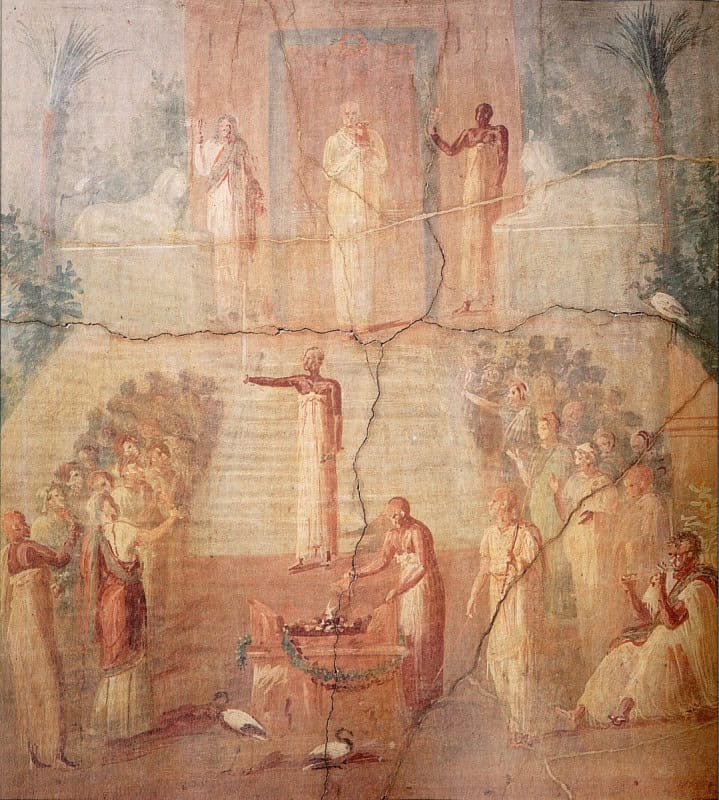
Greek counterpart: none; she is Egyptian, though Rome received her in a Greek form. Isis, the wife of Osiris and mother of Horus, came to Italy through the ports and the sailors, who kept her festival of the launching of the ships in March. The Senate pulled down her altars more than once in the first century BC, and Augustus kept her outside the sacred boundary, but by the time of the Flavians she had a great temple in the Campus Martius and Vespasian spent a night there before his triumph. Her promise was personal: initiation, care in this life and the next, a goddess who had grieved. Apuleius ends The Golden Ass with his hero’s conversion to her. The fresco above shows her priests at a morning service in Italy, with the ibises brought from the Nile.
30. Mithras
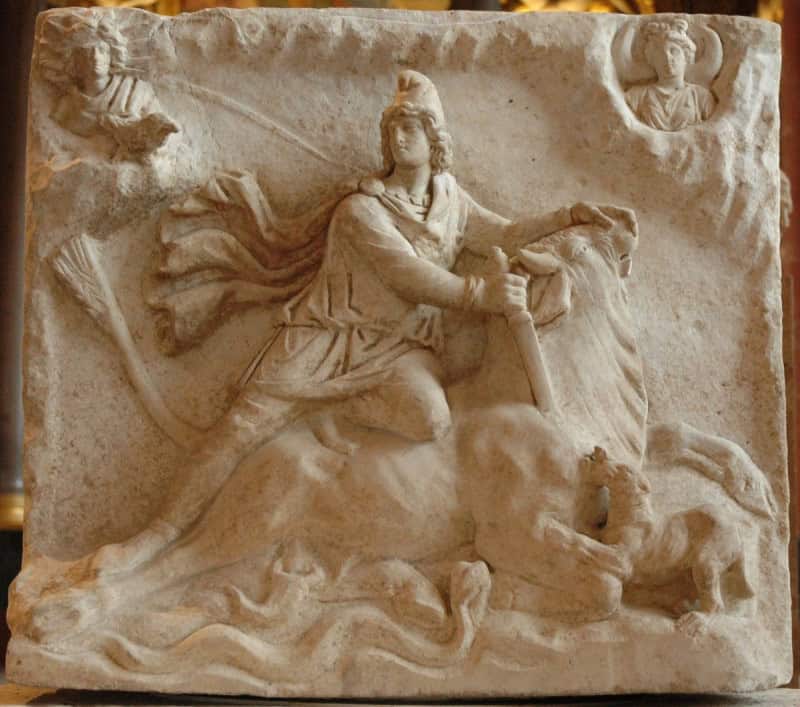
Greek counterpart: none. Mithras carries a Persian name, but the Roman cult that bore it is known only from the Roman empire, where it spread with the army from the late first century AD: a men-only mystery religion of seven grades, meeting in small cave-like temples, hundreds of which have been found from Hadrian’s Wall to the Danube, with one under the church of San Clemente in Rome. Almost every one held the same image, the relief above: the god in a Phrygian cap kneeling on a bull and killing it, while a dog, a snake and a scorpion attend the wound and the sun and moon watch from the corners. No Mithraic scripture survives, so what the scene meant is argued from the image alone. It was the last serious rival to Christianity among the soldiers, and it vanished with them.
Roman gods versus Greek gods: what actually changed
Three things. First, the myths are Greek: the Romans had almost no stories of their own about their gods, which is why Ovid’s Metamorphoses, the great Latin book of mythology, is a book of Greek tales. What Rome contributed instead was ritual and record, the calendar of festivals, the priesthoods, the formulas of prayer, and Ovid’s Fasti, a poem about the calendar, is the Roman counterpart to the Greek myths. Second, the characters shifted: Mars rose from the Greeks’ least-liked Olympian to Rome’s second god; Vesta, a minor figure in Greece, became the heart of the state; Apollo kept his name because there was no one to translate him into. Third, Rome added: Janus, Quirinus, Terminus, the Lares, and then the imports, each adopted by a decision of the Senate or an emperor. Five of the planets, the months of January, March, May and June, and four days of the week in the Romance languages still carry the Roman names, which is more than the Greek gods can say.
Frequently asked questions
Who are the 12 main Roman gods?
The Dii Consentes: Jupiter, Juno, Neptune, Minerva, Mars, Venus, Apollo, Diana, Vulcan, Vesta, Mercury and Ceres, six gods and six goddesses, listed in a verse of Ennius and honoured with gilded statues in the Forum. They correspond to the twelve Olympians, with Vesta in the place the Greeks sometimes gave to Dionysus.
Who are the big three Roman gods?
The Capitoline Triad of Jupiter, Juno and Minerva, who shared the temple on the Capitoline Hill and were the gods of the Roman state. The older triad, before Greek influence, was Jupiter, Mars and Quirinus.
Which god is both Greek and Roman?
Apollo, who kept his Greek name in Rome because there was no Italian god to identify him with. Every other Olympian was matched to an existing Roman god and took that god’s name.
How many Roman gods were there?
There is no count. Beyond the great gods, Roman religion named a deity for almost every act and moment, from Cunina, who guarded the cradle, to Cardea, goddess of the door hinge; Varro and Augustine between them list dozens. This page covers the thirty with temples, festivals or stories that a reader will meet again.
Are the Roman gods in Percy Jackson?
Yes: the Heroes of Olympus series is built on the idea that the gods have Greek and Roman aspects, with Jupiter, Mars, Bellona and Terminus (as a statue who guards a camp’s boundaries) all appearing, which is a fair summary of how Rome itself saw them.
Image credits
All images are public domain or CC0 via Wikimedia Commons and the museums named in the captions, except: the bust of Janus (entry 21), photograph by Américo Toledano, CC BY-SA 4.0, via Wikimedia Commons; and Giambologna’s Flying Mercury (entry 11), photograph by Rufus46, CC BY-SA 3.0, via Wikimedia Commons. The Herculaneum mosaic and the Temple of Vesta are photographs by Jebulon, released under CC0; the Minerva mosaic is a photograph by Carol M. Highsmith, placed in the public domain; the Mithras relief is a photograph by Marie-Lan Nguyen (Jastrow), placed in the public domain.
Related guides
Mythology on this site: the male Greek gods, the famous statues of the Greek gods, the Greek mythical creatures, the gods of death, destruction and the underworld and the Norse gods.