
Every list of the best Shakespeare plays is one person’s opinion, including the ones in newspapers. This page does something different: it takes the complete rankings that critics have actually published, puts them side by side, and averages them, so that the order below is not ours but theirs, and you can see exactly how each play got its place. All 38 plays are here, from the one the critics agree is the weakest to the one they agree is the best, each with the date it was written, what happens in it, why the lists put it where they do, a line worth knowing from nearly every one, and a production worth seeing.
The method is set out in full just below, with a table of every input, and the plays run from 38 to 1 after it. If you only want to know which ones to start with, the top ten is Hamlet, Twelfth Night, King Lear, Macbeth, both parts of Henry IV, A Midsummer Night’s Dream, The Winter’s Tale, Coriolanus and Antony and Cleopatra. If you want to know which one to skip, the critics are nearly unanimous about that too.
How the ranking was built
Two complete rankings of the canon have been published by major newspapers. In April 2016, for the 400th anniversary of Shakespeare’s death, The Times asked thirty-six working Shakespeareans (directors, actors, scholars and critics, among them Stanley Wells, Declan Donnellan, Josie Rourke, Michael Boyd and Michael Pennington) to vote, and published the result as a ranking of every play from 1 to 39, Edward III included. In April 2026, for Shakespeare’s birthday, The Guardian published its former chief theatre critic Michael Billington’s ranking of every play in 35 slots, counting the two parts of Henry IV as one entry and the three parts of Henry VI as another. One is a poll of a profession, the other is the considered verdict of the critic who reviewed more Shakespeare productions than anyone alive; between them they are the best evidence there is of what the people who spend their lives with these plays think of them.
Each play’s two positions were averaged. Because the Guardian list has 35 slots and the Times list 38 (Edward III, which most editions leave out, is excluded here), the Guardian positions were multiplied by 38/35 first, so that a play at the bottom of either list scores the same and neither list outweighs the other. Where the Guardian ranked a group of history plays as one entry, each part takes the group’s position. Time Out London’s public vote of January 2025, which ranks only a top ten, is shown in the table for comparison and does not enter the average. Averages are shown to two decimal places because two pairs are close: The Merchant of Venice edges Troilus and Cressida by three hundredths, and The Two Noble Kinsmen sits four hundredths below Henry VIII. The comparisons between the two lists in the entries below use the scaled positions. The table is the whole method; nothing in the order below comes from anywhere else.
| # | Play | Times 2016 (36 experts) | Guardian 2026 (Billington) | Average (Guardian scaled) | Time Out 2025 (public top 10) |
|---|---|---|---|---|---|
| 1 | Hamlet | 2 | 3 | 2.63 | 1 |
| 2 | Twelfth Night | 4 | 2 | 3.09 | 7 |
| 3 | King Lear | 1 | 6 | 3.76 | 5 |
| 4 | Macbeth | 3 | 5 | 4.21 | 2 |
| 5 | Henry IV, Part 1 | 10 | 1 (with Part 2) | 5.54 | |
| 6 | A Midsummer Night’s Dream | 7 | 4 | 5.67 | 3 |
| 7 | Henry IV, Part 2 | 11 | 1 (with Part 1) | 6.04 | |
| 8 | The Winter’s Tale | 5 | 9 | 7.39 | |
| 9 | Coriolanus | 16 | 8 | 12.34 | |
| 10 | Antony and Cleopatra | 13 | 11 | 12.47 | |
| 11 | As You Like It | 12 | 13 | 13.06 | |
| 12 | Othello | 6 | 19 | 13.31 | 6 |
| 13 | Measure for Measure | 14 | 12 | 13.51 | |
| 14 | Love’s Labour’s Lost | 21 | 7 | 14.30 | |
| 15 | Much Ado About Nothing | 8 | 20 | 14.86 | 4 |
| 16 | Richard II | 15 | 14 | 15.10 | |
| 17 | Henry V | 22 | 10 | 16.43 | |
| 18 | Titus Andronicus | 17 | 16 | 17.19 | |
| 19 | The Tempest | 9 | 25 | 18.07 | 8 |
| 20 | The Comedy of Errors | 23 | 17 | 20.73 | |
| 21 | Richard III | 19 | 21 | 20.90 | |
| 22 | Romeo and Juliet | 18 | 23 | 21.49 | 9 |
| 23 | Henry VI, Part 1 | 28 | 18 (with Parts 2 and 3) | 23.77 | |
| 24 | The Merchant of Venice | 20 | 26 | 24.11 | 10 |
| 25 | Troilus and Cressida | 32 | 15 | 24.14 | |
| 26 | Henry VI, Part 2 | 29 | 18 (with Parts 1 and 3) | 24.27 | |
| 27 | Henry VI, Part 3 | 30 | 18 (with Parts 1 and 2) | 24.77 | |
| 28 | Julius Caesar | 24 | 24 | 25.03 | |
| 29 | The Merry Wives of Windsor | 27 | 22 | 25.44 | |
| 30 | Pericles | 26 | 28 | 28.20 | |
| 31 | Cymbeline | 25 | 34 | 30.96 | |
| 32 | The Taming of the Shrew | 34 | 27 | 31.66 | |
| 33 | King John | 31 | 30 | 31.79 | |
| 34 | Timon of Athens | 35 | 29 | 33.24 | |
| 35 | All’s Well That Ends Well | 36 | 31 | 34.83 | |
| 36 | The Two Gentlemen of Verona | 33 | 35 | 35.50 | |
| 37 | Henry VIII | 38 | 32 | 36.37 | |
| 38 | The Two Noble Kinsmen | 37 | 33 | 36.41 |
Two things the table shows that a single list cannot. The experts and the critic put the same five plays (Hamlet, Twelfth Night, King Lear, Macbeth and the Dream) in their top eight and the same four (Two Gentlemen, All’s Well, Henry VIII and Kinsmen) in their bottom six, and disagree most about Othello, Much Ado About Nothing and The Tempest, which the Times voters put in their top nine and Billington put between 19th and 25th; and about Love’s Labour’s Lost, Troilus and Cressida and Henry V, which he rates far higher than the poll did. Where the public vote exists it tracks the Times poll more closely than the Guardian. Every play below is free to read in a modern edition at the Folger Shakespeare Library’s website, whose editions are the source for the composition dates used in the headings.
Every Shakespeare play ranked, from 38 to 1
38. The Two Noble Kinsmen (about 1613, with John Fletcher)
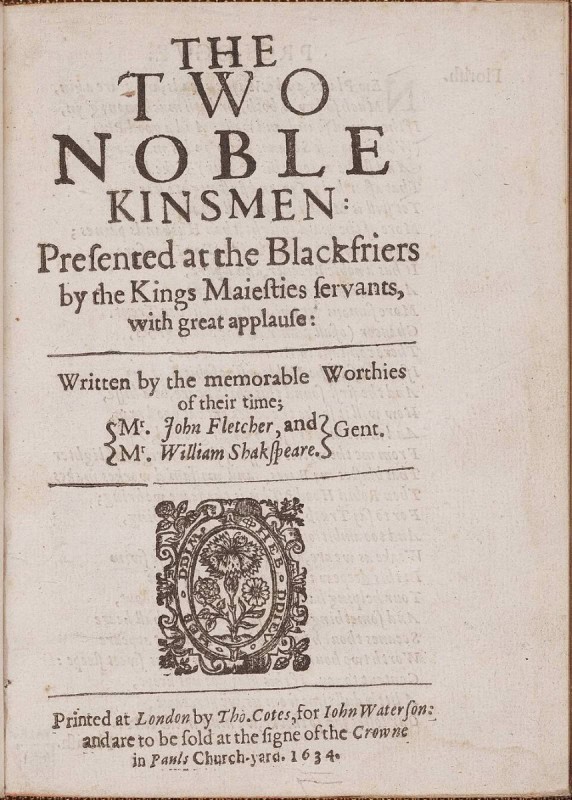
A late tragicomedy written with John Fletcher, Shakespeare’s successor as the King’s Men’s house playwright, and taken from Chaucer’s Knight’s Tale: the cousins Palamon and Arcite, captured by Theseus, see Emilia from their prison window and fall out over her, and when they finally fight for her the winner, Arcite, is thrown by his horse and dies, leaving her to Palamon. It was not in the First Folio and only entered most editions in the twentieth century, which is part of why both lists put it at or near the bottom; the other part is that the Fletcher scenes are more fun than the Shakespeare ones. The line to know is the Jailer’s Daughter’s, who goes mad for love of Palamon and gets the play’s best writing. The RSC has staged it twice, most recently in 2016 at the Swan.
37. Henry VIII (1613, with John Fletcher)
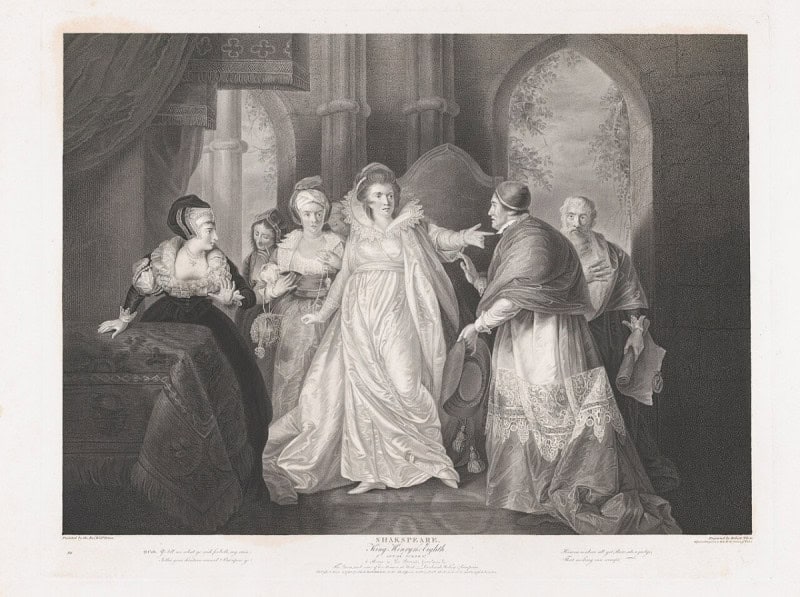
Also written with Fletcher and last of the 38 on the Times poll, Henry VIII is a pageant more than a play: Buckingham falls, Queen Katherine is divorced and dies, Wolsey rises and falls, Anne Boleyn is crowned, and the infant Elizabeth is baptised with a prophecy of the golden age to come. Its claim on history is accidental. During a performance on 29 June 1613 a cannon fired for the king’s entrance set the Globe’s thatch alight and the theatre burned to the ground. Katherine’s trial scene and Wolsey’s farewell (“Farewell, a long farewell, to all my greatness”) are the parts actors want; the RSC’s 1996 production with Jane Lapotaire as Katherine is the one most often cited.
36. The Two Gentlemen of Verona (about 1589 to 1593)
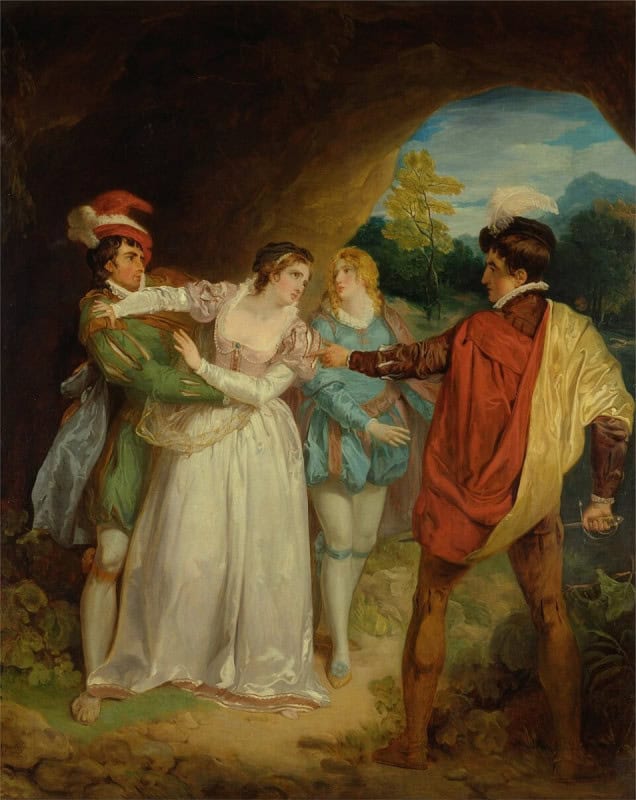
Probably Shakespeare’s first comedy and possibly his first play. Valentine and Proteus, friends from Verona, go to Milan, where Proteus falls for Valentine’s Silvia, betrays his friend, abandons his own Julia and finally tries to force himself on Silvia in a forest, at which point Valentine forgives him and, in the play’s notorious line, offers to give Silvia up to him. Both lists put it in the bottom six for that ending and for the thinness of everything around it, though it also contains the first of Shakespeare’s cross-dressed heroines in Julia, the song “Who is Silvia? What is she?”, and the best dog part in the canon, Launce’s Crab. The RSC’s 2014 production at the Royal Shakespeare Theatre was its first on the main stage in forty years.
35. All’s Well That Ends Well (about 1604 to 1605)
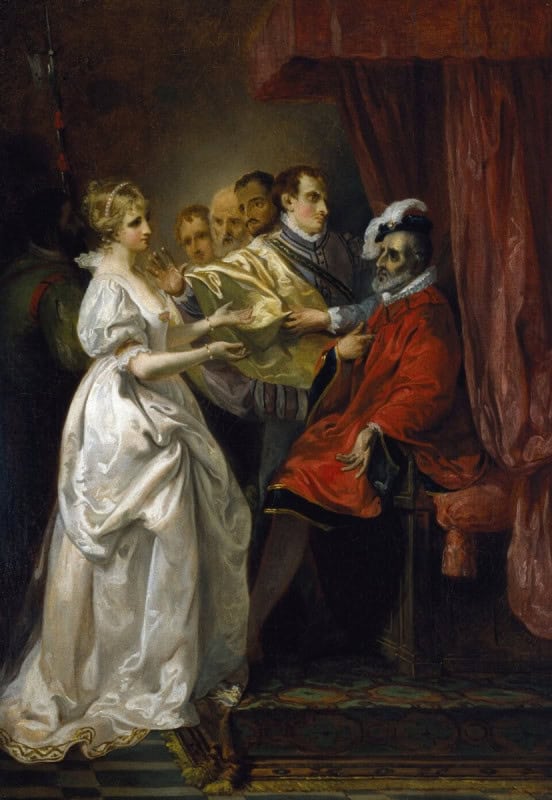
Helena, a physician’s daughter, cures the King of France and asks for Bertram, a count, as her reward; he marries her under protest, flees to the Italian wars and writes that he will never be her husband until she has his ring and is carrying his child, which she achieves by the bed trick that gives the play its title and its problem. The critic F. S. Boas called it a “problem play” in 1896, and the problem has not gone away: both lists rank it in the bottom eight because Bertram is so hard to want for Helena. It has one of Shakespeare’s great older women in the Countess of Roussillon, and the braggart Parolles (“Simply the thing I am shall make me live”) steals it whenever it is staged. Nancy Meckler’s 2013 RSC production and the National’s 2009 fairytale staging with Clare Higgins are the modern reference points.
34. Timon of Athens (about 1605 to 1608, possibly with Thomas Middleton)
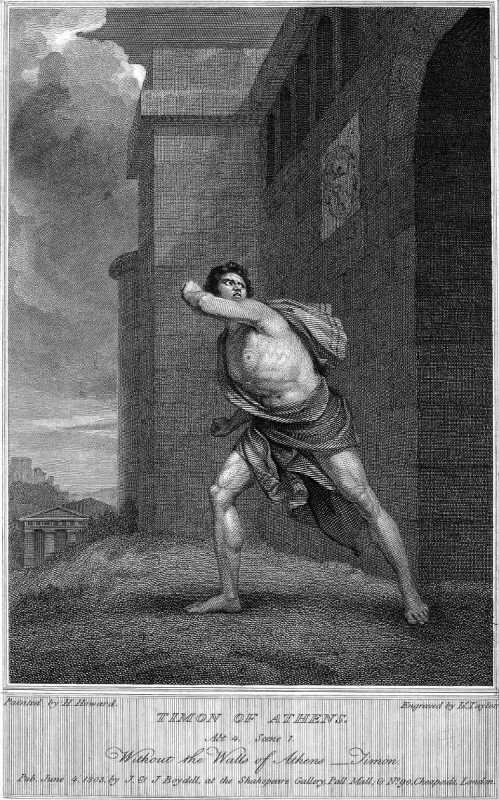
A rich Athenian gives his money away to flatterers, finds when it runs out that none of them will lend him any, curses the city and goes to live in a cave, where he digs up gold, gives it to anyone who will use it to harm Athens, and dies offstage. The text looks unfinished and there is no record of a performance in Shakespeare’s lifetime, and the Times voters placed it fourth from last. Its reputation rests on Nicholas Hytner’s 2012 National Theatre production, which moved it to the London of the financial crash with Simon Russell Beale as a Timon who funds art galleries, and made a case that the play is about money that no other play makes as nakedly. The line is Timon’s: “I am Misanthropos, and hate mankind.”
33. King John (about 1594 to 1596)
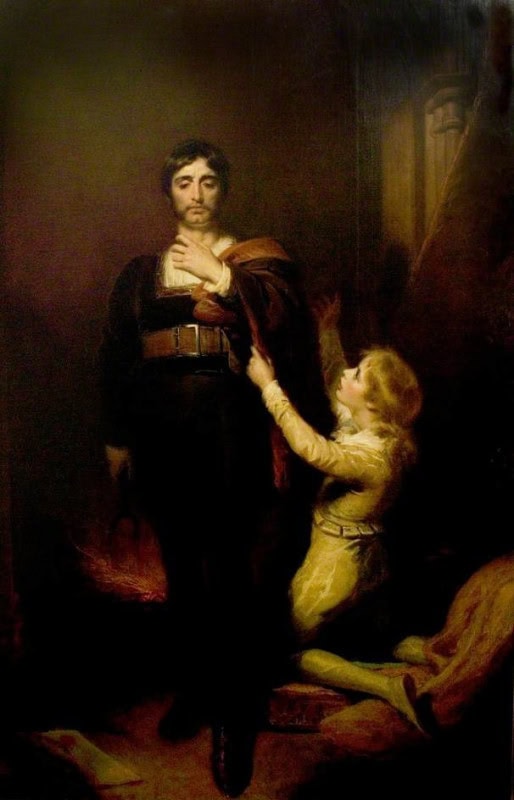
The one English history play outside the two great cycles. John holds the throne against his nephew Arthur’s claim, backed by France and the Pope; Arthur dies, the barons revolt, the French invade, and John is poisoned by a monk, leaving the crown to his son Henry III. There is no Magna Carta in it. Both lists put it in the bottom ten for a plot that keeps changing its mind, but it has one great original character, the Bastard Faulconbridge, who speaks the play’s famous speech on “commodity”, meaning self-interest, and one scene that audiences never forget, in which Hubert cannot bring himself to blind the boy Arthur (the Boydell painting above). It was the most popular of the histories in the Victorian theatre, when its pageantry suited the stage, and is now among the least performed.
32. The Taming of the Shrew (about 1590 to 1592)
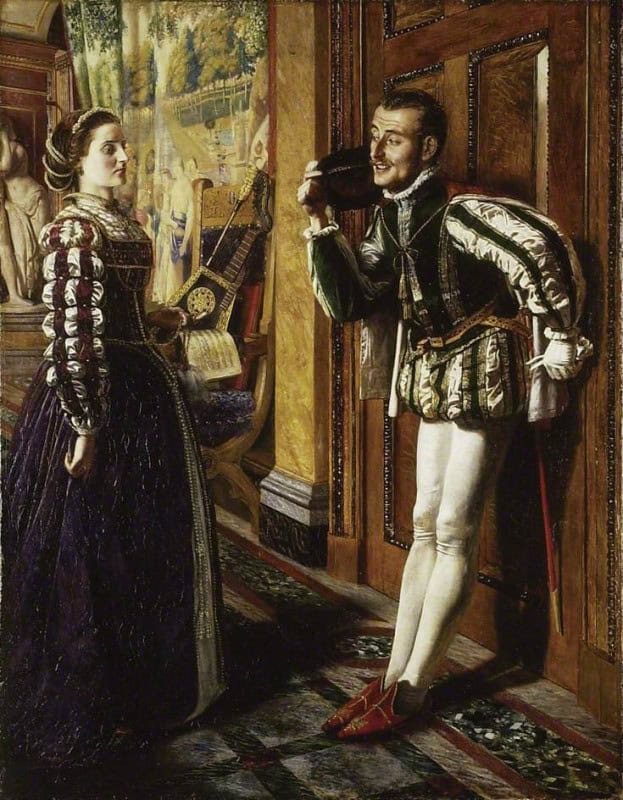
Petruchio marries Katherine for her dowry and breaks her temper by starving her, keeping her from sleep and contradicting everything she says, until in the last scene she lectures the other wives on obedience. It is framed as a play performed for a drunken tinker, Christopher Sly, which some productions use to hold it at arm’s length. The Times voters put it 34th and Billington 27th; the reason is the same in both cases, and modern productions divide between those that play Katherine’s final speech straight, those that play it as irony, and those, like the RSC’s 2019 gender-swapped version, that reassign the roles. It remains constantly performed, partly on the strength of Cole Porter’s Kiss Me, Kate (Petruchio’s own line in the play), and Zeffirelli’s 1967 film with Richard Burton and Elizabeth Taylor is the one most people have seen.
31. Cymbeline (about 1609 to 1610)
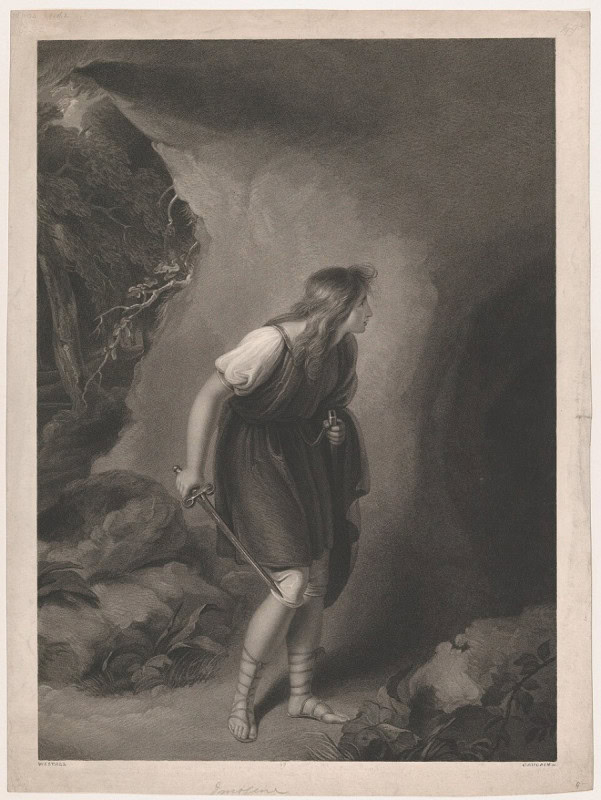
Innogen, daughter of the British king Cymbeline, secretly marries Posthumus, who is banished to Rome, bets the villain Iachimo that she is faithful, is tricked into believing she is not, and orders her killed; she escapes disguised as a boy, wakes beside a headless body she takes for his, and is reunited with him in a final scene that resolves some two dozen plot threads in a row. George Bernard Shaw found it so untidy he rewrote the last act. Billington has it 34th and the Times poll 25th, the widest gap between the lists at the bottom of the table, and the gap is the play: a plot that is either a mess or a deliberate fairy tale, depending on the production. Innogen is one of the great parts, and the dirge “Fear no more the heat o’ the sun” is among the most quoted things Shakespeare wrote.
30. Pericles (about 1607 to 1608, with George Wilkins)
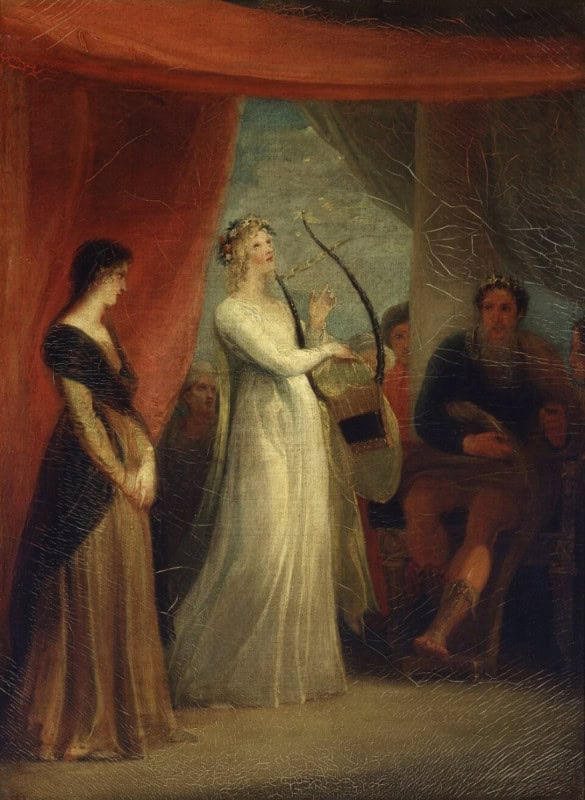
Pericles, Prince of Tyre, solves a riddle that reveals a king’s incest, flees, wins a wife in a tournament, loses her in childbirth at sea, leaves their daughter Marina to be raised in Tarsus, and years later, broken and silent, is restored by the grown daughter he does not recognise, and then by the wife he thought dead. The first two acts are generally agreed to be George Wilkins’s work and are much worse than the last three. Both lists place it in their bottom third, and both single out the recognition scene between father and daughter (“Thou that beget’st him that did thee beget”) as one of the most moving things in the canon. It was excluded from the First Folio and was a hit in its own day. Dominic Dromgoole’s 2015 candlelit production at the Sam Wanamaker Playhouse is the modern case for it.
29. The Merry Wives of Windsor (about 1597 to 1601)
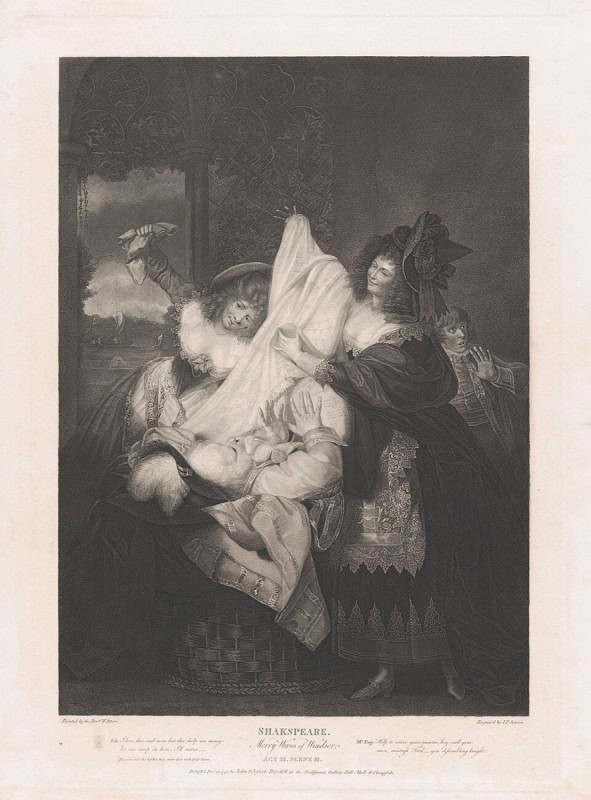
Falstaff, short of money, sends identical love letters to two married women of Windsor, who compare notes and punish him three times: hidden in a laundry basket and tipped into the Thames, beaten in the disguise of an old woman, and pinched by children dressed as fairies in Windsor Forest at midnight. It is the only Shakespeare play set in contemporary England and the only one almost entirely in prose, and the legend that Elizabeth I asked for a play showing Falstaff in love dates from 1702 and has no earlier evidence. The lists put it in the twenties: a well-made farce with a diminished Falstaff. Verdi thought enough of it to make it his last opera. “Why, then the world’s mine oyster” is Pistol’s, from this play.
28. Julius Caesar (1599)
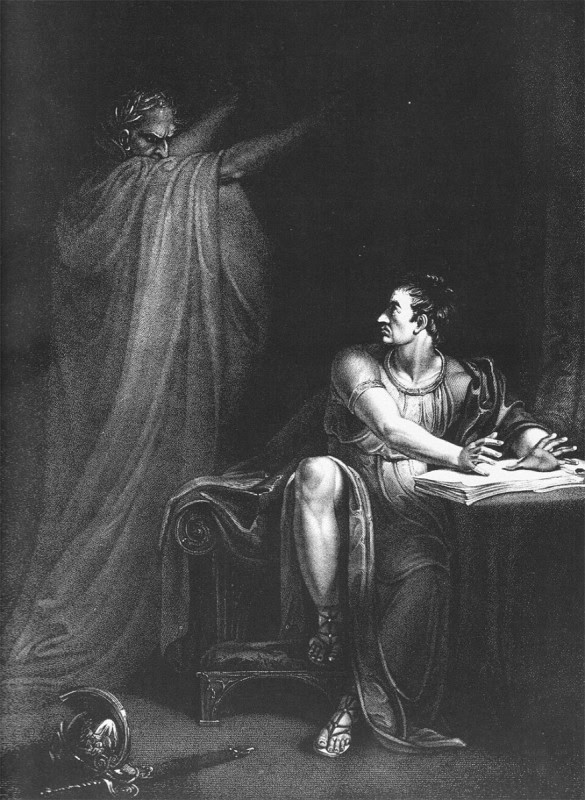
Brutus, persuaded by Cassius that Caesar means to make himself king, joins the conspiracy and kills him in the Senate; Antony’s funeral oration turns the crowd against the conspirators, and Brutus and Cassius lose the battle of Philippi and die on their own swords. It is the Shakespeare play most Americans read at school, and the lists place it exactly where they agree it belongs, 24th on both, a political play of great speeches whose hero disappears from the title halfway through. “Friends, Romans, countrymen, lend me your ears” and “Et tu, Brute?” are both here, and so is “The fault, dear Brutus, is not in our stars.” Phyllida Lloyd’s all-female production at the Donmar in 2012 and Orson Welles’s fascist-dress staging of 1937 are the two most discussed.
27. Henry VI, Part 3 (about 1591)
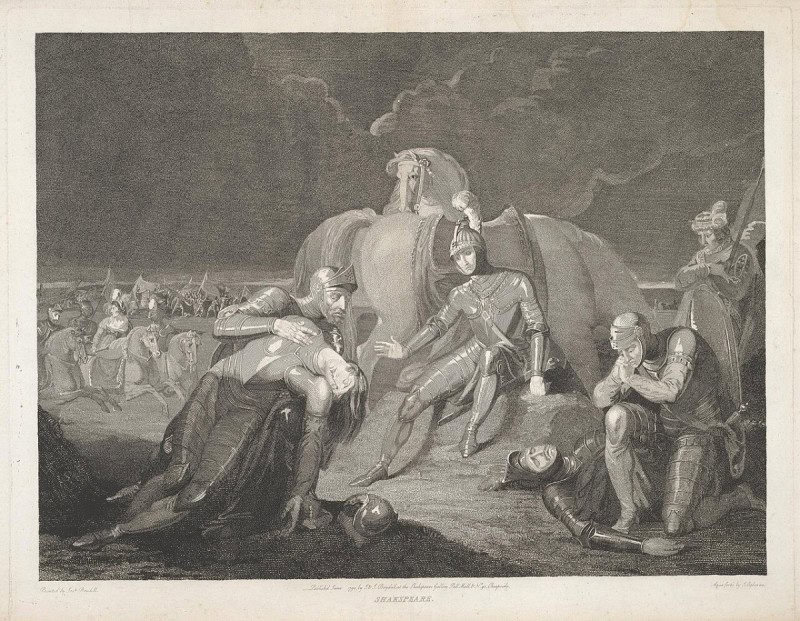
The Wars of the Roses at full pitch: York claims the throne and is killed at Wakefield after Queen Margaret has shown him a handkerchief soaked in his young son’s blood; his sons win at Towton, where the king watches a son who has killed his father and a father who has killed his son (the scene in the engraving above); Edward IV takes the crown, loses it, takes it back; and Richard of Gloucester stabs the saintly Henry in the Tower and tells the audience what he plans next. The Guardian ranks the three parts together at 18 and the Times voters put this one 30th. It contains the speech Robert Greene parodied in 1592 in the first printed reference to Shakespeare as a playwright, “O tiger’s heart wrapped in a woman’s hide.” Margaret is the biggest female part in Shakespeare across the four plays she appears in.
26. Henry VI, Part 2 (about 1591)
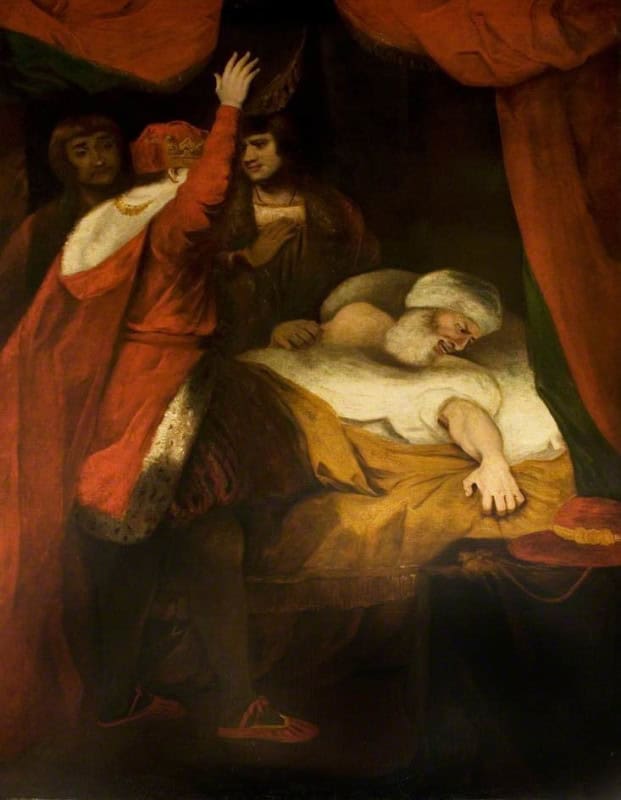
The best of the three by most accounts: the good Duke Humphrey is destroyed by the court faction around Queen Margaret and Suffolk, Cardinal Beaufort dies raving (the Reynolds painting above), Suffolk is beheaded by pirates, and the clothier Jack Cade leads a rebellion of the London poor in which a clerk is hanged for being able to write and the line “The first thing we do, let’s kill all the lawyers” is spoken, by a rebel, as a plan. The Times poll put it 29th and Billington ranked the trilogy 18th. The RSC’s 1963 The Wars of the Roses, which compressed the three parts and Richard III into three evenings, is the production that put these plays back on the stage, and the BBC’s 2016 Hollow Crown films did the same for television.
25. Troilus and Cressida (about 1601 to 1602)
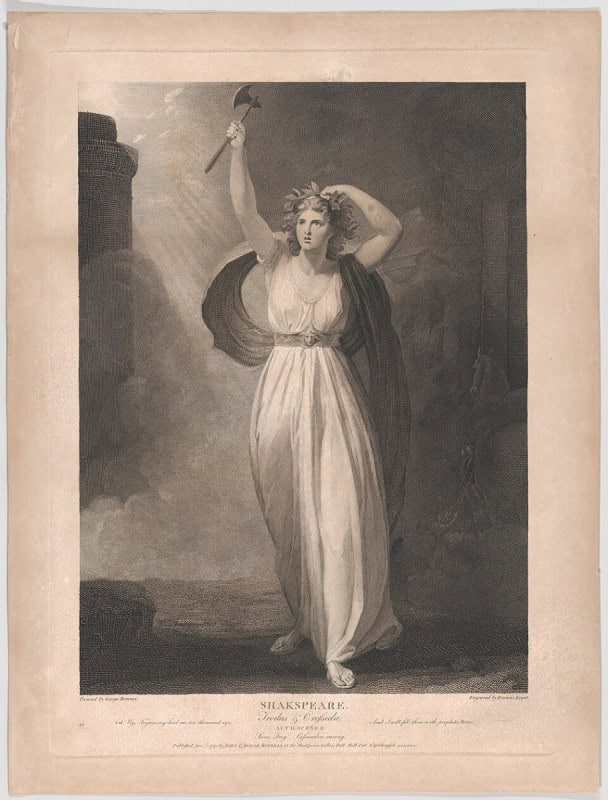
The Trojan War in its seventh year, with no one behaving well. Troilus and Cressida swear eternal love, she is traded to the Greek camp the next morning, and he watches her give his sleeve to Diomedes; Achilles sulks in his tent, has the unarmed Hector murdered by his Myrmidons, and the play ends with Pandarus bequeathing his diseases to the audience. The Times voters put it 32nd and Billington 15th, the second-widest disagreement in the table, which reflects its history: unperformed for three hundred years, it became a twentieth-century play after the First World War made its view of heroism look like reporting. Ulysses’ speech on “degree” is the most quoted passage, and the RSC’s 2018 production with Gavin Fowler and Amber James, with Evelyn Glennie’s percussion score, is a recent reference point.
24. The Merchant of Venice (about 1596 to 1597)
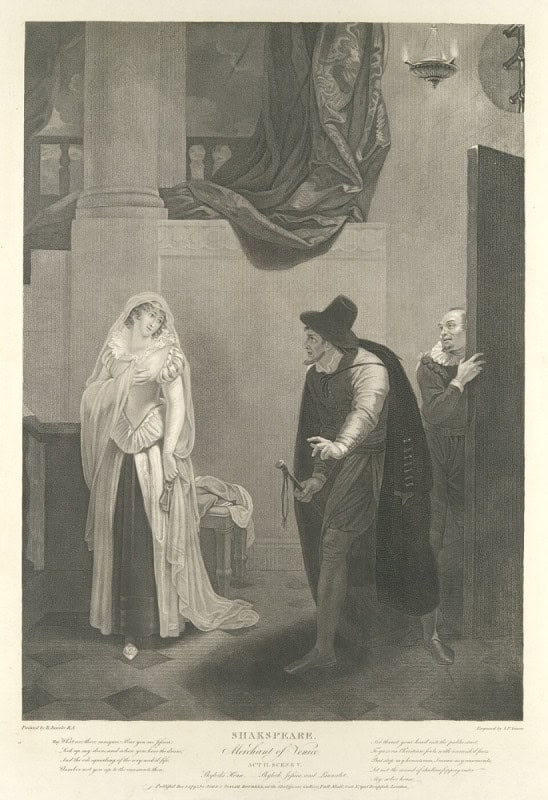
Antonio borrows from the Jewish moneylender Shylock to fund his friend Bassanio’s courtship of the heiress Portia, pledging a pound of his flesh; his ships are lost, Shylock demands the bond, and Portia, disguised as a lawyer, defeats him on a technicality and sees him stripped of his wealth and forcibly converted. It is the tenth entry on Time Out’s public vote, 20th in the Times poll and 26th for Billington, and the spread is the play’s problem stated as numbers: the court scene, the casket scenes and “The quality of mercy is not strained” keep it in the theatre, and the treatment of Shylock keeps every production arguing with it. Henry Irving in 1879 and Laurence Olivier in 1970 made Shylock a tragic figure; the Times voters noted how many Jewish Shakespeareans name it as their favourite play.
23. Henry VI, Part 1 (about 1591 to 1592, possibly with Thomas Nashe and others)
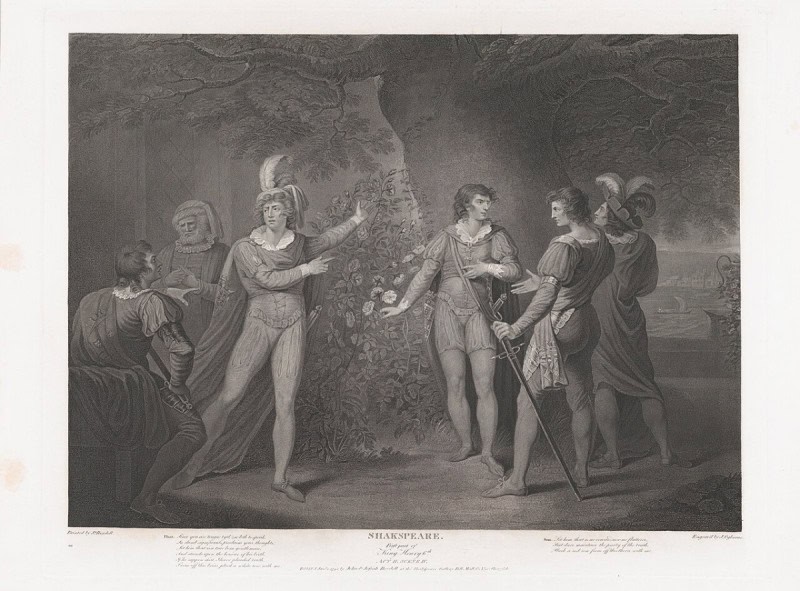
Henry V is dead, his infant son is king, Talbot fights a losing war in France against Joan of Arc, and in the Temple garden the nobles pick red and white roses to declare their sides (the scene above, which Shakespeare invented). Most scholars think Shakespeare wrote only part of it, and the Times voters placed it 28th; the Guardian ranks the trilogy at 18. Thomas Nashe wrote in 1592 that ten thousand spectators had wept for Talbot, which is the first review of a Shakespeare play we have. It is almost never staged alone, and when the three parts are cut into one evening it is the part that loses most.
22. Romeo and Juliet (about 1594 to 1596)
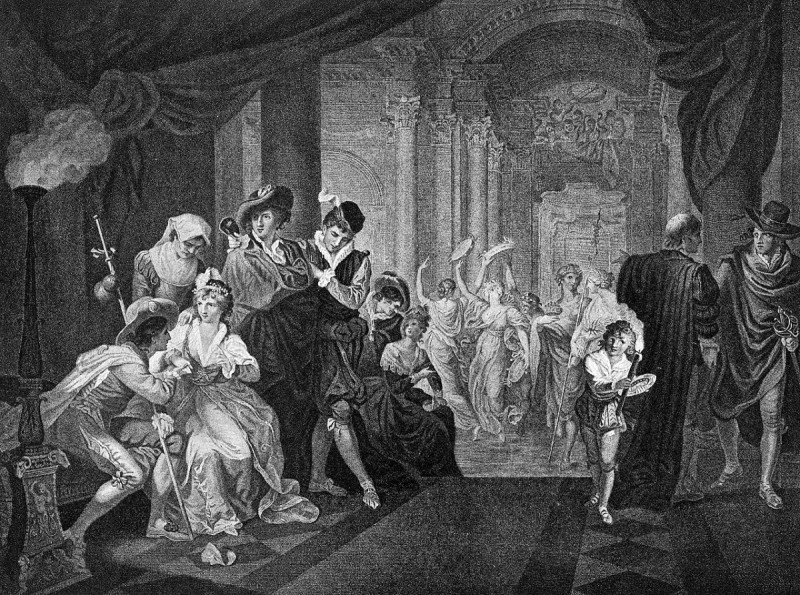
The most famous love story in the language is 22nd here, which will surprise anyone who has not read the lists: 18th in the Times poll, 23rd for Billington, and ninth with the public. The critics’ reasons are consistent. The lovers are children, the plot turns on a letter that does not arrive, and the play is remembered for its best scenes rather than its whole. Those scenes are the balcony, the Queen Mab speech, Mercutio’s death (“A plague o’ both your houses”) and the tomb, and they have been enough to keep it among the most performed plays in the world since the Restoration. The dates belong to the city of Verona as much as to the play; the house the city calls Juliet’s is covered in this site’s guide to love-lock locations. Zeffirelli’s 1968 film and Baz Luhrmann’s 1996 one are the two most seen.
21. Richard III (about 1592 to 1594)
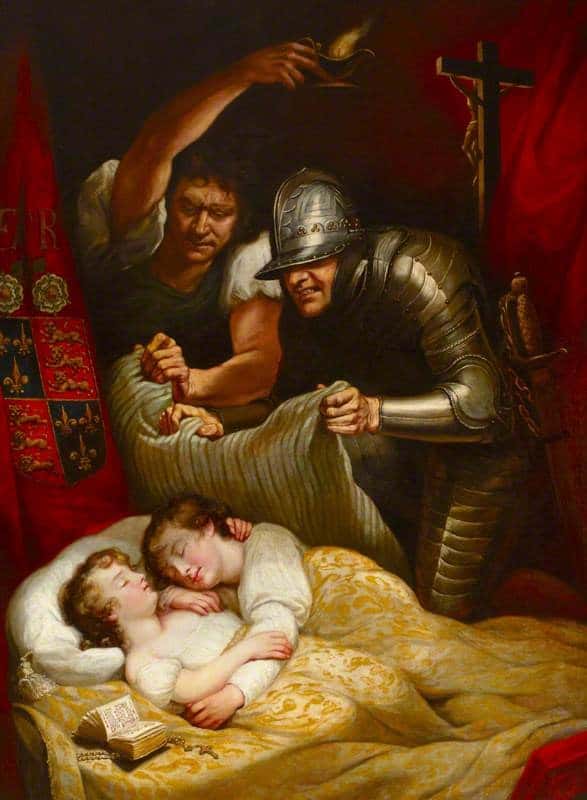
Richard of Gloucester tells the audience in the first speech that he intends to be a villain, and spends the play proving it: he woos Lady Anne over the coffin of the father-in-law he killed, has his brother Clarence drowned in a butt of wine, has the two princes murdered in the Tower (the Northcote painting above), is crowned, and is killed at Bosworth by Richmond, calling for a horse. It is 19th in the Times poll and 21st for Billington, placed by both as a magnificent part in an uneven play: the second half is a procession of ghosts and the first half is a one-man show. Olivier’s 1955 film fixed the voice for a generation, and Antony Sher’s crutches in 1984, Ian McKellen’s 1930s fascist in 1995 and Mark Rylance’s Globe Richard in 2012 are the performances since. “Now is the winter of our discontent” is its first line.
20. The Comedy of Errors (about 1589 to 1594)
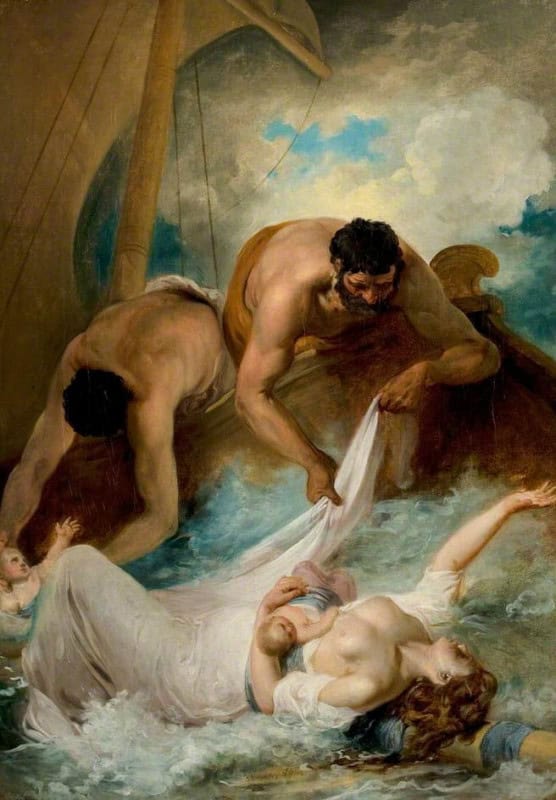
Two sets of identical twins, both pairs separated in a shipwreck in infancy and both pairs named Antipholus and Dromio, spend a single day in the same city without meeting, while wives, merchants, a goldsmith, a courtesan and an exorcist mistake each one for the other. It is Shakespeare’s shortest play and the closest he came to the Roman farce of Plautus he took it from. The Times poll put it 23rd and Billington 17th, and both call it the same thing, a perfectly built machine (“Am I in earth, in heaven, or in hell?” asks the visiting twin) with a surprisingly moving ending when the twins’ mother, an abbess, turns out to have been in the city all along. The Rodgers and Hart musical The Boys from Syracuse is made from it, and the RSC has staged it as everything from a circus to a Vegas floor show.
19. The Tempest (about 1610 to 1611)
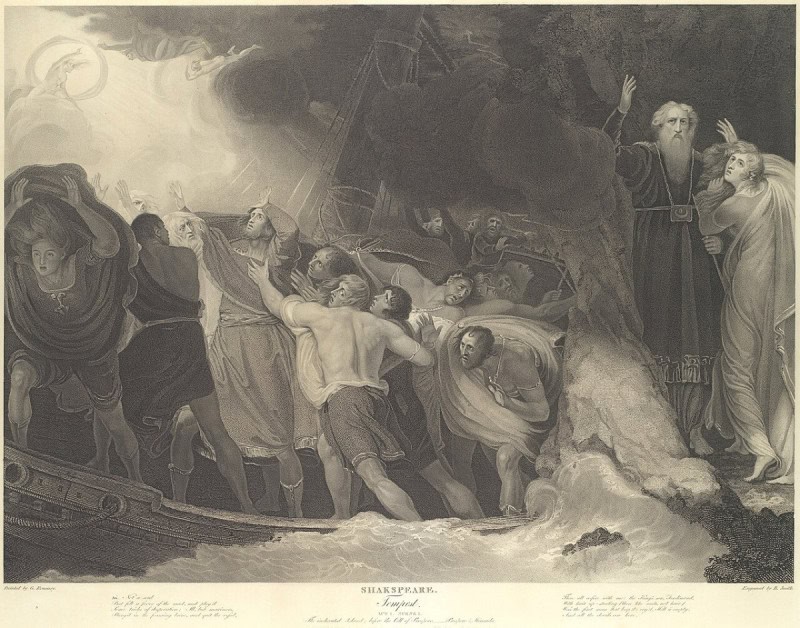
Prospero, the deposed Duke of Milan, has spent twelve years on an island with his daughter Miranda, the spirit Ariel and the enslaved Caliban; when his usurping brother sails past he raises the storm of the title, wrecks the ship, brings the court through trials and a masque to repentance, marries Miranda to the King of Naples’ son, frees Ariel and gives up his magic. Ninth in the Times poll, eighth with the public and 25th for Billington, it is the play on which the two lists disagree most in the top half, and it was read for most of the twentieth century as Shakespeare’s farewell to the stage, which it may not be. “We are such stuff as dreams are made on” and “O brave new world” are its lines, and it has been staged as a colonial parable at least since the 1970s. Peter Brook, Giorgio Strehler and Julie Taymor (with Helen Mirren as Prospera) have all made famous versions.
18. Titus Andronicus (about 1591 to 1593, possibly with George Peele)
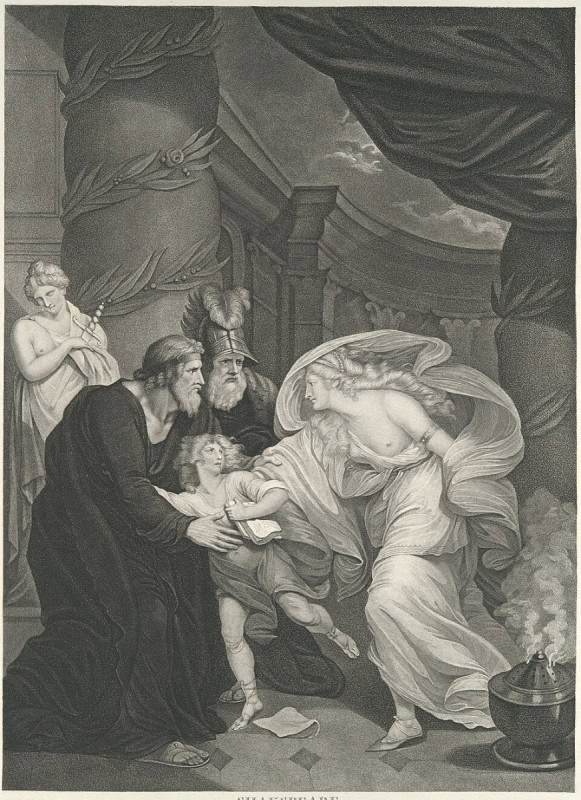
Shakespeare’s first tragedy and his bloodiest by a distance: the Roman general Titus sacrifices the son of the captured Gothic queen Tamora, who takes her revenge through her sons’ rape and mutilation of his daughter Lavinia (the scene above, from Boydell, shows the maimed Lavinia pursuing her nephew to reveal the crime), and he takes his by baking the sons in a pie and serving it to their mother. It was a hit in the 1590s, unperformable for the next three centuries, and is 17th in the Times poll and 16th for Billington, which is higher than most readers would guess. The reason is Peter Brook’s 1955 production with Laurence Olivier, which proved it worked on a stage, and Julie Taymor’s 1999 film with Anthony Hopkins, which proved it worked on a screen. Aaron the Moor, the villain (“Vengeance is in my heart, death in my hand”), has the play’s best lines and is Shakespeare’s first great stage villain.
17. Henry V (1599)
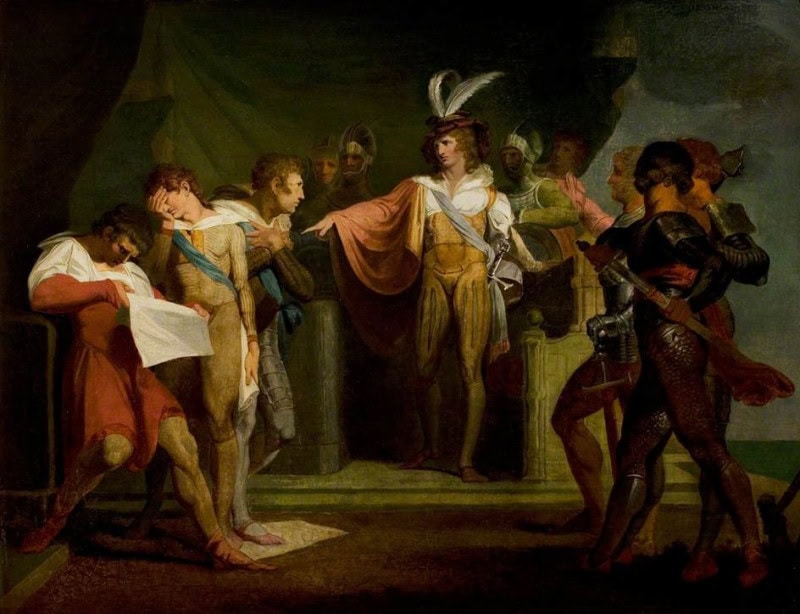
The reformed Prince Hal, now king, invades France on a lawyer’s argument, hangs his old drinking companion Bardolph for theft, walks his camp in disguise the night before Agincourt, wins against the odds and woos the French princess in broken French. It is the most argued-over of the histories: a patriotic pageant (Olivier’s 1944 film, made for a nation at war) or an examination of what a leader has to do (Kenneth Branagh’s muddier 1989 one, and most productions since). Billington ranks it tenth and the Times voters 22nd, where one of them called it “a sort of fascist play” and another said its Chorus “encapsulates everything I love about theatre”; the gap in the table is that argument. “Once more unto the breach” and the St Crispin’s Day speech are the lines everyone knows, and the scene above, by Fuseli, is Henry unmasking the three conspirators at Southampton.
16. Richard II (about 1595)
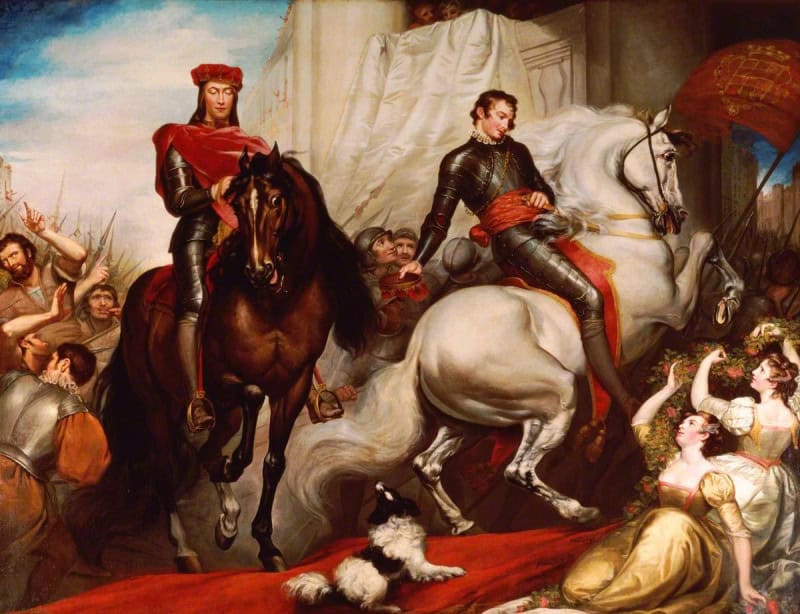
The king who talks himself off the throne. Richard banishes Henry Bolingbroke, seizes his inheritance to pay for an Irish war, and returns to find Bolingbroke has landed with an army and the country has gone over to him; the long middle of the play is Richard surrendering the crown in a series of speeches of extraordinary beauty and self-pity, and the end is his murder at Pomfret, which Bolingbroke, now Henry IV, both wanted and disowns. It is written entirely in verse. Fifteenth in the Times poll and 14th for Billington, it is one of the plays on which the two lists agree most closely. John of Gaunt’s “This royal throne of kings, this sceptred isle” is the famous speech and is, in context, an attack on the king. The painting above, by Northcote, is the entry into London that the Duke of York describes in the last act. David Tennant for the RSC in 2013 and Ben Whishaw in The Hollow Crown in 2012 are the recent Richards.
15. Much Ado About Nothing (about 1598 to 1599)
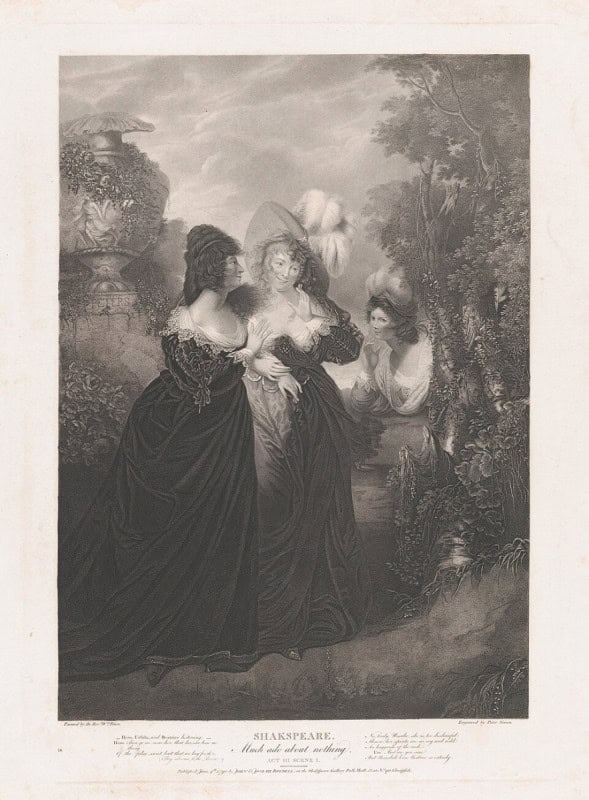
Beatrice and Benedick, who insult each other on sight, are tricked by their friends into believing each is loved by the other and fall in love for real; alongside them Hero is slandered as unfaithful on her wedding day, repudiated at the altar by Claudio and pretended dead until the fraud is exposed by the constable Dogberry, the most incompetent policeman in literature. The public put it fourth, the Times voters eighth and Billington 20th. His reservation is the Hero plot and Claudio’s cruelty in it; everyone else’s enthusiasm is the other plot, which one of the Times voters called “the template for every romantic comedy since” and which gives Benedick “I do love nothing in the world so well as you: is not that strange?” The scene above, from Boydell, is Hero and Ursula letting Beatrice overhear them. Branagh’s 1993 film, David Tennant and Catherine Tate in 2011, and the Globe’s many revivals have kept it among the most performed comedies.
14. Love’s Labour’s Lost (about 1594 to 1595)
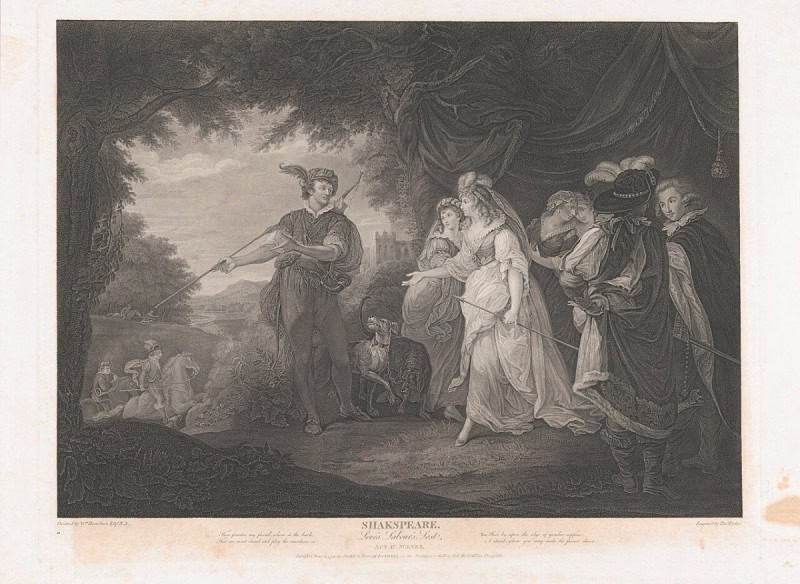
The King of Navarre and three lords swear to study for three years and see no women; the Princess of France and three ladies arrive on an embassy the same week, and the oaths last about a scene. The play is a tournament of wordplay, with a Spanish braggart, a pedant, a curate and a clown doing their own, and it ends, uniquely in Shakespearean comedy, with the weddings postponed for a year after news of the Princess’s father’s death, and the line “Jack hath not Jill.” Billington ranks it seventh, the Times voters 21st, and the difference is whether you find the wordplay a feast or a wall. It vanished from the stage for two hundred years and came back in the twentieth century; Kenneth Branagh’s 2000 film turned it into a 1930s musical, and the RSC’s 2014 production set it in the summer of 1914, so that the year’s postponement became the war.
13. Measure for Measure (about 1603 to 1604)
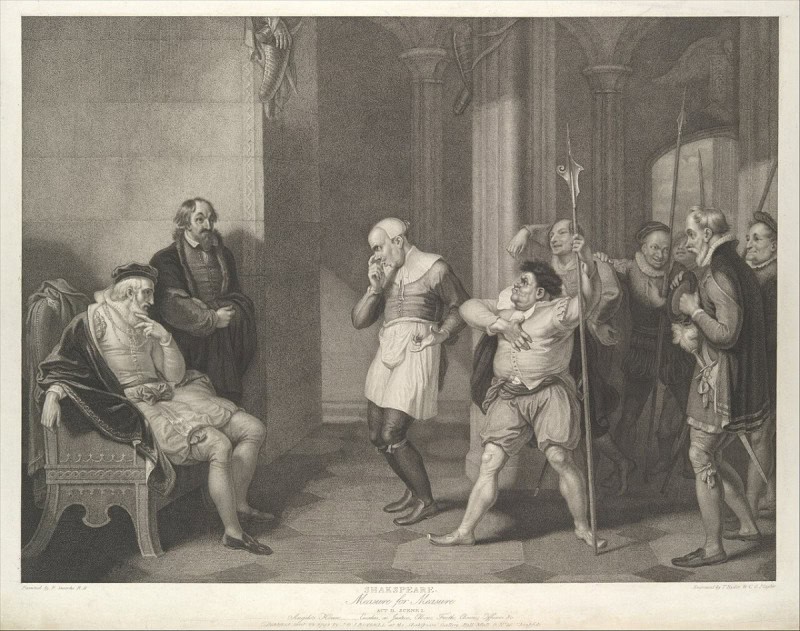
The Duke of Vienna pretends to leave the city and hands it to his puritan deputy Angelo, who revives a dead law and sentences Claudio to death for getting his fiancée pregnant; Claudio’s sister Isabella, a novice nun, pleads for him, and Angelo offers to spare him if she will sleep with him. The Duke, disguised as a friar, watches all of it and arranges a bed trick and a substituted head to put it right, then proposes to Isabella in the last lines, and the text does not record her answer. Fourteenth in the Times poll and 12th for Billington, it is the “problem play” that the modern theatre has come to prize most, because its questions about power, sex and hypocrisy have not dated at all; “Some rise by sin, and some by virtue fall” is its line. Three major London productions in 2015 alone; Josie Rourke’s 2018 Donmar staging ran the play twice a night with the genders of Angelo and Isabella swapped in the second half.
12. Othello (about 1603 to 1604)
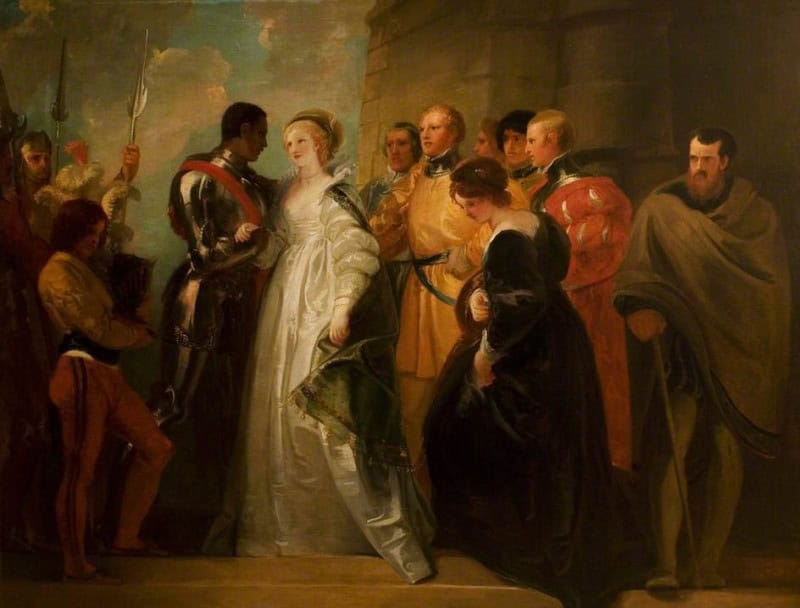
Othello, the Moorish general of Venice, has married Desdemona against her father’s wishes; his ensign Iago, passed over for promotion, convinces him with a dropped handkerchief and a great deal of insinuation that she is sleeping with his lieutenant Cassio, and Othello smothers her in their bed before learning the truth and killing himself. It is sixth in the Times poll, sixth with the public and 19th for Billington, the second-largest disagreement in the top half of the table after The Tempest; the Times voters cited Desdemona’s “Kill me tomorrow, let me live tonight” as ten syllables that tear the heart. The Boydell painting above, by Thomas Stothard, is Othello’s landing in Cyprus in the second act, the last happy scene he has. It is the tightest of the four great tragedies, with the smallest cast and the fastest clock, and Iago is the biggest villain’s part in the canon. Nicholas Hytner’s 2013 National production with Adrian Lester and Rory Kinnear is the modern benchmark; Orson Welles’s 1951 film is the one to see.
11. As You Like It (about 1599)
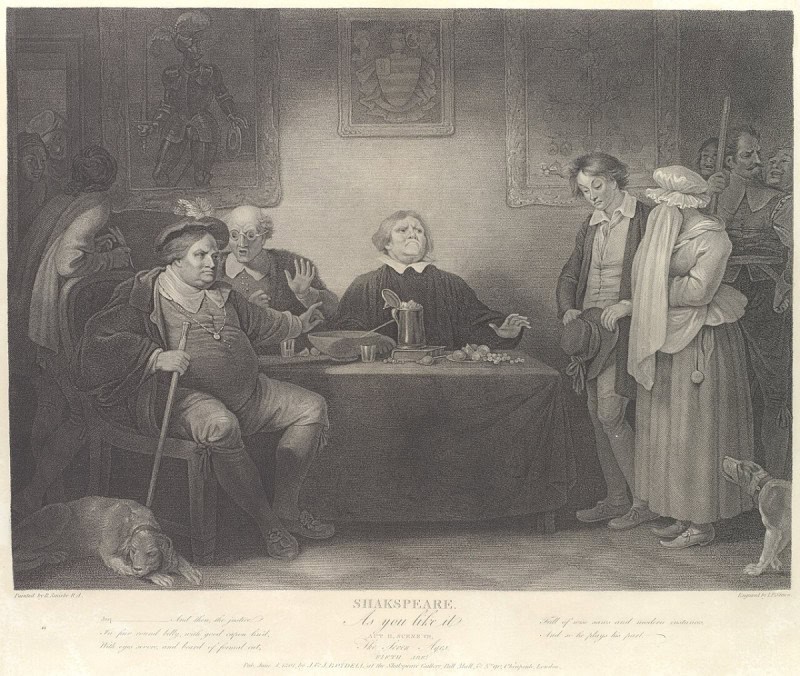
Rosalind, banished from her usurping uncle’s court, flees to the Forest of Arden dressed as a boy, meets Orlando, who is in love with her and does not recognise her, and offers to cure him of love by letting him woo her as if she were Rosalind, which she is. Around them a melancholy courtier delivers “All the world’s a stage” (the Boydell engraving above is the fifth of its seven ages, the justice), a shepherd and shepherdess conduct a parody courtship, and the play ends with four weddings and the god of marriage. Twelfth in the Times poll and 13th for Billington, it is placed by both as the comedy with the best heroine and the least plot. Rosalind is the longest female part Shakespeare wrote; Vanessa Redgrave in 1961, Juliet Stevenson in 1985 and Rosalie Craig at the National in 2015 are among the famous ones.
10. Antony and Cleopatra (about 1606 to 1607)
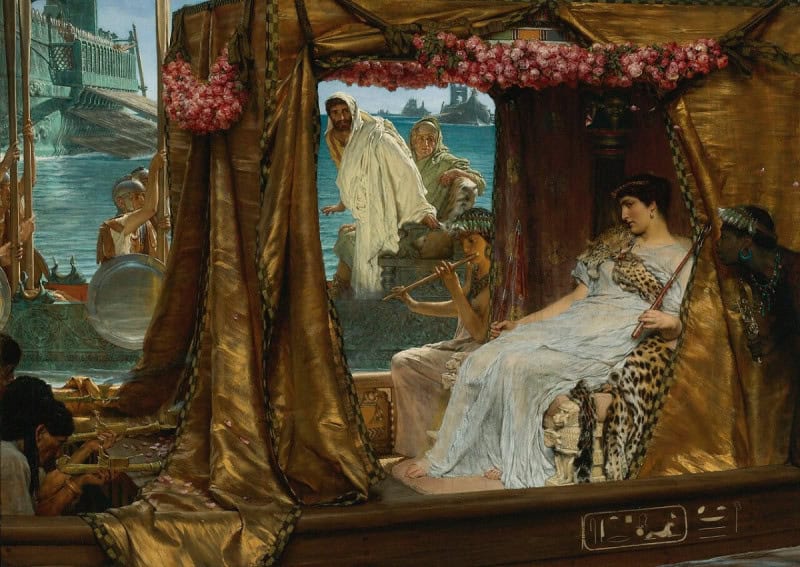
Antony, one of the three rulers of the Roman world, has abandoned his duties for Cleopatra in Egypt; Octavius Caesar makes war on them, Antony loses at Actium when he follows Cleopatra’s fleeing ships, botches his suicide after a false report of her death, and dies in her monument; she outwits Caesar by dying first, with the asps. The painting above is Alma-Tadema’s Meeting of Antony and Cleopatra (1885), her barge at Tarsus as Enobarbus describes it. It has more than forty scenes and jumps from Rome to Alexandria to Athens in the space of a page, and the Times voters called it “difficult, clunky, a huge challenge for all the leading characters and ultimately heart-rending”, which is why it is 13th with them, 11th for Billington and absent from the public’s top ten. Enobarbus’s “Age cannot wither her, nor custom stale her infinite variety” is the famous speech. Antony Sher and Harriet Walter in 2006 and Ralph Fiennes and Sophie Okonedo at the National in 2018 are the recent pairings.
9. Coriolanus (about 1608)
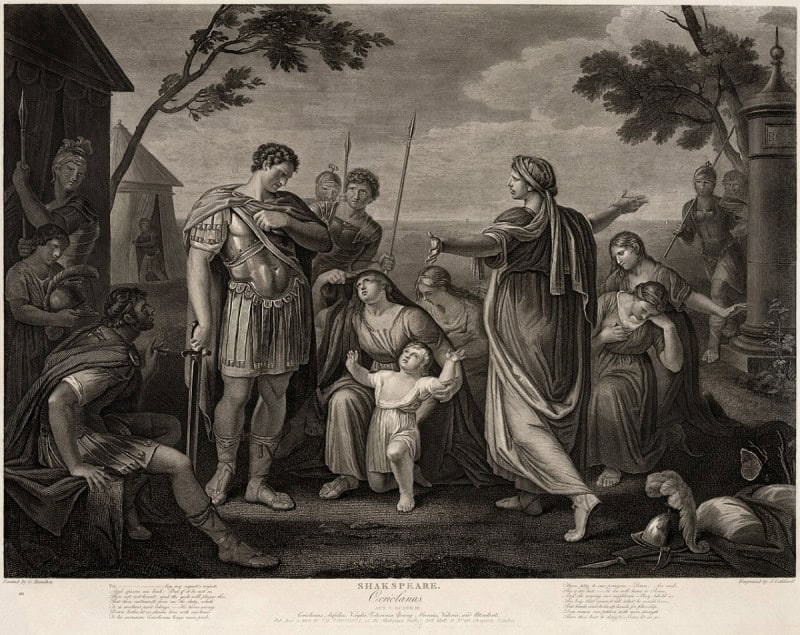
Caius Martius, Rome’s greatest soldier, takes the city of Corioles almost single-handed and is given its name; put up for consul, he cannot bring himself to flatter the people whose votes he needs, is banished, joins the enemy Volscians, marches on Rome, is talked out of destroying it by his mother Volumnia (the Boydell engraving above, after Gavin Hamilton, shows the family’s plea), and is killed by the Volscians for it. Billington ranks it eighth, and the Guardian’s caption calls it “his greatest Roman play”; the Times voters put it 16th, where one of them admitted its “proto-fascist narcissist” left him feeling fed up. It is the last tragedy, the most political, and the one with no soliloquies to speak of, which is why it is a director’s play: Olivier in 1959, Ian McKellen in 1984, Ralph Fiennes’s 2011 film set in a Balkan war, and Tom Hiddleston at the Donmar in 2013. “There is a world elsewhere” is Coriolanus’s line on his banishment.
8. The Winter’s Tale (about 1609 to 1611)
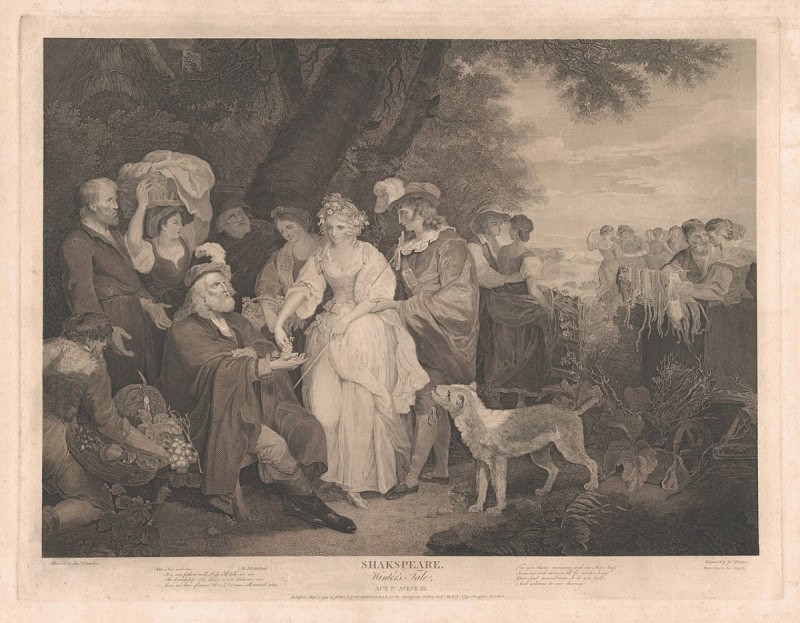
Leontes, King of Sicilia, decides without evidence that his pregnant wife Hermione is sleeping with his friend Polixenes, tries her, loses his son to grief and his wife, apparently, to shock, and orders the baby abandoned on the coast of Bohemia, where the man carrying her is eaten by a bear (“Exit, pursued by a bear”). Sixteen years pass in a speech by Time, the baby has grown into the shepherdess Perdita (the Boydell painting above is the sheep-shearing feast where Polixenes’ son courts her), and the play ends in Sicilia with a statue of Hermione that comes to life. Fifth in the Times poll and ninth for Billington, it is the late romance the professionals rate highest, by a distance, and the statue scene is the reason. Judi Dench played both Hermione and Perdita in 1969 and Paulina in 2015; Kenneth Branagh’s 2015 production with her is the recent one.
7. Henry IV, Part 2 (about 1597 to 1598)
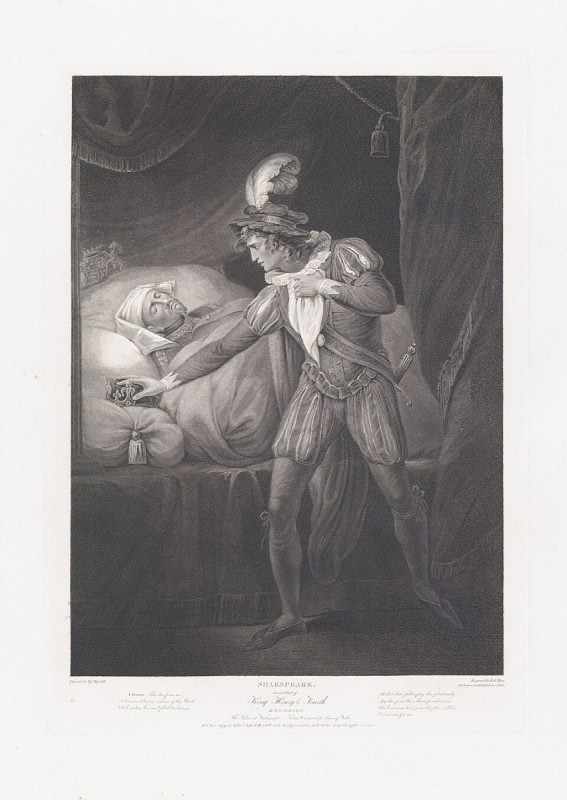
The rebellion is mopped up by treachery rather than battle, the king is dying, and Hal, finding him asleep, takes the crown from his pillow too early; the great scene is the one above, father and son at Westminster, with the old king’s “Uneasy lies the head that wears a crown” and his last advice to busy giddy minds with foreign quarrels. Falstaff, meanwhile, is older, sicker and in Gloucestershire recruiting among Justice Shallow’s tenants, and in the last scene the new king rejects him in the street: “I know thee not, old man.” Billington ranks the two parts together at number one, the best thing Shakespeare wrote; the Times voters put Part 2 11th. It is a sadder play than Part 1 and, for many actors and critics, a deeper one. The two-part RSC productions of 1975 (Alan Howard) and 2014 (Antony Sher) and Orson Welles’s 1965 film Chimes at Midnight, which cuts both parts into one, are the references.
6. A Midsummer Night’s Dream (about 1595 to 1596)
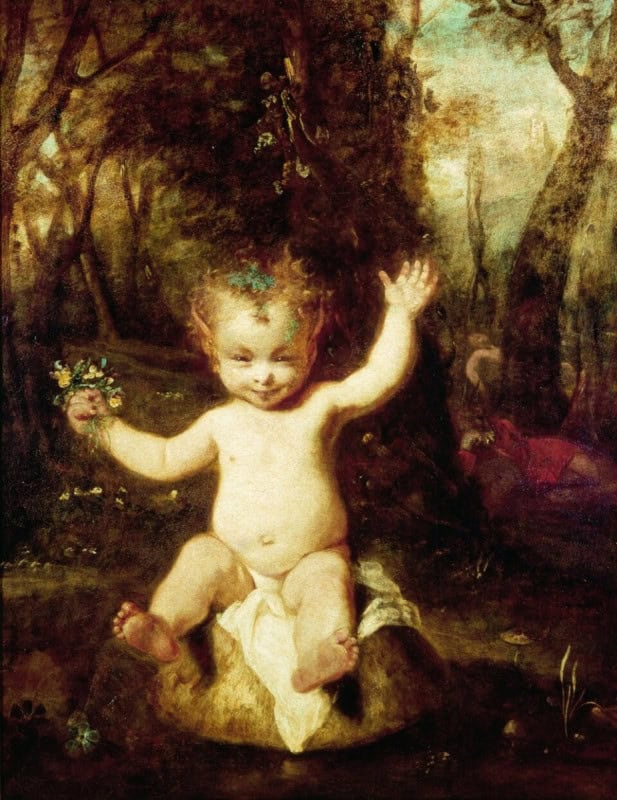
Four lovers run into a wood outside Athens on the night before a ducal wedding, where the fairy king Oberon, quarrelling with his queen Titania, has his servant Puck (Reynolds’s painting of him, above, was one of the first pictures commissioned for the Boydell gallery) anoint the wrong eyes with a love potion; Titania wakes and falls for a weaver with a donkey’s head; and a troupe of Athenian workmen rehearse the worst play ever written for the wedding. Seventh in the Times poll, fourth for Billington and third with the public, it is Shakespeare’s most performed play, the one most people see first, and the one a Times voter said was “done to death, but always because someone loves it”. Peter Brook’s white-box production of 1970, with the fairies on trapezes, is the most influential Shakespeare staging of the twentieth century. “The course of true love never did run smooth” and “Lord, what fools these mortals be” are both from it.
5. Henry IV, Part 1 (about 1596 to 1597)
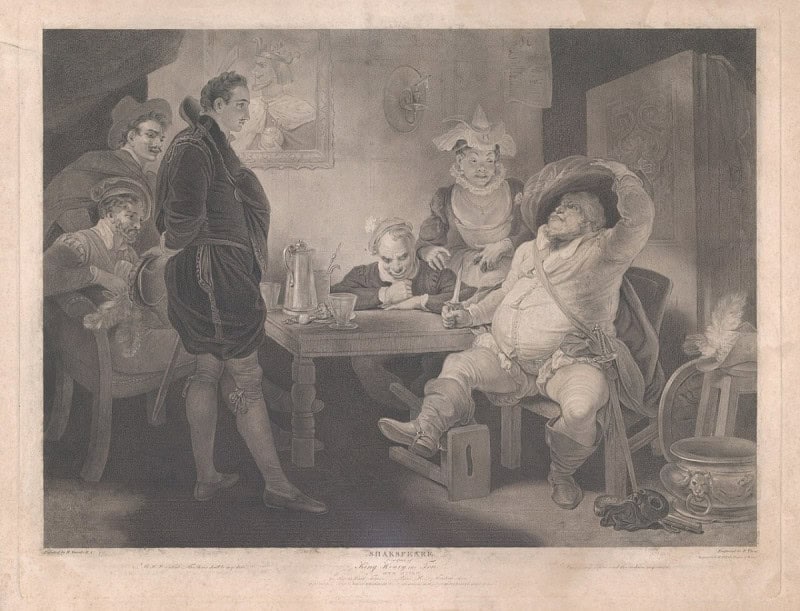
Henry Bolingbroke, now king and unable to go on the crusade he promised, faces a rebellion led by the Percys and their fiery son Hotspur, while his own son, Prince Hal, drinks in Eastcheap with Sir John Falstaff, the fat knight who is the greatest comic character in English, and tells the audience early that he is only pretending to be a wastrel. The two worlds meet at Shrewsbury, where Hal kills Hotspur and Falstaff, playing dead, claims the credit. The scene above, from Boydell, is the Boar’s Head tavern, where Falstaff and Hal take turns playing the king. Billington puts the two parts together at number one; the Times voters put Part 1 tenth and one of them said it proved Shakespeare “wasn’t so much an intellectual as a man with sharp ears sitting in Warwickshire pubs”. Falstaff’s catechism on honour (“What is honour? A word”) is the speech to know.
4. Macbeth (about 1606)
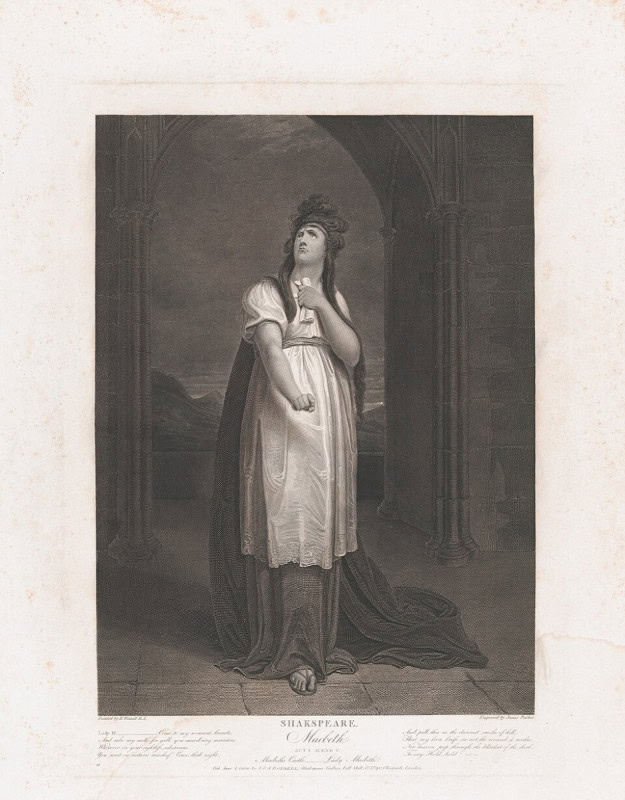
Three witches tell a Scottish general he will be king; his wife makes sure of it; he murders the king who is his guest, then his friend Banquo, then Macduff’s wife and children, and is destroyed by the prophecies he trusted, when Birnam Wood comes to Dunsinane and he meets a man not born of woman. It is the shortest tragedy and the fastest, with no subplot and barely a scene that is not about the murder, and it is third in the Times poll, fifth for Billington and second with the public. “Tomorrow, and tomorrow, and tomorrow” and “Out, damned spot” are both here. The engraving above, after Richard Westall for Boydell, is Lady Macbeth reading her husband’s letter. Ian McKellen and Judi Dench in Trevor Nunn’s 1976 studio production, Patrick Stewart in Rupert Goold’s Soviet-hospital staging of 2007, and Kurosawa’s Throne of Blood (1957) are the versions most often named; it is also the play actors will not name in a theatre.
3. King Lear (about 1605 to 1606)
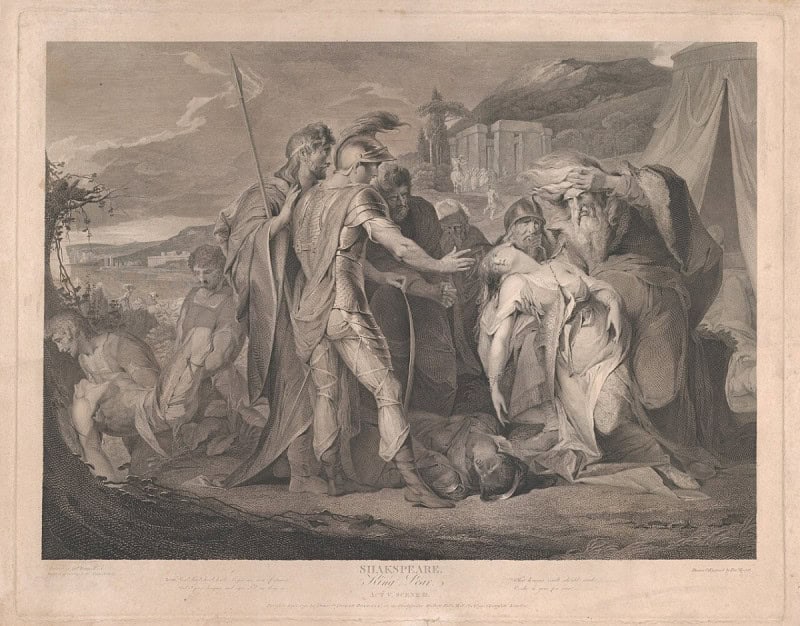
An old king divides his kingdom between the two daughters who flatter him and disowns the one who will not, and is turned out by the two into a storm on a heath, where he goes mad in the company of a fool, a beggar who is really the Earl of Gloucester’s wronged son, and a blind man who is Gloucester himself. Cordelia returns with an army, loses, and is hanged; Lear carries her body on and dies over it (the Boydell painting above). The Times poll put it first, with one voter calling it “the Everest of plays”; Billington put it sixth (“magnificent but flawed”, in the Guardian’s own summary); the public fifth. For most of the eighteenth century it was performed only in Nahum Tate’s version with a happy ending, and its rise to the top of the canon is a twentieth-century event, helped by Peter Brook’s 1962 production with Paul Scofield. Lear’s “Howl, howl, howl, howl” and “Never, never, never, never, never” are the lines actors fear most.
2. Twelfth Night (about 1601 to 1602)
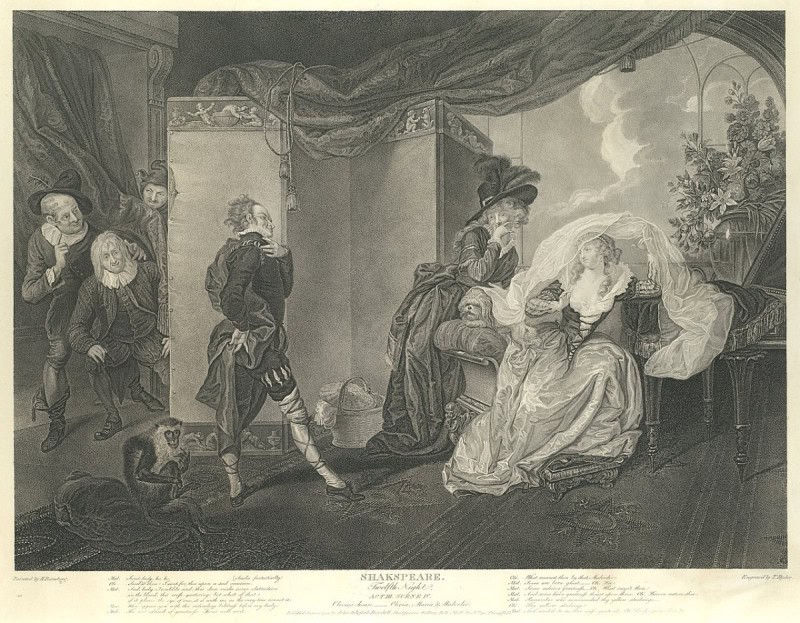
Viola, shipwrecked in Illyria and believing her twin brother drowned, disguises herself as a boy and takes service with Duke Orsino, who sends her to woo the Countess Olivia on his behalf; Olivia falls for the messenger, Viola falls for the duke, and the brother turns up alive to be mistaken for his sister. Below stairs, Olivia’s drunken uncle and her maid trick the steward Malvolio into believing his mistress loves him and wants him in yellow stockings, cross-gartered (the Boydell painting above), and lock him up as a madman, a joke the play lets go sour. Fourth in the Times poll, second for Billington and seventh with the public, it is the comedy the professionals rate highest, and the reason is that it is the one where the sadness and the jokes are the same material. “If music be the food of love, play on” is the first line. Sam Mendes’s 2002 Donmar production and Mark Rylance’s Olivia at the Globe in 2012 are the modern reference points.
1. Hamlet (about 1599 to 1601)
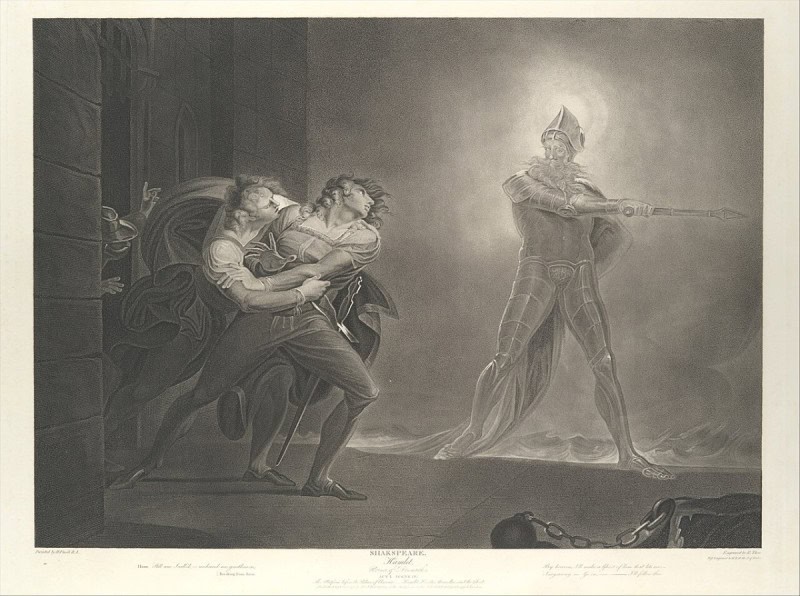
The prince of Denmark, home from university for his father’s funeral and his mother’s remarriage to his uncle, is told by his father’s ghost (the scene above, from Boydell) that the uncle murdered him, and spends the rest of the longest play Shakespeare wrote deciding what to do about it, feigning madness, staging a play to test the ghost’s story, killing the wrong man behind a curtain, driving Ophelia to her death and finally, in a rigged fencing match, killing the king and dying himself. Second in the Times poll, third for Billington and first with the public, it is first overall by the smallest of margins over Twelfth Night, and it is the one play that no list leaves out of its top three. It contains more quoted lines than any other work in English, from “To be, or not to be” to “the rest is silence”, and the title role has been the test of every leading actor for four hundred years: Burbage, Garrick, Kean, Irving, Gielgud, Olivier, Burton, Jacobi, Branagh, Tennant, Cumberbatch and Paapa Essiedu among them. The sonnets that run alongside the plays are covered in this site’s list of the greatest love poems.
Frequently asked questions
What are Shakespeare’s big four plays?
The four great tragedies: Hamlet, King Lear, Macbeth and Othello, all written between about 1599 and 1606. The phrase comes from A. C. Bradley’s lectures Shakespearean Tragedy (1904), which treated those four and set the terms for a century of criticism. On the combined ranking above they finish first, third, fourth and twelfth; Othello is the one the two lists disagree about.
What are the 10 most popular Shakespeare plays?
Popular in the sense of most staged: A Midsummer Night’s Dream, Romeo and Juliet, Hamlet, Macbeth, Twelfth Night, Much Ado About Nothing, The Tempest, As You Like It, King Lear and Othello appear, in some order, at the top of every count of productions, and Time Out’s public vote of 2025 (in the table above) names nine of them. The critics’ top ten overlaps with the public’s on five plays; the critics add both parts of Henry IV, The Winter’s Tale, Coriolanus and Antony and Cleopatra, and the public adds Much Ado, Othello, The Tempest, Romeo and Juliet and The Merchant of Venice.
What is Shakespeare’s worst play?
By the combined ranking, The Two Noble Kinsmen, just below Henry VIII; both were written with John Fletcher at the end of his career, and The Times’ voters put Henry VIII last of the 38 while Billington put Kinsmen lower. If the question means the worst play entirely his own, the combined ranking says The Two Gentlemen of Verona: Billington puts it last outright, while the Times voters put All’s Well, Timon and The Taming of the Shrew below it.
What is the funniest Shakespeare play?
The comedies the critics rank highest are Twelfth Night, A Midsummer Night’s Dream and As You Like It, and the funniest single character by common consent is Falstaff, who is in two histories and a farce rather than a comedy. For laughs per minute, The Comedy of Errors is the shortest and the most farcical; for wit, Much Ado About Nothing.
How many plays did Shakespeare write?
Thirty-eight by the count used here: the thirty-six of the 1623 First Folio plus Pericles and The Two Noble Kinsmen. Some editions add Edward III, which the RSC has staged and The Times ranked 39th, and at least two plays are lost, Love’s Labour’s Won and Cardenio. Several of the thirty-eight were written with collaborators, which the headings above note where scholars broadly agree.
Where can I read the plays free?
The Folger Shakespeare Library publishes every play free online in a modern, annotated edition, which is the text this page uses for dates and references; Project Gutenberg has the older Globe edition; and the Internet Shakespeare Editions and Open Source Shakespeare are searchable by line. The plays themselves have been out of copyright for as long as copyright has existed.
Image credits
Every picture on this page is a painting or engraving made for John Boydell’s Shakespeare Gallery in London between 1789 and 1805, or another public-domain painting or print, and all are in the public domain or credited below: the Metropolitan Museum of Art’s scans of the Boydell engravings (Hamlet, Twelfth Night, King Lear, both parts of Henry IV, The Winter’s Tale, As You Like It, Measure for Measure, Love’s Labour’s Lost, Much Ado About Nothing, Titus Andronicus, The Tempest, Henry VI Part 1, The Merchant of Venice, Troilus and Cressida, The Merry Wives of Windsor, Cymbeline and Henry VIII); the Royal Shakespeare Theatre’s Boydell paintings by Fuseli (Henry V), Wheatley (The Comedy of Errors), Reynolds’s studio (Henry VI Part 2) and Harlow (King John); Westall’s Lady Macbeth; Reynolds’s Puck; Gavin Hamilton’s Coriolanus (engraving restored by Adam Cuerden); Stothard’s Othello; Northcote’s Entry of Richard and Bolingbroke (Royal Albert Memorial Museum) and Murder of the Princes; Ogborne’s engraving after Henry VI Part 3 (Yale Center for British Art); Wheatley’s Two Gentlemen of Verona; Howard’s Timon; the Romeo and Juliet ball scene; Brutus and the Ghost of Caesar (1802); Lawrence Alma-Tadema’s Meeting of Antony and Cleopatra (1885); Robert Braithwaite Martineau’s Katherine and Petruchio (1855); and the title page of the 1634 quarto of The Two Noble Kinsmen. The photographs of Wheatley’s All’s Well That Ends Well and of Thomas Stothard’s Marina Singing Before Pericles (1825) are from the Folger Shakespeare Library Digital Image Collection, published on Wikimedia Commons under CC BY-SA 4.0. All are reproduced via Wikimedia Commons.