
Every youth leader has had the Wednesday where the plan falls through, the weather turns, and twenty teenagers are standing in a church hall, a classroom or somebody’s basement waiting to be told what happens next. These are the forty games for that evening. They are sorted not by how fun they are, which is a matter of the room, but by what you have to work with: eight that need nothing but the group, eight that need things already in the building, eight for a big room where people can run, eight for a small group or a room where they cannot, and eight team games for when the group is big. Every game is written the same way, with the players, space, equipment and time it needs on one line, so you can scan the list while the group is already arriving.
They are written for teenagers, roughly 12 to 18, in the kind of group that meets weekly: a church youth group, a scout troop, a school club, a camp cabin on a rainy day. Most work for younger children with the rules softened and for adults with the rules left alone. None needs a budget. The games that use music will go better with a speaker that can fill the room, and the trivia and story games go better if the leader has read the group’s own worries and interests rather than a list from a decade ago. That is the whole secret of running games for this age: they can tell when the leader is going through the motions.
How to pick a game for the room you are in
Four questions decide it. How many are there: under ten, a circle game or a quiet game; over twenty, a team game or something with elimination so the numbers come down. How much space: a hall with the chairs pushed back takes the movement games; a classroom full of desks does not. How much energy is in the room: a group that has just eaten sugar needs to run before it can sit, and a group that has just come from sport needs the opposite. And how well do they know each other: a new group needs the games where nobody can be humiliated (Look Up Look Down, Five Second Rule, Would You Rather), and a group that has met for years can take Psychiatrist or Wink Assassin, which depend on reading people. One line on safety, which is general practice for every movement game here: clear the floor of bags and cables before anyone runs, keep the game away from glass and stairs, and stop any game the moment it stops being a game. Then play.
No-prep circle games: nothing needed but the group
These eight need nothing to buy and nothing to set up: at most a list of questions on a phone and the chairs already in the room, which makes them the ones to memorise. Most are played standing or sitting in a circle, which also happens to be the fastest way to get a group of teenagers to stop talking and face each other.
1. Look Up, Look Down
Everyone stands in a circle looking at the floor. On “look up”, each player lifts their head and stares at one other person in the circle. If the person you chose is staring back at you, you both shout, and you are both out. Repeat until two players are left. It takes thirty seconds to explain, produces a laugh every round, and nobody has to do anything in front of the group except make eye contact, which is why it is the best opener on this page for a group that does not know each other yet.
Players: 8 to 30. Space: room for a circle. Equipment: none. Time: 5 minutes.
2. Ninja
Players stand in a circle, strike a pose, and then take turns in order. On your turn you make one single movement, trying to slap the hand of a neighbour; they may make one movement to dodge. A player whose hand is hit loses that hand; lose both and you are out. The rule that makes it work is that between turns everyone must freeze exactly where their move left them, which produces a ring of teenagers holding absurd positions and trying not to laugh. Fast players love it, cautious players survive it.
Players: 4 to 12 per circle. Space: an arm’s length each. Equipment: none. Time: 10 minutes.
3. Wink Assassin
Everyone closes their eyes and the leader taps one player on the shoulder: the assassin. Eyes open, the group mills about the room making eye contact, and the assassin kills by winking. A winked-at player counts silently to five and then dies as theatrically as they like. Anyone who thinks they know the assassin can accuse; a wrong accusation puts the accuser out, a right one ends the round. It rewards exactly the skills a youth group is supposed to build, noticing people and keeping a straight face, and it runs itself once the first round is over.
Players: 10 to 30. Space: room to wander. Equipment: none. Time: 10 to 15 minutes.
4. Psychiatrist
One player, the psychiatrist, leaves the room. The group agrees on a shared condition: everyone answers questions as the person on their left, or everyone must touch their nose when they speak, or everyone answers truthfully except that the last word is a lie. The psychiatrist returns and asks questions of anyone until they work out the rule. Good for a group that knows each other, because the best conditions are the ones built on a running joke only this group would get.
Players: 6 to 20. Space: seated circle plus a door. Equipment: none. Time: 15 minutes.
5. Zip, Zap, Zop
A circle, and an imaginary bolt of energy that is passed by pointing at someone and saying the next word in the sequence: zip, zap, zop, zip, zap, zop. Say the wrong word, point without speaking, hesitate for more than a beat, or take the bolt when it was clearly sent to someone else, and you are out. It gets fast, and the point is that it gets fast; the drama-class version adds a clap. Play it twice in a row and the second round is always better.
Players: 6 to 25. Space: a circle. Equipment: none. Time: 5 to 10 minutes.
6. Heads Up, Seven Up
The elementary-school classic works just as well with teenagers because it gives everyone two minutes of permitted silence. Seven players stand at the front; everyone else puts their head down on the desk or their knees with a thumb up. The seven creep round and each presses one thumb down, then return to the front. “Heads up” and the pressed players stand and guess who got them; a right guess swaps places. It needs desks or chairs and a group that can keep its eyes shut, which is the whole challenge.
Players: 12 to 35. Space: a classroom or chairs. Equipment: none. Time: 10 minutes.
7. Sit Down If
Everyone stands. The leader reads out conditions, and anyone the condition fits sits down: sit down if you have ever missed a bus on purpose, if you can touch your nose with your tongue, if you have more than two siblings. The last one standing wins, and the leader controls the pace by making the conditions sillier as the numbers fall. It doubles as the fastest way to learn things about a new group, which is why the questions should be chosen in advance rather than invented under pressure.
Players: any number. Space: room to stand. Equipment: a list of twenty conditions. Time: 5 minutes.
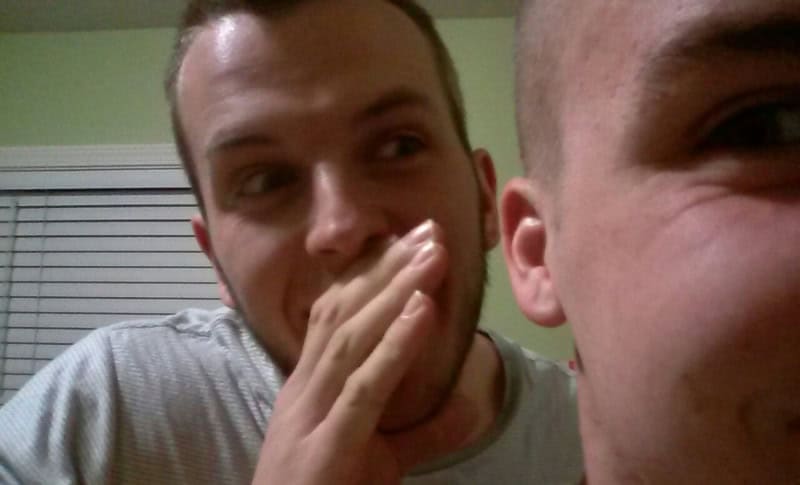
8. Telephone
The first player whispers a sentence to the next, who whispers what they heard to the next, round the circle to the last player, who says it aloud, and then the first player says what it was. With a group of twenty the sentence is unrecognisable by the end, which is the joke; the leader’s only job is to supply a starting sentence with enough odd words in it to mutate. The variant where each player draws what they heard and the next describes the drawing takes longer and is funnier still.
Players: 8 to 30. Space: a circle. Equipment: none (paper and pens for the drawing variant). Time: 5 to 10 minutes.
Low-prep games with things already in the building
Chairs, balloons, cups, paper, a phone that plays music: these eight need something, but nothing you would have to buy on the way, and most of them need five minutes of setting up at most.
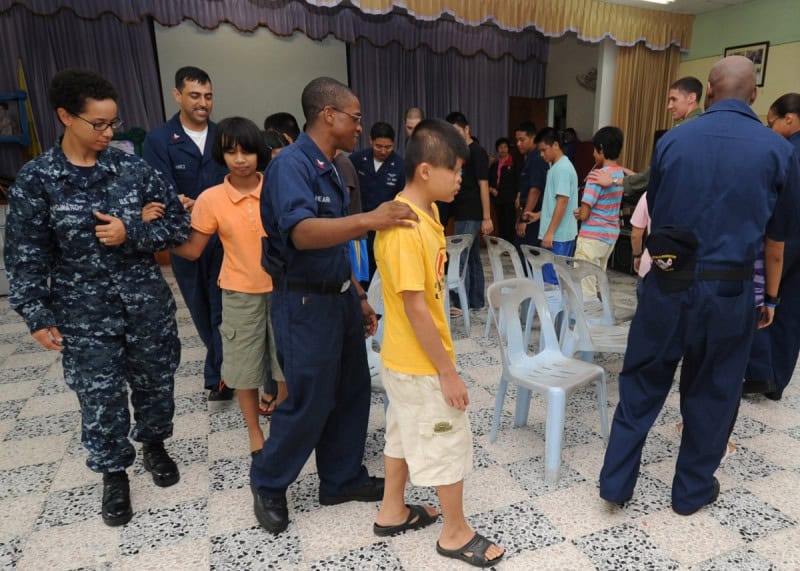
9. Musical Chairs
One fewer chair than there are players, in a line back to back or a circle facing out; the music plays and everyone walks round; it stops and everyone sits; the player without a chair is out and a chair is removed. Teenagers will tell you it is a children’s game and then play it with a competitiveness that frightens the leader, so set two rules before you start: no touching other players, and a chair counts only if you are fully on it. The non-competitive version, where chairs are removed but nobody is out and the whole group has to fit on what is left, is the better game for a group you want to bring together rather than thin out.
Players: 8 to 25. Space: a cleared hall. Equipment: chairs, music. Time: 10 to 15 minutes.
10. Hot Potato
A circle, any soft object, and music or a leader counting with their back turned. The object is passed as fast as possible until the music stops; whoever is holding it is out. It is over in minutes, which makes it the right game for the five minutes before a session starts rather than the centrepiece, and it can be run with a rolled-up jumper if there is no ball. For a bigger laugh, pass two objects in opposite directions.
Players: 6 to 20. Space: a circle. Equipment: a soft ball, music. Time: 5 minutes.
11. Pass the Parcel
A bar of chocolate from the cupboard wrapped in as many layers of newspaper as there are players, passed round the circle to music; each time the music stops, the holder removes one layer. The leader’s trick for teenagers is to write a forfeit or a question on every layer, so that each stop produces something, a dare or a confession or a terrible joke to read aloud, rather than a strip of newspaper. Wrapping it takes ten minutes beforehand, which is the only prep on this page that cannot be done in the room.
Players: 8 to 20. Space: a seated circle. Equipment: a prize, newspaper, tape, music. Time: 10 minutes.
12. Balloon Stomp
Each player ties an inflated balloon to their ankle with a length of string. On “go”, everyone tries to stomp on everyone else’s balloon while protecting their own; a popped balloon puts you out, and the last intact balloon wins. It is loud, it is over in three minutes, and it is the single most reliable way to raise the energy of a flat room. Play it on a floor that will not be scratched and nowhere near a sleeping baby.
Players: 6 to 30. Space: a cleared hall. Equipment: a balloon and a metre of string per player. Time: 5 minutes, plus five to blow up the balloons.
13. Head, Shoulders, Knees, Cup
Pairs face each other across a table or the floor with one cup between them. The leader calls “head”, “shoulders” or “knees” and both players touch the part named; on “cup”, both grab for the cup, and the one who gets it wins the point. The leader draws out the pauses, mixes the order and occasionally says “cuh… knees” to catch the eager. Three points wins the pair; winners play winners until one champion is left.
Players: any even number. Space: a table or floor per pair. Equipment: one plastic cup per pair. Time: 10 minutes.
14. Five Second Rule
Name three things in a category in five seconds: three breakfast cereals, three countries beginning with S, three things you would not say to a teacher. The leader counts down on their fingers; the player who fails is out, or, in the friendlier version, the question passes to the next player. It needs only a list of categories, which can be written on a phone in the car on the way, and it works seated, which makes it the game for the room with the desks that will not move.
Players: 4 to 20. Space: none. Equipment: a list of categories. Time: 10 minutes.
15. Cup Stack Relay
Teams of four or five line up at one end of the room with a stack of ten plastic cups at the other. Each runner in turn runs to the cups, adds one to a pyramid (four, three, two, one), and runs back to tag the next; the first team with a standing pyramid wins, and a collapsed pyramid is rebuilt by the runner who collapsed it. Ten cups per team is all it needs, and the pyramid can be replaced with any build the leader likes.
Players: 8 to 30 in teams. Space: a hall length. Equipment: ten plastic cups per team. Time: 10 minutes.
16. Paper Plane Distance
Everyone gets one sheet of paper and three minutes to build a plane; then they throw from the same line and the furthest flight wins. Run a second round for accuracy, aiming at a bin, and a third for the longest time in the air, so that the player with the fastest dart does not win everything. It is quiet during the building and loud during the throwing, which is a useful rhythm for a group that needs settling in stages.
Players: any number. Space: a hall length. Equipment: a sheet of paper each. Time: 15 minutes.
Big-room games: for a hall or a gym where people can run
Eight games that need a big cleared room: six where people run, crab-walk or dance, one hide-and-seek that needs the run of the building, and one sitting game that needs a circle of chairs and space to move between them. The running games are the ones to run first in a session, while the energy is high, and to stop while they are still fun rather than when someone gets hurt.
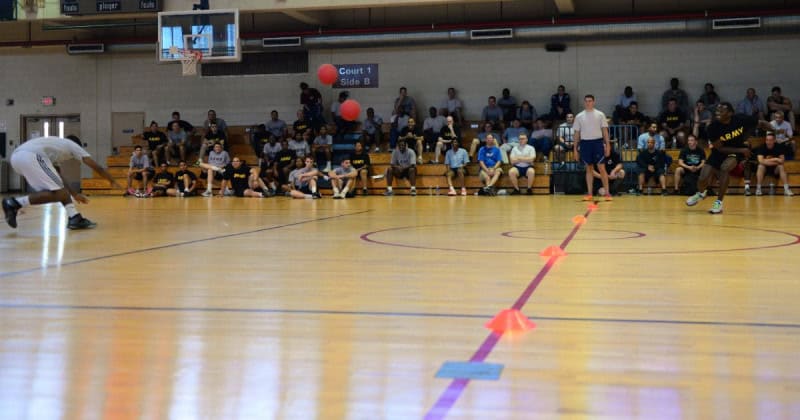
17. Dodgeball, with soft balls
Two teams, a centre line, and as many soft foam balls as you can find in the sports cupboard; a hit below the shoulders puts you out, a caught ball puts the thrower out and brings one of the catcher’s team back in. The foam is not optional for this age group, and neither is the shoulder rule. The version worth knowing is Doctor Dodgeball, where each team secretly names a doctor who can revive the fallen by touching them, so the game has a hidden objective and does not end in thirty seconds when the strongest arm has cleared the floor.
Players: 10 to 30. Space: a gym or hall. Equipment: 4 to 8 foam balls. Time: 15 to 20 minutes.
18. Sardines
Hide and seek in reverse: one player hides, everyone else counts to fifty and then searches, and whoever finds the hider squeezes into the hiding place with them. The last searcher to find the growing, giggling pile of sardines hides next. It needs a building with places to hide, cupboards and stairwells and the space behind the stage, and a leader who has decided in advance which doors are out of bounds. For teenagers it is the game they remember from the trip years later.
Players: 6 to 20. Space: a building, not one room. Equipment: none. Time: 20 minutes.
19. Blob Tag
Ordinary tag with one change: a tagged player joins hands with the tagger and the two of them, then three, then four, hunt as a blob. Once the blob reaches six it splits into two blobs of three. The game ends when the last free player is caught, usually cornered by three blobs at once. It makes tag work in a room, because the blobs cannot sprint, and it hands the fast players a handicap without anyone saying so.
Players: 10 to 30. Space: a cleared hall. Equipment: none. Time: 10 minutes.
20. Crab Soccer
Football played on hands and feet with your stomach facing the ceiling, with a soft ball and two goals made of chairs. Nobody can move fast, nobody can kick hard, and the usual sporting hierarchy of the group collapses, which is the reason to play it. Ten minutes is plenty; crab-walking is exhausting, and the leader should stop it before the arms give out and someone sits on the ball.
Players: 10 to 24. Space: a hall. Equipment: a soft ball, four chairs. Time: 10 minutes.
21. Four on a Couch
Chairs in a circle with a couch (or four marked chairs) at one point of it, players in two teams sitting alternately, one empty seat, and every player’s name written on a slip and redistributed so that everyone is secretly somebody else. The player to the left of the empty seat calls a name; whoever holds that slip moves into the empty seat, and the two swap slips. The aim is to fill the couch with your own team. It is a memory game disguised as a sitting-down game, and the second half, when the group has worked out who is who, is pure tactics.
Players: 10 to 20. Space: a circle of chairs. Equipment: chairs, slips of paper, pens. Time: 20 minutes.
22. Human Rock, Paper, Scissors
Two teams, each huddles and agrees on rock, paper or scissors, then lines up facing the other and on three performs the sign with their whole body: arms overhead for scissors, flat for paper, crouched for rock. The losing team runs for its wall and the winning team chases; anyone tagged joins the winners. It is tag with a decision in it, and the huddle is where the quiet members of a group get to argue with the loud ones.
Players: 10 to 40. Space: a hall with two safe walls. Equipment: none. Time: 10 minutes.
23. Freeze Dance
Music on, everyone dances; music off, everyone freezes; anyone still moving is out. The leader who runs it well changes the music every twenty seconds, so the group has to switch from a waltz to a drill track to a nursery rhyme, and calls styles (“dance like your grandmother”, “dance like you are underwater”) to give the self-conscious something to hide behind. It is the game for the moment when the room has gone quiet and needs not to be.
Players: any number. Space: a cleared floor. Equipment: music and a speaker. Time: 10 minutes.
24. Captain’s Coming
The leader is the captain and calls orders that the crew must perform at once: “port” and “starboard” send everyone to one wall or the other, “scrub the deck” means kneeling and scrubbing, “man overboard” means pairs with one on the other’s back, “captain’s coming” means standing to attention and saluting until “at ease” is called, and anyone who moves early is out. Teach five orders, then add one each round. The last sailor standing wins, and the leader’s voice will be gone by the end.
Players: 10 to 50. Space: a hall. Equipment: none. Time: 10 to 15 minutes.
Small-group and quiet games: for a room where nobody can run
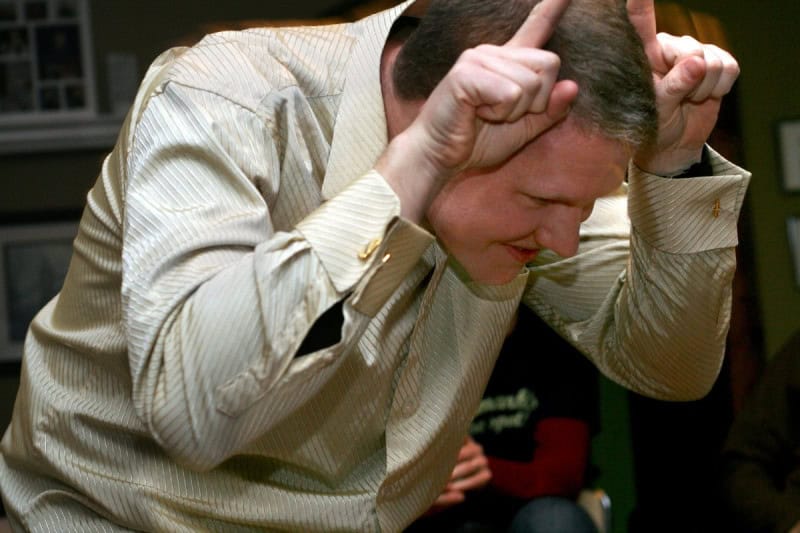
Eight games that need no running, seven of them sitting down and one on your feet: for a small group, or a bigger one split into teams, in a living room, a classroom with desks in it, or the last half hour when the energy has gone and the conversation is the point.
25. Charades
One player acts out a film, song, book or phrase without speaking while their team guesses against the clock. The conventions (fingers for the number of words, fingers laid on the forearm for the syllable count, a hand to the ear for “sounds like”) are worth teaching in two minutes because they turn flailing into a game. Write the titles in advance, on slips in a bowl, and write them for this group: the films they have actually seen, not the ones the leader has. Two teams, a minute each, best of ten.
Players: 6 to 16. Space: a living room. Equipment: slips of paper, a timer. Time: 20 minutes.
26. Name That Tune
The leader plays the first two seconds of a song and the first team to name it, or the artist, scores. Build the playlist from what the group listens to plus a few songs their parents did, so the leader wins one round and is mocked for the rest. It can be run from a phone and a speaker, or, for a youth group with a cupboard full of old discs, from a CD player and whatever is in the cupboard. Ten songs, then swap the DJ.
Players: 4 to 20. Space: none. Equipment: music, a speaker. Time: 15 minutes.
27. Two Truths and a Lie
Each player states three things about themselves, two true and one false, and the group votes on the lie. The leader goes first and lies well, to set the standard; a group that plays it twice a year learns more about each other than from any planned discussion. It is the best quiet game on this page for a new group, because every player gets the same thirty seconds of attention and nobody is tested on anything.
Players: 4 to 15. Space: seated. Equipment: none. Time: 15 minutes.
28. Would You Rather
The leader reads a choice, players move to one side of the room or the other, and anyone who wants to defends their side in one sentence. Would you rather be able to fly or be invisible; always be ten minutes late or always be an hour early; live without music or without films. The discussion is the game, so pick choices with no right answer and ask the quiet side to speak first. It needs nothing and can be stretched or cut to fit any gap in a session.
Players: any number. Space: a room with two sides. Equipment: a list of choices. Time: 5 to 20 minutes.
29. I Spy, the hard version
“I spy with my little eye something beginning with” is a game for the car, and in a room full of teenagers it lasts one round. The version that lasts is the one where the clue is a description rather than a letter (“something that has been in this room longer than any of us”, “something that is the wrong colour”), where the spied object must be in plain sight, and where the guesser who gets it chooses next. It is a game about looking at a familiar room as if for the first time, and a good leader can run it for a surprising while.
Players: 3 to 12. Space: any room. Equipment: none. Time: 10 minutes.
30. Indoor Trivia
Teams of three or four, a sheet of paper each, and five rounds of five questions read by the leader, with the twist that one round is about the group itself: who in this room has a pet snake, what was last week’s session about, what is the leader’s car. Write the questions beforehand; a quiz invented on the spot is a quiz about the leader’s interests. Swap papers to mark, read the answers aloud, and argue about the disputed ones, which is the real game.
Players: 6 to 30 in teams. Space: tables or laps. Equipment: paper, pens, a question sheet. Time: 30 minutes.
31. Twenty Questions
One player thinks of a person, place or thing and the group has twenty yes-or-no questions to name it. The discipline is the counting: a leader who keeps a visible tally on a whiteboard turns a ramble into a tense endgame at question seventeen. For teenagers, let the categories be anything they like, including people in the room, and watch the questions get sharper each round.
Players: 3 to 15. Space: none. Equipment: none (a whiteboard helps). Time: 10 minutes.
32. One-Word Story
Round the circle, each player adds one word to a story. The rule that saves it from nonsense is that the sentence must make grammatical sense, and the rule that makes it funny is that a player can end a sentence with a full stop whenever they like, so a story about a dragon can be ended mid-dragon by the next player with “died”. Appoint one player to write it down and read the whole thing back at the end. Three minutes, or until the story has reached a natural catastrophe.
Players: 4 to 15. Space: a seated circle. Equipment: none (pen and paper for the scribe). Time: 5 to 10 minutes.
Team games for a big group
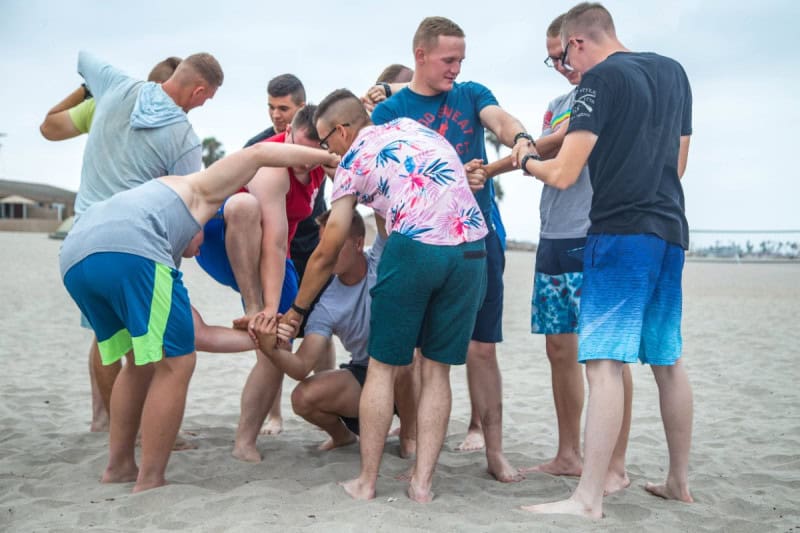
Eight games that work because there are a lot of people: five are played in teams, balloon volleyball splits the room in two, and the silent line-up and Simon Says are played by the whole group at once. Most run as stations or rounds, which means the leader needs a second adult and a whistle.
33. Human Knot
Groups of six to eight stand in a tight circle, reach in and take two hands belonging to two different people, not their neighbours, and then untangle themselves into a circle without letting go. It can be done, almost always, in a few minutes of stepping over and ducking under, and it is the team-building exercise every corporate away-day uses because it works: the group has to talk, and the loudest voice is not the one that solves it. Run several groups at once and race them.
Players: 16 to 40, in groups of 6 to 8. Space: a hall. Equipment: none. Time: 10 minutes.
34. Indoor Scavenger Hunt
Teams get the same list of twenty things to find or do inside the building in fifteen minutes: a hymn book, a paper clip, a photograph of the whole team in a cupboard, a signature from the caretaker, something older than the leader. Points for each item, double for the ones that need the whole team, and a rule that nothing may leave the building. The list is the whole game, so write it for the building you are in, and keep one or two items impossible so no team finishes early.
Players: 12 to 40 in teams. Space: a building. Equipment: a list per team, phones for photos. Time: 20 to 30 minutes.
35. Minute to Win It Stations
Five tables, five one-minute challenges with household objects, teams rotating round them on a whistle: stack six cups and unstack them, move ten sweets from one bowl to another with a straw, keep two balloons in the air for a minute, bounce a ping-pong ball into a cup, get a biscuit from your forehead to your mouth without using hands. Each station is scored by the helper running it. The set-up takes twenty minutes but the game runs itself for forty, which is the best ratio on this page for a big evening.
Players: 15 to 50 in teams. Space: a hall with tables. Equipment: cups, straws, sweets, balloons, ping-pong balls, biscuits. Time: 40 minutes.
36. Balloon Volleyball
A line of chairs or a rope across the room for a net, a balloon for a ball, and volleyball rules loosened to three touches per side and no spiking. The balloon floats, so the rallies are long and anyone can play; for a bigger group, play with two balloons at once, or sit everyone on the floor and play from there. It is the big-group game that does not favour the athletes, which is sometimes exactly what the evening needs.
Players: 12 to 30. Space: a hall. Equipment: balloons, chairs or a rope. Time: 15 minutes.
37. Silent Line-Up
The whole group must form a single line in order of birthday, January at one end and December at the other, without speaking or writing. Then by height, which is easy; then by shoe size, which is not; then by the number of letters in their middle name. It takes two minutes a round, needs nothing, and shows a leader in thirty seconds who the organisers in the group are. The team version races two lines against each other.
Players: 10 to 60. Space: a long wall. Equipment: none. Time: 10 minutes.
38. Newspaper Tower
Each team gets twenty sheets of newspaper and a roll of tape, and ten minutes to build the tallest free-standing tower in the room. It must stand on its own for ten seconds at the whistle to count. Rolled tubes beat folded sheets and a wide base beats a tall ambition, which every team learns the hard way in round one and applies in round two. Swap the newspaper for plastic cups, or dried spaghetti and marshmallows, for a different evening.
Players: 12 to 40 in teams. Space: floor space per team. Equipment: newspaper and tape per team. Time: 20 minutes.
39. Bucket Head
One player per team holds an empty bucket (or a bin, or a box) on their head and stands behind a line; their team-mates throw soft balls, balled-up socks or scrunched paper from a few metres away, and the bucket-holder can move to catch them but not touch the ball. Most catches in two minutes wins. It is ridiculous, which is the point, and the bucket-holder, who can see nothing, is the star of the round.
Players: 10 to 40 in teams. Space: a hall. Equipment: a bucket and a pile of soft objects per team. Time: 10 minutes.
40. Simon Says, the elimination version
The oldest game on this page scales to fifty players better than almost anything else here. Simon stands at the front; commands beginning “Simon says” must be obeyed, commands without it must be ignored, and anyone who gets it wrong is out. With teenagers, the leader speeds up, chains commands (“Simon says hop, Simon says stop, hop”), and lets the last three survivors become Simon in turn. It needs no equipment, no space beyond standing room, and no explanation, which makes it the game to keep in reserve for the moment the plan falls apart.
Players: any number. Space: standing room. Equipment: none. Time: 5 to 10 minutes.
Putting an evening together
A ninety-minute session rarely needs more than four games: an opener while people arrive (Look Up Look Down, Hot Potato, Sit Down If), one big game while the energy is high (dodgeball, Captain’s Coming, a scavenger hunt), one that makes the group talk (Two Truths and a Lie, Would You Rather, Four on a Couch), and one quiet closer that sends them home calm (One-Word Story, Twenty Questions). Keep this list on a phone, keep a bag of balloons, cups, string and foam balls in the cupboard, and the evening when the plan falls through becomes the evening they ask to repeat.
Image credits
The musical chairs, dodgeball and human knot photographs are United States government works (U.S. Navy, U.S. Air Force and U.S. Marine Corps) in the public domain, reproduced via Wikimedia Commons. The charades photograph is by Scott via Wikimedia Commons (CC BY-SA 2.0). The telephone photograph is by Christopher Morgan via Wikimedia Commons (CC BY-SA 3.0).