

A big room is the hardest thing to ask of a plug-in heater, and most of the guides that rank for it never say why. The answer is not the heater. It is the wall socket.
Every heater you can plug into a standard US outlet tops out at 1,500 watts, because that is as much as the socket will safely give it. That ceiling is the same for the cheapest tower on this page and the most expensive infrared cabinet on it, which means the honest question is never “which heater is most powerful.” They are all the same power. The question is what each one does with it: how far it throws the air, how evenly it spreads, how quiet it stays, and whether it can run for hours without you thinking about it.
This guide covers twelve heaters. Every one was checked on its Amazon listing on the day this was written, and for each one we quote the coverage the manufacturer itself claims, not a number we invented. Some of those claims are a lot smaller than the words “large room” on the box. That gap is the most useful thing on this page.
For a cold bedroom where the only thing that needs warming is the bed, a heated mattress pad does the job on a fraction of the power of any heater on this page.
Disclosure: As an Amazon Associate I earn from qualifying purchases. Product links in this guide are affiliate links.
What “large room” actually means on a 120-volt heater
1,500 watts converts to roughly 5,100 BTU per hour. That is the ceiling on any heater running from a US wall socket, and it is set by the circuit rather than by the manufacturer. Several picks here offer lower settings; none can go above it. Dr. Infrared’s own listing for the DR-968 rates it at “around 5200 BTU.”
For context, a whole-house furnace is rated in the tens of thousands of BTU. A single space heater is a rounding error against that. What it can genuinely do is raise one room several degrees above the rest of the house, which is exactly what most people actually want, and what the good ones do very well.
So when a listing says “large room,” read the specification rather than the headline. Here is what these twelve heaters claim for themselves, taken from their own Amazon listings, quoted verbatim where quotation marks appear:
| Heater | Coverage the listing itself claims |
|---|---|
| DREO 25-inch tower | 100 to 270 sq ft |
| Lasko 23-inch ceramic tower | “medium-sized rooms” (no figure given) |
| PELONIS 30-inch tower | up to 280 sq ft |
| DREO 42-inch heater and fan | no sq ft given; 1,585 CFM, air thrown up to 40 ft |
| Dr Infrared DR-968 | “around 5200 BTU” |
| Vornado AVH10 | “small to medium-sized spaces” |
| EdenPURE CopperPLUS | 1,000 sq ft in the title; 1500W high, 1000W low |
| De’Longhi EW7707CM oil-filled | “small to medium spaces” |
| Amazon Basics oil radiator | up to 144 sq ft |
| DREO smart wall heater | 150 sq ft as a primary source, up to 750 sq ft supplementary |
| Dr. Infrared DR-966 | 240V hardwired, 3000W or 6000W (not a plug-in heater) |
| Mr. Heater Portable Buddy | approximately 225 sq ft, 4,000 or 9,000 BTU |
Two things stand out. First, where a plug-in listing commits to a number at all, it lands between 100 and 280 square feet, whatever the word “large” is doing on the box. The two that quote bigger figures do it by changing the question: the DREO wall heater says 150 square feet as a primary source and up to 750 as a supplement, and the EdenPURE claims 1,000 square feet for zone heating. Second, only two picks here can exceed 1,500 watts at all, and both do it by leaving the 120-volt outlet behind: the DR-966 is hardwired to 240 volts, and the Portable Buddy burns propane. Leaving the socket is the only route to more heat than 5,118 BTU, though note the Buddy only beats it on its high setting; on low it puts out less.
One listing on this page draws the distinction the rest of the category avoids, and it is the distinction that settles the whole “large room” question: primary heat versus supplementary heat. As a supplement to central heating in a well-insulated room, any of these will work in a big space. As the only heat in a cold room, none of them will heat 1,000 square feet.
The 12 best space heaters for large rooms at a glance
Live prices and stock status below. The “Best for” column is our read; the coverage column is the manufacturer’s own claim.
| Pick | Best for | Coverage claimed by the listing | Noise the listing quotes | Price | Stock | |
|---|---|---|---|---|---|---|
 | 1. DREO 25-Inch Tower Space Heater | Most people. Quiet, fast, wide throw | 100-270 sq ft | 25 dB | $89.99 | In stock |
 | 2. Lasko 23-Inch Ceramic Tower 751320 | The proven one. Largest review sample | Medium rooms, no figure | Not quoted | $71.99 | In stock |
 | 3. PELONIS 30-Inch Ceramic Tower | Widest claimed coverage of the towers | Up to 280 sq ft | Under 55 dB | $75.99 | In stock |
 | 4. DREO 42-Inch Heater and Fan Combo | Heater in winter, fan in summer | No figure, 40 ft throw | 25 dB | $169.99 | In stock |
 | 5. Dr Infrared DR-968 | Infrared. Warms objects, not just air | Around 5200 BTU | 39 dB | $104.99 | In stock |
 | 6. Vornado AVH10 (2026) | Set it and stop thinking about it | Small to medium | Not quoted | $99.99 | In stock |
 | 7. EdenPURE CopperPLUS Infrared | Largest cabinet, same 1,500 watts | 1000 sq ft (title) | Not quoted | $272.00 | Available later |
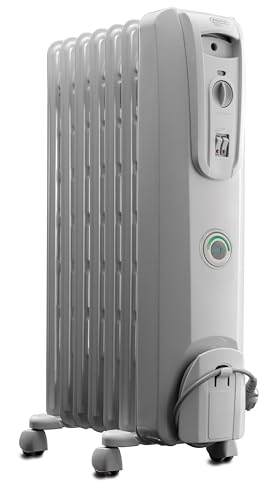 | 8. De'Longhi EW7707CM Oil-Filled Radiator | Silent heat with no fan at all | Small to medium | No fan | $129.95 | In stock |
 | 9. Amazon Basics Oil Radiator | Honest coverage figure, low price | Up to 144 sq ft | No fan noise | — | Unavailable |
 | 10. DREO Smart Wall Heater | Frees the floor, runs all day | 150 primary, 750 supplementary | 28 dB | $88.98 | In stock |
 | 11. Dr. Infrared DR-966 Garage Heater | Garages. 240V, needs an electrician | 3000W or 6000W, 240V | Not quoted | $175.70 | In stock |
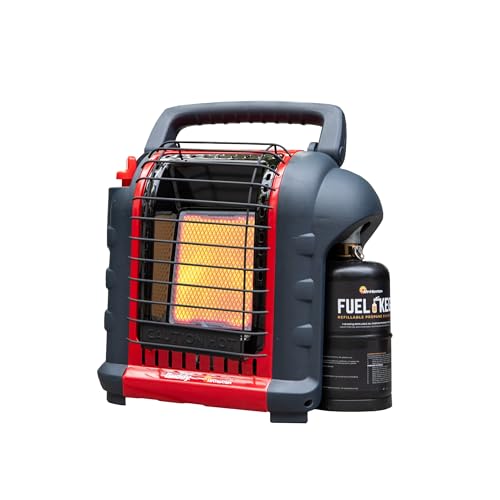 | 12. Mr. Heater Portable Buddy | Workshops and power cuts. No mains at all | About 225 sq ft | No fan | $89.97 | In stock |
Prices and availability as of 04:09 EDT — details
Towers and ceramic heaters for open-plan rooms
A tower is the right default for a living room. The tall, narrow outlet and a wide oscillation sweep move warm air across a space instead of cooking one armchair, and several of these listings describe cool-touch housings. This is the category to start in unless you have a specific reason not to.
1. DREO 25-Inch Tower Space Heater
If you buy one heater from this list without reading the rest of it, buy this one. DREO quotes an air speed of 11.5 ft/s and a 70 degree oscillation covering 100 to 270 square feet, and it does that at a quoted 25 dB, the lowest figure quoted anywhere on this page, matched only by the DREO 42. Those two numbers together are the whole argument: reach without noise.
The thermostat is the other reason it leads. DREO says a dedicated thermal sensor adjusts heating automatically in ECO mode, with the target settable between 41 and 95 degrees Fahrenheit in one degree steps. In practice that is the difference between a heater you switch on and off all evening and one you set once in October. Safety is ETL certified with 45 degree tip-over and overheat cutouts, V0 flame retardant housing, a reinforced plug and a child lock.
The honest limit is in the listing: 270 square feet is the top of its claimed range, so a genuinely open-plan living and dining space will want this as a supplement rather than the only heat.
2. Lasko 23-Inch Ceramic Tower 751320
More than 40,000 ratings, the largest sample on this list and about forty percent more than the next-best-reviewed pick. There is no substitute for that kind of sample. A design with a genuine flaw does not hold its rating across forty thousand buyers.
Specification-wise it is deliberately plain: 1500W of ceramic heat, wide oscillation, a remote that handles heat settings, oscillation and the timer, a 7-hour timer, a carry handle, and ETL listing with a self-regulating ceramic element, overheat protection and cool-touch housing. Lasko describes the coverage as “medium-sized rooms” and quotes no square footage at all, which is at least not an overstatement, and is the reason it sits second rather than first.
It also costs less than most of the towers here while doing the same job, which makes it the sensible pick if you need two heaters rather than one.
3. PELONIS 30-Inch Ceramic Tower
The widest claimed coverage of any tower here. PELONIS quotes a 75 degree oscillation and up to 280 square feet, helped by what the listing describes as 26 percent more hot air vents and a claim of reaching 70 degrees in three seconds.
Four modes (High, Low, ECO and fan-only), a digital panel, a remote, one degree Fahrenheit adjustment and a 12-hour timer. At 30 inches it stands five inches above the DREO 25, and the extra height is the likeliest reason it claims 280 square feet where the DREO claims 270.
The trade-off is noise. PELONIS quotes “under 55 dB,” roughly double the DREO figure in decibel terms. Decibels are logarithmic, so that gap is much larger than the numbers suggest: fine in a living room with a television on, and clearly audible in a quiet study.
4. DREO 42-Inch Heater and Fan Combo
The only genuinely year-round machine here. DREO’s MC706 runs as a 5-level 1500W PTC heater in winter and a 12-speed cooling fan in summer, with an 1800 RPM DC motor moving 1,585 CFM up to 40 feet away across a 120 degree sweep. That 40 foot throw is the largest reach quoted by anything in this guide, and reach is the thing a large room actually needs.
It holds 25 dB while doing it, matches the DREO 25-inch on temperature control (41 to 95 degrees Fahrenheit, plus or minus 1.5 degrees in ECO mode), and carries eight separate safety features including a patented plug, V0 flame retardant build, thermal insulated wiring and a child lock, all ETL certified.
It costs roughly twice what the tower picks cost, and the case for that is entirely the summer half of the year. If you already own a fan you like, buy a cheaper heater. If you were going to buy both, this is the better spend and it occupies one corner instead of two.
Infrared and whole-room heaters
Infrared heats objects and people directly rather than warming the air first, so a room feels warm sooner even though the thermostat has not moved much. In a big space with high ceilings, where heated air has a long way to rise before it does you any good, that difference matters more than it sounds.
5. Dr Infrared DR-968
With 28,300 ratings behind it, this is the infrared pick to look at if your room loses heat faster than a fan heater can replace it. Dr. Infrared runs an infrared quartz tube and a PTC element together, rates the result at “around 5200 BTU,” and claims “60% more heat than others.” That second claim deserves a pause, because whatever it is being compared against, it runs into the one fact this page keeps returning to: every 1,500 watt heater delivers the same total heat. What an infrared design can genuinely do is deliver that heat differently, into people and objects rather than into air. Even the BTU figure is rounded in its own favour, since 5,200 slightly exceeds the 5,118 a 1,500 watt element can actually produce.
A high-pressure low-noise blower holds it to 39 dB, the thermostat covers 50 to 85 degrees Fahrenheit, there is a 12-hour auto shut-off, an infrared remote, caster wheels and what the listing calls a lifetime filter, so there is nothing to replace. It draws 12.5 amps at 1500 watts and weighs 19 pounds.
The 12.5 amp draw is worth a thought before you buy: on a 15 amp circuit this is most of the budget, so do not run it on the same breaker as a microwave, or as a second heater.
6. Vornado AVH10 (2026)
The one to buy if you do not want to operate a heater. Vornado’s Auto Climate senses how much heat and circulation the room needs and adjusts power and airflow on its own, which is a step beyond the ECO modes elsewhere in this guide: those hold a temperature, this one also decides how hard to blow.
Vortex Heat Circulation is Vornado’s long-standing approach of moving the whole room’s air rather than aiming a hot jet at you, which the listing compares to a small forced-air furnace and credits with avoiding harsh, dry air. Two heat settings plus a fan-only mode, cool-touch exterior, tip-over protection and a safety shut-off, and a five-year replacement commitment, which the listing states plainly.
Two honest caveats. Vornado describes the coverage as “small to medium-sized spaces,” not large, and at 303 ratings this 2026 model has the thinnest review history of anything on this page. The brand’s track record is long; this specific model’s is not.
7. EdenPURE CopperPLUS Infrared
The most expensive heater in this guide by a wide margin, and the only one whose title claims 1,000 square feet. It is built around more than 3.5 square feet of copper surface for heat transfer, offers 24 preset heat levels from 40 to 90 degrees Fahrenheit, runs 1500W on high and 1000W on low, and includes a lifetime washable dust and hair filter so there is nothing consumable to buy.
Safety is cETL approved with dual overheat sensors, automatic tip-over shut-off, a touch-safe front grill and cool-touch housing. EdenPURE also makes the case that infrared preserves a room’s natural humidity where forced-air systems dry it out, which is a genuine comfort argument if dry winter air bothers you.
Now the caveat, because it is the most important one on the page. This heater is subject to the same 1500 watt ceiling as the cheapest tower above it. The 1,000 square feet in the title is a zone-heating claim, not a promise to warm 1,000 square feet from cold. You are paying roughly three times a tower’s price for build quality, the copper element, the filter and the control range, not for more heat. If that is what you want, it is a good machine. If you expected more output, there is none to be had at 120 volts.
Oil-filled radiators for quiet, steady heat
An oil-filled radiator has no fan, so it makes no noise at all and moves no dust. It is slower to warm a room and it keeps giving heat after you switch it off, which makes it the right shape for a room you occupy for hours: a bedroom, a home office, a room where someone is reading.
8. De’Longhi EW7707CM Oil-Filled Radiator
Nearly 13,000 ratings behind it. De’Longhi’s ComfortTemp feature holds the optimal temperature and power level automatically, which the company says is up to 20 percent more efficient than running the same unit’s thermostat at maximum without it.
The thermal slot design maximises heat flow into the room while keeping the surface temperature low, and because there is no fan the listing makes a point that matters for anyone with allergies: nothing is stirring up dust, pollen or dander, and the gentle heat minimises dry air. Smart snap wheels and an integrated handle mean it moves between rooms without any assembly.
De’Longhi rates it for “small to medium spaces,” so treat the large-room question the way the rest of this page does. What it is genuinely best at is running silently in a room you are sitting in, for as long as you are sitting in it.
9. Amazon Basics Oil Radiator
One of the two cheapest picks here, and the one whose listing is most specific about what it can do. Seven oil-filled fins, three heat settings at 1500W, 1000W and 600W, tip-over and overheat protection, ETL certification, caster wheels and a slim vertical profile.
Amazon states the coverage as “heats up to 144 sq ft,” one of the most specific figures on this page. That is a bedroom or a study, not a great room, and the listing does not pretend otherwise. Included here precisely because it is honest: if the room you actually want to heat is 12 feet by 12 feet, this does the job at the bottom of this list’s price range, and the 600W low setting is genuinely cheap to run overnight.
Wall-mounted heaters for always-on rooms
One pick here, and it answers a different question from the rest: what to do in a room where a floor-standing heater is the wrong object to have in it.
10. DREO Smart Wall Heater
Nothing to knock over, nothing occupying a corner, and the position is chosen once and then forgotten. DREO’s wall unit runs a PTC element at 11.5 ft/s and 28 dB with a 30 degree manual oscillation you aim once, and carries an IP24 water resistance rating, which is a splash-resistance rating rather than a bathroom approval. DREO lists it for bedrooms and offices.
Control is by remote, the DREO app or Alexa, with an ECO mode and an app-side temperature calibration function. Construction is 5 VA flame-retardant with overheat protection. It ships with a drilling template, and installation is a plug-in job with a 70.8 inch cord rather than an electrician’s.
This is the listing that states the distinction the rest of the category avoids: 150 square feet as a primary heat source, up to 750 square feet as a supplementary one, with a note to check your insulation. Take that as the honest frame for every heater on this page, not just this one.
Garages, workshops and unheated spaces
These two are not living-room heaters and are not sold as such. They are here because a garage or a workshop is the one case where you genuinely can exceed the 1,500 watt ceiling, and because an older version of this guide recommended several units of this type without saying so. If you are heating a family room, the ten picks above are your list.
11. Dr. Infrared DR-966 Garage Heater
A heavy-duty 240-volt single-phase commercial heater switchable between 3000W and 6000W, which is two to four times anything you can plug into a normal socket. UL and CUL listed, wall or ceiling mounted with the bracket included, adjustable thermostat with high and low settings, and five adjustable louvres to aim the airflow.
Read the second bullet on its listing before buying: “Hardwired. Power cord not included in the unit.” This is not a plug-in appliance. It needs a 240-volt circuit and an electrician, and wiring one is a job worth pricing before you buy the unit. For a detached garage or a workshop it is worth it, because nothing you can plug in will heat that space. For a bedroom it is the wrong product entirely.
12. Mr. Heater Portable Buddy
The highest-rated product in this guide at 4.7 stars across more than 29,000 ratings, and the only one that needs no electricity at all. It emits 4,000 or 9,000 BTU per hour of radiant propane heat, is approved for indoor and outdoor use, heats approximately 225 square feet, and runs 5.4 hours on low or 2.4 hours on high from a single one pound cylinder.
At 9,000 BTU it puts out nearly twice what any 1,500 watt electric heater can manage, which is the whole reason it is on this list. It carries an emergency low oxygen safety system, and that feature exists for a reason: this is a combustion appliance, it consumes oxygen from the room it is in, and it needs ventilation. Follow the manufacturer’s instructions rather than ours.
The right uses are a workshop, a garage, a cabin, a tent or a power cut. It is not a substitute for a living-room heater, and running costs are a cylinder at a time rather than a line on an electricity bill.
How many BTUs do you actually need?
This is the part the coverage claims above are standing in for, and it is worth doing yourself, because it takes about ten seconds and it tells you straight away whether one heater can do the job.
The working rule for supplemental electric heating is 10 watts per square foot for a reasonably insulated room with an eight-foot ceiling. Multiply your floor area by ten and you have the wattage you need. Divide that by 1,500, round up, and you have the number of heaters.
| Room | Floor area | Watts needed | BTU/hr | What that means here |
|---|---|---|---|---|
| Bedroom | 120 sq ft | 1,200 | 4,100 | One heater, comfortably |
| Home office | 150 sq ft | 1,500 | 5,100 | One heater, at its limit |
| Living room | 250 sq ft | 2,500 | 8,500 | One as a supplement, two as primary heat |
| Open-plan living and dining | 400 sq ft | 4,000 | 13,600 | Supplement only, or three units |
| Double garage | 600 sq ft | 6,000 | 20,500 | Beyond any plug-in heater. Hardwired or propane |
Three adjustments, in the order they matter. Ceilings above eight feet: multiply by your ceiling height divided by eight, because you are heating volume, not floor. Poor insulation, single glazing or more than one exterior wall: add a quarter to a half. A room over an unheated garage or a crawl space: add a quarter again.
Run that on the room you actually have and the 150-square-foot figure at the top of this page stops looking pessimistic. A 250 square foot living room wants around 8,500 BTU as its only heat source, and the ceiling on one wall socket is 5,118. That is the whole argument on this page, in one sum you can check.
How to choose a space heater for a large room
Start with the room, not the heater
Measure the floor area and be honest about insulation, ceiling height and how many exterior walls the room has. A 300 square foot room with one exterior wall and a modern window is a different job from a 300 square foot room over an unheated garage. Every coverage figure quoted on this page assumes the easy version.
Decide whether it is the only heat or the extra heat
This is the decision that actually matters and almost no listing asks it. As a supplement to central heating, any heater here will make a large room comfortable. As the sole heat source in a cold room, plan on the 100 to 280 square feet these listings commit to as primary heat, and consider two heaters on two different circuits rather than one heater you expect too much from.
Match the technology to how you use the room
Ceramic towers heat fast and spread wide, which suits a room you walk into and want warm now. Oil-filled radiators are slow, silent and steady, which suits a room you sit in for hours. Infrared warms people rather than air, which suits high ceilings and draughty spaces. Wall units suit rooms where floor space or a toddler rules out anything standing up.
Check noise if the room has a purpose
25 dB and 55 dB are both described as quiet by the people selling them. In a bedroom or an office that gap is the difference between a heater you forget about and one you switch off to take a phone call. Where a listing quotes a decibel figure we have reproduced it in the table above; where it does not, assume it is not a selling point.
Think about the circuit, not just the socket
A 1500 watt heater draws around 12.5 amps, which is most of a standard 15 amp circuit on its own. Two heaters on the same breaker will trip it. If you are planning to run two, check that they are on different circuits, and do not run either through a light-duty extension lead.
Budget realistically
The towers and the cheaper oil-filled radiators sit at the bottom of this list’s range and do the core job properly. Stepping up roughly fifty dollars buys infrared output or a better thermostat. The top of the range, two to three times the entry price, buys build quality, control range and a filter you never replace, not more heat. Budget another ten to twenty dollars for a smart plug if the unit you choose has no timer.
Frequently asked questions
What size space heater do I need for a large room?
Every plug-in heater sold for a US outlet tops out at 1,500 watts, so the size question is really a coverage question. Where the plug-in listings on this page commit to a primary-heating figure, it runs from 100 to 280 square feet. If your room is larger than that and you need it warm from cold, you need either two heaters on separate circuits or a hardwired or propane unit.
Is infrared better than ceramic for a big room?
Neither produces more heat, because both are capped at 1,500 watts. Infrared warms objects and people directly so a large or high-ceilinged room feels warm sooner. Ceramic warms the air and, with oscillation, distributes it more evenly. For a draughty room with high ceilings, infrared. For an ordinary living room, ceramic.
Can a space heater replace central heating in one room?
In a well-insulated room of around 150 square feet, yes. Beyond that a single unit is topping up existing heat rather than providing it.
Are oil-filled radiators cheaper to run?
Not per hour at the same wattage: 1500 watts costs the same whatever produces it. They can cost less in practice because they retain heat after switching off and because lower settings, such as the Amazon Basics 600W option, are genuinely usable overnight where a fan heater on low still runs a fan.
Is it safe to leave a space heater on overnight?
Safety features differ by pick, and the listings are genuinely not interchangeable on this point, so read the one you are buying rather than trusting a summary. To show how much they vary among picks on this page: the DREO 25 lists ETL certification with tip-over and overheat protection and a child lock; the Lasko lists ETL with overheat protection and a self-regulating ceramic element; the Vornado lists a cool-touch exterior, tip-over protection and a safety shut-off; the EdenPURE lists cETL approval with dual overheat sensors and automatic tip-over shut-off; the Amazon Basics radiator lists tip-over and overheat protection with ETL certification; the Dr Infrared DR-968 lists a 12-hour automatic shut-off. Whatever you buy, follow the manufacturer’s instructions, plug it directly into a wall socket rather than an extension lead, and keep it clear of furnishings. The propane unit is a different case entirely and should not be treated like the electric ones.
The best space heaters for large rooms: in conclusion
For most people in most large rooms, the DREO 25-inch tower is the pick: quiet, fast, wide, and controllable enough that you set it once. The Lasko 751320 is the safer buy on sheer weight of evidence and costs less. If the room is tall or draughty, the Dr Infrared DR-968 is the one to look at, because infrared puts the same 1,500 watts into objects rather than into air that then has to find you. If the room is genuinely a garage, stop looking at plug-in heaters.
And the thing worth carrying away from this page: the ceiling is real. Once you know that every heater here that plugs into a wall socket has the same 1,500 watts to work with, choosing between them gets much easier, because you are no longer shopping for power. You are shopping for reach, quiet, control and how little you have to think about it.
If you are working through the cold-weather list, we have also covered the best cordless heated blankets for heat you wear rather than heat you install, the best winter work gloves for outdoor jobs, and the washing machine hoses worth replacing before a cold snap finds the weak one. In summer, the same rooms usually need a lightweight window air conditioner.
Product prices and availability are accurate as of the date/time indicated and are subject to change. Any price and availability information displayed on Amazon.com at the time of purchase will apply to the purchase of this product.