
The 20th century did not just add new objects to the world. It changed what an ordinary life felt like from the inside — how far you could travel in a day, how likely your children were to survive childhood, how much of your week disappeared into housework, and how quickly news reached you.
The inventions below are the ones that did that work. Some were the product of decades of methodical research; a few were accidents that their discoverers nearly threw away. They are listed here in roughly chronological order, opening with the one that has the strongest claim to going first — a December morning on a North Carolina beach in 1903 — and ending in the early 1980s, with the first consumer format that stored sound as numbers rather than as a physical trace of it.
A note on what is not here. The automobile, the radio and the submarine all belong to the 19th century, not this one — you will find them on our 30 Greatest Inventions of the 19th Century list, where they were invented. Electricity is not on this list either, for the simple reason that nobody invented it. And the century that followed has its own list — the 25 Greatest Inventions of the 21st Century, from CRISPR and reusable rockets to a helicopter that flew on Mars.
1. The Airplane (1903)

On 17 December 1903, at Kill Devil Hills near Kitty Hawk, North Carolina, Orville Wright flew a powered, heavier-than-air machine for 12 seconds and 120 feet. Three more flights followed the same morning; the longest, flown by Wilbur, covered 852 feet in 59 seconds.
What made the Wrights succeed where better-funded rivals failed was not the engine. It was control. Their key insight was wing-warping — twisting the wingtips to roll the aircraft — which gave them command of all three axes of flight. They arrived at it after building their own wind tunnel and testing more than 200 wing shapes, having concluded that the published lift tables everyone else relied on were wrong. They were.
Within 16 years of that first hop, Alcock and Brown flew the Atlantic non-stop. Within 66, a rocket derived from the same lineage of aeronautical engineering put two men on the Moon. The photograph above shows an early Wright-type machine in flight, not the first flight itself.
2. The Vacuum Cleaner (1901)
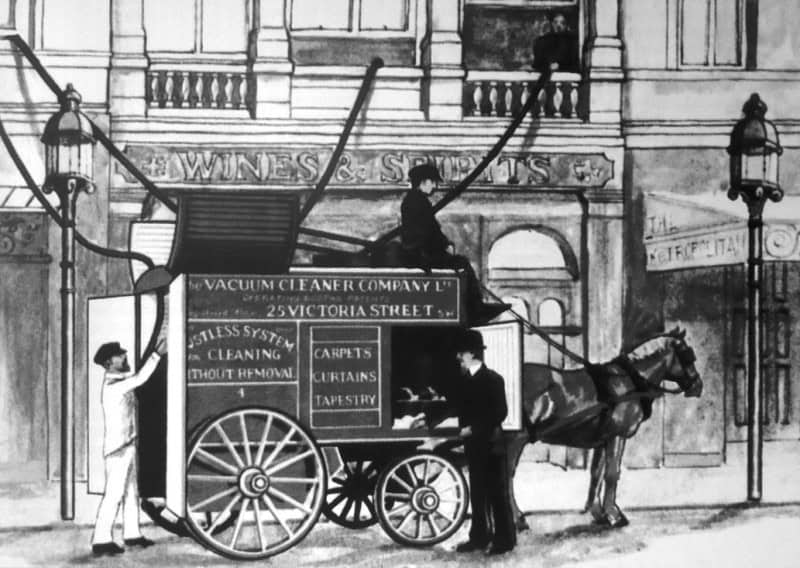
Hubert Cecil Booth’s contribution to domestic life began with an argument in a London restaurant, where he reportedly put a handkerchief to the back of a plush seat and sucked hard to prove that dust could be drawn out rather than blown around.
His 1901 machine was not a household appliance. It was a petrol-engined pump the size of a small carriage, painted red, parked in the street and known as the “Puffing Billy”. Long hoses were fed through the windows of the building being cleaned. Society hostesses held vacuum parties so guests could watch the dirt travel up the transparent sections of pipe.
The domestic version came in 1907 from James Murray Spangler, an Ohio janitor whose asthma was aggravated by carpet sweeping. He sold the patent to his cousin’s husband, William Hoover.
3. The Safety Razor (1901)
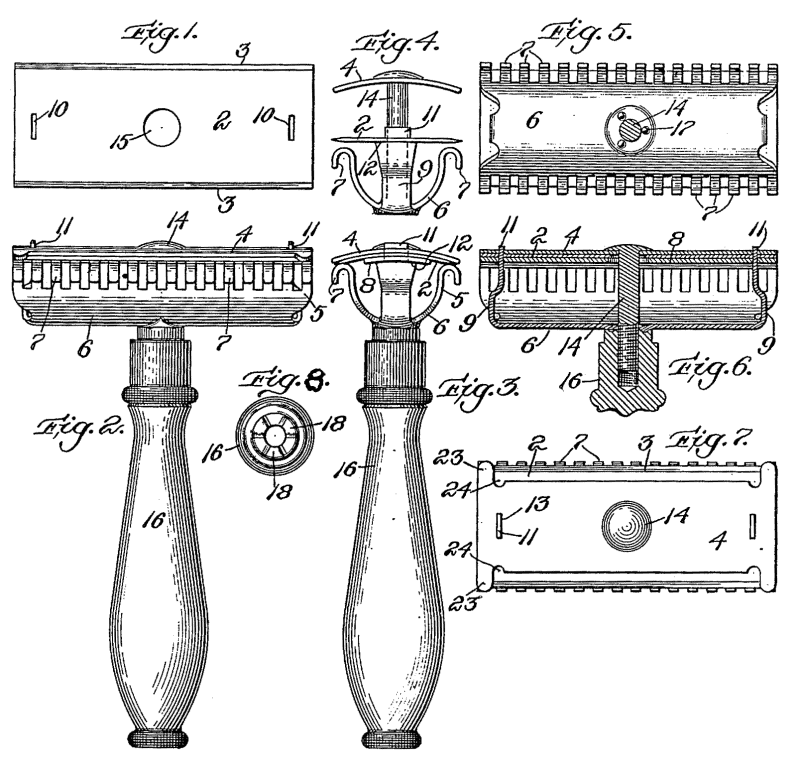
King Camp Gillette’s idea was not the razor. It was the business model. He wanted a product that customers had to buy again and again, and he found it in a blade so cheap to make that it could be thrown away when blunt rather than laboriously stropped.
The engineering problem — stamping a wafer of steel thin enough to be disposable but rigid enough to hold an edge — took six years and the help of MIT machinist William Nickerson to solve. The patent was granted in 1904. Gillette sold 51 razors and 168 blades in his first year. The next year he sold 90,884 razors and 123,648 blades.
The pattern he established, of selling the handle cheaply and profiting on the refill, now underpins everything from inkjet printers to coffee pods.
4. Air Conditioning (1902)
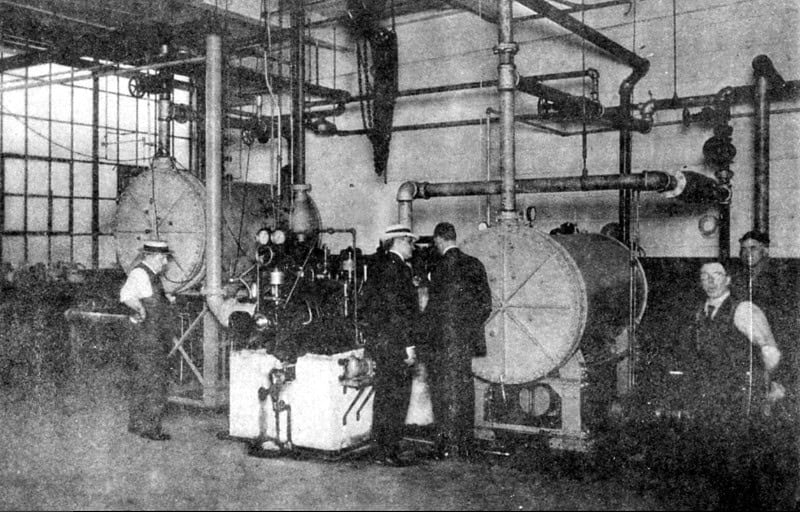
Willis Carrier’s machine was not designed to make anyone comfortable. He was 25, working for a Buffalo heating company, and the problem in front of him was a Brooklyn printing plant where humidity kept swelling the paper and blurring the colour registration.
His solution — passing air over coils chilled by cooled water to condense moisture out of it — controlled humidity precisely. Cooling was, at first, a side effect. Carrier worked out the underlying relationship between temperature, humidity and dew point and published it in 1911; the paper is still the foundation of the field.
Air conditioning went on to reshape the map of the United States. The population of the Sun Belt — Phoenix, Houston, Atlanta, Miami — was only possible at scale once summers indoors became survivable. The photograph above shows a later, far larger Carrier installation rather than the 1902 Brooklyn original, and none of the men in it can be identified.
5. Bakelite and Synthetic Plastics (1907)
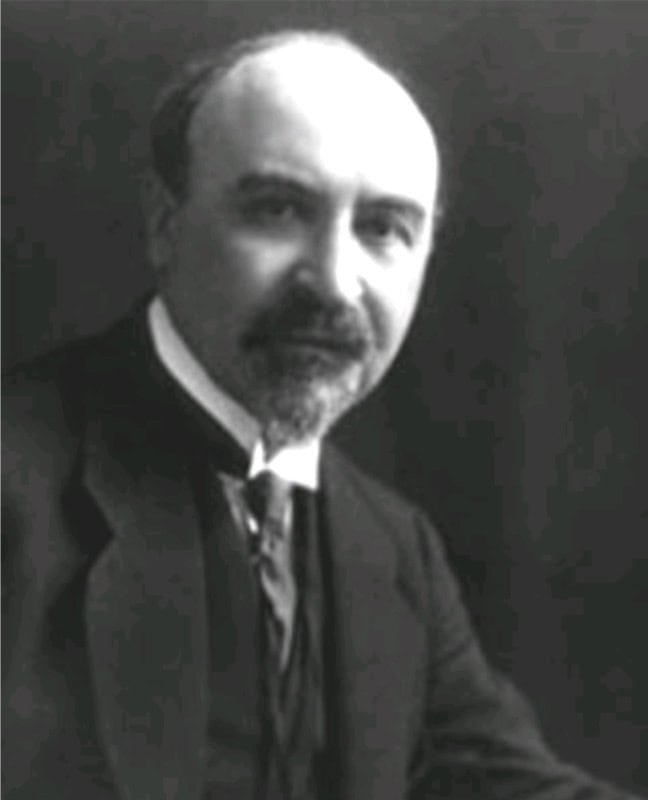
Leo Baekeland, a Belgian chemist working in Yonkers, New York, was looking for a substitute for shellac, a resin secreted by an insect and harvested by hand in India. What he produced instead, by reacting phenol with formaldehyde under heat and pressure, was the first plastic made entirely from synthetic components — owing nothing to any plant or animal.
Bakelite would not melt, would not burn easily, and did not conduct electricity. That last property made it the material of the electrical age: switch housings, plug sockets, distributor caps, telephone handsets, radio cabinets.
It also began the Polymer Age. Polyethylene, PVC, polystyrene, nylon, acrylic and polyester all followed within four decades. So did the waste problem, which Baekeland did not foresee and which the century did not solve.
6. The Tea Bag (c. 1908)
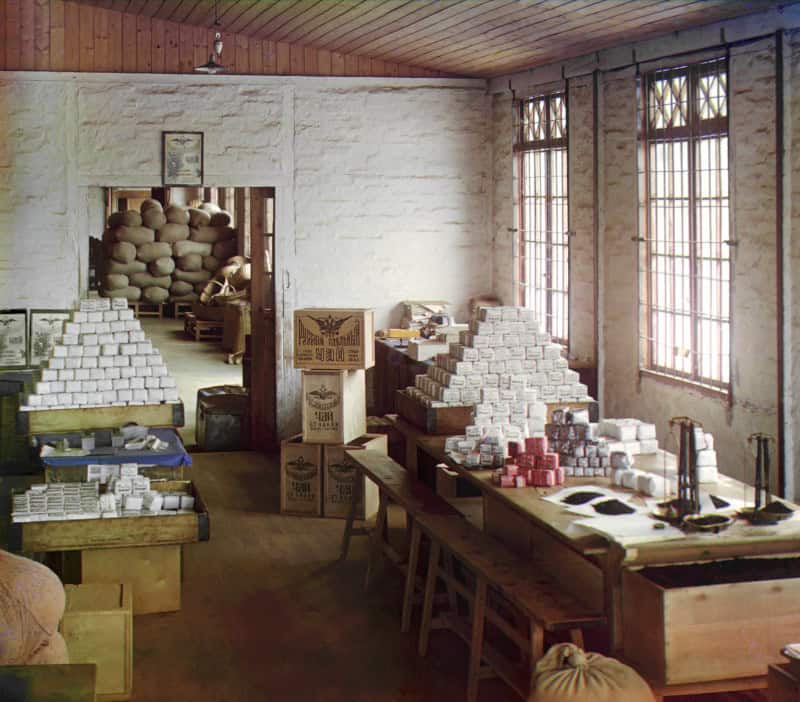
The tea bag is usually credited to Thomas Sullivan, a New York tea merchant who around 1908 began sending customers samples in small hand-sewn silk pouches. The story goes that recipients dropped the whole pouch into the pot rather than opening it, and wrote back asking for more.
Whether that specific tale is true is uncertain — a patent filed in 1901 by Roberta Lawson and Mary Molaren of Milwaukee describes a mesh “tea leaf holder” that predates it. What is certain is that the commercial single-serving tea packet arrived in the first decade of the century and that gauze replaced silk, then paper replaced gauze.
Britain, the world’s most committed tea market, resisted for decades. In 1968 tea bags were still under 3% of the British market. They are now around 96%. No period photograph of an early tea bag survives — the picture above shows tea being weighed into single-serving paper packets, around 1910.
7. The Electric Washing Machine (1908)
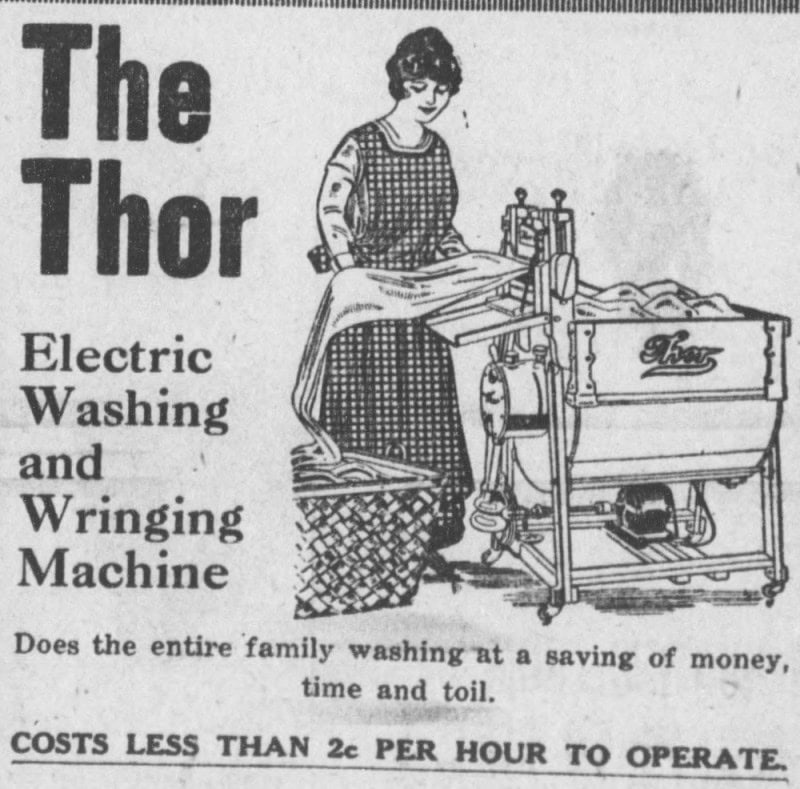
The Thor, built by the Hurley Machine Company of Chicago and generally credited to Alva J. Fisher, put a galvanised tub on a belt-driven electric motor and took the single most hated task of the domestic week off human arms.
It is difficult now to appreciate the scale of what it displaced. Laundry day meant hauling and heating water, hours of scrubbing, and feeding every item through a hand-cranked mangle. Studies of household labour in the period consistently put it at the top of the list of tasks women wanted mechanised — ahead of cooking, ahead of cleaning.
The economist Ha-Joon Chang has argued, only half-provocatively, that the washing machine changed the world more than the internet did, by freeing an enormous quantity of human time.
8. The Electric Toaster (1909)
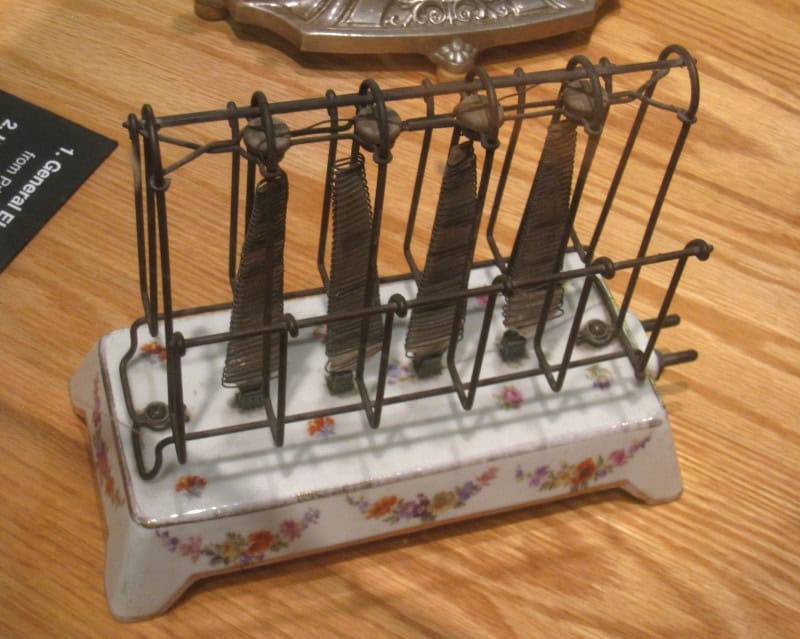
Before the toaster could exist, someone had to invent a wire that would glow red-hot, in open air, without burning out. That was Albert Marsh, whose nickel-chromium alloy — Nichrome — was patented in 1906 and remains the standard heating element more than a century later.
General Electric’s D-12 of 1909 was the first commercially successful electric toaster: a bare wire cage on a porcelain base that browned one side of one slice at a time, and required the cook to stand over it and flip the bread. It could not switch itself off.
That came in 1919, when Charles Strite, exasperated by burnt toast in a Minnesota plant canteen, patented a toaster with a variable timer and a spring that ejected the slice. Every pop-up toaster since is a refinement of his.
9. The Moving Assembly Line (1913)
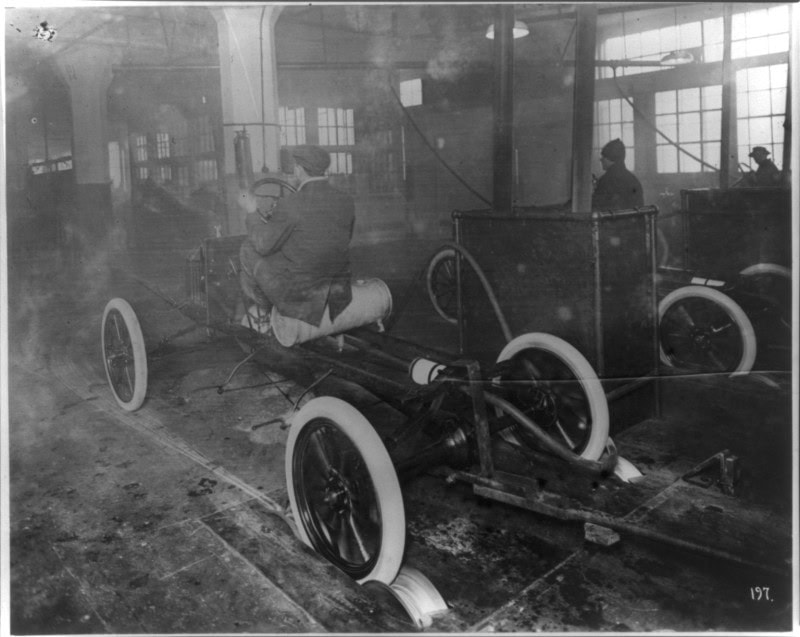
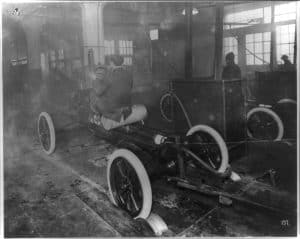
Henry Ford did not invent the assembly line, interchangeable parts, or the division of labour. What his Highland Park plant did in 1913 was combine them and add motion: instead of workers moving to the car, the car moved past the workers, each performing one operation.
The effect was startling. Chassis assembly fell from 12 hours 30 minutes to 1 hour 33 minutes. The price of a Model T dropped from $850 in 1908 to $260 by 1925, putting a car within reach of the people building it — a point Ford made explicitly when he doubled wages to $5 a day in 1914.
The cost was borne in the work itself. Turnover at Highland Park hit 380% in 1913, as workers found the pace and monotony intolerable. The $5 day was, in part, the price of getting them to stay.
10. The Electric Refrigerator (1913–1927)
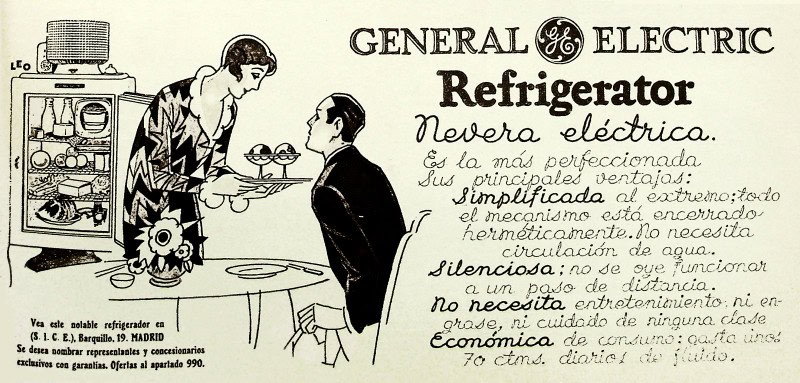
Domestic refrigeration arrived in stages. Fred W. Wolf’s DOMELRE of 1913 was an electric cooling unit designed to sit on top of an existing ice box. Frigidaire and Kelvinator followed. But the machine that made the refrigerator a normal household object was General Electric’s Monitor Top of 1927, so called because its cylindrical compressor perched on top resembled the turret of the USS Monitor.
It was hermetically sealed, needed no plumbing, and was reliable enough that a substantial number still run today.
The refrigerator did more than preserve leftovers. It changed national diets by making fresh meat, dairy and vegetables available year-round in cities, and it removed the daily visit of the ice wagon — an entire industry that vanished within a generation. The 1928 advertisement above is from the Spanish press — General Electric was selling the same machine across Europe by then.
11. Television (1926)
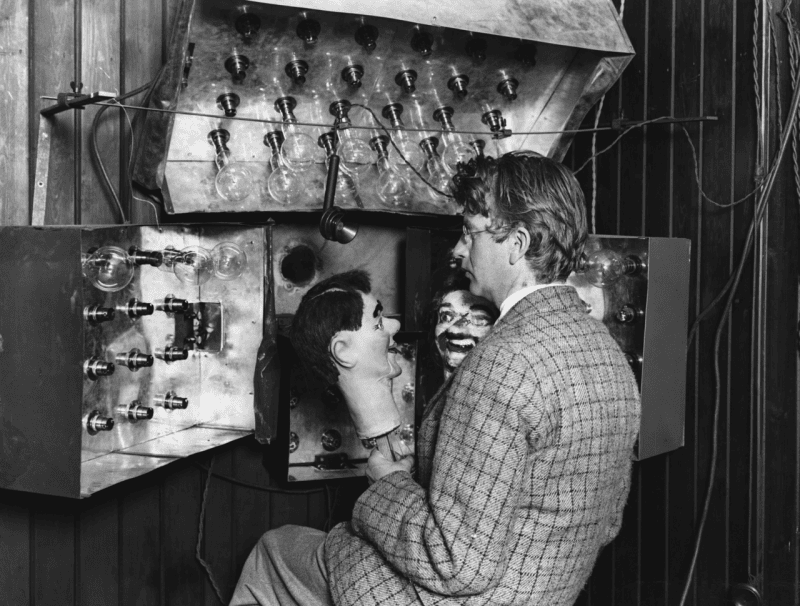
On 26 January 1926, John Logie Baird demonstrated moving television pictures to members of the Royal Institution in a Soho attic. His apparatus was built from a hatbox, a tea chest, darning needles, bicycle light lenses and sealing wax. The first face he transmitted belonged to a ventriloquist’s dummy called Stooky Bill, whose painted features held up under the fierce lighting better than a human sitter could.
Baird’s system was mechanical, spinning a perforated Nipkow disc to scan the image, and it was an evolutionary dead end. The future belonged to the all-electronic approach developed in parallel by Philo Farnsworth in San Francisco and Vladimir Zworykin at RCA.
But Baird got there first, and the BBC used his system for its earliest broadcasts before switching to Marconi-EMI’s electronic one in 1937.
12. Penicillin and Antibiotics (1928)
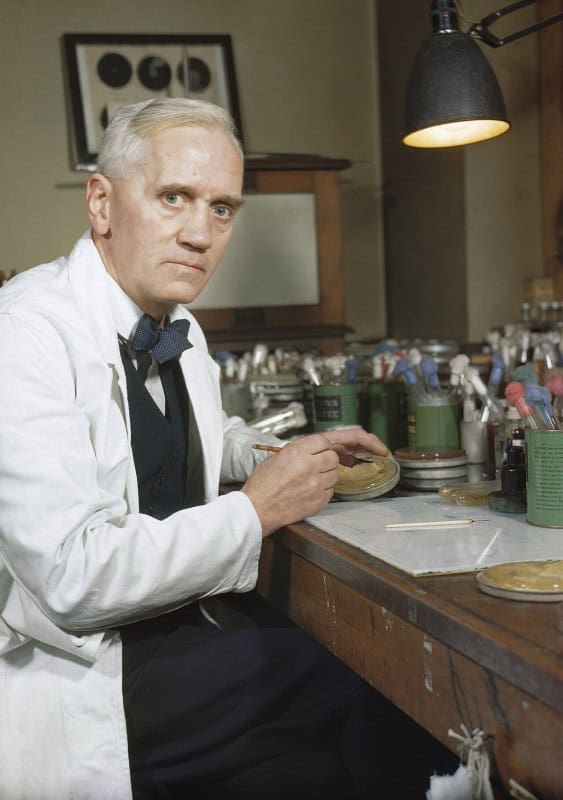
Alexander Fleming returned from holiday in September 1928 to a stack of culture plates he had left by a window. On one, a blue-green mould had contaminated the staphylococcus he was growing, and around the mould was a clear ring where the bacteria had dissolved.
Fleming identified the mould as a Penicillium, named the substance penicillin, published in 1929 — and then largely moved on, unable to purify it in useful quantities.
The drug that saved millions came a decade later from Oxford, where Howard Florey, Ernst Chain and Norman Heatley worked out how to concentrate and stabilise it, testing it on mice in 1940 and on a human patient in 1941. Mass production was achieved in the United States in time for D-Day. Fleming, Florey and Chain shared the 1945 Nobel Prize.
Fleming used his Nobel lecture to warn that careless use would breed resistant bacteria. He was right about that too.
13. Radar (1935)
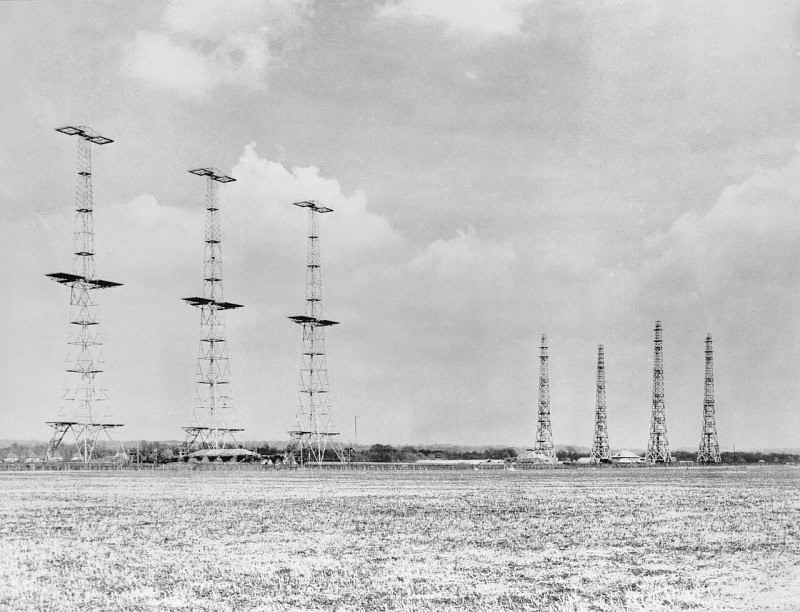
In February 1935, Robert Watson-Watt was asked by the Air Ministry whether a radio “death ray” capable of destroying aircraft was feasible. He calculated that it was not — but noted that radio waves reflected off an aircraft could reveal its position long before it was visible.
The Daventry Experiment later that month proved it, detecting a Handley Page Heyford bomber at eight miles. By 1940 Britain had Chain Home: a line of transmitter and receiver masts along the east and south coasts feeding into a centralised filter room.
Radar’s real contribution in the Battle of Britain was not simply detection but management — it let a numerically inferior fighter force be directed to where it was needed instead of flying wasteful standing patrols. The technology now lands aircraft, tracks storms, catches speeding drivers and reads the surface of Venus.
14. Nylon (1935)
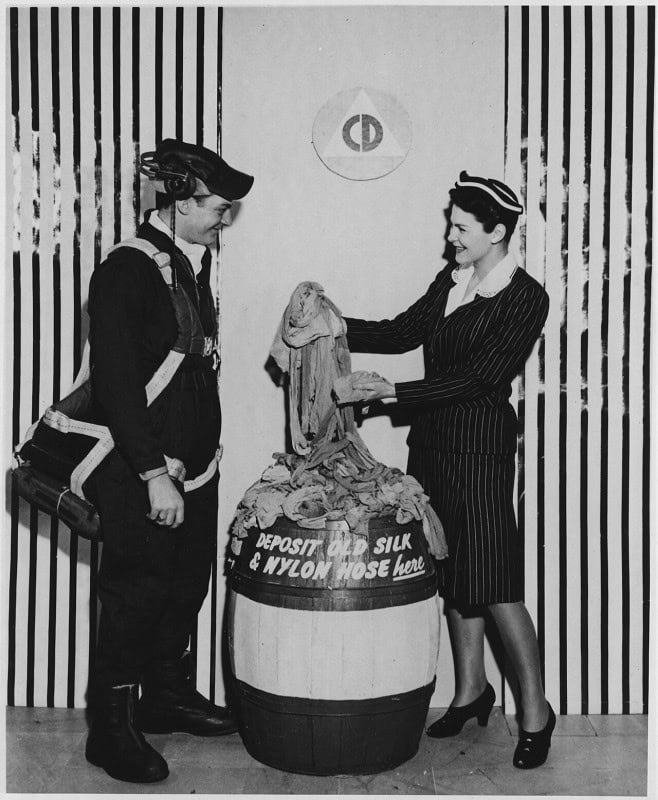
Wallace Carothers, leading fundamental research at DuPont, was investigating long-chain polymers when his team drew a fibre from a molten sample in 1935. It was strong, elastic, and made from coal, air and water.
DuPont launched it at the 1939 New York World’s Fair and put stockings on sale nationally on 15 May 1940. Four million pairs sold in four days. Nylon was, briefly, a cultural event.
Then the war took it. Production was diverted to parachutes, tyre cord, ropes and tents, and civilian stockings vanished — which is what the photograph above shows: a wartime salvage drive collecting worn nylons to be reprocessed for military use. The scarcity produced its own folklore, including women drawing seam lines up the backs of their legs with eyebrow pencil.
Carothers, who suffered from severe depression, died by suicide in 1937 and never saw any of it.
15. Xerography (1938)
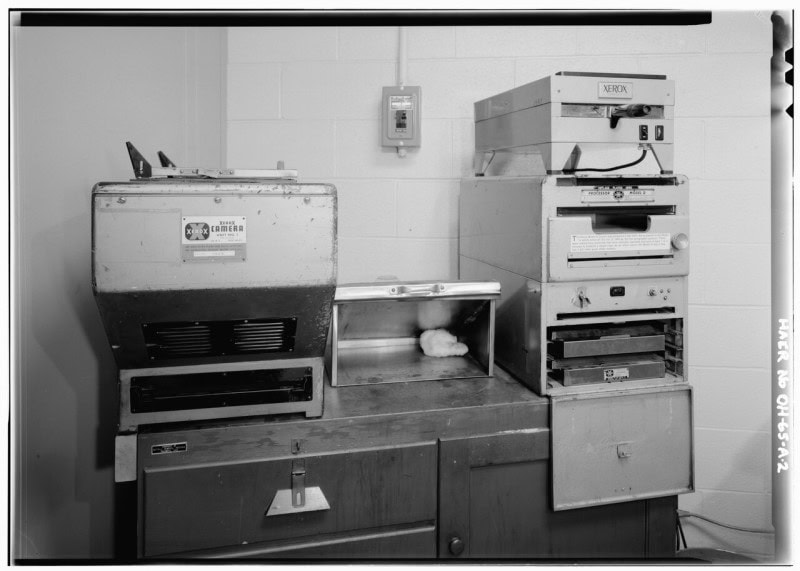
Chester Carlson was a patent attorney with arthritis, tired of copying documents by hand. On 22 October 1938, in a rented room in Astoria, Queens, he and his assistant Otto Kornei produced the first xerographic image: the words “10-22-38 ASTORIA” transferred using static electricity, sulphur powder and wax paper.
Then came the hard part. Carlson spent six years being turned down — by IBM, by RCA, by General Electric, by more than twenty companies — before the Battelle Memorial Institute took an interest in 1944 and the small Haloid Company licensed it in 1947.
The Xerox 914, launched in 1959, became one of the most profitable products in American history. Haloid renamed itself Xerox. The photograph above shows an earlier Model D installation, photographed in the 1980s while still in use.
16. The Ballpoint Pen (1938)
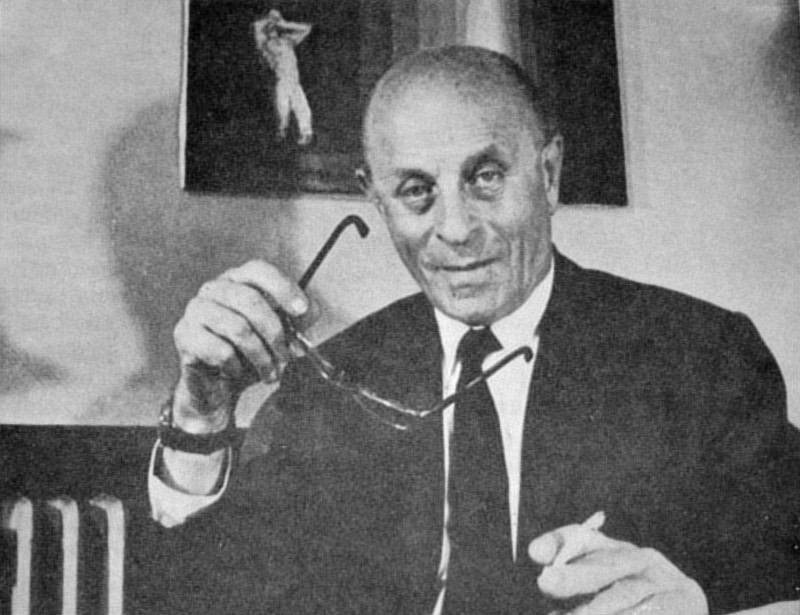
László Bíró was a Hungarian journalist who noticed that newspaper ink dried almost instantly on the page, while the fountain pen in his pocket smudged everything. The problem was that newspaper ink was far too viscous to flow through a nib.
Working with his brother György, a chemist, he arrived at the solution: not a nib at all, but a tiny ball bearing seated in a socket, rolling as it moved across the paper and picking up thick ink from a reservoir behind it. He patented it in 1938 and, as a Jewish refugee, fled to Argentina, patenting it again in 1943.
The RAF bought them for navigators because they worked at altitude where fountain pens leaked. In Argentina the pen is still called a birome; in much of the world, simply a biro. Bíró is pictured above in later life; no photograph of him with the original pen appears to survive.
17. The Helicopter (1939)
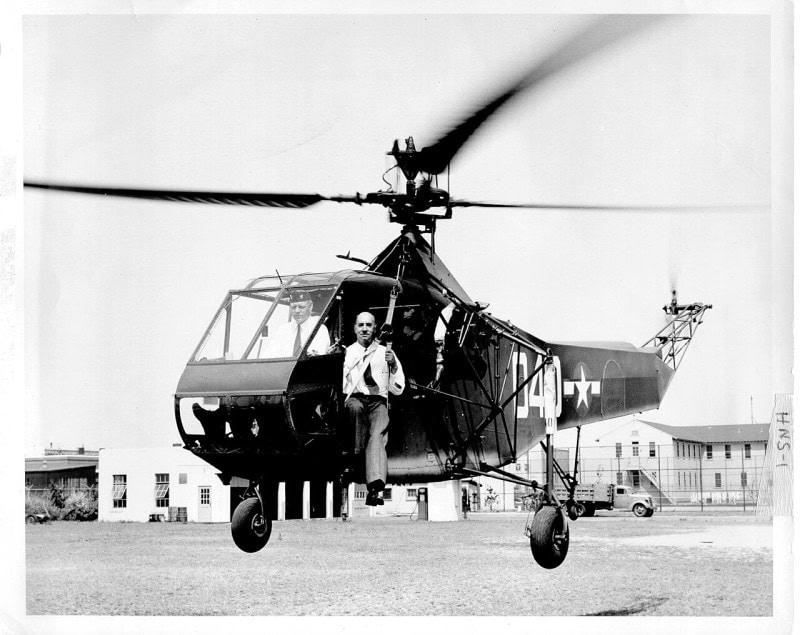
Rotary flight had been attempted for decades — Paul Cornu and the Breguet brothers both left the ground in 1907, and Juan de la Cierva’s autogyro flew well from 1923. The obstacle was torque: spin a large rotor and the fuselage wants to spin the other way.
Igor Sikorsky’s VS-300, first flown tethered in September 1939, settled the configuration that almost every helicopter has used since — a single main rotor for lift, and a small vertical tail rotor to cancel the torque and steer.
The R-4 that followed — the machine pictured above — became the first mass-produced helicopter and, in 1944, flew what is generally recorded as the first helicopter combat rescue, in Burma. The machine’s defining civilian use, reaching people that nothing else can reach, was established almost immediately.
18. The Jet Engine (1937–1941)
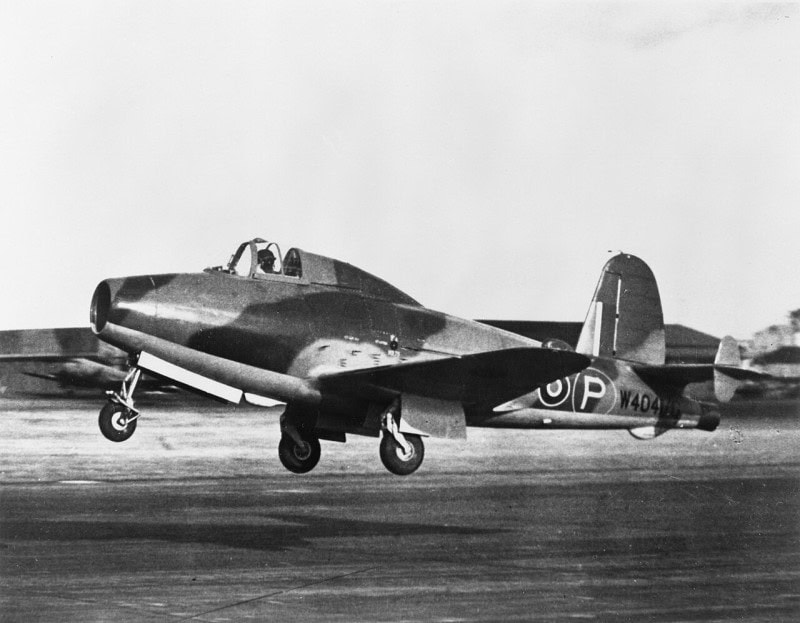
Two men solved it independently and neither knew of the other. Frank Whittle, an RAF officer, patented a turbojet in 1930 while still in his early twenties and could not persuade the Air Ministry to fund it; he ran his first bench engine in 1937. Hans von Ohain, a German doctoral student, ran his in 1937 too, and his engine flew first, in the Heinkel He 178 in August 1939.
Whittle’s design flew in the Gloster E.28/39 in May 1941 — the aircraft in the photograph above, identifiable by its serial W4041.
The piston engine had reached its limits: propellers lose efficiency as blade tips approach the speed of sound. The jet removed that ceiling and, within twenty years, made intercontinental air travel ordinary rather than exotic.
19. Nuclear Power (1942)
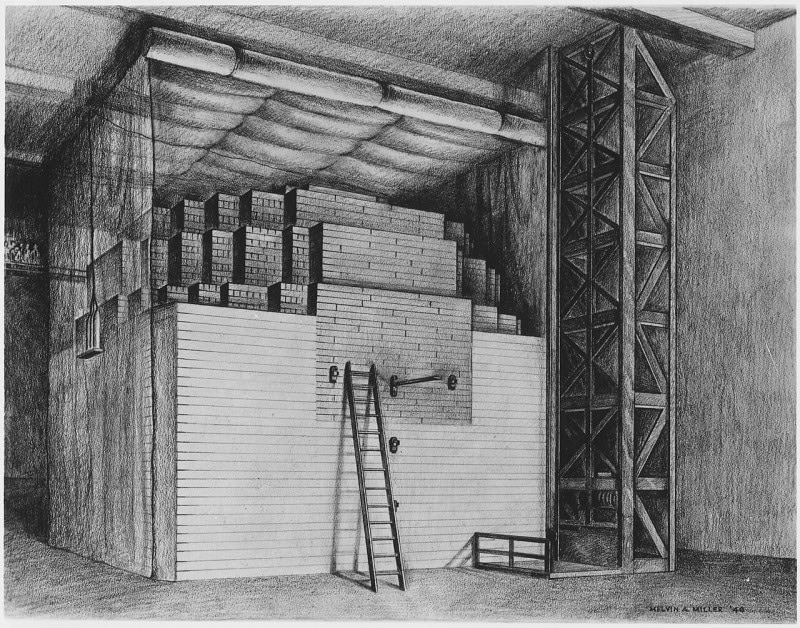
Beneath the disused stands of Stagg Field at the University of Chicago, on 2 December 1942, a team under Enrico Fermi withdrew the last control rod from a stack of graphite blocks and uranium slugs and achieved the first controlled, self-sustaining nuclear chain reaction. Chicago Pile-1 ran for about 28 minutes at half a watt.
There is no photograph of the moment — the image above is a 1946 drawing by Melvin Miller of Argonne National Laboratory.
The civilian consequence arrived in 1951, when Experimental Breeder Reactor I in Idaho lit four light bulbs, and in 1954 with Obninsk in the Soviet Union, the first reactor to supply a power grid. Nuclear power remains the century’s most morally complicated invention: the same physics produced both a carbon-free electricity source and the weapons that have shadowed every decade since.
20. Modern Rocketry (1942)

Robert Goddard launched the first liquid-fuelled rocket from his aunt’s farm in Auburn, Massachusetts, in March 1926. It rose 41 feet. The local press had earlier ridiculed him, and The New York Times published an editorial explaining that rockets could not possibly work in the vacuum of space — a claim it retracted in July 1969, the day after Apollo 11 launched.
The technology matured in Germany. The A-4, better known as the V-2, first reached space on a test flight in 1944, becoming the first human-made object to cross the boundary. It was also a weapon that killed thousands of civilians and was built with concentration-camp labour, a fact that sits permanently alongside its engineering significance.
After the war both superpowers recruited its engineers, and the direct descendants of the V-2 carried satellites, then people, into orbit.
21. The Microwave Oven (1946)
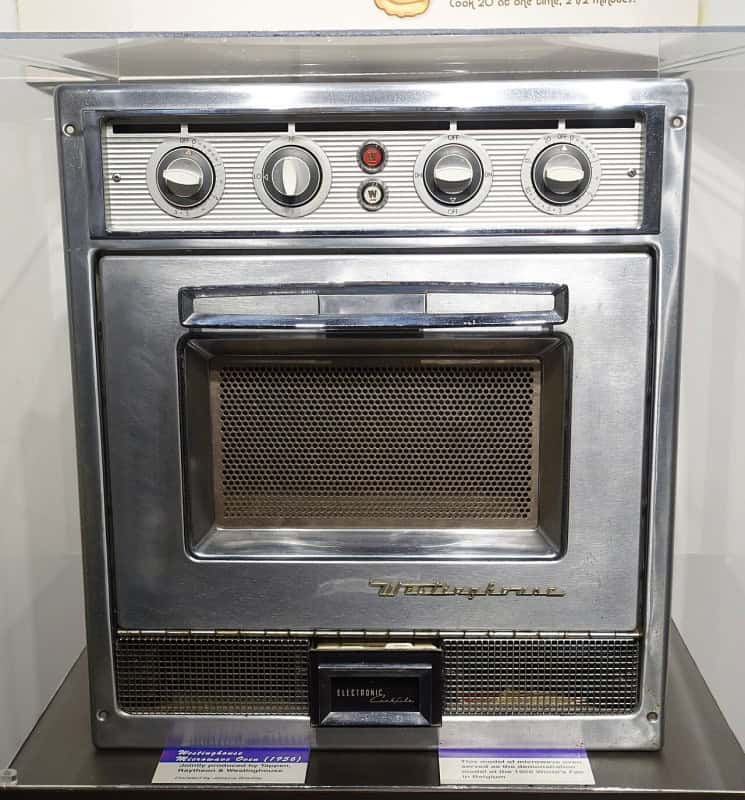
Percy Spencer, a self-taught engineer at Raytheon who had left school at twelve, was standing beside an active magnetron in 1945 when he noticed that a peanut cluster bar in his pocket had melted. He sent out for popcorn kernels, which duly popped, then for an egg, which exploded over a colleague.
Raytheon patented the idea in 1945 and shipped the Radarange in 1947: nearly six feet tall, weighing around 750 pounds, water-cooled, and costing around $5,000 — a machine for restaurants and ocean liners, not kitchens.
The countertop domestic model arrived in 1967 from Amana, a Raytheon subsidiary, at $495. The oven above is a 1956 Westinghouse demonstration unit, preserved in a museum case.
22. The Transistor (1947)
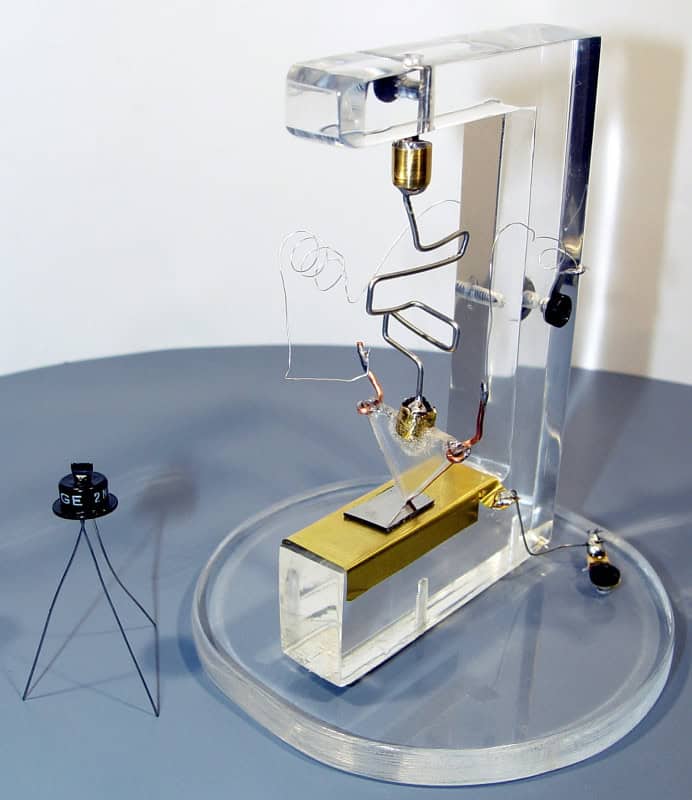
If this list had to be reduced to one entry, it would be this one.
On 16 December 1947, at Bell Telephone Laboratories, John Bardeen and Walter Brattain pressed two gold contacts into a slab of germanium and observed that a small current at one contact controlled a much larger current at the other. It amplified. Within weeks, working with William Shockley, they had a device that could do everything a vacuum tube could — while being smaller, cooler, more durable and vastly cheaper.
The three shared the 1956 Nobel Prize. Bardeen won a second in 1972 for superconductivity, the only person to win twice in physics.
Every subsequent entry on this list that computes anything, and effectively every electronic object now in your home, is built from descendants of that germanium wedge. Modern processors contain tens of billions of them. The device above is a replica of the 1947 point-contact transistor, built by Bell Labs’ successor to mark its fiftieth anniversary.
23. The Credit Card (1950)
The founding story is that Frank McNamara, having finished dinner at a New York restaurant in 1949, discovered he had left his wallet behind. Whether or not that happened, in 1950 he launched Diners Club — a cardboard card, accepted at 27 restaurants, billed monthly.
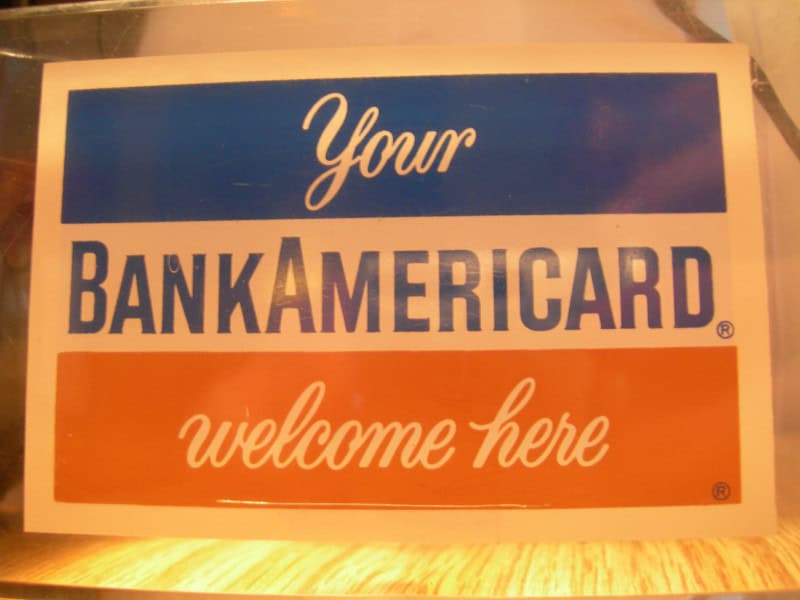
The card that generalised the idea was BankAmericard, which Bank of America launched in 1958 by mailing 60,000 unsolicited, pre-approved cards to residents of Fresno, California. The “Fresno Drop” produced enormous losses and a good deal of fraud, but it solved the problem that had defeated everyone before: a payment network is worthless unless shoppers and merchants join at the same time.
BankAmericard became Visa in 1976. The sign above is the merchant decal that told customers the card would be taken.
24. The Polio Vaccine (1955)
Polio was the disease American parents feared most. Epidemics closed swimming pools and cinemas each summer; the 1952 US outbreak recorded around 58,000 cases, and images of children in iron lungs defined the era.
Jonas Salk’s inactivated vaccine was tested in 1954 in a trial involving roughly 1.8 million children, still among the largest medical trials ever run. When the results were announced on 12 April 1955, church bells rang. Salk, asked who owned the patent, replied: “Well, the people, I would say. There is no patent. Could you patent the sun?”
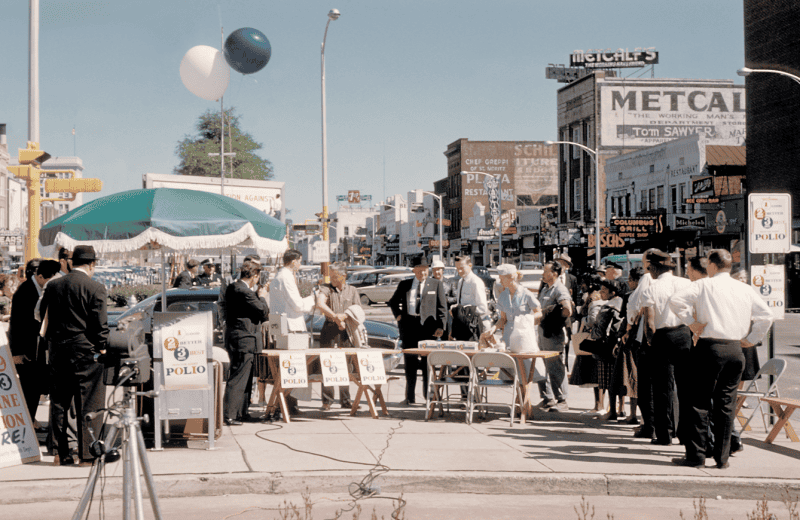
Albert Sabin’s oral vaccine, easier to administer on a mass scale, followed in 1961 — the kind of community clinic pictured above. Cases worldwide have since fallen by more than 99%.
25. The Integrated Circuit (1958)
The problem was called the tyranny of numbers. Transistors were cheap, but complex circuits needed thousands of them, each soldered by hand to its neighbours, and every joint was a chance to fail.
Jack Kilby, a new employee at Texas Instruments without enough seniority to take the summer holiday, spent an empty July in 1958 working on it, and demonstrated a working circuit built entirely on a single sliver of germanium that September. Months later Robert Noyce at Fairchild independently arrived at a silicon version with the interconnections printed on, which is the form that scaled. Kilby received the Nobel Prize in 2000; Noyce had died in 1990.
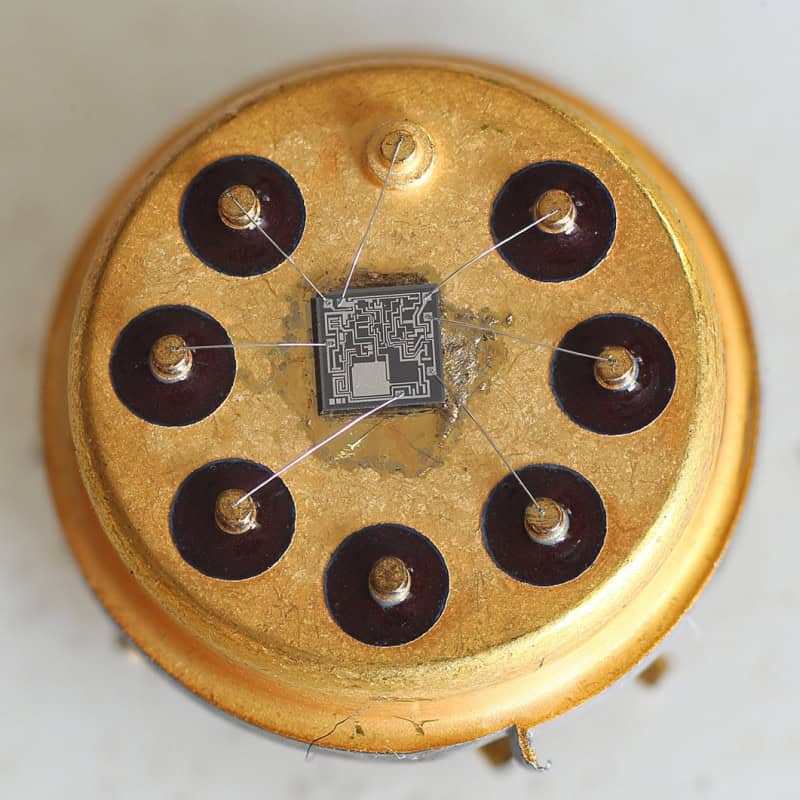
Pictured is a Fairchild μA741 operational amplifier from 1969, opened to show the silicon die and its bond wires — an early production integrated circuit rather than Kilby’s first.
26. The Laser (1960)
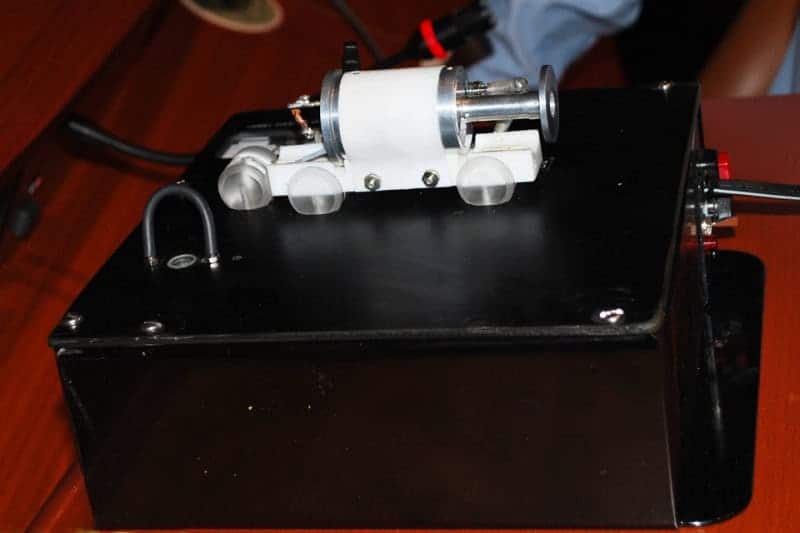
Theodore Maiman built the first working laser at Hughes Research Laboratories in Malibu, firing it on 16 May 1960 using a synthetic ruby rod wrapped in a photographic flashlamp. Physical Review Letters rejected his paper. Nature published it.
The laser was famously described in its early years as “a solution looking for a problem”, and for a decade that was fair. What changed was fibre optics. A laser can be switched billions of times a second and its light carried down a glass thread with almost no loss — which is the physical basis of essentially all long-distance internet traffic today.
Along the way it also became the thing that reads a compact disc, corrects vision, cuts steel, prints documents and scans the barcode on everything you buy.
27. The Industrial Robot (1961)
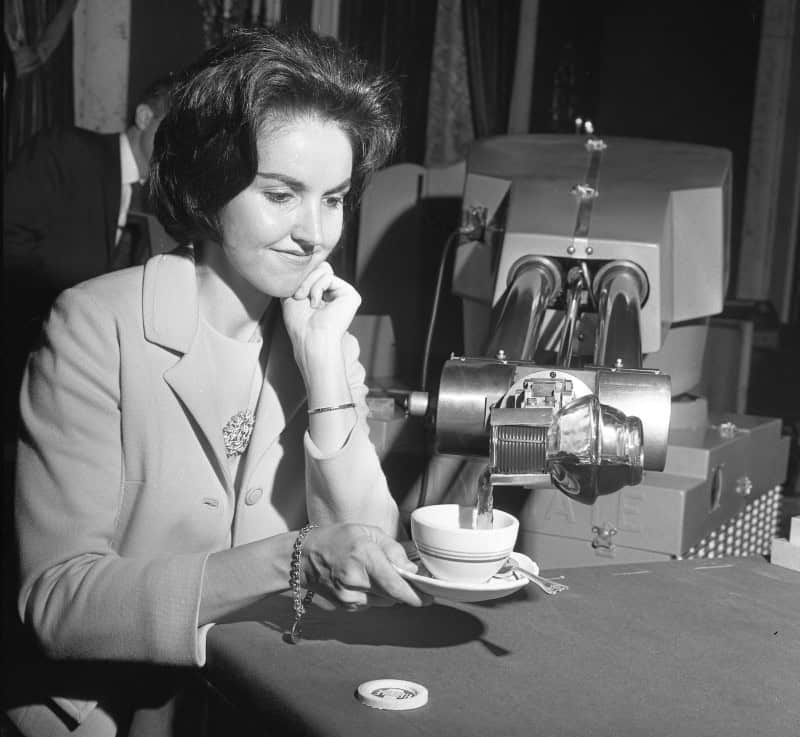
Unimate, designed by George Devol and developed with Joseph Engelberger, went to work at a General Motors plant in Ewing Township, New Jersey, in 1961. Its first job was one nobody wanted: lifting red-hot die-cast parts out of a machine and stacking them, work that was hot, monotonous and dangerous.
Devol’s patent, filed in 1954, described “programmed article transfer” — a machine that stored a sequence of movements and repeated them. Engelberger, who had read Isaac Asimov as a teenager, supplied the salesmanship, including the 1966 Tonight Show appearance where a Unimate poured a drink and conducted the band. The photograph above is from that publicity era, showing an arm pouring coffee at a hotel demonstration.
The trade-off industrial robots introduced — safer, more consistent production against fewer manual jobs — is still being argued over.
28. ARPANET, the Ancestor of the Internet (1969)
On 29 October 1969, a student at UCLA named Charley Kline began typing “LOGIN” to a machine at the Stanford Research Institute in Menlo Park. The system crashed after two characters. The first message ever sent over the ARPANET was therefore “LO”.
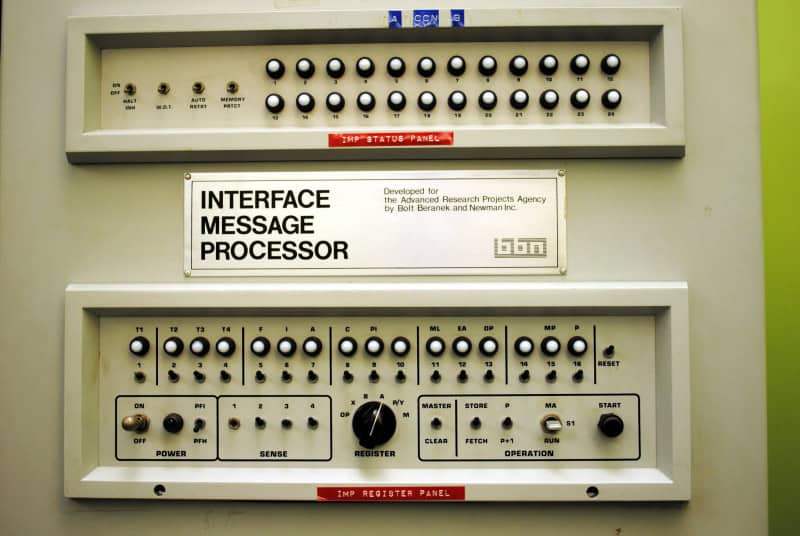
The network’s foundational idea was packet switching — breaking messages into small blocks that find their own way across a network and reassemble at the far end, rather than reserving a dedicated circuit. It was developed independently by Paul Baran in the United States and Donald Davies in Britain. The hardware that made each site a node was the Interface Message Processor, pictured above: a ruggedised Honeywell minicomputer built by Bolt Beranek and Newman.
TCP/IP, designed by Vint Cerf and Bob Kahn, became the standard in 1983 and turned a research network into a network of networks.
29. The Mobile Phone (1973)
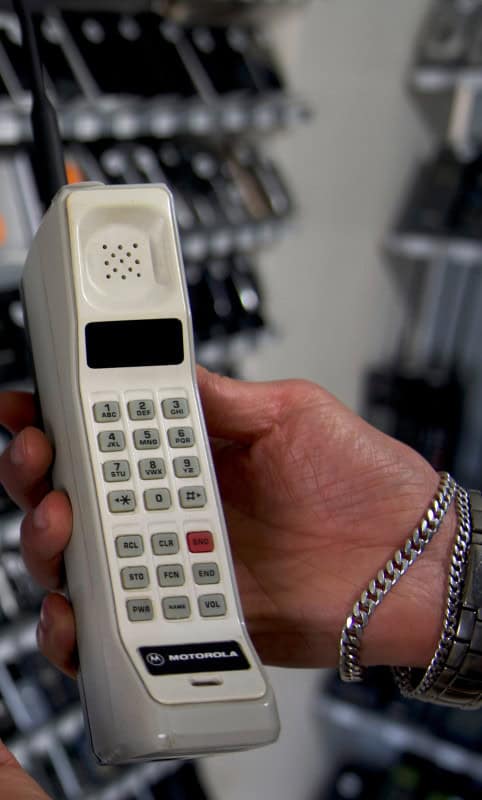
On 3 April 1973, Motorola’s Martin Cooper stood on Sixth Avenue in Manhattan and made a call from a handheld prototype to Joel Engel, his opposite number at Bell Labs — the rival he had beaten to it. He has said he cannot recall Engel’s reply.
Getting from that prototype to a product took ten years. The DynaTAC 8000X reached the market in 1983 weighing about 790 grams, offering roughly 30 minutes of talk after ten hours of charging, and costing $3,995 — around $12,000 in today’s money.
The genuinely important idea was underneath: the cellular concept, worked out at Bell Labs, which divides territory into cells and reuses the same frequencies in non-adjacent ones. Without it, only a few hundred simultaneous calls would be possible in a whole city. The handset above is a preserved DynaTAC on display, photographed against a rack of modern phones.
30. The Personal Computer (1975)
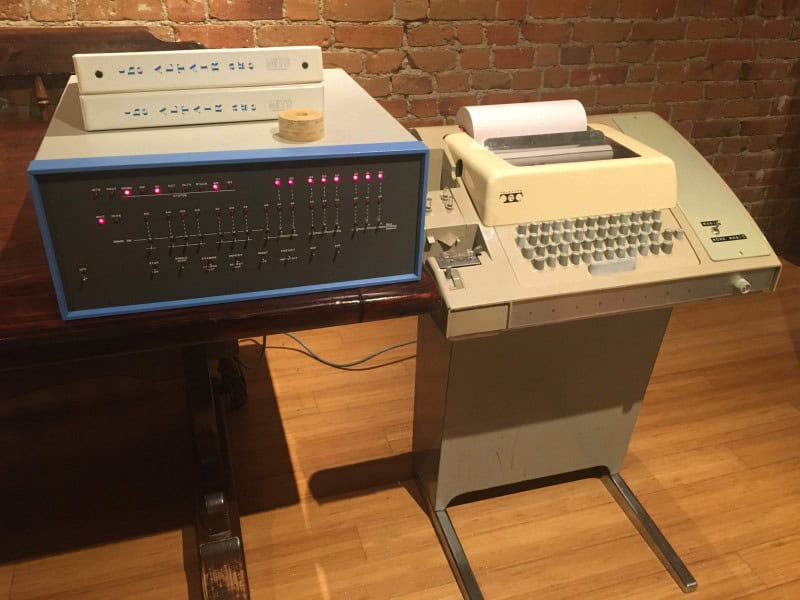
The MITS Altair 8800 appeared on the January 1975 cover of Popular Electronics as a $439 kit. It had no keyboard, no screen and no storage — you entered programs by flipping switches on the front panel and read the answers off red LEDs.
It sold in thousands to people who had never expected to own a computer, and it produced two consequences. Two young programmers, Paul Allen and Bill Gates, wrote a BASIC interpreter for it and founded Microsoft. And in California, the hobbyists of the Homebrew Computer Club began building their own machines — one of whom, Steve Wozniak, designed the Apple I.
The IBM PC of 1981 supplied the standard that made the machine a business tool, and its open architecture allowed the clone industry that drove prices down for the next two decades.
31. GPS (1978–1995)
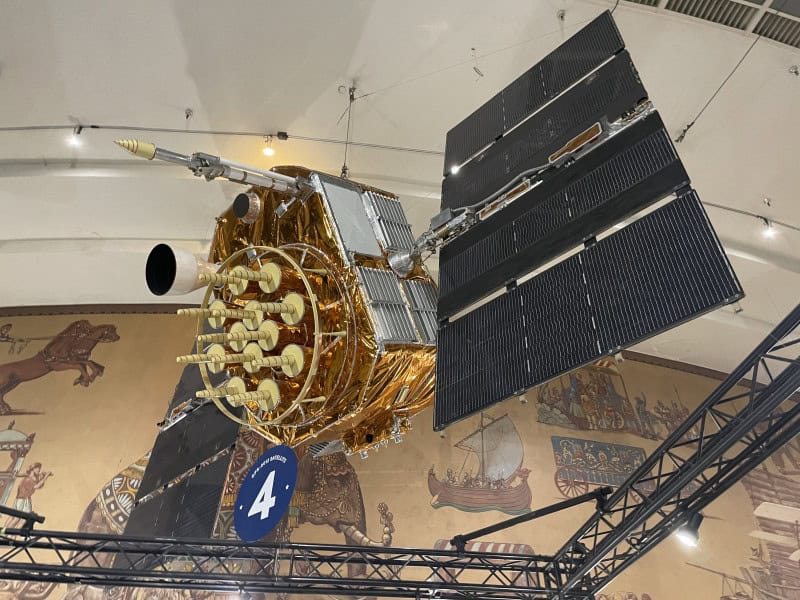
The idea arrived within days of Sputnik in 1957, when two physicists at Johns Hopkins Applied Physics Laboratory noticed they could work out the satellite’s orbit from the Doppler shift of its radio signal — and realised that the reverse also held. If you know where the satellite is, you can find where you are.
The first NAVSTAR satellite launched in 1978; the constellation was declared fully operational in 1995. Each satellite carries atomic clocks, and the system only works if the calculations account for both special and general relativity — the clocks run measurably faster in orbit. Ignore Einstein and GPS drifts by about ten kilometres a day.
Civilian access was deliberately degraded until May 2000, when the US switched off Selective Availability and accuracy improved roughly tenfold overnight.
32. The Compact Disc (1982)

The CD was a joint Philips–Sony standard, released in Japan in October 1982, and the first consumer format to store sound as numbers rather than as a physical analogue of a waveform. A laser reads microscopic pits pressed into a spiral track; nothing touches the surface, so it does not wear out with playing.
The persistent story is that the 74-minute running time was chosen so that Beethoven’s Ninth would fit on one disc. Philips and Sony engineers have given differing accounts over the years, and it may be tidier than the truth.
Its real legacy was not music but the idea of consumer digital storage. CD-ROM followed, then the writable disc, then DVD — and the habit of treating information as something that could be copied perfectly and endlessly, which is where the century ended and the next one began.
Conclusion
Read in order, the list tells a fairly clear story. The first third of the century mechanised the household and the factory. The middle third, under the pressure of two wars, produced the physics and chemistry — radar, the jet, nuclear fission, penicillin, the transistor. The final third turned that physics into information: the chip, the network, the personal computer, the satellite in your pocket.
The pattern worth noticing is how rarely the inventor saw what was coming. Carlson was turned down by twenty companies. The laser was a solution looking for a problem. Fleming published penicillin and moved on. Bardeen and Brattain were trying to build a better telephone amplifier, not the foundation of the digital world.
If you want to see where all of this came from, our list of the 30 Greatest Inventions of the 19th Century covers the machines this century inherited — and if you would rather look at how people have commemorated their inventors and heroes in bronze and marble, try the Top 32 Most Famous Statues In The World.
And for the people behind these machines, our list of the 18 famous inventors and the inventions that made them follows the story from Gutenberg to Berners-Lee, with the Wright brothers, Farnsworth, Fleming, Lamarr, Hopper and Kwolek picking up the 20th-century entries above. The whole span, from fire to the mRNA vaccine, is on our hub of 30 inventions that changed the world, where seven of the entries above take their place in the longer story.
Image credits
- Transistor replica — Mister rf, CC BY-SA 4.0, via Wikimedia Commons
- Integrated circuit (Fairchild μA741) — Analogdesigner, CC BY-SA 4.0, via Wikimedia Commons
- Unimate industrial robot — Frank Q. Brown / Los Angeles Times, CC BY 4.0, via Wikimedia Commons
- ARPANET Interface Message Processor — FastLizard4, CC BY-SA 3.0, via Wikimedia Commons
- Altair 8800 — Tim Colegrove, CC BY-SA 4.0, via Wikimedia Commons
- Microwave oven and GPS satellite photographs — Daderot and Blervis respectively, released CC0
- All other historical images are in the public domain, via Wikimedia Commons, the Imperial War Museum, the Library of Congress, NARA, the CDC and the US Department of Energy.